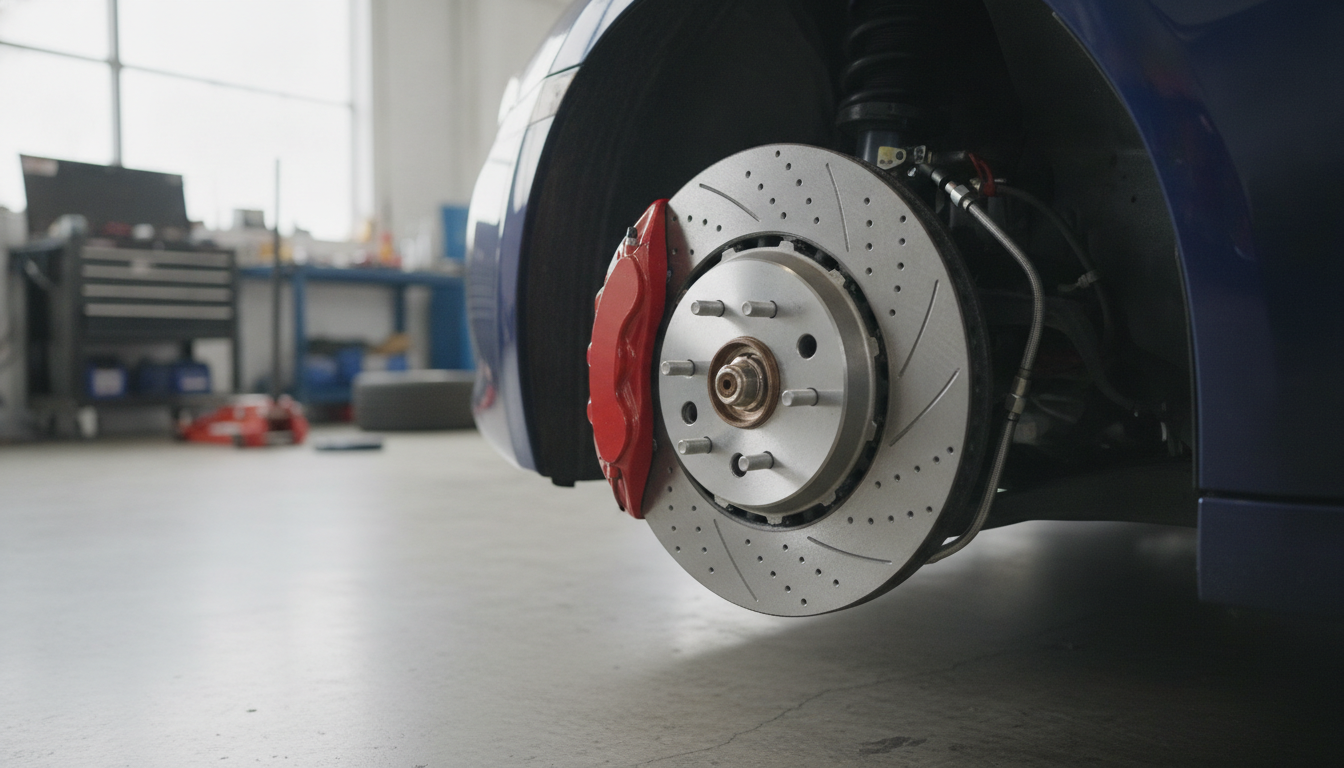
You're looking at upgrading your vehicle's stopping power. Maybe you've added some horsepower, or you're hauling more weight, or you just want more confidence when you hit the pedal. A big brake kit isn't a simple pad slap; it's a significant change to your braking system designed to handle more heat and provide more consistent, powerful stops.
Stock brakes are engineered for the average driver and typical conditions. They're good enough for daily commuting, but they can quickly get overwhelmed when you push them hard. Think about repeated hard braking, towing heavy loads, or spirited driving on twisty roads. That's when you start to experience brake fade – the pedal gets soft, and the stopping distance increases. A big brake kit addresses these issues by using larger rotors, more aggressive pads, and multi-piston calipers.
What to look for
Rotor size and type
Larger rotors have more surface area to dissipate heat. Heat is the enemy of braking performance. When your brakes get too hot, the friction material on the pads can start to break down, and the brake fluid can boil, leading to that spongy pedal feel. You'll often see big brake kits with rotors that are not only larger in diameter but also thicker, sometimes slotted or drilled. Slots help sweep away gas and dust, while drilling can aid in cooling, though some argue drilled rotors can be prone to cracking under extreme stress. For most street applications, slotted is a good compromise.
Caliper design and piston count
Your stock calipers usually have one or two pistons. Big brake kits often come with four, six, or even eight-piston calipers. More pistons mean the clamping force is spread more evenly across the brake pad, which can lead to more consistent wear and better modulation. Multi-piston calipers are also typically more rigid than single-piston floating calipers, reducing flex and improving pedal feel. The difference in pedal feel between a stock single-piston caliper and a rigid six-piston setup is night and day.
Pad material
Big brake kits almost always come with performance-oriented pads. These are designed to withstand higher temperatures and provide a higher coefficient of friction. You'll find everything from aggressive street compounds to full-on race pads. The trade-off is often more dust, more noise, and sometimes reduced performance when cold. Make sure the pads in the kit match your driving style. If you're just commuting, you don't need a track-day pad that squeals every time you touch the pedal.
Brake lines and fluid
Don't overlook these components. Stock rubber brake lines can expand under pressure, leading to a slightly spongy pedal. Stainless steel braided lines, like the Russell #10 Cushion Clamps 6 Pack (though these are clamps, not lines themselves, they highlight the importance of line security), don't expand, giving you a firmer, more consistent pedal feel. You'll also want to upgrade to a high-performance brake fluid with a higher boiling point. This is crucial for preventing fluid boil, especially with the increased heat generated by a big brake kit. I always recommend flushing the old fluid out completely when doing any brake upgrade. It's cheap insurance against fade.
Master cylinder compatibility
This is a big one. Your master cylinder is designed to push a certain volume of fluid to your calipers. If your new multi-piston calipers require significantly more fluid volume than your stock ones, your pedal might feel long or spongy. Sometimes, a big brake kit will require an upgrade to the master cylinder or at least a careful check of the master cylinder's bore size to ensure proper function. This isn't always necessary, but it's something to investigate before you commit to a kit.
Quick comparison
| Feature | Stock Brakes | Big Brake Kit |
|---|---|---|
| Rotor Size | Smaller diameter, thinner | Larger diameter, thicker, often slotted/drilled |
| Caliper Type | Single or dual-piston floating | Multi-piston fixed (4, 6, 8 pistons) |
| Pad Material | OEM-spec, quiet, low dust | Performance-oriented, higher temp, more bite |
| Heat Dissipation | Adequate for normal driving | Superior, resists fade under heavy use |
| Pedal Feel | Softer, more travel | Firmer, more consistent, better modulation |
| Wheel Clearance | Generally not an issue | Requires larger wheels, specific offsets |
Top picks
While we don't carry complete big brake kits as a single SKU, we do offer components that are essential for any brake system, whether stock or upgraded. For instance, if you're building a custom brake line, you'll need quality tubing. The Ags Poly-Armour Brake Line 3/16 Inch Diameter 40 Foot Length is a solid option, in stock for $5.02. For shorter runs or specific connections, the Ags Steel Brake Line 3/16 Inch Diameter 30 Inch Length at $5.08 is also available. And for those smaller, critical connections, the Ags Poly-Armour Brake Line 3/16 Inch x 8 Inch Length for $5.11 is a good choice. These are the hard lines that carry the fluid, and having good quality material is paramount.
How to verify fitment before buying
This is the most critical step. A big brake kit won't do you any good if it doesn't fit your vehicle. Here's what you need to check:
-
Wheel clearance: The larger calipers and rotors in a big brake kit often require larger wheels or wheels with specific offsets to clear the components. Many manufacturers provide a template you can print out and hold up to your wheel to check for clearance. Don't skip this. You don't want to buy a kit only to find out your wheels won't fit over the new calipers. If your current wheels are too small, factor in the cost of new wheels and tires.
-
Vehicle specific applications: Most reputable big brake kit manufacturers will list specific vehicle applications. Make sure the kit you're looking at is designed for your exact year, make, and model. Don't assume a kit for a similar model will work; there can be subtle differences in spindle design or mounting points.
-
Master cylinder and ABS compatibility: As mentioned earlier, check if your stock master cylinder is compatible. Some kits might include a new master cylinder or recommend an upgrade. Also, ensure the kit is compatible with your vehicle's anti-lock braking system (ABS). While most modern kits are designed to work with ABS, it's always worth confirming.
-
Suspension components: In rare cases, a big brake kit might interfere with certain aftermarket suspension components. If you have coilovers or custom control arms, double-check for any potential clearance issues. This is less common but still a possibility with highly modified vehicles.
Always consult your service manual or the kit manufacturer's instructions for specific torque values and installation procedures. Brakes are a safety-critical system, and proper installation is non-negotiable.
Top picks



Frequently asked questions
What is the main benefit of a big brake kit?
The primary benefit of a big brake kit is improved heat management and consistent stopping power. Larger rotors dissipate heat more effectively, preventing brake fade during heavy use. Multi-piston calipers provide better clamping force and modulation, leading to shorter stopping distances and a firmer pedal feel, especially under demanding conditions.
Do I need new wheels for a big brake kit?
Often, yes. Big brake kits feature larger calipers and rotors that may not clear your existing wheels. Many manufacturers provide templates to check fitment. You might need larger diameter wheels or wheels with specific offsets to accommodate the increased size of the brake components, so factor this into your budget.
Are big brake kits only for racing?
No, big brake kits aren't just for racing. While they are essential for track performance, they also benefit street-driven vehicles that frequently tow heavy loads, have increased horsepower, or are driven aggressively. They significantly enhance safety and confidence by providing more reliable and consistent braking in demanding situations.
Will a big brake kit affect my ABS system?
Most modern big brake kits are designed to be compatible with your vehicle's anti-lock braking system (ABS). However, it's crucial to verify compatibility with the kit manufacturer before purchasing. Improper installation or incompatible components could potentially interfere with ABS function, compromising safety.