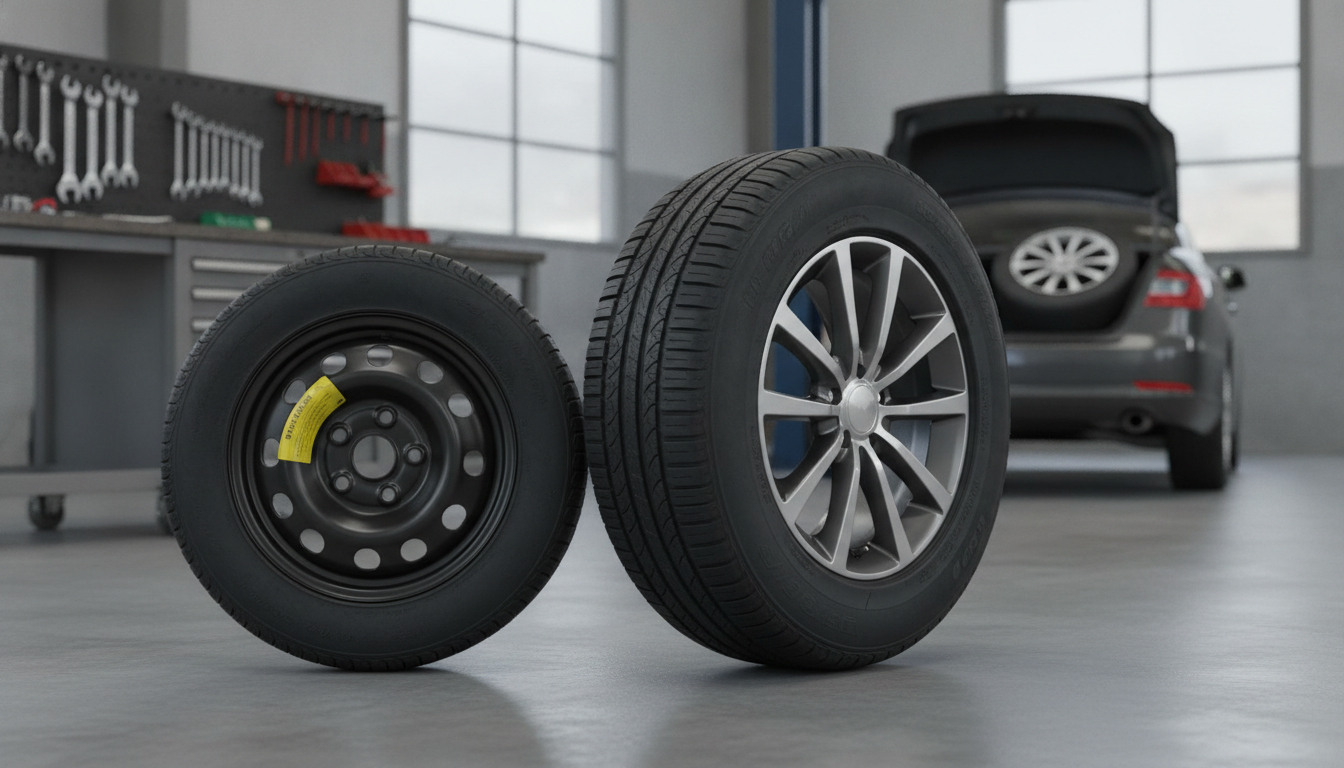
Why this matters for your
Getting a flat tire is never convenient, but knowing what kind of spare you have and its limitations can save you from a much bigger headache. Most modern cars come with a compact spare tire, often called a "donut spare." These aren't designed for long hauls or high speeds. They're meant to get you to the nearest tire shop, not across the state.
Understanding the difference between a donut and a full-size spare is crucial for your safety and to prevent further damage to your vehicle. The small size and different construction of a donut spare can affect your vehicle's handling, braking, and even the lifespan of other components if used improperly. It's not just about getting back on the road; it's about getting back on safely and without creating new problems.
Before you start: when NOT to DIY
While swapping a flat for a spare is usually a simple task, there are situations where you should absolutely call for roadside assistance instead of attempting it yourself. If you're on a busy highway shoulder with no safe clearance from traffic, or if the vehicle is on an uneven surface where a jack could slip, it's too risky. Also, if the tire damage is catastrophic and the wheel itself is bent or broken, you'll need professional help. Never try to change a tire if:
- You're on an unlevel or soft surface.
- You don't have proper safety equipment (reflective triangles, safety vest).
- The lug nuts are seized and won't budge.
- The vehicle is unstable on the jack.
- You're not physically able to safely lift the wheel and tire.
Step-by-step procedure
Step 1 — Locate your spare and tools First things first, find your spare tire. Most vehicles store the donut spare under the cargo floor in the trunk, or sometimes underneath the vehicle itself. You'll also need the jack, lug wrench, and any other specific tools like a wheel lock key. Make sure you know how to access all of these before you ever need them in an emergency.
Step 2 — Park safely and engage parking brake Pull over to a safe, level spot away from traffic. Turn on your hazard lights. Put the vehicle in park and firmly engage the parking brake. If you have wheel chocks, place them behind the wheel diagonally opposite the flat tire to prevent any movement.
Step 3 — Loosen lug nuts Before lifting the vehicle, use the lug wrench to slightly loosen the lug nuts on the flat tire. Turn the wrench counter-clockwise. You might need to put some body weight into it. Just break them loose a quarter turn or so; don't remove them yet.
Step 4 — Jack up the vehicle Consult your owner's manual for the correct jack points. Improper jacking can damage your vehicle's frame or suspension. Slowly raise the vehicle until the flat tire is completely off the ground. I always tell people to raise it just a little bit more than you think you need, because the spare might be a different size and you want enough clearance to get it on.
Step 5 — Remove lug nuts and flat tire Finish unscrewing the lug nuts and carefully remove the flat tire. Set it aside where it won't roll away or get in the way. Be mindful of the weight; tires can be heavy.
Step 6 — Mount the spare tire Lift the spare tire onto the wheel studs. Line up the holes in the wheel with the studs. It can be a bit awkward, so take your time. Once it's on, hand-tighten the lug nuts as much as you can. Make sure the cone-shaped side of the lug nuts faces the wheel.
Step 7 — Lower the vehicle and tighten lug nuts Lower the vehicle until the spare tire just touches the ground, but the full weight isn't on it yet. Now, use the lug wrench to tighten the lug nuts in a star or crisscross pattern. This ensures even pressure. Lower the vehicle completely and remove the jack. Give the lug nuts one final tighten with the wrench. Don't overtighten, but make sure they're snug. Consult your service manual for the proper torque specification for your lug nuts.
Step 8 — Store flat tire and tools Stow your flat tire in the spare tire well (if it fits) or in the trunk. Secure it so it doesn't move around. Put all your tools back in their designated spots. You don't want them rattling around or getting lost.
Step 9 — Check tire pressure and drive to a shop Check the pressure in your newly mounted spare. Donut spares often need a higher pressure than your regular tires, sometimes 60 psi. Drive immediately to a tire shop to get your original tire repaired or replaced. Remember the limitations of a donut spare: typically 50 miles at a maximum speed of 50 mph. Exceeding these limits can lead to tire failure, damage to your vehicle's differential, or even a dangerous blowout.
Common mistakes
One common mistake is forgetting to check the spare tire's pressure before hitting the road. Donut spares often require a higher pressure than standard tires, and if it's low, you could be in for trouble. Another mistake is driving too fast or too far on a donut spare. This can lead to significant vehicle damage and safety hazards. Always keep an eye on your speed and distance when using a donut spare.
Bedding-in the new pads
This section is not applicable to changing a spare tire. There is no
Top picks
Frequently asked questions
How far can I drive on a donut spare?
Most donut spares are designed for very limited use, typically around 50 miles. Always check your vehicle's owner's manual for the exact distance and speed limitations, as exceeding these can be dangerous and cause vehicle damage.
What is the maximum speed for a donut spare?
The general rule of thumb for donut spares is a maximum speed of 50 mph. Driving faster than this can lead to overheating, tire failure, and can negatively impact your vehicle's handling and braking performance.
Can I replace my donut spare with a full-size spare?
Yes, you can often replace a donut spare with a full-size spare, provided there is adequate space in your vehicle's spare tire well. A full-size spare offers better peace of mind and performance similar to your regular tires.
What are the risks of driving too long on a donut spare?
Driving too long on a donut spare can cause uneven wear on your other tires, stress your vehicle's differential (especially on AWD/4WD vehicles), and compromise braking and handling due to the difference in tire size and construction.