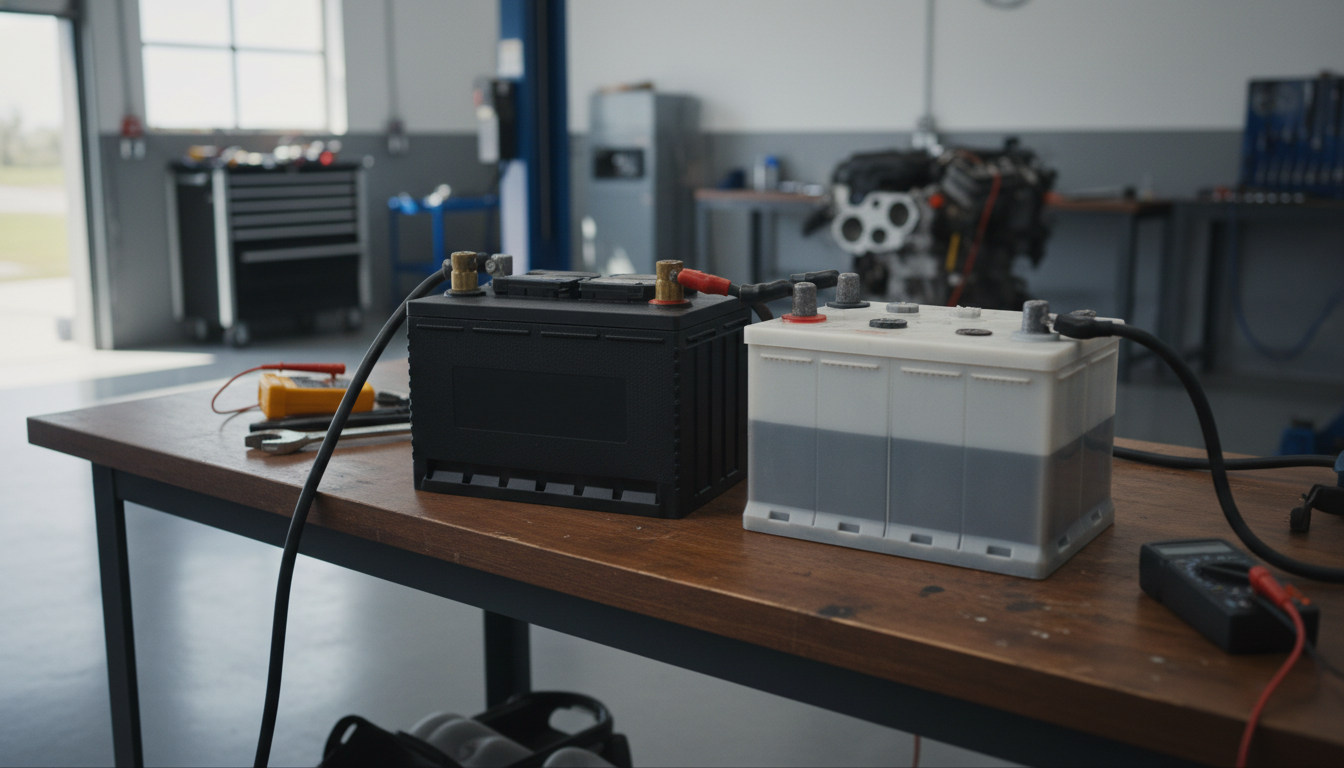
Why this matters for your
Choosing the right battery is more than just grabbing the cheapest one off the shelf. Your car's electrical system, especially in newer vehicles, relies on a specific type of battery to function correctly. The wrong battery can lead to issues with charging, accessory performance, and even the lifespan of other electrical components. Modern vehicles with start-stop technology or extensive electronics demand more from their power source than older, simpler setups.
Understanding the differences between flooded, AGM, and lithium batteries helps you make an informed decision. Each type has its own strengths and weaknesses, impacting everything from cold-cranking amps to overall longevity and how well it handles deep discharges. Get it right, and your vehicle starts reliably every time; get it wrong, and you'll be troubleshooting electrical gremlins or replacing a dead battery sooner than you expect.
Before you start: when NOT to DIY
While choosing a battery type is a research task, replacing it yourself is usually straightforward. However, there are a few situations where you should probably let a professional handle it.
- Your vehicle's battery is located in a hard-to-reach spot, like under the back seat or in the trunk, and requires special tools or panel removal.
- The battery terminals are severely corroded or damaged, making removal risky.
- You suspect other electrical issues are draining your current battery, not just age.
- Your vehicle has complex electronics that require a battery management system (BMS) reset after replacement, which often needs specialized diagnostic tools.
- You're uncomfortable working with high-current electrical components, even with safety precautions.
Step-by-step procedure
Step 1 — Understand flooded lead-acid batteries These are your traditional car batteries. They use a liquid electrolyte (sulfuric acid and water) that covers lead plates. When you hear "car battery," this is usually what people picture. They're reliable, relatively inexpensive, and have been powering vehicles for decades. They do require some maintenance, like checking electrolyte levels and topping off with distilled water, though many modern versions are "maintenance-free" with sealed caps. They're good for older cars or basic daily drivers without a lot of extra electronics.
Step 2 — Explore absorbed glass mat (AGM) batteries AGM batteries are a step up from flooded. The electrolyte is absorbed into fiberglass mats between the lead plates, rather than being free-flowing. This makes them spill-proof, vibration-resistant, and allows them to be mounted in various positions. They deliver higher cold-cranking amps (CCA), recharge faster, and handle deep discharges better than flooded batteries. This makes them ideal for vehicles with start-stop systems, lots of accessories, or aftermarket audio systems. I've seen AGM batteries last significantly longer in demanding applications compared to their flooded counterparts, especially in trucks with winches or auxiliary lighting.
Step 3 — Consider lithium-ion (LiFePO4) batteries Lithium-ion batteries, specifically Lithium Iron Phosphate (LiFePO4), are the newest players in the automotive starting battery game. They are significantly lighter than lead-acid or AGM batteries, offer a much longer cycle life, and can deliver consistent power even when deeply discharged. Their self-discharge rate is very low, meaning they hold a charge longer when not in use. The biggest downside is the cost – they are considerably more expensive upfront. However, if you're looking for maximum performance, weight savings, or a battery that can withstand extreme conditions, lithium is worth considering.
Step 4 — Match the battery to your vehicle's needs Don't just buy the most expensive battery you can afford. If you have an older car with minimal electronics, a good quality flooded battery will likely serve you well. For modern vehicles with start-stop technology, a lot of onboard computers, or frequent short trips, an AGM battery is almost always the right choice. Many newer vehicles are designed specifically for AGM, and putting a flooded battery in can shorten its life and cause electrical issues. Lithium is generally for high-performance applications, custom builds, or situations where weight is a critical factor.
Step 5 — Check battery specifications Look at the CCA (cold-cranking amps) and reserve capacity (RC) ratings. CCA indicates how much power the battery can deliver to start the engine in cold weather. RC measures how long the battery can power essential accessories if the alternator fails. Always match or exceed the vehicle manufacturer's recommended CCA and RC. Physical size and terminal placement also matter – make sure the battery fits in the tray and the terminals align correctly with your cables.
Step 6 — Consider your driving habits If you do a lot of short trips, your alternator might not have enough time to fully recharge a traditional flooded battery, especially in winter. AGM batteries handle this better due to their faster recharge rate. If your vehicle sits for extended periods, a lithium battery's low self-discharge rate is a huge advantage, or you'll need a trickle charger for lead-acid and AGM types.
Step 7 — Factor in cost and warranty Flooded batteries are the cheapest, ranging from around $100-$200. AGMs are typically $200-$350. Lithium batteries are the priciest, often starting at $800 and going up from there. While the upfront cost of AGM and lithium is higher, their longer lifespan and better performance can make them more cost-effective over time. Check the warranty – a longer warranty usually indicates a manufacturer's confidence in their product's durability.
Step 8 — Proper disposal No matter which battery you choose, when it's time to replace it, make sure to dispose of the old one properly. Car batteries contain lead and sulfuric acid, which are hazardous materials. Most auto parts stores will take your old battery for recycling, often giving you a core charge refund if you paid one. Never just throw an old battery in the trash.
Common mistakes when choosing a battery
One common mistake is assuming all batteries are interchangeable. Each type has specific requirements based on your vehicle's design and electrical needs. Another mistake is not considering the climate. Cold weather can significantly affect battery performance, especially for flooded batteries. Lastly, many people overlook the importance of matching the CCA and RC ratings to their vehicle's specifications, which can lead to starting issues.
Bedding-in the new pads
This section is not applicable to battery replacement. Batteries do not require a bedding-in process like brake pads do. Instead, focus on ensuring proper installation and connection to avoid any electrical issues.
FAQs
What is the main difference between AGM and flooded batteries? AGM batteries use fiberglass mats to absorb the electrolyte, making them spill-proof and more resistant to vibration. Flooded batteries have a liquid electrolyte. AGM batteries also offer better deep-cycle performance and a longer lifespan, especially in modern vehicles with high electrical demands.
Are lithium car batteries worth the extra cost? For most standard vehicles, the high cost of lithium batteries isn't justified. However, for performance vehicles, custom builds, or situations where weight savings and extreme longevity are paramount, lithium batteries offer significant advantages that can make them a worthwhile investment.
Can I replace a flooded battery with an AGM battery? In many cases, yes, you can upgrade a flooded battery to an AGM. However, it's crucial to ensure your vehicle's charging system is compatible. Some older vehicles might not fully benefit, and newer vehicles designed for AGM might require a specific AGM replacement for optimal performance.
How do I know which battery type my car needs? Consult your vehicle's owner's manual or the battery label on your existing battery. Newer vehicles, especially those with start-stop technology, often specifically require AGM batteries. If unsure, a local auto parts store can look up the correct battery type for your make and model.
Top picks
Frequently asked questions
What is the main difference between AGM and flooded batteries?
AGM batteries use fiberglass mats to absorb the electrolyte, making them spill-proof and more resistant to vibration. Flooded batteries have a liquid electrolyte. AGM batteries also offer better deep-cycle performance and a longer lifespan, especially in modern vehicles with high electrical demands.
Are lithium car batteries worth the extra cost?
For most standard vehicles, the high cost of lithium batteries isn't justified. However, for performance vehicles, custom builds, or situations where weight savings and extreme longevity are paramount, lithium batteries offer significant advantages that can make them a worthwhile investment.
Can I replace a flooded battery with an AGM battery?
In many cases, yes, you can upgrade a flooded battery to an AGM. However, it's crucial to ensure your vehicle's charging system is compatible. Some older vehicles might not fully benefit, and newer vehicles designed for AGM might require a specific AGM replacement for optimal performance.
How do I know which battery type my car needs?
Consult your vehicle's owner's manual or the battery label on your existing battery. Newer vehicles, especially those with start-stop technology, often specifically require AGM batteries. If unsure, a local auto parts store can look up the correct battery type for your make and model.