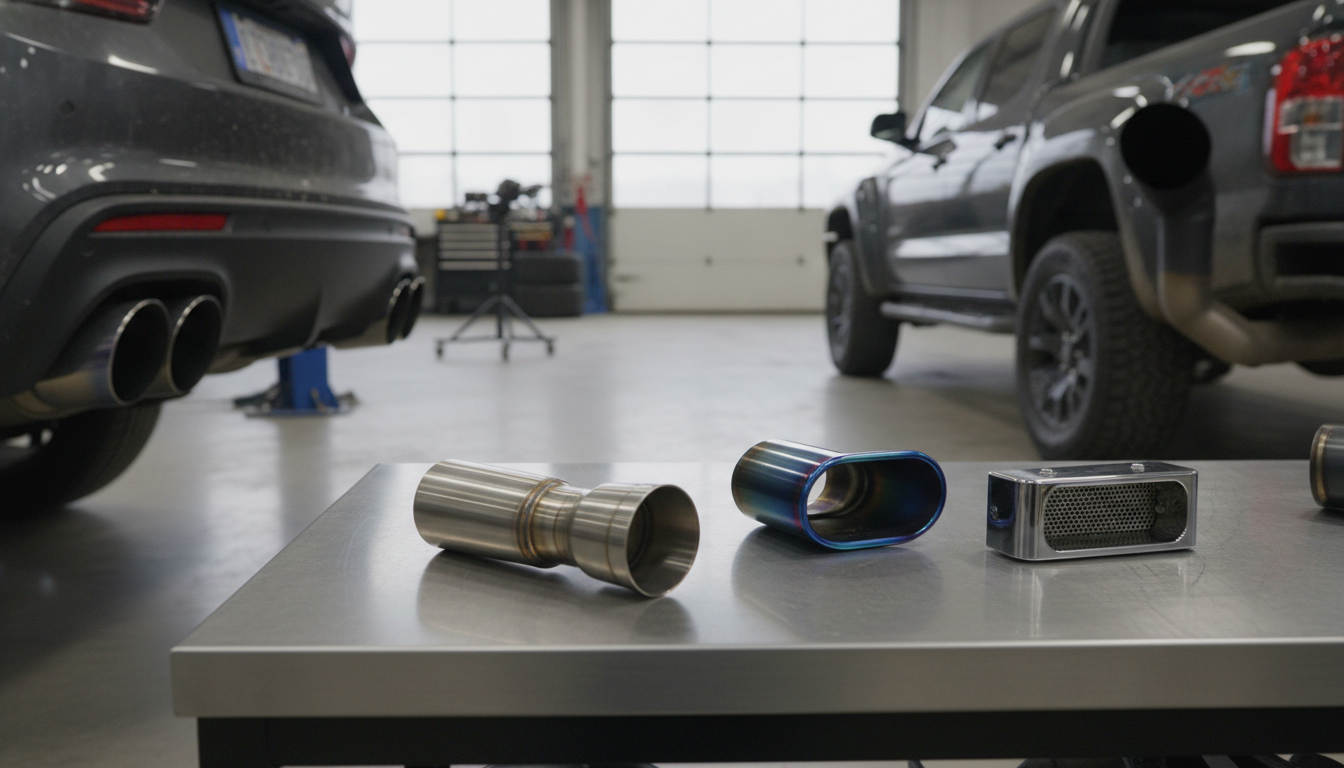
Thinking about upgrading your exhaust tips? It's a common question I get in the shop: "Will a bigger tip make my truck sound meaner?" The short answer is, not really. Exhaust tips are mostly for looks. They're the last piece of the exhaust system you see, and they finish off the look of your vehicle's rear end. While they can have a very minor influence on the exhaust note, the real sound comes from everything upstream – the muffler, resonator, and catalytic converter.
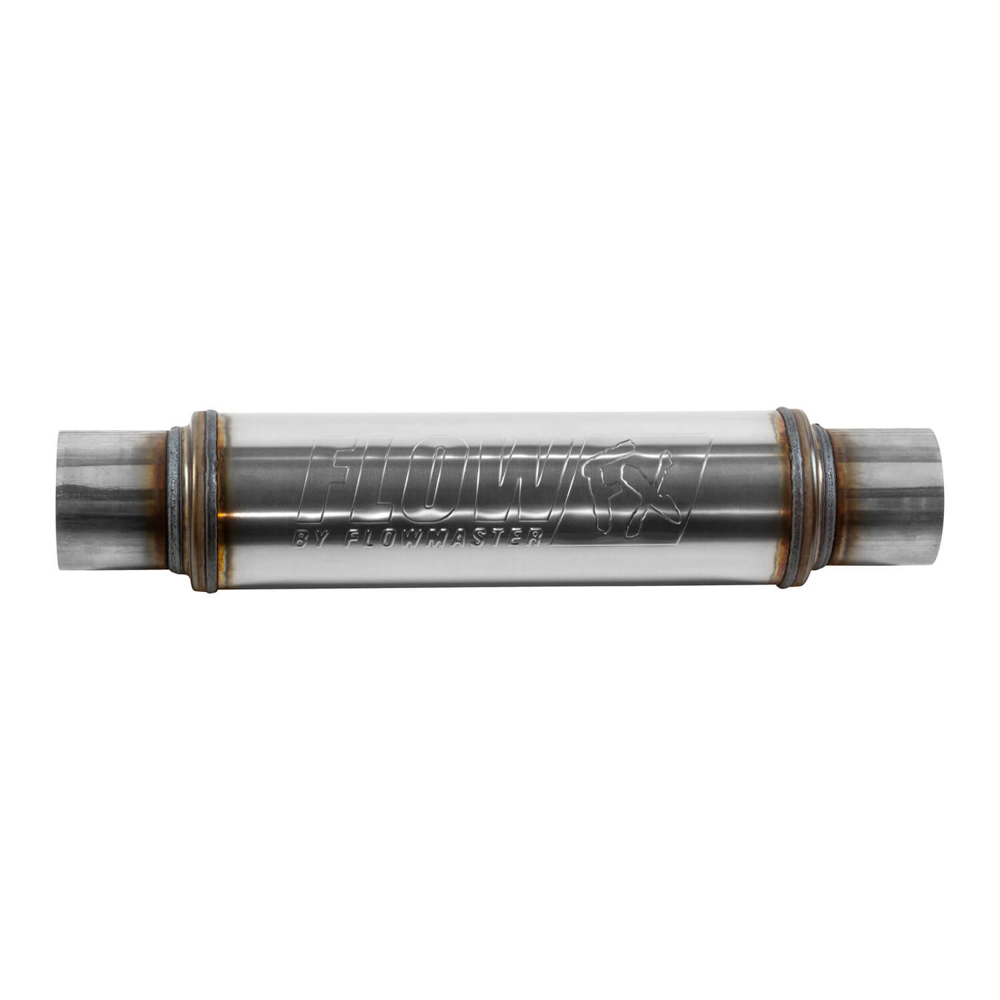
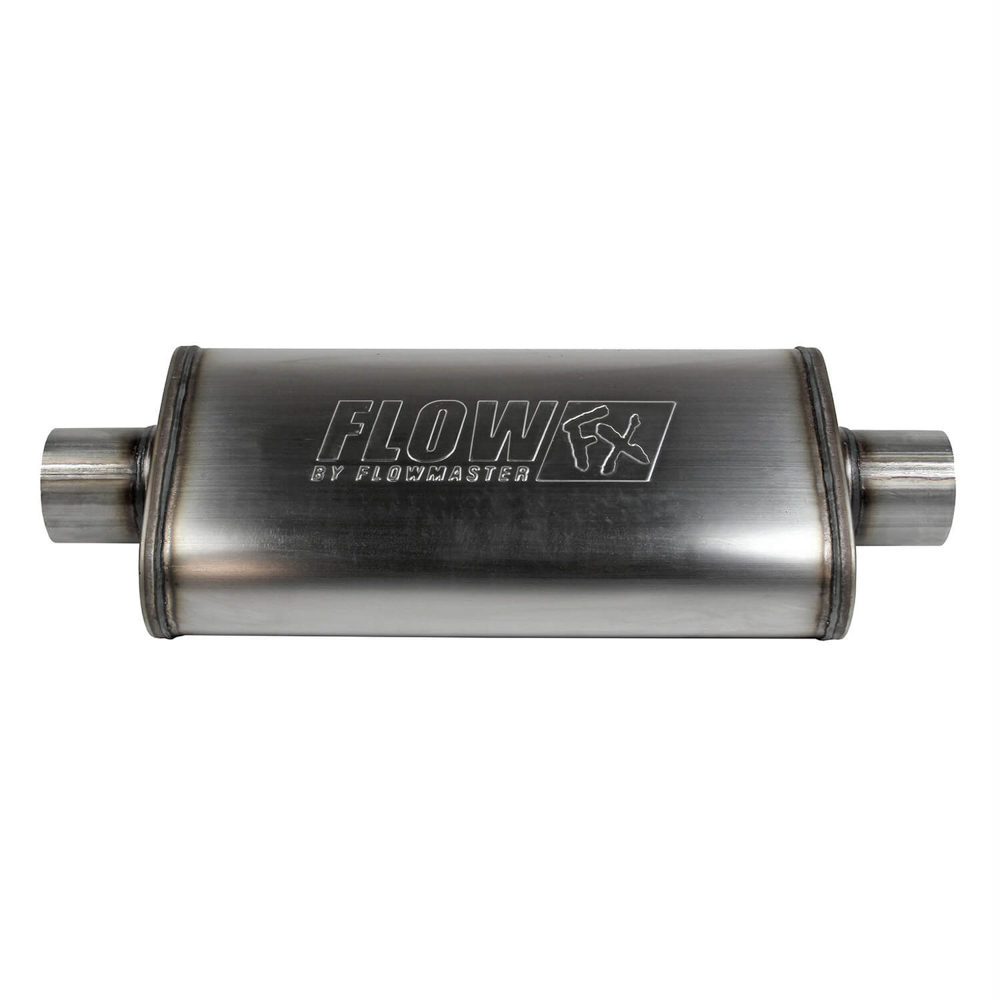
Most of the time, when someone wants to change their exhaust sound, they're looking at a new muffler, like a Flowmaster FlowFX. We've got the 3.00 inch center inlet/center outlet FlowFX muffler (MPN 71419) in stock for $92.31, or the larger case version (MPN 71249) for $110.78. Those are the components that actually tune the sound. Tips are more about aesthetics, like picking out new wheels or a custom grille. You're trying to achieve a certain look, whether it's aggressive, subtle, or something in between.
What to look for — exhaust tip styles and sizes
When you're picking out exhaust tips, you'll find a ton of options. It's not just about the size, though that's a big part of the visual. You've got different shapes, materials, and finishes. Think about what kind of statement you want your vehicle to make. Are you going for a clean, factory-plus look, or something that screams performance?
Tip diameter and length
The diameter of the exhaust tip is probably the first thing most people notice. A larger diameter tip, say a 4-inch or 5-inch, will fill out the bumper cutout better on many trucks and performance cars. A smaller diameter might look lost. Length matters too. Too short, and it looks unfinished. Too long, and it can stick out past the bumper, which can look awkward and even be a hazard. The general rule is to have the tip extend just past the bumper, or be flush with it, depending on the vehicle's design and your personal preference. A wider tip might give a very slight deeper resonance due to the larger exit area, but it's not going to turn a quiet car into a roaring beast. It's more of an acoustic nuance than a dramatic change.
Material and finish
Most aftermarket exhaust tips are made from stainless steel. This is good because it resists corrosion, which is a big deal since they're constantly exposed to road grime, salt, and exhaust gases. You'll see different finishes: polished, brushed, black chrome, or even powder-coated black. Polished stainless is classic and shiny. Black tips are popular on trucks and darker-colored vehicles for a more aggressive or stealthy look. The material itself, whether it's T-304 or T-409 stainless, doesn't change the sound. It's purely for durability and appearance.
Shape and cut
Exhaust tips come in various shapes. Round is the most common, but you'll also see oval, square, and even rectangular tips. The cut of the tip matters too. You can have a straight cut, an angle cut, or a rolled edge. A rolled edge tip usually looks a bit more premium and finished. Double-wall tips are also common, where there's an inner and outer layer. This can help with heat dissipation, keep the outer tip looking cleaner, and provide a more substantial appearance. These design elements are all about visual appeal, not about modifying the sound waves coming out of your exhaust.
Single vs. dual tips
Some vehicles come with single exhaust outlets, while others have dual. You can often convert a single exit to a dual tip setup, or even a quad tip setup, with the right exhaust work. This is a significant aesthetic change. It can make a car look much sportier or more powerful. Again, the number of tips doesn't inherently change the exhaust sound, but it's a major visual upgrade. If you're running a true dual exhaust system, then each tip is an exit point for a separate bank of cylinders, which contributes to the overall sound characteristic of that specific exhaust system.
Quick comparison — exhaust components
Here's a look at some exhaust components we carry that do affect sound, or are crucial for a complete exhaust system.
| Product Name | Brand | Retail Price | Stock |
|---|---|---|---|
| Flowmaster FlowFX Muffler 3.00 Inch Center Inlet Center Outlet | Flowmaster | $92.31 | 376 |
| Flowmaster FlowFX Muffler 3.00 Inch Center Inlet Center Outlet 4x9x18 Inch Case | Flowmaster | $110.78 | 298 |
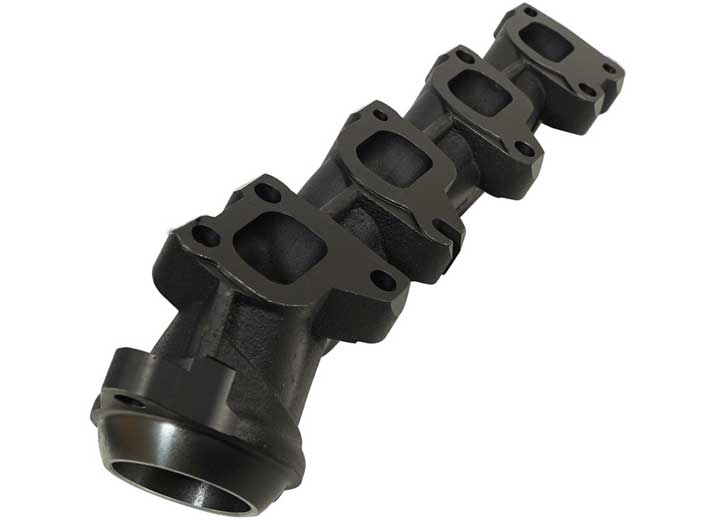
| BD Diesel Exhaust Manifold Kit for Dodge Ram 6.7L Cummins 2007.5-2018 | Bd Diesel | $530.99 | 355 |
| Walker Exhaust Gasket 31645 | Walker Exhst | $5.04 | 2 |
| Dorman Exhaust Flange Spring Universal | Dorman | $5.08 | 1 |
Top picks — for exhaust system components
If you're serious about changing your exhaust sound, you need to look beyond just the tips. These components are where the real work happens:
- Flowmaster FlowFX Muffler 3.00 Inch Center Inlet Center Outlet: This is a solid choice if you want to dial in a more aggressive exhaust note. It's a direct replacement for many factory mufflers and gives a noticeable improvement in sound. We've got 376 of these in stock for $92.31.
- Flowmaster FlowFX Muffler 3.00 Inch Center Inlet Center Outlet 4x9x18 Inch Case: For a slightly different sound profile or if you need a larger case muffler for your application, this FlowFX option is also excellent. It's priced at $110.78 and we have 298 units available.
- BD Diesel Exhaust Manifold Kit for Dodge Ram 6.7L Cummins 2007.5-2018: While this is a specific part for Cummins engines, it highlights how upstream components like exhaust manifolds can impact overall exhaust flow and sound. A better flowing manifold can change the character of the exhaust note, even before it hits the muffler. This kit is available for $530.99.
How to verify fitment before buying
Verifying fitment for exhaust tips is crucial. You don't want to end up with a tip that's too small for your existing exhaust pipe or too large for your bumper cutout. Here's what you need to measure:
- Inlet diameter: This is the internal diameter of the exhaust tip, which needs to match the outer diameter of your existing exhaust pipe. If your pipe is 2.5 inches, you need a tip with a 2.5-inch inlet. Some tips use a clamp-on design, others are weld-on. If it's clamp-on, ensure the clamp range matches your pipe size. If it's weld-on, a good exhaust shop can make it fit even if there's a slight difference, but a direct match is always best.
- Outlet diameter: This is the external diameter of the tip, the part you see. Measure the space available in your bumper cutout or around your existing exhaust pipe to make sure the new tip won't rub or look disproportionate. Don't forget to account for the overall width if you're looking at oval or rectangular tips.
- Overall length: Measure from where the tip will attach to the exhaust pipe to its end. Compare this to the length of your current tip or the desired protrusion past your bumper. You want it to look intentional, not like an afterthought. I've seen plenty of tips that are either too short and recessed, or stick out way too far. Getting this right makes a huge difference in the final appearance.
- Angle and bend: If your exhaust pipe has a specific angle or bend before the tip, make sure the new tip's design accommodates that. Many tips are straight, but some are angled or curved to follow the lines of the vehicle. This is especially true for custom setups or vehicles with unique exhaust routing.
Always double-check these measurements against the product specifications before you buy. It saves a lot of hassle and ensures you get the look you're going for without any surprises. If you're unsure, a quick trip to an exhaust shop can get you the exact measurements you need and advice on installation.
Top picks
Frequently asked questions
Do bigger exhaust tips make your car louder?
Generally, no. Exhaust tips are primarily cosmetic. While a larger diameter tip might slightly deepen the tone due to a larger exit area, it won't significantly increase volume or change the overall exhaust note. The sound is mostly determined by the muffler, resonator, and catalytic converter.
What's the difference between a single-wall and double-wall exhaust tip?
A single-wall tip is just one layer of metal. A double-wall tip has an inner and outer layer. Double-wall tips often look more premium, can dissipate heat better, and tend to keep the outer surface cleaner by insulating it from hot exhaust gases. This is purely an aesthetic and durability difference.
Can I install an exhaust tip myself?
Many clamp-on exhaust tips are simple to install with basic hand tools. You just slide it over your existing pipe and tighten the clamp. Weld-on tips require welding equipment and expertise. Always ensure the tip's inlet diameter matches your exhaust pipe's outer diameter for proper fitment, whether clamping or welding.