The short answer
You should change your brake fluid every two to three years, or every 30,000 to 45,000 miles, whichever comes first. This isn't a hard and fast rule for every single vehicle, but it's a solid guideline that will keep your brake system healthy. Your owner's manual will have the exact interval for your specific car, and it's always a good idea to check that first.
The longer answer
Brake fluid is hygroscopic. That's a fancy word for "it loves to absorb water." Even in a sealed system, moisture finds its way in over time through microscopic pores in rubber hoses and seals. This isn't just a minor inconvenience; it's a big deal for your brakes. Water in the brake fluid lowers its boiling point. When you use your brakes hard, like going down a long hill or in heavy traffic, the brake calipers get hot. That heat transfers to the brake fluid. If there's enough water in the fluid, it can boil, creating vapor bubbles.
Vapor is compressible, unlike fluid. So, when you push the brake pedal, instead of pushing fluid to activate the calipers, you're just compressing those vapor bubbles. The result? A soft, spongy pedal that goes almost to the floor, and your car doesn't stop like it should. This is called brake fade, and it's dangerous. Beyond the safety aspect, water in the brake fluid also causes corrosion inside the brake lines, calipers, and the master cylinder. These components are expensive to replace, and a regular fluid flush is cheap insurance against premature failure.
Most drivers skip this service because it's not as obvious as an oil change or tire rotation. You don't see the fluid getting dirty in the same way engine oil does, and the brakes still seem to work. But underneath, that fluid is slowly degrading, and the system is silently corroding. Flushing the brake fluid removes this old, contaminated fluid and replaces it with fresh, high-performance fluid, restoring your braking system's integrity and responsiveness. It's a critical part of maintaining your vehicle's safety system.
What changes the answer
- Driving style: If you're hard on your brakes, frequently drive in stop-and-go traffic, or tow heavy loads, your brake fluid will heat up more often. This accelerates moisture absorption and degradation. You might need to change it closer to the 2-year mark.
- Climate: Living in a humid environment means more moisture in the air, which can lead to faster water absorption into your brake fluid. Dry climates are a bit easier on brake fluid.
- Vehicle age: Older vehicles, especially those with original rubber brake hoses, might be more susceptible to moisture ingress than newer cars with more advanced materials.
- Brake fluid type: Different DOT ratings (DOT 3, DOT 4, DOT 5.1) have different boiling points and hygroscopic properties. DOT 3 and DOT 4 are the most common and are both glycol-based, meaning they absorb water. DOT 5 is silicone-based and doesn't absorb water, but it's not compatible with systems designed for DOT 3 or 4 and is rare in passenger cars.
- Manufacturer recommendations: Always check your owner's manual. Some high-performance vehicles or those with specific braking systems might have different service intervals.
How to know when it applies to you
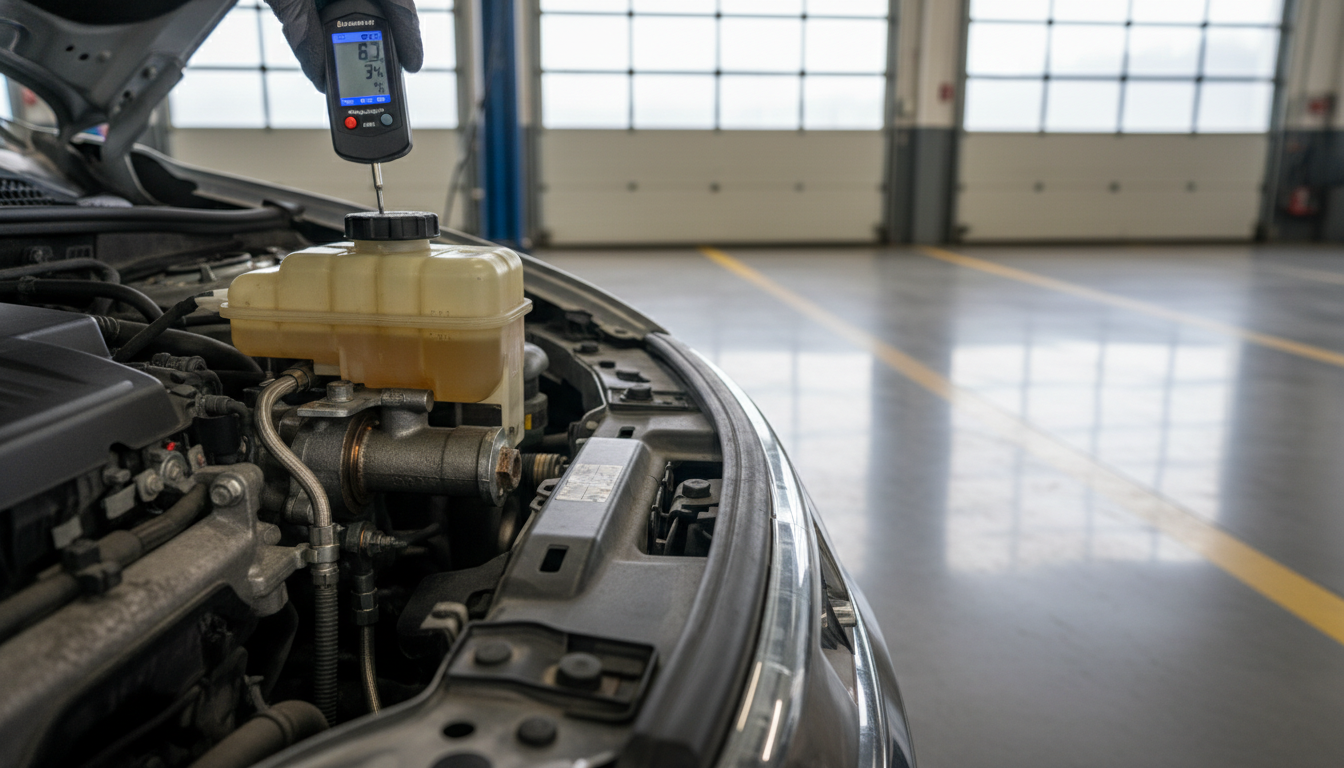
The easiest way to get an idea of your brake fluid's condition is to check the fluid in the master cylinder reservoir. Pop your hood and find the small plastic reservoir on the driver's side, usually near the firewall. It'll have a cap that says "Brake Fluid." The fluid should be a clear, light amber color, similar to fresh cooking oil. If it looks dark brown or black, it's definitely time for a flush. If it's murky or cloudy, that's also a bad sign. However, a visual check isn't foolproof. Even clear fluid can have a high water content. The best way to know for sure is to have a mechanic test it with a brake fluid test strip or a specialized electronic tester. These tools measure the copper content or boiling point, giving a much more accurate picture of the fluid's health.
Another sign that you might be overdue is a spongy brake pedal. If your pedal feels soft, or you have to push it further than usual to get the car to stop, that could indicate boiling fluid or excessive moisture. Don't wait until you feel these symptoms; by then, your braking performance is already compromised. Regular maintenance prevents these issues.
What to do when you need a brake fluid flush
If your brake fluid is old, contaminated, or you're simply at the recommended service interval, it's time for a flush. You have a couple of options:
DIY Brake Fluid Flush:
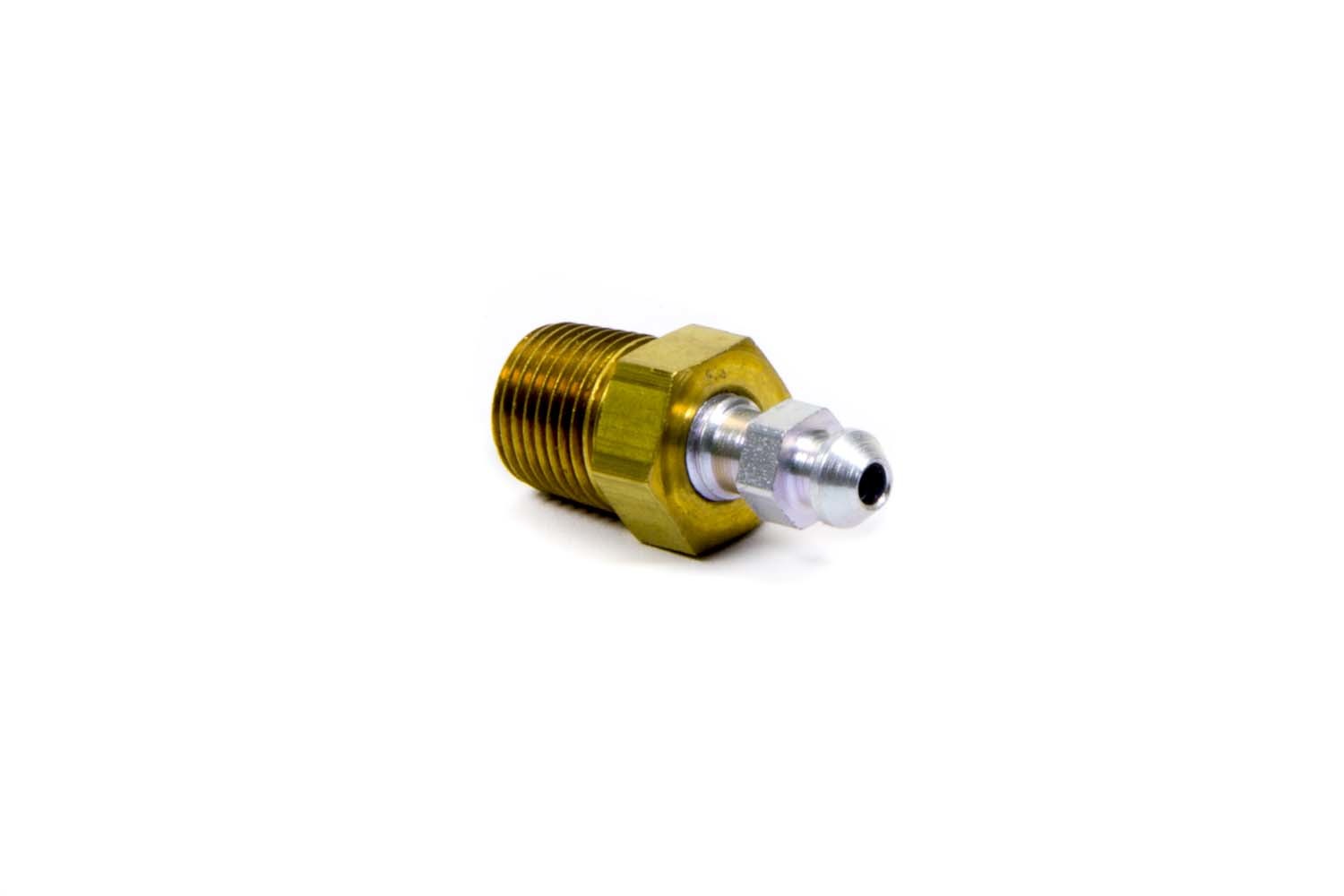
If you're comfortable working on your car, a brake fluid flush is a doable job. You'll need some basic tools, new brake fluid (make sure it's the correct DOT rating for your vehicle), and a friend to help pump the brakes. You'll bleed each wheel in a specific order, usually starting with the wheel furthest from the master cylinder. I've done hundreds of these, and the trick is to keep the master cylinder reservoir topped off so you don't introduce air into the system. Bleeder screws, like the Howe Brass Bleeder Screws 1/8 Inch NPT (MPN: 3374) available for $5.02, can sometimes seize, so have some penetrating oil handy. You'll open the bleeder screw, have your friend press the pedal, close the screw, and then release the pedal. Repeat until clean fluid comes out. This process ensures all the old fluid is pushed out and replaced with fresh fluid. Just be careful not to get brake fluid on your paint, as it's corrosive.
Take it to a Shop:
If you're not comfortable with DIY, or you don't have the time, a professional shop can perform a brake fluid flush quickly and efficiently. They often use specialized pressure bleeding equipment that makes the job faster and ensures all air is removed from the system. This is a common service, and most reputable shops can get it done in about an hour. It's a small investment for peace of mind and optimal braking performance.
Regular brake fluid maintenance is one of those unsung heroes of vehicle safety. Don't let it become your car's most overlooked service.
Recommended parts
- Howe Brass Bleeder Screws 1/8 Inch NPT (MPN: 3374) - At $5.02, these are great to have on hand if your old bleeder screws are corroded. We have 9 in stock.
- Ags Poly-Armour Brake Line Adapter 1/4 Inch Tube to 7/16-24 Inverted Flare (MPN: PAA-B410) - Sometimes you need an adapter for custom brake line work. This one is $5.17 and we have 6 available.
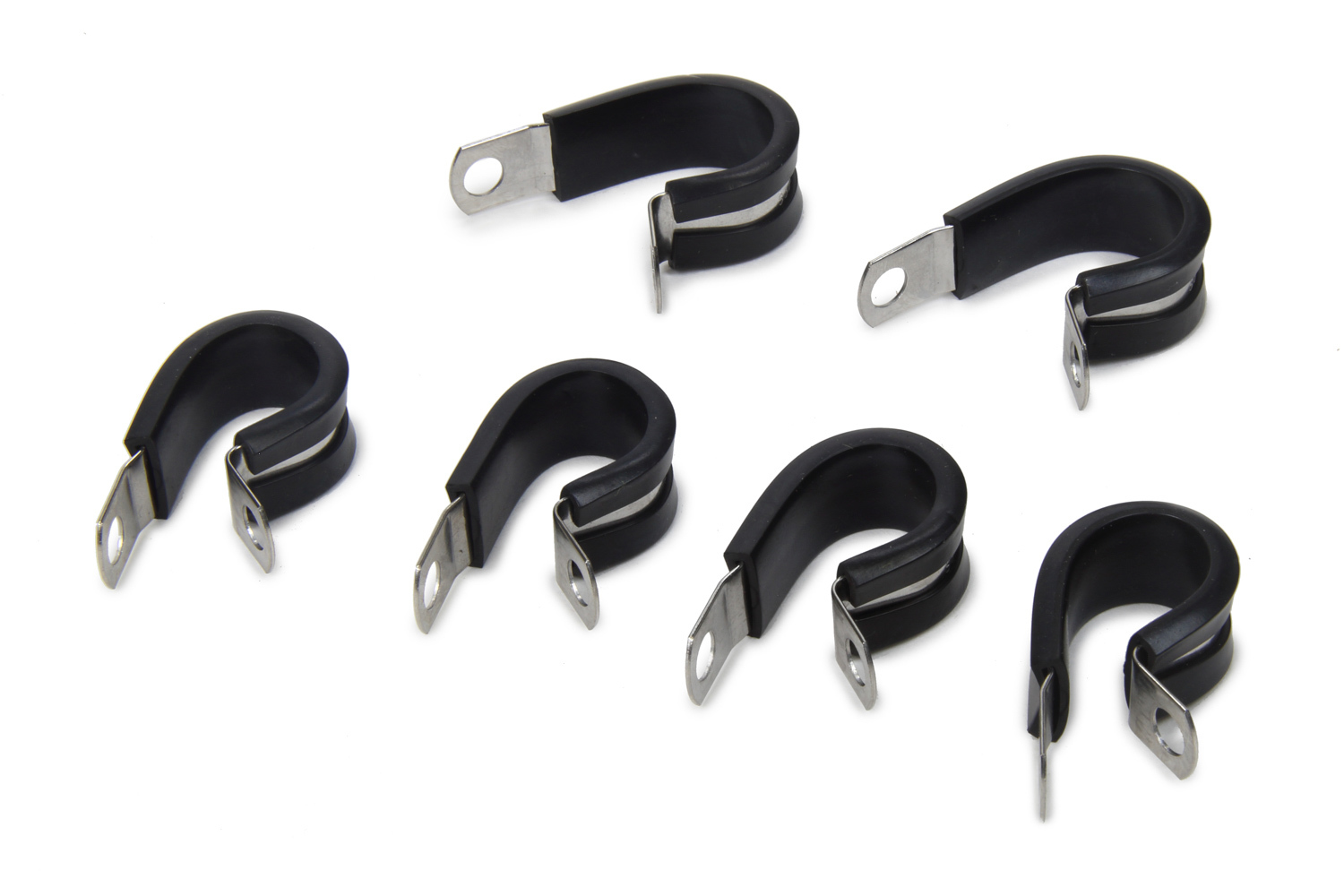
- Russell #10 Cushion Clamps 6 Pack (MPN: 651000) - Useful for securing brake lines, these clamps are $5.11 for a 6-pack. We have 4 in stock.
Top picks

Frequently asked questions
What happens if I don't change my brake fluid?
If you don't change your brake fluid, it will absorb moisture, lowering its boiling point. This can lead to brake fade, where your pedal feels spongy and your car doesn't stop effectively. Over time, water in the fluid also causes corrosion in your brake lines and components, leading to expensive repairs.
How often should brake fluid be flushed?
Most vehicle manufacturers recommend a brake fluid flush every two to three years or every 30,000 to 45,000 miles. However, this can vary based on your driving conditions and vehicle. Always check your car's owner's manual for the precise interval.
Can I check my brake fluid myself?
Yes, you can visually check your brake fluid in the master cylinder reservoir. It should be a clear, light amber color. If it looks dark brown, black, or cloudy, it's a strong indicator that it needs to be changed. For a more accurate assessment, a mechanic can test its boiling point or copper content.
Is changing brake fluid a DIY job?
A brake fluid flush can be a DIY job if you're comfortable with basic automotive maintenance. You'll need new fluid, a wrench for the bleeder screws, and a helper to pump the brakes. It's crucial to follow the correct bleeding sequence and keep the master cylinder topped off to avoid introducing air into the system.