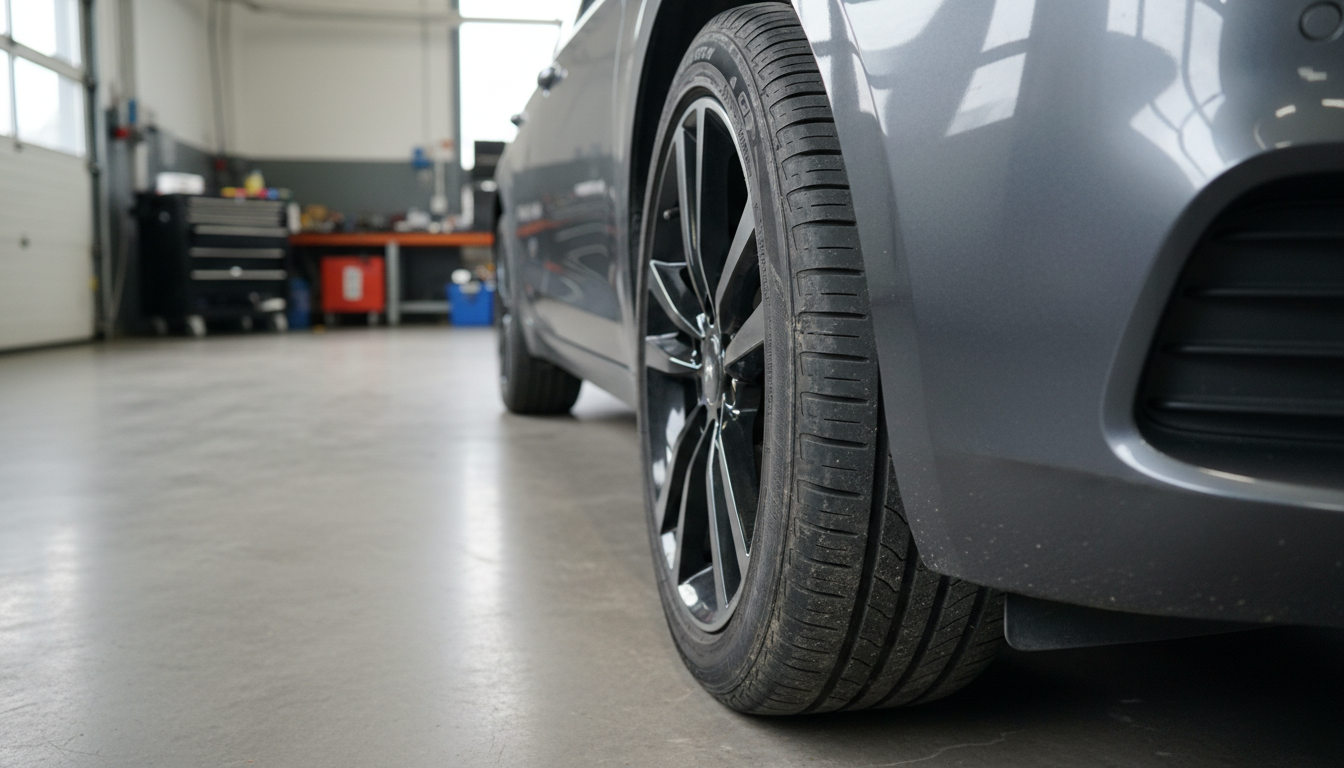
When you look at your tires, they should wear down pretty evenly across the tread. If you're seeing more wear on one edge, the center, or even in patches, your tires are wearing unevenly. This isn't just about needing new tires sooner; it's a red flag that something else is going on with your vehicle. Catching these patterns early can save you a lot of headache and money down the road, and more importantly, it can keep you safer on the road.
What's actually happening
Your tires are the only part of your vehicle that actually touches the road. How they contact that road surface, and the forces acting on them, dictate how they wear. When everything is working right, the tire presses evenly against the pavement, distributing the load and friction across the entire tread face. This leads to a nice, even wear pattern over the life of the tire. Think of it like walking: if you always drag one foot, that shoe wears out faster on one side.
Uneven tire wear means that for some reason, one part of the tire is experiencing more friction, more load, or a different contact angle with the road than it should. This could be due to the tire itself, or more commonly, due to issues with the suspension, steering, or even the braking system. The specific pattern of wear often tells a story about the underlying mechanical problem, acting like a diagnostic fingerprint for your vehicle's health.
The most common causes, ranked
| Cause | Likelihood | Easy to fix? |
|---|---|---|
| Incorrect tire pressure | Very High | Yes |
| Wheel alignment | High | No |
| Worn suspension components | Medium | No |
| Tire imbalance | Medium | Yes |
| Worn steering components | Medium | No |
| Braking issues | Low | No |
How to figure out which one is yours
Figuring out why your tires are wearing unevenly takes a bit of detective work. Here's a step-by-step approach to narrow down the culprits:
-
Check tire pressure: This is the easiest and most common cause. Grab a reliable tire pressure gauge and check the pressure in all four tires, including the spare if it's part of your rotation. Compare it to the recommended pressure found on the sticker inside your driver's side door jamb, not the maximum pressure listed on the tire itself. Incorrect pressure can cause wear on the center (overinflation) or edges (underinflation).
-
Visually inspect the wear pattern: Look closely at each tire. Is the wear on the inner edge, outer edge, or both? Is it cupping (scooped out patches)? Is it feathered (one side of the tread block higher than the other)? Different patterns point to different problems.
-
Feel for play in suspension and steering: With the vehicle safely supported on jack stands, grab each wheel at 12 and 6 o'clock, then 3 and 9 o'clock. Try to rock it. Any significant play could indicate worn ball joints, wheel bearings, or tie rod ends. This is where a second pair of eyes helps, watching the components as you rock the wheel.
-
Check for bent or damaged wheels: Sometimes a hard hit on a pothole or curb can bend a wheel, leading to vibrations and uneven wear. Spin the wheel slowly (again, safely on jack stands) and look for any wobbles or obvious damage.
-
Look for worn suspension components: Inspect your shocks or struts for leaks. Push down on each corner of the vehicle; if it bounces more than once or twice, your shocks might be shot. Also, check control arm bushings for cracks or excessive play. I clean the slide pins on every K2 brake job — they seize on about half the trucks I see, and the same principle applies here: regular checks can prevent bigger issues.
-
Consider a professional alignment: Even if you don't find obvious issues, if the wear is consistent across an axle (e.g., both front tires wearing on the inner edge), a wheel alignment is a strong possibility. This requires specialized equipment that most DIYers don't have.
When you can fix it yourself, when you can't
| You can fix it yourself | You need a shop for this |
|---|---|
| Adjusting tire pressure | Wheel alignment |
| Rotating tires | Replacing ball joints |
| Balancing tires (with proper tools) | Replacing control arm bushings |
| Replacing worn tires | Diagnosing complex suspension issues |
| Inspecting for obvious damage | Repairing bent wheels |
What it costs to fix
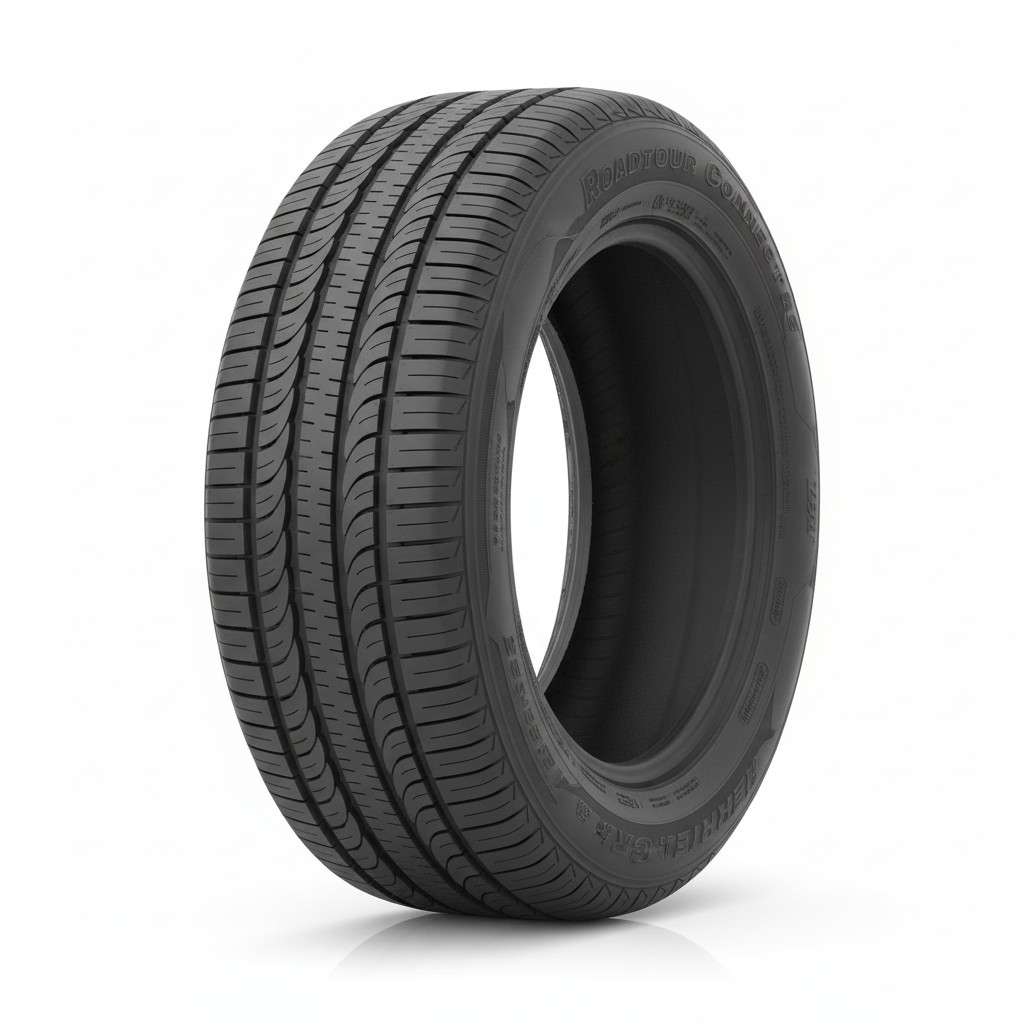
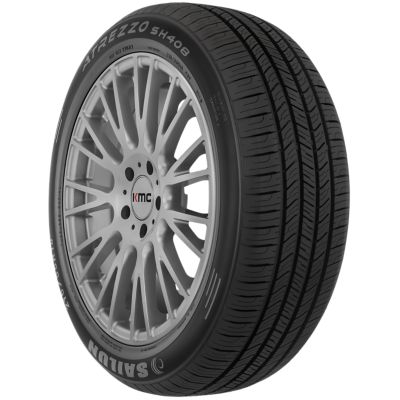
Fixing uneven tire wear can range from free to a few hundred dollars, depending on the cause. Simply adjusting your tire pressure costs nothing. A professional wheel alignment usually runs between $75 and $150. If you need new tires, a set of four like the Hercules Roadtour Connect AS All Season Tire 205/65R15 94H Blackwall can run you about $322.24 (4 x $80.56), not including mounting and balancing. Replacing worn suspension components like ball joints or tie rod ends can cost anywhere from $150 to $500 per axle, including parts and labor, depending on the vehicle and the specific components involved. If you tackle the suspension work yourself, you'll save on labor, but you'll still pay for the parts. For example, a Sailun Atrezzo SH408 225/60R17 99H tire costs $92.20, and there are over 11,000 in stock if you need a replacement.
Recommended parts
- Hercules Roadtour Connect AS All Season Tire 205/65R15 94H Blackwall (SKU: 474077): A solid all-season option with good durability, available for $80.56 each. We've got 250 in stock. Great for many compact cars and sedans.
- Sailun Atrezzo SH408 225/60R17 99H (SKU: 433084): This tire offers a good balance of value and quality for SUVs and crossovers, priced at $92.20. With over 11,000 in stock, you won't have trouble finding them.
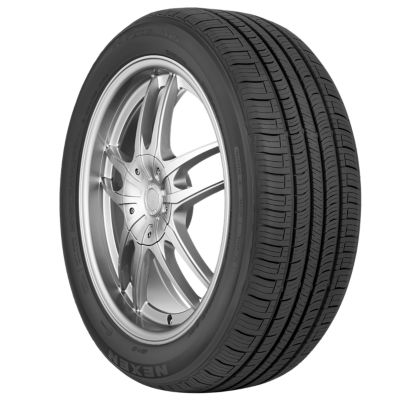
- Nexen N Priz AH5 225/65R17 102H (SKU: 436121): A dependable all-season tire from Nexen, offering good quality and durability at $129.16. We have over 5,500 of these ready to ship for your SUV or larger sedan.
Top picks
Frequently asked questions
What is the most common cause of uneven tire wear?
The most frequent cause is incorrect tire pressure. Over-inflated tires often wear in the center, while under-inflated tires wear on both edges. Always check your vehicle's recommended pressure, usually on a sticker in the driver's door jamb, and not the maximum pressure listed on the tire sidewall.
Can a bad alignment cause uneven tire wear?
Absolutely. A misaligned wheel can cause significant uneven wear, typically on one edge of the tire (inner or outer). This happens when the wheel isn't pointing perfectly straight or isn't at the correct angle relative to the road. An alignment is a professional job requiring special equipment.
How often should I check my tire pressure to prevent uneven wear?
You should check your tire pressure at least once a month, and always before a long trip. Temperature changes affect tire pressure, so it's a good habit to check them regularly. Proper inflation is key to maximizing tire life and ensuring safe handling.
Will rotating my tires fix uneven wear?
Tire rotation helps promote even wear across all four tires over their lifespan. However, it won't fix an underlying mechanical issue causing uneven wear, like a bad alignment or worn suspension parts. If you have significant uneven wear, address the root cause before rotating.
What are the signs of worn suspension components causing tire wear?
Worn suspension parts can cause various types of uneven wear, including cupping or feathering. You might also notice a bouncy ride, clunking noises over bumps, or poor handling. A thorough inspection for play in joints and leaks in shocks/struts is necessary to confirm.