Quick verdict
Alright, let's cut to the chase. Shocks and struts both do the same basic job: they control the bouncing and swaying of your vehicle's suspension. The big difference is how they're built and what other jobs they do. A strut is a whole assembly that's part of your vehicle's structure and carries the weight. A shock absorber is just the damper, and it works with a separate spring.
What actually matters when choosing
When you're talking about shocks versus struts, you're usually not choosing one over the other for your specific vehicle. Your vehicle came from the factory with one or the other, or a mix. The real choice comes down to understanding what you have and picking the right replacement parts.
Structural role
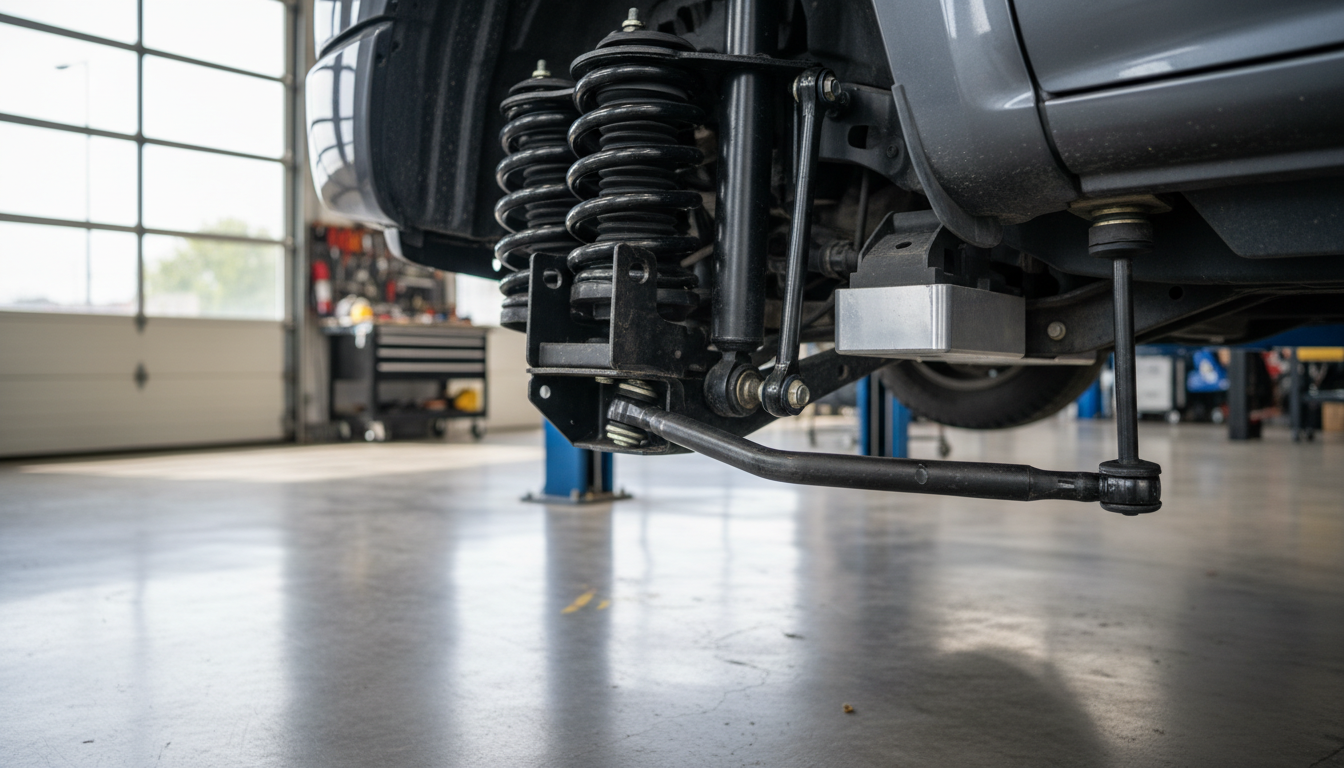
This is the biggest differentiator. A strut is a structural part of your vehicle's suspension. It's designed to handle side loads and support the weight of the vehicle. This means the strut assembly often includes the coil spring, a spring seat, and the strut itself, all as one unit. When you replace a strut, you're replacing a major load-bearing component. Shocks, on the other hand, are strictly for damping. They don't support the vehicle's weight; that's the job of a separate coil spring or leaf spring. They just control the movement of those springs.
Damping function
Both shocks and struts contain hydraulic fluid and valves that resist the movement of your suspension. This resistance, or damping, turns the kinetic energy of suspension movement into heat, which then dissipates. Without damping, your vehicle would bounce uncontrollably after hitting a bump. The internal workings of the damper are pretty similar whether it's a shock or a strut, but the overall package is what makes them different.
Ride quality and handling
The type of suspension (shocks or struts) can influence ride quality and handling characteristics. Vehicles with struts often have a more compact suspension design, which can be good for packaging and manufacturing costs. They can offer a firm, controlled ride. Vehicles with separate shocks and springs might allow for more suspension travel and a potentially softer, more compliant ride, especially in off-road applications. However, modern engineering means both setups can be tuned for a wide range of performance.
Cost and complexity of replacement
Generally, replacing a strut can be more involved and potentially more expensive than replacing a shock. Because a strut often integrates the spring, you might need a spring compressor to safely disassemble and reassemble the unit. This tool can be dangerous if not used correctly. Some aftermarket struts come as a complete assembly, sometimes called a "quick strut," which simplifies installation but can cost more upfront. Shocks are usually simpler to unbolt and replace, as the spring is separate and doesn't need to be compressed. For example, a Fabtech Stealth Monotube Shock Absorber for a Jeep Wrangler JK, like MPN FTS6349 or FTS6352, costs $89.95 and is a straightforward swap.
Side-by-side comparison
| Feature | Shock Absorber | Strut |
|---|---|---|
| Primary Role | Damping suspension movement | Damping and structural support |
| Weight Bearing | No, works with separate spring | Yes, supports vehicle weight |
| Components | Damper unit only | Damper, spring seat, often integrated coil spring |
| Installation | Generally simpler, unbolt and replace | Can be more complex, often requires spring compressor or quick strut assembly |
| Design | Separate from spring | Often integrates spring as a single unit |
| Impact on Alignment | Minimal direct impact | Replacement often necessitates wheel alignment |
Who should buy what
Again, you're not really buying one over the other in terms of choosing a suspension type for your vehicle. You're replacing what your vehicle already has. The decision is more about what kind of replacement part you get.
- If your vehicle has separate shocks and springs: Get high-quality shock absorbers that match your vehicle's application. For example, if you're replacing a rear shock on a compatible Jeep Wrangler JK, a Fabtech Stealth Monotube Shock Absorber (MPN FTS6349 or FTS6352) is a solid choice at $89.95. Remember to check out shock boots like the Skyjacker Universal Red Rubber Shock Boot (MPN B10R) or the Skyjacker Black Shock Boot (MPN B10K) at $5.04 each to protect your new shocks.
- If your vehicle has struts: You'll need to decide between replacing just the strut cartridge (if applicable), the bare strut body, or a complete quick strut assembly. If you're comfortable with a spring compressor and the associated risks, replacing just the strut body can save you some cash on parts. If you want a simpler, safer DIY, a quick strut is the way to go.
- If you're upgrading or lifting your vehicle: You'll need to consider performance shocks or struts designed for modified suspension geometry and increased travel. This often means looking at specific lift kit components that include new shocks or struts.
- If you're just doing routine maintenance: Stick with OEM-equivalent replacements unless you have specific performance goals. Consistency is key for predictable handling.
Common mistakes when shopping
- Buying the wrong part: This is the most common one. Don't just assume your vehicle has shocks or struts. Look under there, or check your service manual. Many vehicles use struts up front and shocks in the rear. Get the right part for the right corner.
- Ignoring related components: When replacing struts, especially, it's a good idea to inspect the strut mount, dust boot, and jounce bumper. These often wear out at the same time and can cause noise or reduce the life of your new strut. For example, a Dorman Stabilizer Bar Link Kit (MPN SL85605) for $5.07 might be a good idea to replace if you're already in there.
- Not replacing in pairs: While you can replace just one shock or strut, it's almost always recommended to replace them in pairs on the same axle. Worn components on one side can negatively impact the performance of a new component on the other, leading to uneven handling and accelerated wear.
- Forgetting about alignment: Any time you replace a strut, or sometimes even a shock, you're messing with suspension geometry. You absolutely need to get a wheel alignment afterwards. Skipping this will lead to uneven tire wear and poor handling.
- Overlooking basic protection: Shock boots, like the Skyjacker B10R or B10K, are cheap insurance. They keep dirt, grit, and road debris from damaging the shock shaft and seals, extending the life of your suspension components. It's a small detail that makes a big difference in the long run. I always recommend adding them to new shocks, it's just good practice.
Frequently asked questions
Can I replace a shock with a strut, or vice versa?
No, you cannot directly swap a shock for a strut or a strut for a shock. Your vehicle's suspension is designed specifically for one or the other in each position. A strut is a structural component that supports weight, while a shock absorber is just a damper. Attempting to interchange them would be unsafe and impossible without major modifications.
How do I know if my vehicle has shocks or struts?
The easiest way is to look at your suspension. If the coil spring wraps around the main damping unit, it's likely a strut. If the coil spring (or leaf spring) is separate from the damping unit, then you have a shock absorber. Your owner's manual or a quick search for your vehicle's make and model will also confirm the setup.
What are the signs of worn-out shocks or struts?
Common signs include excessive bouncing after hitting bumps, your vehicle nose-diving when braking or squatting during acceleration, uneven tire wear, fluid leaks from the shock/strut body, and a generally harsh or uncontrolled ride. You might also hear clunking noises over bumps if mounts are worn.
Do I need an alignment after replacing shocks or struts?
You definitely need a wheel alignment after replacing struts, as they are a structural part of the suspension and their removal and installation can affect camber and toe. While replacing only shocks doesn't always require an alignment, it's often a good idea to check it, especially if you're noticing any steering or tire wear issues.
Related guides
Keep exploring — these articles pair well with what you just read.