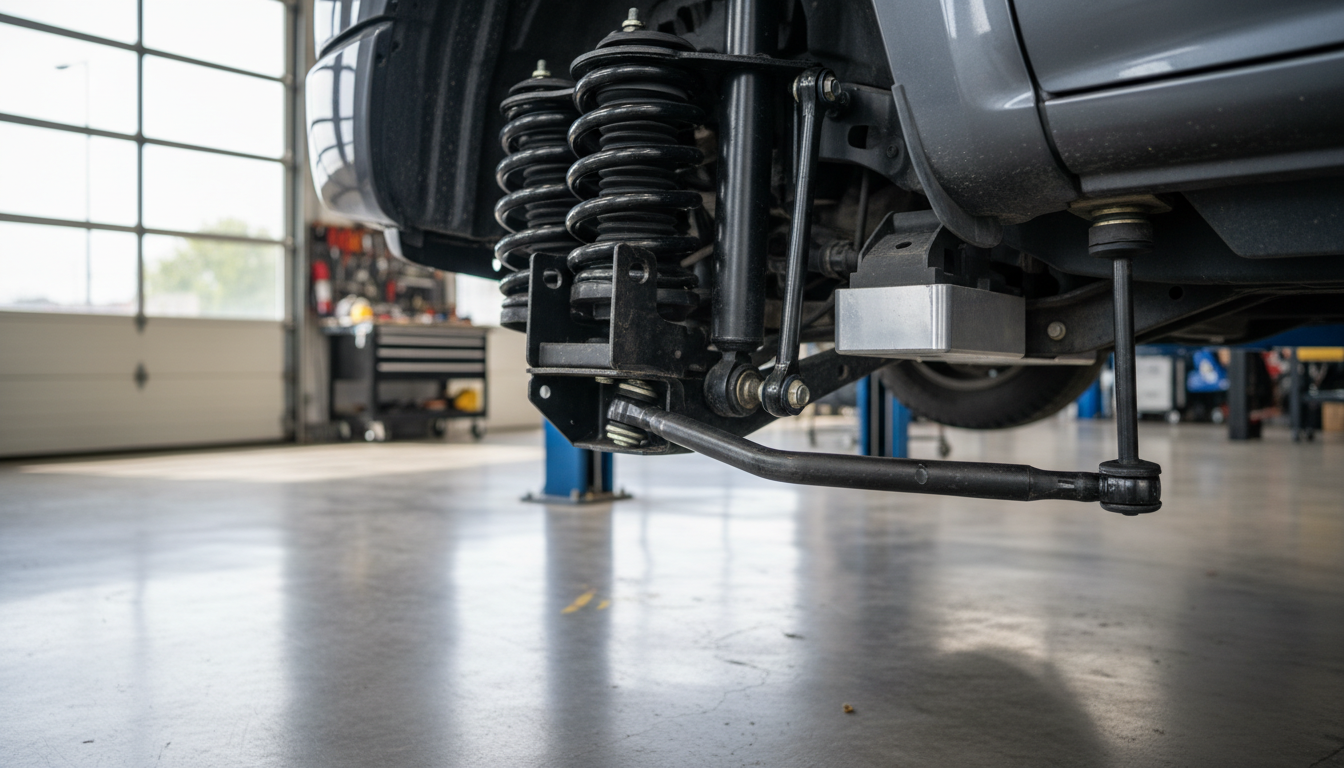
Your vehicle's suspension system is pretty complex, but the shocks and struts are doing a lot of the heavy lifting when it comes to keeping your tires on the road and your ride smooth. They dampen spring oscillations, which means they stop your car from bouncing down the road like a pogo stick. When they start to wear out, you'll feel it, and often you'll see it too.
What's actually happening
Shocks and struts are essentially hydraulic pumps. Inside, there's a piston moving through oil or gas, and this movement creates resistance. That resistance is what controls the spring's motion. Think of it like this: your springs absorb the initial impact of a bump, but without shocks, that spring would just keep compressing and rebounding until friction eventually stopped it. Shocks and struts quickly bring that motion under control, keeping your tires firmly planted. This is crucial for handling, braking, and overall stability.
Over time, the seals inside these components can degrade, allowing the oil or gas to leak out. The internal valves can also wear down, losing their ability to create the necessary resistance. When this happens, the shock or strut can't effectively dampen the spring's movement. You end up with a suspension that's too soft or too bouncy, leading to a host of driving problems and potentially unsafe conditions. It's not just about comfort; it's about control.
The most common causes, ranked
| Cause | Likelihood | Easy to fix? |
|---|---|---|
| Normal wear and tear | High | No |
| Potholes and rough roads | Medium | No |
| Extreme temperatures | Low | No |
| Overloading the vehicle | Low | No |
| Manufacturing defect | Very Low | No |
How to figure out which one is yours
Figuring out if your shocks or struts are shot usually starts with a visual inspection and then moves to a driving test. Here’s how I usually approach it in the shop:
Step 1 — The bounce test
This is the classic test, and it's surprisingly effective for identifying truly worn-out shocks. Go to each corner of your vehicle. Push down hard on the fender, compressing the suspension. Release it quickly. A healthy shock or strut will allow the vehicle to rebound once, maybe a tiny bit more, and then settle. If it bounces up and down more than two or three times, that shock or strut is likely worn out. Do this on all four corners.
Step 2 — Visual inspection for leaks
Get under the vehicle if you can safely, or at least kneel down and look closely at each shock or strut body. Look for any signs of fluid leaking. It might be oily residue or a visible drip. A little bit of road grime is normal, but if it looks wet or greasy, that's a red flag. A leaking shock means the internal fluid is escaping, and it won't be able to do its job. Sometimes, the rubber boots, like the Skyjacker Universal Red Rubber Shock Boot (SKU 328566) or the Skyjacker Black Shock Boot (SKU 464121), can tear, letting dirt in and accelerating wear, but the leak itself is the real problem.
Step 3 — Check for physical damage
While you're looking, check the shock or strut body itself. Look for dents, bends, or severe rust. Sometimes a hard impact can damage the housing, affecting its performance. Also, inspect the mounting points. Are the bolts tight? Are the bushings cracked or completely gone? Loose mounts can mimic bad shock symptoms.
Step 4 — Listen for noises
Drive your vehicle over some familiar rough roads, speed bumps, or even just a gravel driveway. Listen for any unusual noises coming from the suspension. A common sign of bad shocks or struts is a clunking, thumping, or rattling sound, especially when going over bumps or dips. This can be caused by worn bushings, loose mounts, or the internal components of the shock itself failing. Sometimes, it's not the shock but a related component like a sway bar link, such as the Dorman Stabilizer Bar Link Kit (SKU 369379), that's making noise.
Step 5 — Observe driving characteristics
Pay attention to how your vehicle handles during normal driving. Do you notice excessive body roll when turning? Does the front end dive excessively when braking, or squat when accelerating? Does the vehicle feel floaty or unstable at highway speeds? These are all classic symptoms of worn shocks or struts. If you feel like you're constantly correcting the steering, that's another big hint.
Step 6 — Inspect tire wear
Uneven tire wear is a huge indicator of suspension problems. Specifically, look for
Frequently asked questions
How long do shocks and struts typically last?
The lifespan of shocks and struts varies greatly depending on driving conditions, vehicle type, and manufacturer. Generally, you can expect them to last between 50,000 and 100,000 miles. However, rough roads, heavy loads, and aggressive driving can significantly shorten this interval. Regular inspections are key to catching issues early.
Can I drive with bad shocks or struts?
While you technically *can* drive with bad shocks or struts, it's not recommended and can be dangerous. Worn suspension components compromise your vehicle's handling, braking distance, and stability. This increases the risk of losing control, especially in emergency maneuvers or on uneven surfaces. It also accelerates wear on other suspension and tire components.
Do I need to replace all four shocks/struts at once?
It's generally recommended to replace shocks or struts in pairs on the same axle (front or rear) to maintain balanced handling and ride quality. If one side is significantly worse than the other, replacing just one can lead to uneven suspension performance. Ideally, replacing all four provides the best and most consistent results, especially if they're all original.
What is the difference between a shock and a strut?
A shock absorber is a standalone component that only dampens suspension movement. A strut, on the other hand, is a structural component of the suspension system. It combines the shock absorber, coil spring, and often a steering knuckle mount into one unit. Many modern vehicles use struts in the front and shocks in the rear.
Related guides
Keep exploring — these articles pair well with what you just read.