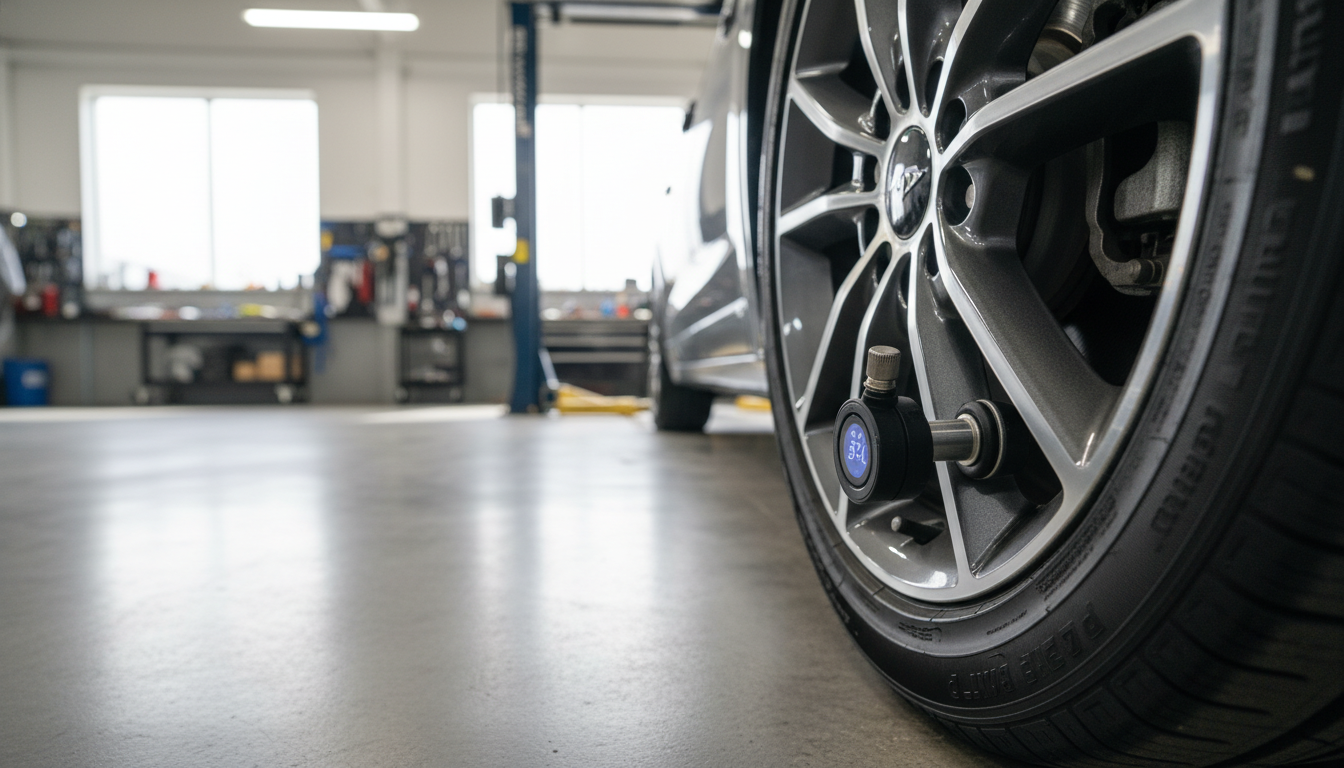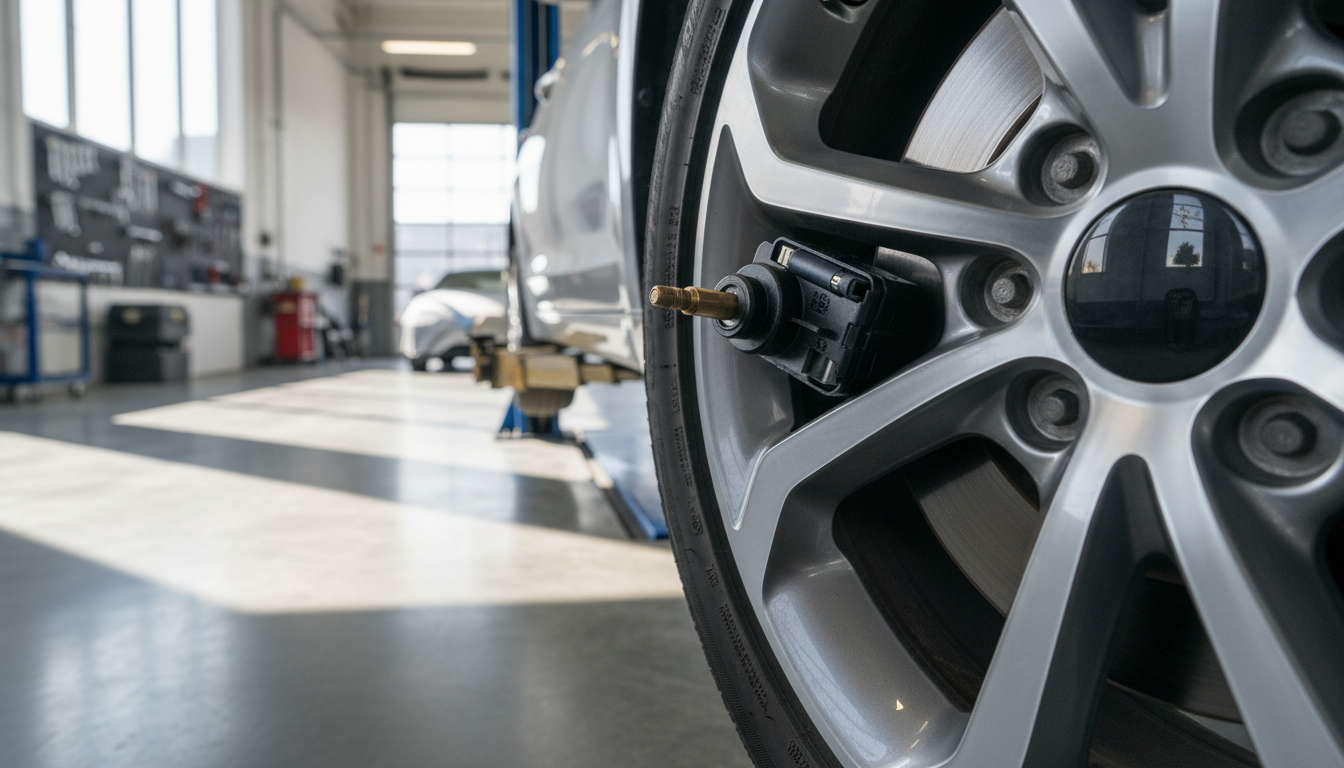
The TPMS (Tire Pressure Monitoring System) sensor is a small but critical component in your vehicle's safety system. It lives inside your tire and constantly monitors air pressure, sending that data to your car's computer. When the pressure drops below a safe threshold, that little light on your dash comes on, telling you to check your tires before you have a blowout.
The short answer
TPMS sensors typically last 5-10 years, primarily limited by their internal battery life. Beyond battery failure, physical damage during tire service or from road hazards can also cause them to fail. When one goes out, you'll see a warning light on your dash, and a scan tool will confirm which sensor is the culprit.
The longer answer
Most TPMS sensors are powered by a small, sealed, non-rechargeable battery. These batteries are designed to last a long time, but eventually, they run out of juice. When that happens, the sensor can't transmit data anymore, and your car's computer sees it as a fault. This is by far the most common reason for a TPMS sensor failure. You can't just replace the battery; the whole sensor needs to be swapped out.
Beyond battery life, these sensors are exposed to a pretty harsh environment inside your tire. They can get damaged during a tire mounting or dismounting if the technician isn't careful. I've seen plenty of sensors get crushed or cracked by a tire machine's bead breaker. Road debris, like potholes or curb strikes, can also sometimes damage a sensor, though that's less common. Corrosion, especially in areas with road salt, can also be a factor, eating away at the sensor's valve stem or housing.
There are two main types of TPMS systems: direct and indirect. Direct systems, which use sensors in each wheel, are what we're talking about here. Indirect systems use the ABS wheel speed sensors to infer low tire pressure, but they don't have individual sensors in the tires. Most modern cars use direct TPMS, which is why understanding these sensors is important.
What changes the answer
- Age of the sensor: This is the biggest factor. The older the sensor, the more likely the battery is dead. Most manufacturers estimate 5-10 years of life.
- Mileage: While not directly tied to battery life, higher mileage often means more tire changes, increasing the risk of physical damage during service.
- Driving conditions: Extreme temperatures, both hot and cold, can affect battery life. Also, frequent rapid deflation/inflation cycles (like off-roading) can stress the sensor.
- Tire service practices: Poor technique during tire mounting or dismounting is a common cause of sensor damage. A good tire shop knows how to avoid hitting the sensor.
- Road hazards: Potholes, curbs, and even significant impacts can sometimes damage the sensor or its valve stem.
How to know when it applies to you
The most obvious sign of a TPMS sensor problem is the TPMS warning light on your dashboard. This light typically looks like a cross-section of a tire with an exclamation point inside it. If it's on solid, it usually means one or more tires are underinflated. If it's flashing, that often indicates a sensor malfunction.
Here's how to narrow it down:
- Check your tire pressure manually: Use a reliable tire pressure gauge. If a tire is genuinely low, inflate it to the recommended pressure found on your driver's side door jamb. If the light goes off, great! If not, or if it comes back on, proceed.
- Note the light behavior: Is it solid or flashing? A solid light after checking pressures often means a slow leak or a significant pressure drop. A flashing light, especially after you've confirmed all tires are properly inflated, strongly suggests a sensor issue.
- Get a diagnostic scan: A professional shop or even some advanced DIY scan tools can read specific TPMS fault codes. This will tell you exactly which sensor (front left, rear right, etc.) is reporting a problem. Sometimes it will even tell you if it's a battery issue or a communication error.
- Consider recent tire work: Did the light come on shortly after you had new tires installed or a tire repaired? This could point to physical damage during service.
What to do when the TPMS light is on
First, don't ignore it. Low tire pressure is a safety hazard. Once you've checked your tire pressures and ruled out a simple underinflation, you'll likely need to address a faulty sensor. Here's your plan:
- Confirm the fault: Use a TPMS scan tool. These tools can often pinpoint the issue, whether it's a dead battery or a communication error. If you have to replace the sensor, expect to pay between $30 and $100 for the part, depending on the brand and model.
- DIY or professional? If you're comfortable with tire work, you can tackle this yourself. Just remember, you’ll need to dismount the tire to access the sensor. If you’re not up for it, a shop will charge between $75 and $200 for the service, including the sensor replacement.
- Reprogramming: After replacing the sensor, you may need to reprogram it to your vehicle's computer. Some shops will handle this for you, but if you're doing it yourself, check your service manual for the specific procedure.
Common mistakes
- Ignoring the warning light: It’s easy to dismiss, but ignoring the TPMS light can lead to bigger issues down the road.
- Not checking tire pressure regularly: Make it a habit to check your tire pressure at least once a month.
- Choosing cheap sensors: While it might be tempting to go for the cheapest option, investing in a quality sensor can save you headaches in the long run.
Conclusion
Understanding TPMS sensors is crucial for maintaining tire safety. Regular checks and proper handling during tire service can extend the life of your sensors and keep you safe on the road.
Top picks
Frequently asked questions
How long do TPMS sensors usually last?
TPMS sensors generally last between 5 and 10 years. Their lifespan is primarily dictated by the internal battery, which is sealed and cannot be replaced independently. Once the battery dies, the entire sensor needs to be replaced to restore proper tire pressure monitoring.
Can I drive with a bad TPMS sensor?
While you technically can drive with a faulty TPMS sensor, it's not recommended. The system is a safety feature designed to warn you of dangerously low tire pressure. Without it, you lose that crucial alert, increasing your risk of a flat tire, reduced fuel economy, and potential accidents. Get it fixed promptly.
Why did my TPMS light come on after getting new tires?
If your TPMS light comes on after new tires, it could be a few things. The sensor might have been damaged during the mounting process, or it might need to be reprogrammed to your vehicle's computer. Sometimes, if the old sensors were near the end of their battery life, the stress of the tire change can push them over the edge.
Do I need to replace all TPMS sensors at once?
No, you don't necessarily need to replace all TPMS sensors at once. If only one sensor is faulty, you can replace just that one. However, if your sensors are all around the same age and one has failed due to battery depletion, it's a good idea to consider replacing the others soon, as they are likely to fail in succession.
Related guides
Keep exploring — these articles pair well with what you just read.