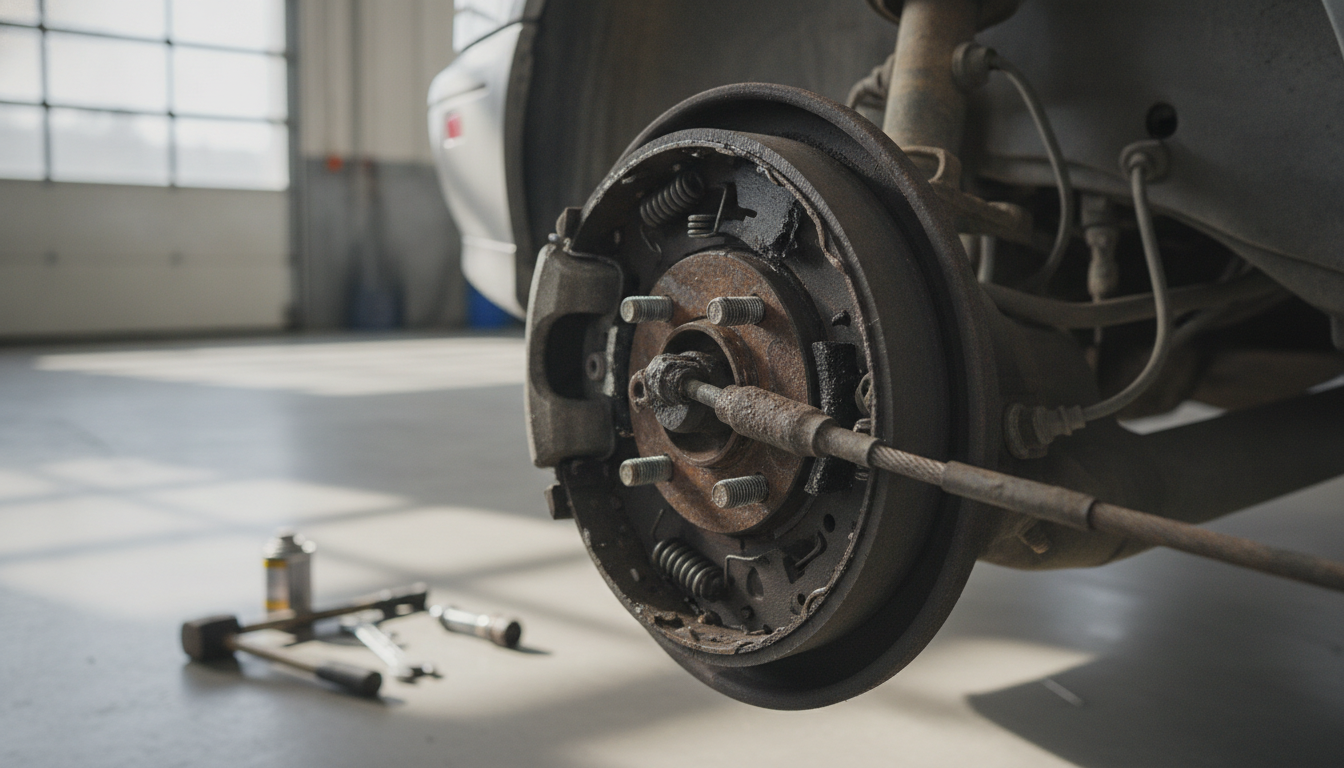
When your parking brake acts up, it's usually one of two things: it's stuck on, or it won't hold the vehicle. Both are annoying, and both can be dangerous if you're not careful. A stuck parking brake can overheat your brakes and damage components, while a parking brake that won't hold means your vehicle could roll away. Let's explore what causes these problems and how to get them sorted.
Most common causes
| Cause | Likelihood | DIY-fixable? |
|---|---|---|
| Seized parking brake cable | High | Yes (replacement) |
| Corroded brake hardware (drum or drum-in-hat) | High | Yes (cleaning/replacement) |
| Worn parking brake shoes/pads | Medium | Yes (replacement) |
| Out of adjustment | Medium | Yes (adjustment) |
| Broken parking brake lever/pedal mechanism | Low | Yes (replacement) |
| Stretched parking brake cable | Low | Yes (replacement) |
How to diagnose
First, figure out if the parking brake is stuck on or if it just isn't holding. This changes your diagnostic path. If it's stuck, you'll feel drag, smell burning, or even see smoke from a wheel. If it won't hold, well, the vehicle just rolls when you try to park on a hill.
If your parking brake is stuck:
-
Check the cable: Get the vehicle safely jacked up and supported on jack stands. Release the parking brake inside the vehicle. Now, go to each rear wheel (or front, depending on your vehicle's setup) and try to spin the wheel by hand. If it's dragging, the parking brake is still engaged. Follow the parking brake cable from the lever or pedal down to the brake assembly. Look for any kinks, rust, or damage to the outer sheath. Sometimes, the cable just seizes inside the sheath, especially in older vehicles or those in salty climates. Try to manually move the cable at the caliper or drum. If it's stiff or won't move, that's your problem.
-
Inspect the brake mechanism: If the cable moves freely but the wheel is still dragging, the issue is likely within the brake itself. If you have drum brakes, or a drum-in-hat parking brake system (where the parking brake shoes are inside a small drum built into the rotor hat), you'll need to remove the wheel and then the drum or caliper/rotor assembly to get a look. Check for corroded hardware, seized levers, or shoes that are simply stuck to the drum. I've seen countless drum-in-hat systems where the shoes literally rust to the drum, especially if the parking brake sits engaged for long periods.
If your parking brake won't hold:
-
Check for engagement: Make sure the parking brake lever or pedal is actually engaging. Does it feel loose? Does it go all the way to the floor or pull all the way up without much resistance? This could indicate a stretched cable or a problem with the internal mechanism.
-
Inspect the shoes/pads: Again, get the vehicle safely lifted. With the parking brake released, remove the wheel and inspect the parking brake shoes (for drum or drum-in-hat systems) or pads (for caliper-based parking brakes). Are they worn down? Are they contaminated with oil or grease? Worn shoes or pads won't create enough friction to hold the vehicle. Look for uneven wear, too.
-
Check the adjustment: Many parking brake systems have an adjustment point. This might be under the vehicle where the cables meet, or it could be an adjuster inside the drum or drum-in-hat assembly. If the shoes are good but the brake still won't hold, it's probably just out of adjustment. Consult your service manual for the specific adjustment procedure for your vehicle.
Parts that commonly need replacing
Often, fixing a parking brake issue means replacing some components. Here are a few common ones:
- Parking brake cables: These are the most common culprit for a stuck parking brake. If the cable is seized or stretched, replacement is the only real fix. They're usually pretty straightforward to swap out, just follow the old cable's path.
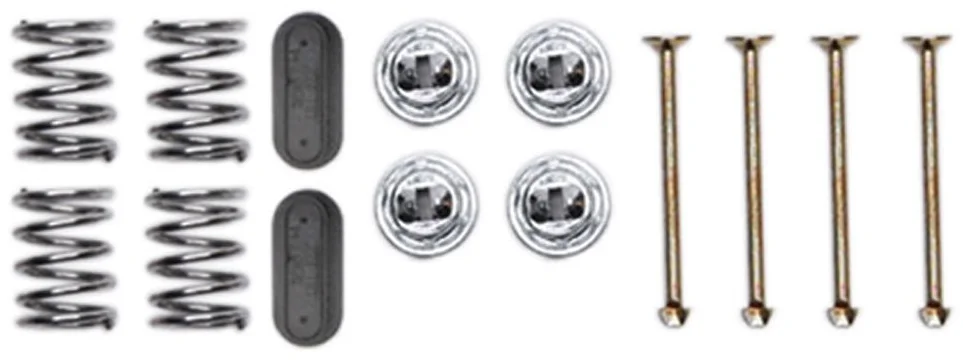
- Brake hardware kits: For drum brakes or drum-in-hat systems, the springs, adjusters, and hold-down pins can get rusty and seize up. A new hardware kit will get everything moving freely again. While we don't have this specific product, a component like the Raybestos Drum Brake Hold Down Spring Pin Kit H4043 for $5.11 is an example of what you'd be looking for. It's out of stock right now, but it gives you an idea.
- Parking brake shoes/pads: If they're worn or contaminated, new shoes or pads are a must. Make sure you get the right ones for your vehicle's specific parking brake system.
- Brake lines: In rare cases, a damaged or corroded brake line could be part of the issue if the parking brake is hydraulically actuated. For example, an Ags Steel Brake Line 3/16 Inch Diameter 30 Inch Length for $5.08, though currently out of stock, is the kind of hard line you might need to replace if yours is compromised. You might also need a banjo bolt like the Red Horse Performance 10mm 3/8 inch Banjo Bolt 90 Degree Radius Black for $5.21 if you're working with flexible brake hoses.
Common mistakes
When diagnosing or fixing a parking brake issue, it's easy to overlook a few key things:
- Ignoring the cables: Always check the cables first. A seized cable can lead you down the wrong diagnostic path.
- Not checking for rust: Corrosion can hide in places you can't see. If you're working on a vehicle in a salty environment, expect rust.
- Skipping adjustments: If you've replaced parts but the brake still doesn’t hold, check the adjustments. They can be the difference between a working and non-working system.
When to take it to a shop
While many parking brake problems are DIY-friendly, there are times you should hand it over to a professional. If you're dealing with a hydraulic parking brake system and suspect issues with the master cylinder or brake lines, that's usually shop territory. Bleeding brakes can be tricky, and you don't want to mess that up. Also, if you've done all the diagnostics and still can't pinpoint the problem, or if the repair involves specialized tools you don't have, a shop is your best bet. Safety is key with brakes, so don't take chances.
Top picks


Frequently asked questions
Why is my parking brake stuck on?
A stuck parking brake is most often due to a seized parking brake cable. Over time, moisture and corrosion can cause the cable to bind inside its protective sheath, preventing it from releasing the brake mechanism. Corroded brake hardware within the drum or caliper can also cause components to stick, keeping the brake engaged even after the cable is released.
What causes a parking brake to not hold?
If your parking brake won't hold, the most common reasons are worn parking brake shoes or pads, or the system being out of adjustment. Just like regular brakes, parking brake components wear down with use. A stretched parking brake cable can also prevent proper engagement, as it won't pull the shoes or pads tightly enough against the braking surface.
Can I drive with a stuck parking brake?
You should avoid driving with a stuck parking brake if at all possible. Driving with the parking brake engaged, even partially, will cause excessive friction and heat. This can quickly wear out your brake shoes or pads, warp brake drums or rotors, and potentially damage other brake components. It's best to diagnose and fix the issue before driving.
How do I adjust my parking brake?
Parking brake adjustment varies by vehicle. Many systems have an adjustment point either at the parking brake lever/pedal, under the vehicle where the cables connect, or directly within the brake assembly (often inside the drum or drum-in-hat). Consult your vehicle's service manual for the precise procedure, as incorrect adjustment can lead to either a non-holding brake or a dragging brake.