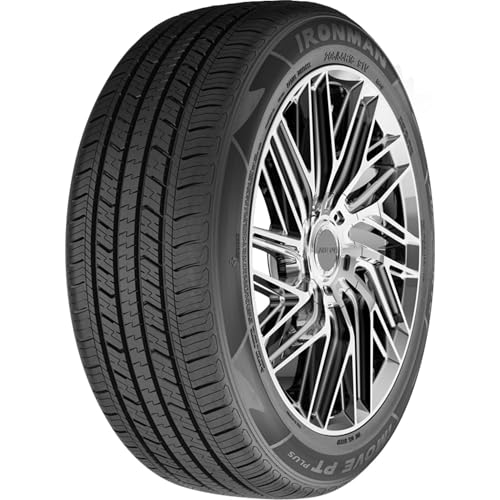
Passenger car tires cover the tires on sedans, coupes, hatchbacks, minivans and most crossovers. They are built for passenger-vehicle loads and a comfortable ride, and they come in a huge range of sizes and types. That variety is good news, because there is a tire built for almost any priority, but it can also make shopping confusing.
This page is a practical guide to getting it right: how to read the size on your current tires, which numbers you must match, how the main tire types differ, and how to make a new set last. If you already know your size, you can jump straight to searching it, for example 205/55R16 or 235/45R18.
How to read a passenger tire size
Every tire has a size code on the sidewall. Using P215/60R16 95H as an example:
| Part | Example | Meaning |
|---|---|---|
| Tire type | P | P-metric passenger tire. No letter means Euro-metric, also a passenger tire. |
| Width | 215 | Section width in millimeters |
| Aspect ratio | 60 | Sidewall height is 60% of the width |
| Construction | R | Radial (nearly all modern tires) |
| Wheel diameter | 16 | Fits a 16-inch wheel |
| Load index | 95 | 1,521 lbs per tire at max pressure |
| Speed rating | H | Rated to 130 mph |
Your vehicle's recommended size is on the placard inside the driver's door jamb, and sometimes in the glove box or fuel door. Use the placard rather than only copying your current tires, in case a previous owner installed something different. Some cars use different sizes front and rear, so check both.
P-metric vs Euro-metric: the two formats have slightly different load ratings at the same size and pressure. If your car came on Euro-metric tires, staying with Euro-metric (or matching the load index exactly) is the simplest way to be sure you meet the load requirement.
Load index, XL and speed ratings
Standard load (SL) tires are the default. Extra load (XL) or reinforced tires carry more weight at a higher pressure in the same size. Many newer cars, crossovers and EVs call for XL tires because of their weight. If your placard or original tires are XL, replace with XL.
Speed ratings show the maximum sustained speed at rated load, and also reflect heat resistance and handling characteristics:
| Rating | Max speed | Common on |
|---|---|---|
| S | 112 mph | Economy cars, minivans |
| T | 118 mph | Family sedans, crossovers |
| H | 130 mph | Many modern sedans |
| V | 149 mph | Sport sedans |
| W / Y | 168 / 186 mph | Performance and luxury cars |
Match or exceed both the load index and the speed rating on your placard. Going higher is fine. Going lower can change handling and, in the case of load index, means the tire is not rated for the weight the car was designed to carry. Winter tires with a lower speed rating are a common, generally accepted exception, as long as you stay within the rating.
Choosing a type of passenger tire
| Type | Good for | Tradeoff |
|---|---|---|
| Touring all-season | Commuters, comfort, long tread life | Moderate handling; light snow only |
| Performance (all-season or summer) | Sharp handling, short braking | Shorter life; summer versions not for cold |
| All-weather (3PMSF) | Year-round use in snowy areas | Slightly shorter life than touring |
| Winter | Snow, ice and sustained cold | Seasonal; wears fast in heat |
For most drivers in mild and moderate climates, a quality all season tire is the right default. For drivers who see regular snow, a winter set or an all-weather tire with the snowflake symbol is the safer choice. If your car came on performance tires, staying in that category usually keeps the handling the car was tuned for.
Run-flat tires can keep you moving for a limited distance after a puncture, typically at reduced speed (check the tire maker's limits). If your car came on run-flats and has no spare, keep that in mind before switching to conventional tires.
Comparing tires: UTQG and what really matters
Most passenger tires carry a UTQG rating on the sidewall, for example 500 A A:
- Treadwear (500): relative to a reference tire graded 100. Higher suggests longer life, but it is a rough guide across brands because each maker grades its own tires.
- Traction (AA, A, B, C): straight-line braking on wet pavement. AA is best.
- Temperature (A, B, C): resistance to heat buildup at speed. A is best.
Beyond UTQG, look at what the tire is designed for, any tread life warranty the manufacturer offers, and whether it carries the 3PMSF snowflake if you need winter capability. Well-known passenger tire brands include Michelin, Hankook, Bridgestone, Continental, Goodyear, Pirelli, Kumho, Yokohama and Cooper, plus many value brands that cover common sizes.
Crossovers, minivans and EVs
The passenger tire category has stretched a lot as vehicles have changed. A few things to watch for depending on what you drive:
- Crossovers often use passenger-construction tires in fairly large sizes, like 225/65R17 or 235/55R19. Many are labeled as CUV or SUV touring tires. They are still passenger tires; you do not need light truck (LT) construction unless your placard calls for it.
- Minivans carry a lot of weight when full, so load index matters. Many specify XL tires. Look for tires with a good traction grade and a comfortable, quiet ride.
- Electric vehicles are heavy and deliver instant torque, which can wear tires faster. Many EVs specify XL load tires, and some come with tires that have foam liners for noise or low-rolling-resistance compounds for range. Matching the load index and, where possible, the tire type the car was designed around helps keep range and ride quality where they should be.
- Older and compact cars are often in 14, 15 and 16-inch sizes, where value-focused tires are widely available.
If you drive a pickup or a body-on-frame SUV, see the light truck and SUV tires page instead, since load range and LT construction come into play.
Care, replacement and common mistakes
- Check pressure monthly, cold, using the door placard number. The number on the sidewall is the maximum, not the recommended pressure. TPMS warnings usually come on only after pressure is well below spec.
- Rotate every 5,000 to 7,500 miles or per the owner's manual. On front-drive cars the fronts wear much faster.
- Align if the car pulls, the steering wheel is off-center, or tires wear on one edge.
- Replace at 2/32 inch (the legal minimum in most states) at the latest. Wet braking drops noticeably as tread gets low, so many drivers replace around 4/32. The penny test (Lincoln's head visible) means about 2/32.
- Age: the last four digits of the DOT code show the week and year built. Inspect older tires for cracking and replace any that are aging out, regardless of tread.
Common mistakes: choosing a lower load index or speed rating to save money, replacing only one tire on an AWD car, mixing tire types on the same axle, plus-sizing so far that the overall diameter changes the speedometer and stability control, and putting new tires on the front only. Most tire makers recommend the newer pair goes on the rear axle for stability in wet conditions.