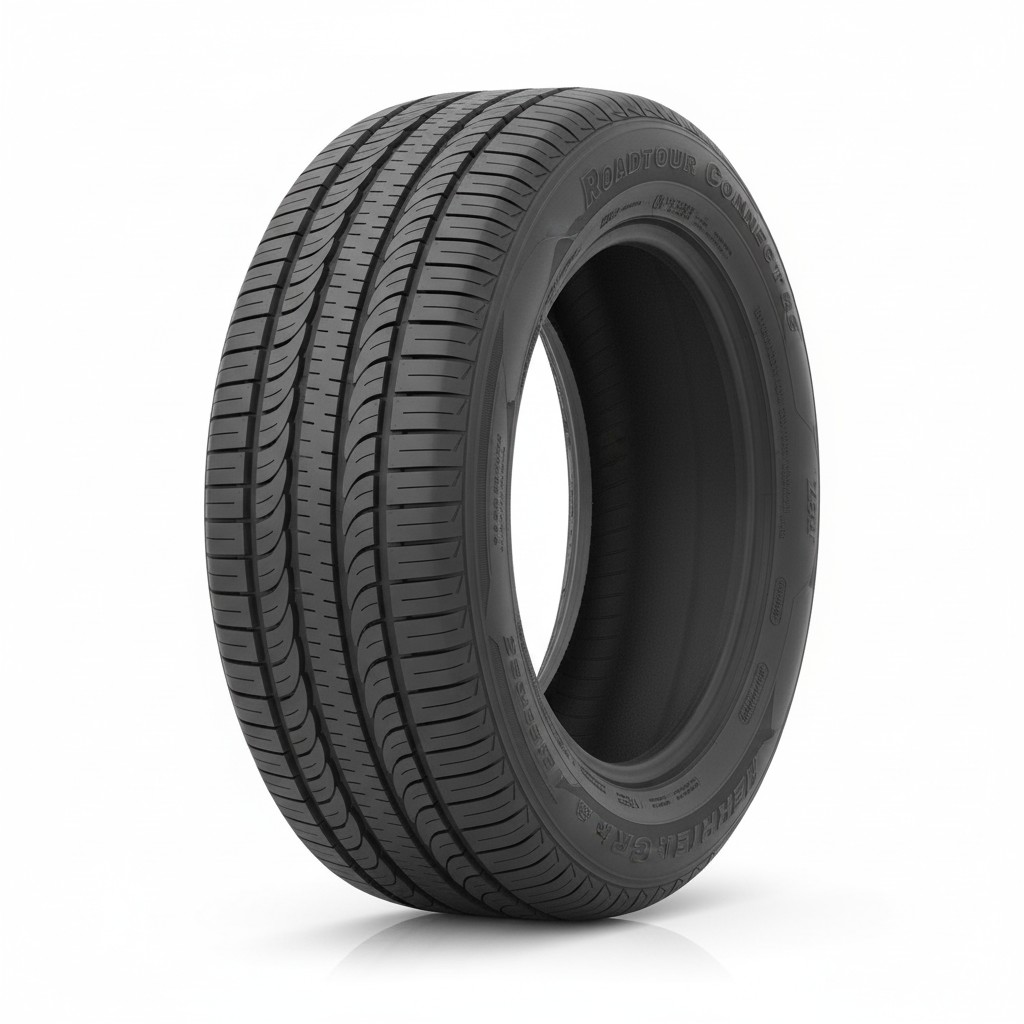
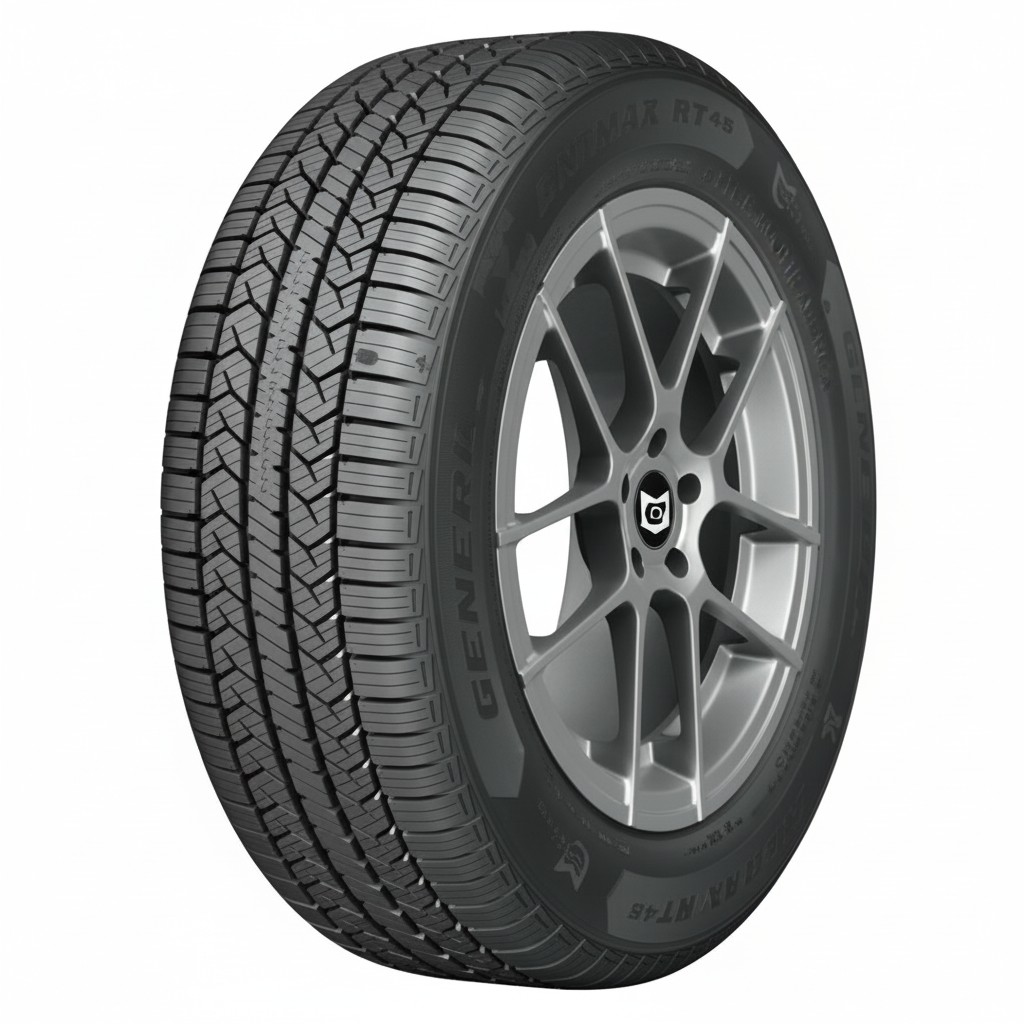
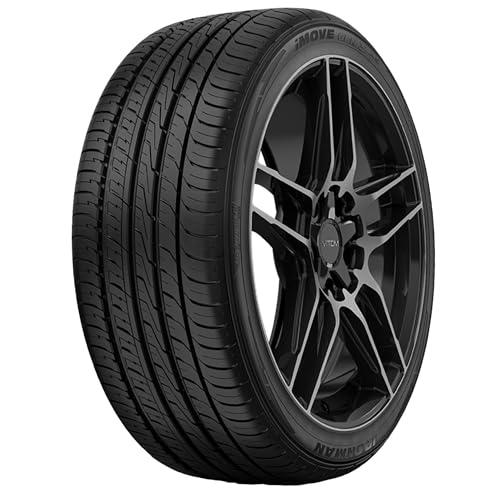
All season tires are what most cars, crossovers and minivans roll out of the factory on, and for good reason. They are designed to handle dry roads, rain and light snow reasonably well with one set, all year, with a quiet ride and long tread life. For drivers in mild and moderate climates, they are usually the right answer.
The name oversells them a little, though. "All season" does not mean "every condition." They are a compromise between summer grip and winter traction, and they give up some of both. This page explains what you are actually getting, how to compare tires on the sidewall numbers, and when you should look at a different type instead.
Quick rule of thumb: if your winters bring a few light snowfalls a year and the plows keep up, a good all-season is enough. If you see snow-covered roads for weeks at a time, budget for something with the snowflake symbol.
What all season tires are good at (and where they fall short)
An all-season tire uses a rubber compound that stays usable across a broad temperature range, a tread with circumferential grooves to channel water, and siping to add biting edges for wet and light snow. Most carry the M+S (mud and snow) marking, which describes tread geometry, not a tested snow performance.
Strengths:
- Good wet and dry grip for normal driving.
- Quiet, comfortable ride.
- Long tread life; many touring all-seasons carry high UTQG treadwear grades.
- One set of tires, no seasonal swaps.
Weaknesses:
- In consistent cold, roughly below 45 degrees Fahrenheit, the compound firms up and loses grip compared with a winter tire.
- On ice and packed snow, braking distances are noticeably longer than with dedicated winter tires.
- In hard, spirited driving, they have less dry grip and steering response than summer performance tires.
If you live where winter means regular snow and ice, look at a winter set or an all-weather tire, which is an all-season style tire that also carries the 3PMSF snowflake symbol.
All season vs all-weather vs winter vs summer
| Type | Dry and wet grip | Snow and ice | Tread life | Best for |
|---|---|---|---|---|
| Summer / performance | Best | Not for snow or cold | Shorter | Warm climates, sporty cars |
| All season | Good | Light snow only | Longest | Mild to moderate winters |
| All-weather (3PMSF) | Good | Good on snow, fair on ice | Medium to long | Regular snow, no tire swaps |
| Winter | Fair in warm weather | Best | Wears fast in heat | Cold, snowy, icy winters |
Within all-season tires there are also sub-types. Touring all-seasons focus on comfort and long life. Grand touring adds a bit more handling. Performance all-seasons carry higher speed ratings (H, V, W) and sharper steering for sport sedans and coupes. Truck and SUV owners can find all-season designs in our highway and touring tires and light truck and SUV tires.
Reading the sidewall: size, load, speed and UTQG
Take 225/65R17 102H as an example:
- 225: section width in millimeters.
- 65: aspect ratio. The sidewall is 65 percent as tall as the tire is wide.
- R: radial construction.
- 17: fits a 17-inch wheel.
- 102: load index. 102 equals 1,874 lbs per tire.
- H: speed rating, here 130 mph.
| Speed rating | Max speed | Typical vehicle |
|---|---|---|
| S | 112 mph | Economy cars, minivans |
| T | 118 mph | Family sedans, crossovers |
| H | 130 mph | Sport sedans, many newer cars |
| V | 149 mph | Performance sedans and coupes |
UTQG (Uniform Tire Quality Grading) is printed on most passenger all-season tires. Treadwear is a number relative to a reference tire graded 100; a 600 should last longer than a 400 from the same maker, but comparing across brands is rough at best because each manufacturer runs its own tests. Traction (AA, A, B, C) measures straight-line wet braking. Temperature (A, B, C) measures heat resistance at speed.
Match or exceed the load index and speed rating your vehicle's door placard calls for. Dropping below either is a common, avoidable mistake.
How to choose an all season tire
- Start with the exact size on your current tires or the door jamb placard. Some cars use different sizes front and rear.
- Decide your priority. Comfort and mileage point to a touring tire. Steering feel and dry grip point to a performance all-season. Better snow traction points to an all-weather tire with 3PMSF.
- Check the load index and speed rating against the placard. If your car calls for XL (extra load), stay with XL.
- Compare UTQG within a brand, plus any tread life warranty the tire maker offers.
- Buy in sets. Four matching tires is ideal, and on AWD vehicles it is often required to avoid drivetrain strain from mismatched diameters.
Well-known all-season brands include Michelin, Goodyear, Bridgestone, Continental, Cooper, Hankook, Kumho and Yokohama, along with many value brands that cover common sizes well.
Care, rotation and when to replace
- Pressure: check monthly, cold, using the placard number (not the max on the sidewall). Pressure drops about 1 psi for every 10 degree Fahrenheit drop in temperature, so fall is when tires most often run low.
- Rotation: every 5,000 to 7,500 miles, or per your owner's manual. Front tires on front-drive cars wear much faster.
- Alignment: if the car pulls or the tires show feathered or one-sided wear.
- Tread depth: most states set the legal minimum at 2/32 inch, but wet and snow grip drop well before that. Many drivers replace all-seasons around 4/32 inch. The quarter test helps: if you can see the top of Washington's head, you are at about 4/32.
- Age: rubber ages even with tread left. Find the build date in the last four digits of the DOT code and inspect older tires for cracking.
Common all season tire mistakes
Most tire problems we hear about come down to a handful of avoidable choices:
- Buying on tread pattern alone. Two tires can look nearly identical and have very different compounds, speed ratings and treadwear grades. Compare the sidewall numbers, not the photo.
- Downgrading the speed rating or load index. If your car came with H-rated XL tires, a T-rated standard load tire may fit the wheel, but it changes handling and may not carry the load the car was designed for.
- Expecting winter performance. The M+S stamp does not make an all-season a snow tire. If you regularly drive in snow, plan for winter tires or an all-weather tire with the 3PMSF symbol.
- Mixing tires on AWD cars. Different brands, models or tread depths can mean slightly different rolling diameters, which some AWD systems do not tolerate well.
- Ignoring the TPMS light. Tire pressure monitoring warns only when pressure is already well below spec. Use a gauge monthly instead of waiting for the light.
- Skipping rotation. It is the cheapest way to get the full life out of a set, and some tire makers require proof of rotation for their own tread wear warranties.
If you are changing wheel size at the same time, pick a tire whose overall diameter stays close to stock so the speedometer, ABS and stability control keep reading correctly.