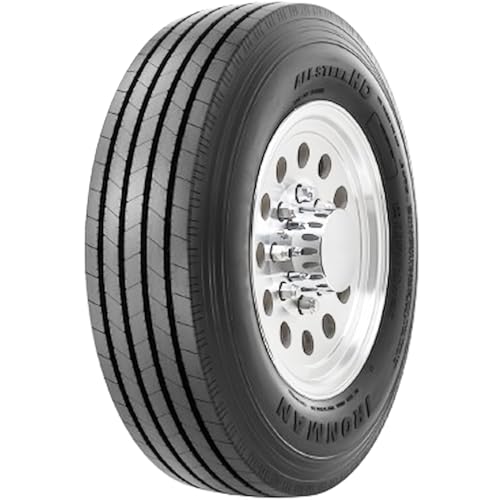
Trailer tires have a hard, unglamorous job. They do not steer or drive, but they carry heavy loads, get dragged sideways in every tight turn, and often sit parked in the sun for months between trips. That is why most trailers use ST (Special Trailer) tires, which are built specifically for free-rolling trailer axles.
This page focuses on choosing the tire itself: sizes, load range, radial vs bias, speed ratings and care. If you also need wheels, complete tire and wheel assemblies, bolt patterns or hub parts, our trailer tires and wheels buying guide covers that side in detail.
The good news is that trailer tires are simple once you know the rules. Most problems come from three things: the wrong type of tire, too little air, and tires kept in service long after they have aged out. Get those right and trailer tires are about as low-drama as any part on the rig.
ST vs LT vs passenger tires on a trailer
An ST tire typically has stiffer sidewalls that resist sway and a higher load rating for its size than a passenger tire. The tradeoff is that it is not designed for the steering and traction demands of a car or truck, so ST tires should never go on a tow vehicle.
| Tire type | On a trailer | Notes |
|---|---|---|
| ST (Special Trailer) | Standard choice | Built for trailer loads, stiff sidewalls, many speed-limited |
| LT (Light Truck) | Sometimes used | Often higher speed ratings; typically carries less load than an ST of similar size, so check the numbers |
| P-metric (passenger) | Not recommended for most trailers | Softer sidewalls, lower load capacity; more sway and heat |
Some owners of heavy campers switch to LT tires for their construction and speed ratings. That can work, but compare the LT tire's load capacity at the pressure you will run against your trailer's needs, make sure the wheels are rated for it, and follow the trailer maker's guidance.
Reading trailer tire sizes
Trailer tires use several size formats:
- ST metric radial, like ST205/75R15: ST for Special Trailer, 205 mm wide, sidewall 75 percent of width, R for radial, 15-inch wheel.
- ST bias, like ST205/75D15: the D (or a dash) means bias-ply construction.
- Small numeric bias sizes, like 4.80-8, 5.70-8 and 5.30-12, common on utility, boat and cargo trailers.
- Low-profile trailer sizes, like 205/65-10 or 215/60-8, used on some boat and low-deck trailers.
The service description, such as 117/112L, gives the load index (single/dual) and speed rating. Common sizes include ST175/80R13, ST205/75R14, ST205/75R15, ST225/75R15 and ST235/80R16. Always start from the tire placard or VIN sticker on the trailer tongue or frame, which lists the original size and pressure.
Load range and capacity
Load range is the most important spec on a trailer tire. Higher letters carry more weight at higher pressure:
| Load range | Ply rating | Typical use |
|---|---|---|
| B | 4-ply | Small utility and lawn trailers |
| C | 6-ply | Light utility, small boat and pop-up trailers |
| D | 8-ply | Mid-size campers, boat and car trailers |
| E | 10-ply | Larger travel trailers, fifth wheels, equipment trailers |
| F / G | 12 / 14-ply | Heavy fifth wheels, toy haulers, equipment |
Exact capacities vary by size, so read them on the sidewall. A good rule: the combined capacity of all the trailer's tires should be above the loaded trailer weight with some margin, accounting for the portion carried on the tongue. Many owners aim for a meaningful buffer, because trailer loads are rarely perfectly balanced side to side. Replace with the same or a higher load range, never lower, and make sure the wheel's load rating is at least as high as the tire's.
Radial vs bias, and speed ratings
Radial ST tires generally run cooler, wear more evenly and ride better at highway speed. They are the usual choice for campers, car haulers and anything that travels long distances. Bias-ply tires have very stiff sidewalls, cost less and are common on small utility and boat trailers that make short, slower trips. Do not mix radial and bias tires on the same axle.
Speed ratings deserve attention. Many ST tires were traditionally limited to 65 mph unless marked otherwise, and some still are. Newer designs often carry higher speed symbols:
- L: 75 mph
- M: 81 mph
- N: 87 mph
Some tire makers specify that a higher speed requires extra pressure or reduces load capacity, so read the manufacturer's information. Heat is what kills trailer tires, and speed plus underinflation plus a heavy load on a hot day is the classic blowout recipe.
Matching the tire to the trailer
Different trailers lean on their tires in different ways. These are general starting points; the trailer's placard and your actual loaded weight always win.
| Trailer type | Common tire choices | What to watch |
|---|---|---|
| Small utility or lawn trailer | Bias 4.80-8, 5.70-8, ST175/80R13, load range B or C | Bearings and pressure; small tires spin fast at highway speed |
| Boat trailer | ST175/80R13 to ST225/75R15, often load range C or D, galvanized or aluminum wheels | Water dunking, bearing protection and rust |
| Travel trailer or pop-up | ST205/75R14 to ST235/80R16, load range C to E radial | Long sits in storage, sun damage, age |
| Car hauler or equipment trailer | ST225/75R15 or ST235/80R16, load range E and up | Load concentration, tight-turn scrubbing on tandems |
| Fifth wheel or toy hauler | ST235/80R16 and up, load range E, F or G | Heavy pin and axle weights, heat on long summer trips |
Tandem and triple axles are hard on tires in tight turns, because the tires scrub sideways. Wide, slow turns in parking lots and campgrounds save tread and reduce stress on the sidewalls. If you see uneven wear on one axle, have the axle alignment and suspension checked; a bent spindle or worn equalizer can chew through new tires quickly.
If the trailer is pulled by a pickup, it is worth checking the truck's tires at the same time. Our light truck and SUV tires page covers load range and towing pressure for the tow vehicle.
Pressure, age and storage
- Inflate cold, to the placard. For ST tires that is often the maximum cold pressure on the sidewall for that load range. Check before every trip; a trailer tire can lose pressure while sitting.
- Replace by age. Trailer tires usually age out before they wear out. Many tire makers and RV owners replace them somewhere around 3 to 6 years old regardless of tread. The last four digits of the DOT code show the week and year built.
- Inspect for cracking, bulges and uneven wear before each season. Uneven wear can point to a bent axle, worn bearings or alignment problems.
- Store smart. Cover tires from the sun, park on wood or a solid surface rather than dirt, and take weight off the tires for long storage if practical.
- Carry a spare in the same size and load range, with the tools to change it.
Common mistakes: using passenger tires to save money, dropping a load range, ignoring the speed rating, replacing only one tire on an axle, and running tires that look new but are many years old. Popular trailer tire brands include Goodyear, Kenda, Carlisle, Taskmaster, Hercules, Ironman, Power King, Sailun and Hankook.