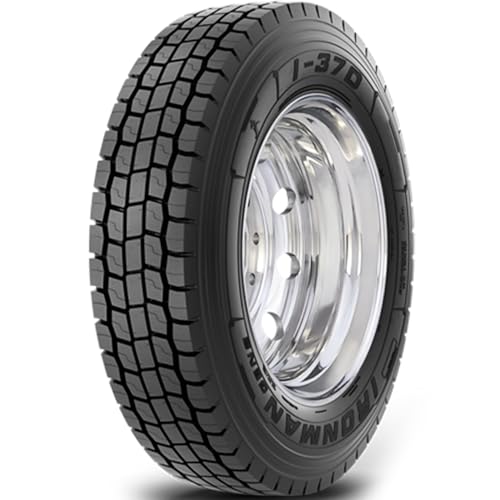
Commercial truck tires are a different world from car and pickup tires. They carry thousands of pounds each, run hundreds of thousands of miles over their life (often with retreads), and are chosen by wheel position as much as by size. A tire that is excellent on a steer axle can be the wrong choice on a drive axle, and vice versa.
This page covers the basics owner-operators, small fleets and equipment owners need: the three positions, how to read sizes like 11R22.5 and 295/75R22.5, load ranges, tread depth rules and the maintenance habits that matter most. Medium-duty trucks on 17.5 and 19.5-inch wheels are covered too.
If you run a mixed fleet, standardizing on a few sizes and tread designs makes spares, rotations and dual matching much easier. It also makes it simpler to track which tires are wearing well on which routes, which is the best data you will ever have for your next purchase.
Steer, drive and trailer positions
| Position | Tread design | What it prioritizes |
|---|---|---|
| Steer | Rib tread with circumferential grooves | Precise handling, even wear, resistance to irregular wear, smooth ride |
| Drive | Lug or block tread, open or closed shoulder | Traction under torque, deep tread for long life, good wet and winter grip |
| Trailer | Rib tread, often shallower | Low rolling resistance, scrub resistance, durability on free-rolling axles |
| All-position | Rib or mild hybrid | Flexibility for mixed fleets, buses and vocational trucks |
Open-shoulder drive tires have gaps in the shoulder that improve traction in snow, mud and wet conditions. Closed-shoulder drive tires keep a continuous shoulder rib for longer, more even wear and are favored for linehaul. Regional and vocational tires add cut and chip resistance for stop-and-go routes, construction sites and gravel.
Putting the right tire in the right position is the single most important commercial tire decision. A drive tire on a steer axle, or a trailer tire on a drive axle, generally wears poorly and may not handle as expected.
Reading commercial tire sizes
Commercial tires use two main size formats:
- Conventional, like 11R22.5: 11 inches wide (nominal), R for radial, 22.5-inch wheel.
- Low profile metric, like 295/75R22.5: 295 mm wide, sidewall 75 percent of width, 22.5-inch wheel.
Common sizes by vehicle:
| Wheel size | Example sizes | Typical vehicles |
|---|---|---|
| 17.5 inch | 215/75R17.5, 235/75R17.5 | Medium-duty box trucks, some trailers |
| 19.5 inch | 225/70R19.5, 245/70R19.5 | Medium-duty trucks, RVs, delivery trucks |
| 22.5 inch | 11R22.5, 295/75R22.5 | Class 7 and 8 tractors, trailers, dump trucks |
| 24.5 inch | 11R24.5, 285/75R24.5 | Tractors and trailers needing more ground clearance |
The sidewall also shows the load index for single and dual use (like 146/143) and a speed symbol. Do not mix 22.5 and 24.5 tires on the same axle or dual pair, and confirm your wheels match the tire's rim diameter exactly; the half-inch sizes are not interchangeable with 22 or 24-inch wheels.
Load range, inflation and dual matching
Commercial tires usually come in load range G (14-ply rated) or load range H (16-ply rated), with some sizes in J or L for heavy vocational use. Higher load ranges carry more weight and require higher pressure. The tire's sidewall lists the maximum load and pressure for single and dual fitments.
- Inflate to the load. Use the tire maker's load and inflation table for your actual axle weight. Underinflation is a leading cause of commercial tire failures, because it builds heat and stresses the casing.
- Check pressure cold and often. Many fleets check at every pre-trip; tire pressure monitoring or automatic inflation systems help.
- Match duals. Tires in a dual pair should be the same size and construction and closely matched in diameter. If one is smaller, the larger tire carries more of the load and wears faster. Many fleets use about 1/4 inch of diameter difference as a practical limit; follow the tire maker's guidance.
- Valve caps and stems matter. Use metal caps with seals, and make sure inner dual valve stems are reachable for checks.
Tread depth rules, retreads and inspection
In the United States, federal motor carrier rules (FMCSA) set minimum tread depths for commercial vehicles: 4/32 inch on steer tires and 2/32 inch on other positions, measured in a major tread groove. Tires with exposed cords, bulges, cuts into the ply or audible leaks are out of service. Rules are updated from time to time, so check current FMCSA and state requirements for your operation.
Other rules worth knowing:
- Retreaded tires are widely used on drive and trailer positions. Federal rules prohibit retreaded tires on the front wheels of buses; check current rules for other vehicles and your fleet's policy for steer positions.
- Regrooving is allowed only on tires marked regroovable, and regrooved tires have their own restrictions on steer axles.
- A healthy casing has value for retreading, so many fleets pull drive and trailer tires before they reach minimum tread.
A good pre-trip tire check covers pressure, tread depth, sidewall damage, foreign objects between duals, and loose or missing lug nuts (rust streaks from lug nuts are a warning sign).
Medium-duty trucks on 17.5 and 19.5-inch wheels
Box trucks, delivery vans, landscape trucks, shuttle buses and many motorhomes run 17.5 or 19.5-inch commercial tires. They follow the same logic as heavy trucks, just at smaller scale:
- Position still matters. Rib tires usually go on the steer axle; drive tires with more lug go on the rear duals if traction matters (snow, gravel, job sites). Many medium-duty owners run all-position rib tires on every wheel for simplicity and highway use.
- Load range is commonly G or H. Check the axle weight ratings on the door label and confirm the tire's dual load rating covers the rear axle when loaded.
- Motorhomes often sit for long periods, so tires can age out with plenty of tread left. Inspect for sidewall cracking and check the DOT date code.
- Do not substitute light truck tires. A 19.5-inch wheel needs a 19.5-inch commercial tire. The half-inch rim sizes indicate a different bead seat design (15-degree tubeless) than standard 16 to 20-inch light truck wheels.
Search exact sizes like 225/70R19.5 to see what is available, and compare load index for single and dual fitments before you buy.
How to choose and common mistakes
- Start with position and application: linehaul, regional, urban or vocational. That narrows tread design more than anything else.
- Match size and load range to the vehicle and wheel ratings.
- Think cost per mile, not price per tire. Tread depth, casing quality and retreadability all affect total cost.
- Consider fuel efficiency. Low-rolling-resistance designs can lower fuel use, especially on trailers and steer positions. Some fleets need tires verified under programs like EPA SmartWay or that meet California rules for certain trailers; check what applies to you.
Common mistakes: mismatched duals, running underinflated to soften the ride, using drive tires on steer positions, mixing radial and bias, and ignoring irregular wear that points to alignment, suspension or balance problems. Well-known commercial brands include Bridgestone, Michelin, Goodyear, Continental, Firestone, Yokohama, Hankook, Sailun and many value lines. For light-duty pickups and vans, see light truck and SUV tires, and for ST tires on smaller trailers see trailer tires.