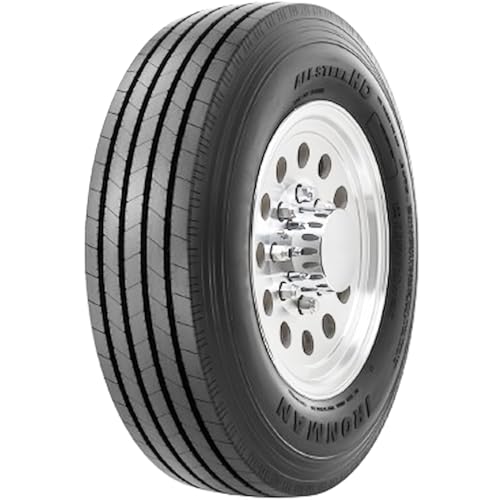
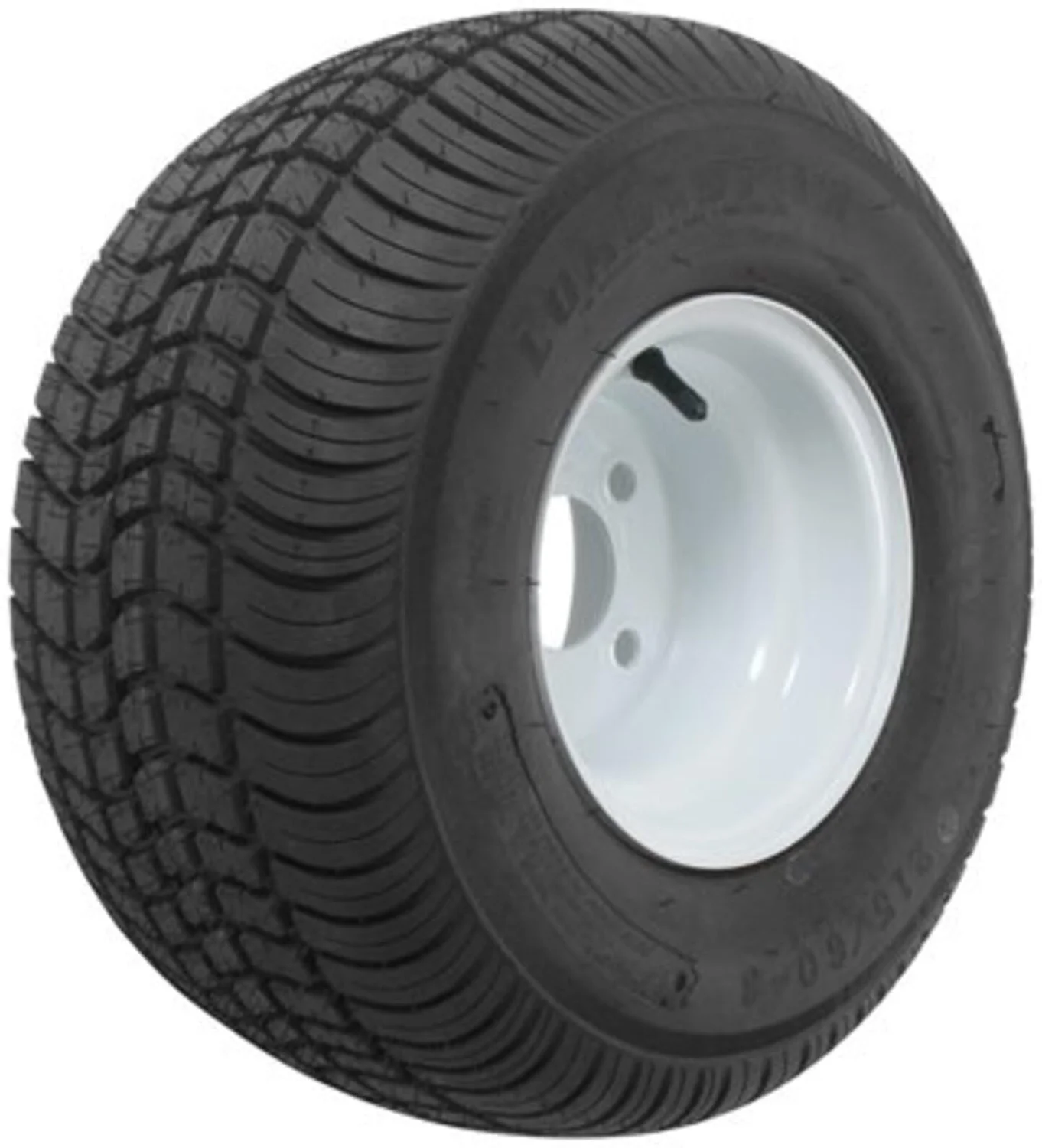
Trailer tires live a different life than the tires on your truck. They don't steer or put down power, but they carry heavy loads, scrub sideways through every tight turn, and often sit parked for months between trips. That's why most trailers run ST (Special Trailer) tires, built with stiffer sidewalls and higher load capacity for their size than passenger tires.
Trailer tires and complete tire and wheel assemblies are some of the most popular items in our store. We stock ST radials from Goodyear (Endurance), Kenda Karrier, Taskmaster, Hercules, Ironman, Power King, Sailun, Hankook, National, Trailer King and Tow-Rite, plus Americana, Kenda and Taskmaster assemblies that arrive mounted on steel or aluminum wheels. This guide covers the choices that matter: tire type, size, load range, radial vs bias, wheels and bolt patterns, and how to make trailer tires last.
ST tires vs passenger and LT tires
An ST tire is designed for the free-rolling axles of a trailer. Compared with a passenger (P-metric) tire of a similar size, it typically has a stiffer sidewall that resists sway and a higher load rating. The tradeoff is that it isn't built for steering or drive axles, so never put ST tires on a car or truck.
Going the other way, passenger tires are a poor choice for most trailers because their sidewalls flex more and they carry less weight at a given size. Some owners of heavy trailers run LT (light truck) tires instead of ST. That can work, but compare the load rating at the pressure you'll actually run against your trailer's needs and follow your trailer maker's guidance. For the full comparison, see trailer tires vs passenger tires and why RV and trailer tires fail differently.
Speed ratings matter more than people think. Many ST tires were traditionally limited to around 65 mph, and some still are. Newer designs often carry a higher speed symbol, such as L (75 mph), M (81 mph) or N (87 mph). The symbol is at the end of the service description, for example 117/112L. Check the sidewall and stay under the rating, especially with a loaded camper in summer heat.
Size, load range and radial vs bias
Start with what's on the trailer now and the tire placard or VIN sticker on the trailer frame or tongue. Read the size on the sidewall (our sidewall guide explains the numbers). Common sizes include ST175/80R13, ST205/75R14, ST205/75R15, ST225/75R15 and ST235/80R16 for campers and car haulers, plus small bias sizes like 4.80-8, 5.70-8, 5.30-12 and 205/65-10 for utility, boat and cargo trailers.
Load range is the letter that tells you how strong the tire is. Higher letters carry more weight and run at higher pressure:
| Load range | Ply rating | Typical use |
|---|---|---|
| B | 4-ply | Small utility and lawn trailers |
| C | 6-ply | Light utility, small boat and pop-up trailers |
| D | 8-ply | Mid-size campers, boat and car trailers |
| E | 10-ply | Larger travel trailers, fifth wheels, equipment |
| F and G | 12 and 14-ply | Heavy fifth wheels, toy haulers, equipment trailers |
Ply rating is a strength equivalent, not a literal count of layers. The actual load and pressure numbers vary by size and brand, so read them off the sidewall. A good rule: the combined capacity of all the trailer's tires should exceed the loaded trailer weight with some margin, and you should replace with the same or a higher load range, never lower. Our load index chart helps translate the numbers.
Radial or bias? Radial ST tires (an R in the size, like ST205/75R15) generally run cooler, wear more evenly and ride better at highway speed, so they're the usual pick for campers and long trips. Bias-ply tires (a D or a dash, like ST205/75D14 or 5.70-8) have stiff sidewalls and cost less, and they're common on small utility trailers and short, low-speed hauls. Don't mix radial and bias tires on the same axle.
Assemblies, wheels and bolt patterns
A tire and wheel assembly arrives mounted, so you can bolt it straight on. It's the easy route for a spare, a full set on a new trailer, or replacing rusted wheels at the same time as worn tires. Buying a bare tire makes sense if your wheels are in good shape and you have a shop to mount and balance it.
To get the right wheel or assembly, match four things:
- Bolt pattern. Written as lugs on circle diameter, like 5 on 4.5 or 8 on 6.5. Common trailer patterns are 4 on 4, 5 on 4.5, 5 on 5, 6 on 5.5 and 8 on 6.5. See how to measure bolt pattern.
- Diameter and width. The rim size must match the tire, such as 15x5 or 15x6 for ST205/75R15 and ST225/75R15.
- Wheel load rating. The wheel has its own capacity. It must be at least as high as the tire you mount on it.
- Fit and clearance. Check center bore, offset and fender clearance, especially when changing styles.
| Wheel type | Strengths | Watch for |
|---|---|---|
| Modular or spoke steel (painted) | Strong, affordable, easy to replace | Rust once the paint chips |
| Galvanized steel | Corrosion resistance for boat trailers | Costs a bit more than painted |
| Aluminum | Lighter, looks sharp, no rust | Higher price; check lug nut seat type |
We stock Americana, Tow-Rite, Taskmaster and Pacer wheels in steel, galvanized and aluminum, plus center caps, dust caps and wheel bearings from AP Products and Dexter. If you're also servicing the hubs, our boat trailer parts guide covers bearings and hubs in more depth.
Making trailer tires last
Most trailer tires age out before they wear out. A few habits prevent the blowouts that give trailer tires a bad name:
- Run the right pressure, cold. Use the pressure on your trailer's placard, which for ST tires is often the maximum cold pressure on the sidewall for that load range. Underinflation builds heat, and heat is what kills trailer tires. Check before every trip.
- Respect the age. Many tire makers and RV owners replace trailer tires somewhere around 3 to 6 years old regardless of tread, because rubber degrades even when the trailer sits. Find the date in the DOT code (how to read DOT codes) and watch for dry rot.
- Don't overload. Weigh the loaded trailer if you can, and remember tongue weight and side-to-side balance shift load between tires.
- Torque the lugs and recheck. Torque to your axle or wheel maker's spec and recheck after the first miles on new wheels; many axle makers suggest around 10, 25 and 50 miles. See lug nut torque specs.
- Store them right. Cover tires from sun, park on wood or a solid surface rather than dirt, and take weight off them for long storage if practical.
- Carry a spare. A mounted assembly matched to your bolt pattern turns a roadside blowout into a short stop.
Replacing tires on both sides of an axle at the same time keeps the load even. If the trailer has brakes, it's a good moment to check them too; our trailer wiring and brake controller guide covers the electrical side.