A cooler looks like a simple box, but the right one depends on how long you need ice to last, how much you carry, how far you carry it and where it rides: a truck bed, a boat deck, a jet ski rack or the back of a UTV. A small soft cooler is perfect for a day on the water and useless for a week at deer camp. A 165 quart rotomolded chest keeps a hunting trip's game cold but takes two people to lift when full.
This guide compares rotomolded and standard hard coolers, explains how to pick a size, covers soft coolers and backpacks, and finishes with ice retention and mounting. Brands we stock include Grizzly (hard coolers from 15 to 450 quarts and Drifter soft coolers), Icey-Tek (large-capacity chests up to 1100 quarts), Rugged Road, Coleman and Camco, plus cooler brackets and PWC cargo racks from Extreme Max.
Rotomolded vs standard hard coolers
| Type | Construction | Ice retention | Best for |
|---|---|---|---|
| Rotomolded | One-piece thick plastic shell with foam insulation, heavy latches and gasketed lid | Typically several days, depending on conditions and how it is packed | Hunting, fishing, multi-day camping, boats |
| Standard injection-molded | Thinner walls and lid, simpler latch or no latch | Typically a day or a few days | Picnics, tailgates, day trips |
| Soft-sided | Insulated fabric shell, often with a leakproof liner and zipper | Usually a day or so | Walking distance, boats, lunch, drinks |
| Powered (12V) | Compressor or thermoelectric cooling, no ice needed | Runs as long as it has power | Overlanding and RV trips with a power source |
Rotomolded coolers like the Grizzly, Icey-Tek and Rugged Road lines cost more and weigh more, but the thick walls, freezer-style gaskets and positive latches are what make ice last. They are also tough enough to stand or sit on, and many have tie-down slots for boats and truck beds. Some rotomolded models, including several Grizzly coolers, are certified bear-resistant by the Interagency Grizzly Bear Committee when used with padlocks. If you camp in bear country, check that the specific model and size is on the certified list and follow local food storage rules.
Standard coolers such as the Coleman Chiller 60 quart with wheels are lighter and far cheaper. For a single day they do the job well, and wheels make a big one easy to move across a parking lot.
How to pick a cooler size
Cooler capacity is listed in quarts (or cans for soft coolers). Remember that for the best ice retention, roughly a third to a half of that space should be ice, so a cooler holds less food and drink than the number suggests.
| Size | Typical use | Examples we carry |
|---|---|---|
| 15 to 25 qt | Lunch and drinks for one or two, small boats, UTVs | Grizzly 15 and 20, Rugged Road 25 can |
| 40 to 75 qt | Weekend trips, a family day out, a day of fishing | Grizzly 45, 60 and 75, Rugged Road 45, Coleman 60 |
| 100 to 165 qt | Week-long camps, offshore fishing, holding game | Grizzly 100 and 165 |
| 350 qt and up | Hunting camps, processing game, commercial and event use | Grizzly 350 and 450, Icey-Tek 450, 600 and 1100 |
Bigger is not always better. A half-empty cooler warms faster because of the air space, and a large rotomolded cooler can weigh well over 100 lb once loaded. If you are torn between sizes, many people run two: a large chest for food and ice that stays closed, and a small cooler for drinks that gets opened all day. Check the exterior dimensions against your truck bed, boat deck or rack before buying, and look for drain plugs that thread onto a hose for big chests you cannot tip. Coolers on a boat often double as a seat or casting platform, so a non-slip lid pad and solid tie-down points matter too.
Soft coolers and cooler backpacks
Soft coolers trade some ice life for weight and portability. They are easier to carry down a trail or onto a boat, they fold or compress when empty, and they will not scratch gelcoat. Look for a leakproof, welded liner, a waterproof or heavy-duty zipper, and a removable shoulder strap or backpack harness.
- Tote style: the Grizzly Drifter 8, 16 and 32, the Camco Kuuma 33 quart soft-sided cooler and the Grizzly Drifter 30 can cover lunch-size to full-day loads.
- Backpack style: the Grizzly Drifter 24 backpack frees both hands for carrying rods, a chair or a kid, which helps on long walks to a beach or a fishing spot.
- Budget: the Coleman Chiller 42 can soft cooler is an inexpensive option for drinks and casual use.
Soft coolers keep things cold longest when they start cold, stay out of the sun and get opened as little as possible. They are not meant to hold raw meat for days.
Ice retention tips and mounting a cooler
- Pre-chill it. Bring a cooler indoors or fill it with a sacrificial bag of ice the night before. A warm cooler melts the first load fast.
- Use more ice and less air. Fill empty space. Block ice lasts longer than cubes; cubes chill contents faster. Many people use both.
- Keep it shaded and closed. Every lid opening lets cold air out. A drinks cooler that gets opened all day protects the food cooler.
- Drain water wisely. Cold meltwater still helps keep contents cold, but keep food sealed so it does not soak.
Food safety: perishable food should stay at 40 F or below. Keep raw meat sealed and below other foods, add ice before it all melts, and use a thermometer if in doubt. Follow USDA food safety guidance for how long items can stay out of refrigeration.
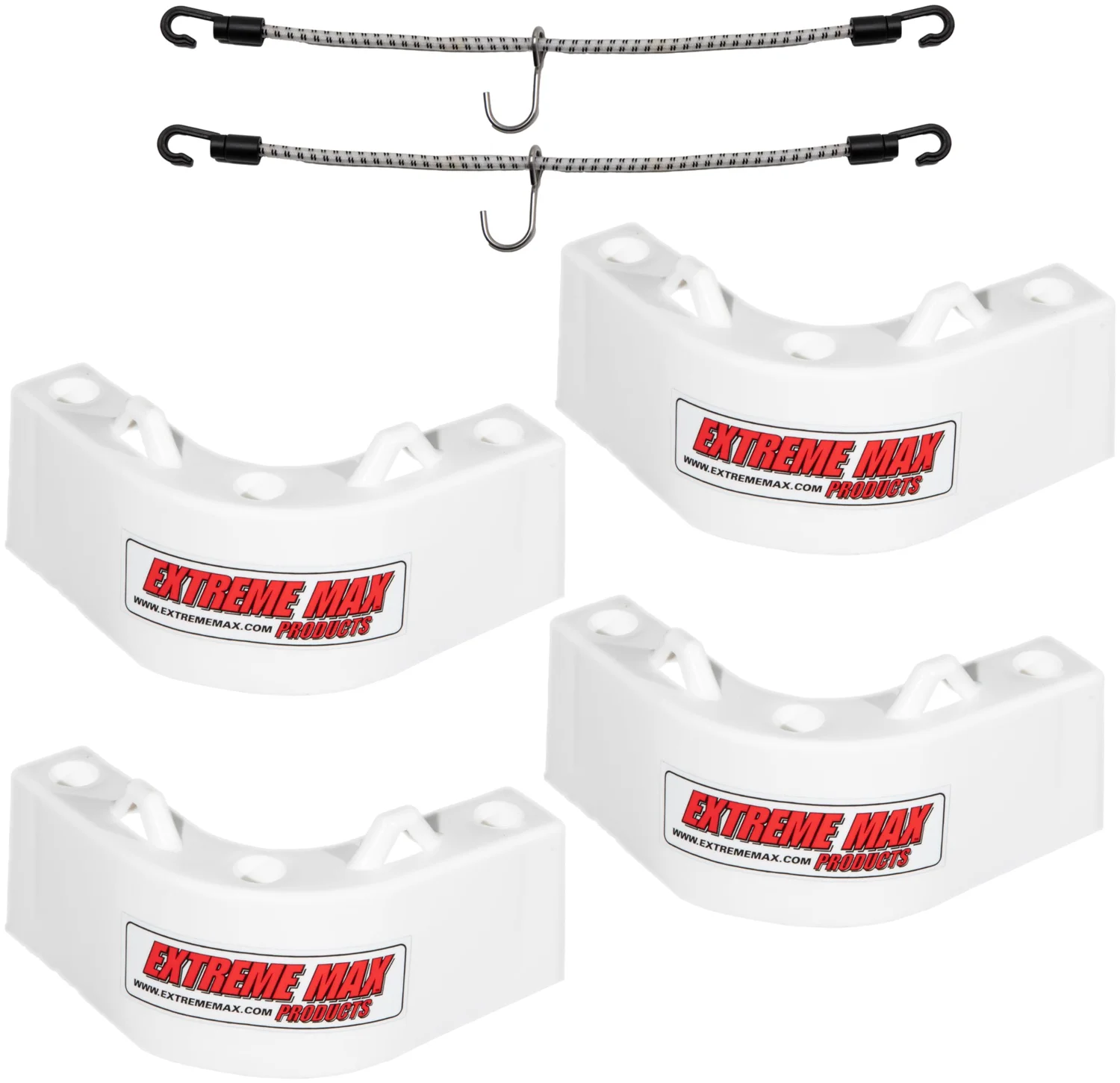
Mounting: an unsecured cooler becomes a projectile in a crash and slides around a boat deck in chop. Extreme Max cooler mounting brackets with straps work on boats, pontoons, ATVs, UTVs and trailers, and the Boattector PWC cargo racks and the jet ski rod rack and cooler combo hold a cooler behind the seat with Rotopax fuel can mounts. In an RV, a Quick Products A-frame cargo rack fits over the propane tanks to carry a cooler or generator; check your trailer's tongue weight limits first. Accessories like the Camco Currituck cooler divider and cooler rod holder add organization. For hauling more gear, see our truck bed racks and grills and smokers guides.