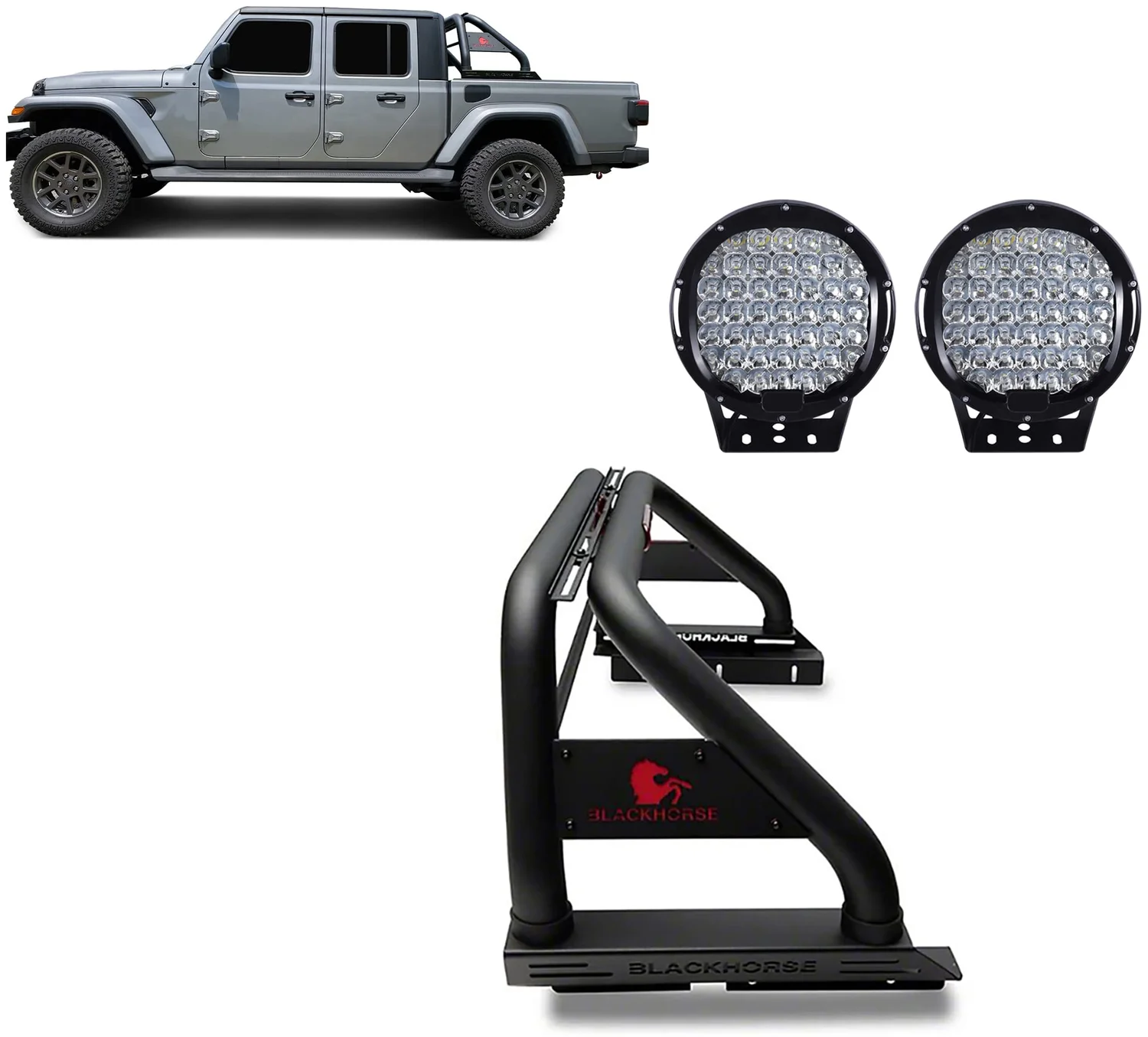
An LED light bar puts a lot of light where your headlights do not reach: far down a dark trail, out to the sides of a two-track, or across a job site. Choosing one comes down to four things: beam pattern, size, row count and where it mounts. Specs like watts and lumens help, but they are not always comparable between brands.
We carry light bars from Hella (Black Magic and Black Series), Heise, Race Sport Lighting, Southern Truck, Blackhorse Off Road, Body Armor 4X4 and XK Glow, plus pods and driving lights from Go Rhino, Valeo and Hella, amber strobe bars from Arc Lighting, and vehicle-specific mounts from Westin, Zroadz, Go Rhino, Performex and Dee Zee. Our best sellers are the Performex curved 50 inch mount brackets, which tells you how many people buy the mount first and the bar second.
Beam patterns and specs explained
| Beam | Pattern | Best for |
|---|---|---|
| Spot | Narrow and long | High-speed desert or long straight trails, seeing far ahead |
| Flood | Wide and shorter | Slow trails, work areas, campsites, backing up |
| Combo | Spot center with flood ends | The all-around choice for most trucks and Jeeps |
| Driving | Shaped to extend high beams | Pods or bars used alongside headlights off-road |
- Lumens measure light output, and are a better comparison than watts. Some brands list raw lumens (what the LEDs could produce) and some list effective lumens (what actually leaves the lens), so compare carefully.
- Watts describe power draw, not brightness. Two 100W bars can produce noticeably different light.
- Single row vs double row. Single row and slimline bars (like the Heise Slimline and Hella Black Series thin bar) are low profile and fit behind grilles and in tight bumper openings. Double row bars pack more LEDs into the same length for more output.
- Color. Most bars are cool white. Amber light is often preferred in dust, fog and snow because it creates less glare.
- Waterproofing. IP67 and IP68 ratings indicate dust-tight housings that resist water immersion, which matters for a light that sees mud and pressure washers.
More on how bars compare to fog and driving lights: fog lights vs driving lights vs light bars.
Choosing a size and mounting spot
| Size | Common mounting spots | Notes |
|---|---|---|
| 6 to 14" | Behind the grille, bumper openings, A-pillar, rear work light | Easy to hide; good as a reverse or work light |
| 20 to 22" | Bull bars, lower bumper, grille | The most popular size; fits most bull bar mounts |
| 30 to 42" | Full-width bumpers, grille guards | Lots of light without a roof install |
| 50 to 52" (often curved) | Roof or above-windshield brackets | Maximum reach and spread; most wind noise and glare off the hood |
Buy the mount and the bar together so the length and bolt spacing line up. Vehicle-specific brackets, like the Performex curved 50 inch roof brackets, Go Rhino and Zroadz grille mounts, Westin bumper mounts and Dee Zee ditch light brackets, are made for one bar size, so check before ordering. A curved bar needs a curved bracket.
Pods and ditch lights are a good alternative or add-on to a bar. A pair of 3 to 4 inch pods mounted at the base of the windshield (A-pillar or ditch light brackets) throws light out to the sides where you turn, which a front bar does not cover well. Round driving lights like the Go Rhino Black Out Combo pair or the Valeo LP530 add reach without the wide footprint of a bar.
Roof-mounted bars can whistle at highway speed and reflect off the hood. Lower mounts on a bumper or bull bar or grille guard avoid hood glare but sit closer to rocks and brush. Our LED light bar lumens and mounting article goes deeper.
Wiring it safely
Most light bars should be wired through a relay, an inline fuse and a switch. Many bars include a harness; if yours does not, a light bar harness with a rocker switch (like the Southern Truck harness) covers it.
- Connect power to the battery through the fuse, sized to the harness and bar.
- Mount the relay away from heat and water.
- Route wires away from exhaust, steering and moving suspension, and use grommets where they pass through the firewall.
- Put the switch where you can reach it without looking, and choose a lighted switch so you know when the bar is on.
To estimate current, divide the bar's rated watts by about 12 volts. A 120W bar is in the range of 10 amps, though actual draw often runs lower than the label. Check the manufacturer's fuse recommendation, and use wire heavy enough for the current and length of the run. Undersized wire gets hot and drops voltage, which dims the bar. If you run several lights plus a winch, think about your battery and alternator, and see finding parasitic battery drain if something stays powered.
Road use, strobes and amber lights
Off-road light bars are generally meant for off-road use. Many states restrict auxiliary lights on public roads, limit how many forward lights can be on at once, or require bars to be covered while driving on the street. Rules vary a lot, so check your state's rules and use the bar only where allowed. Never run a light bar toward oncoming traffic.
Amber and amber-white strobe bars (like the Arc Lighting BuiltBright and mini light bars) are common on plow trucks, tow trucks, utility vehicles and farm equipment. Who may use flashing amber or white lights is regulated by each state, and some markings like "SAE Class I" refer to tested light output standards, not permission to use them. Check your state's rules before installing warning lights on a personal vehicle.
After installing any forward lighting, make sure your headlights are still aimed correctly. See how to aim headlights and LED vs halogen headlights.