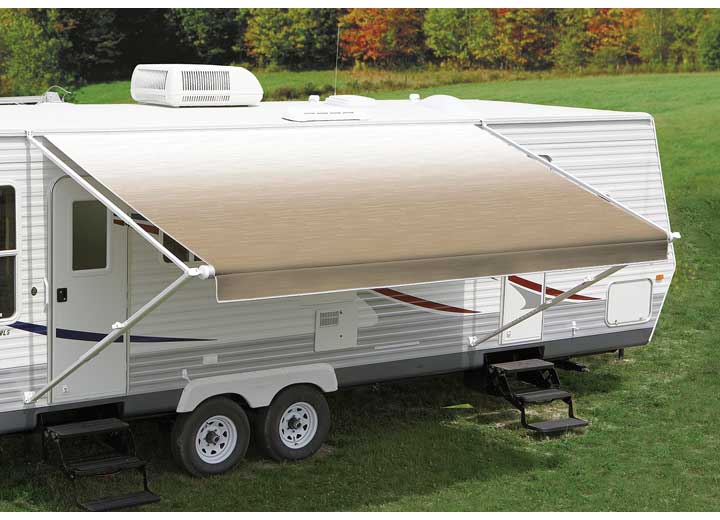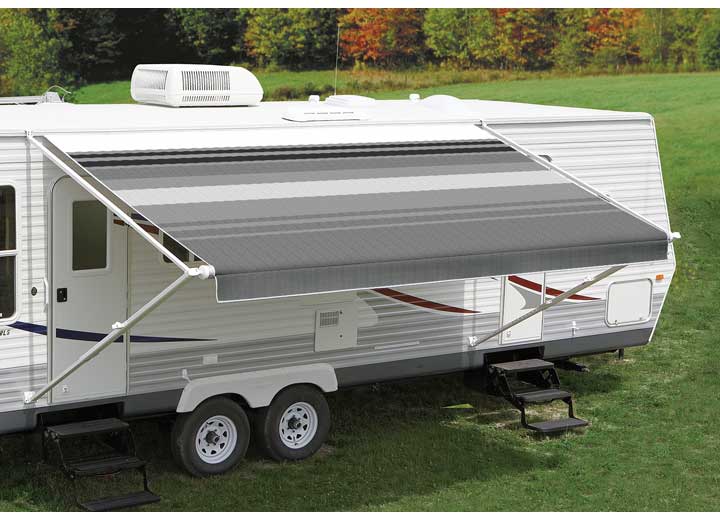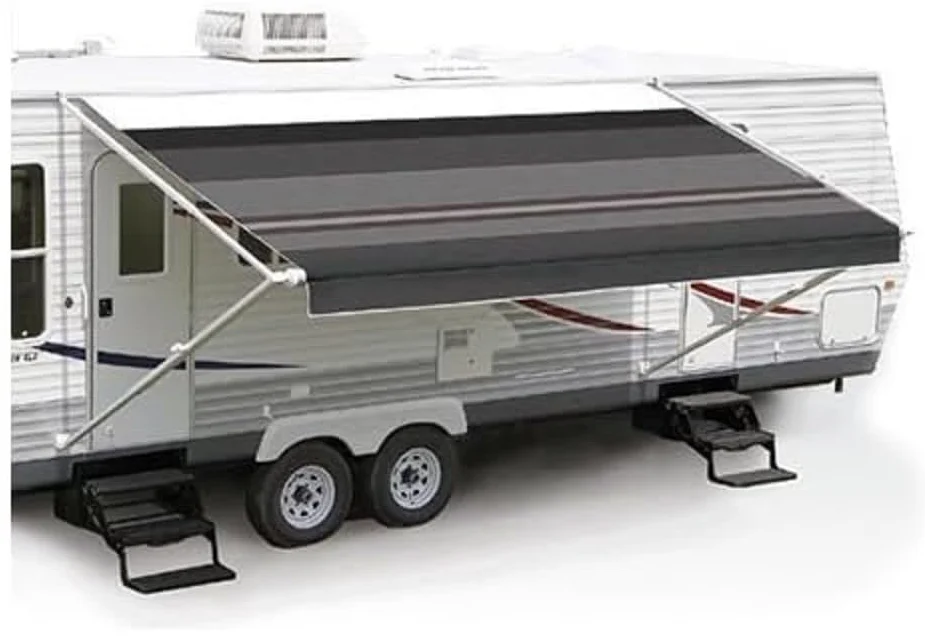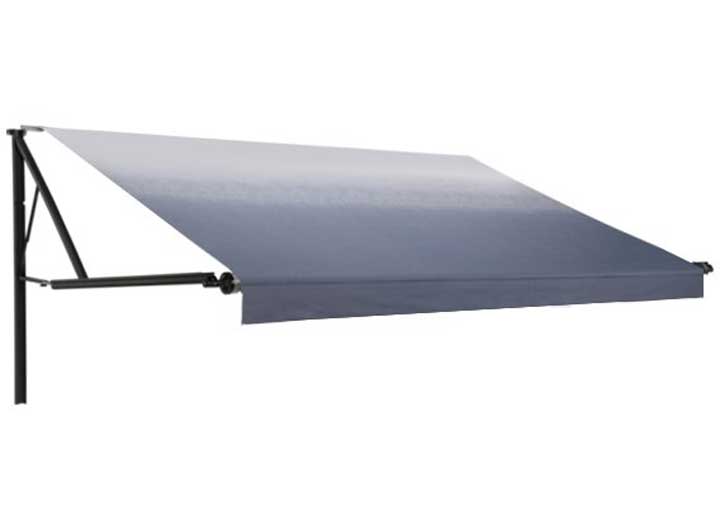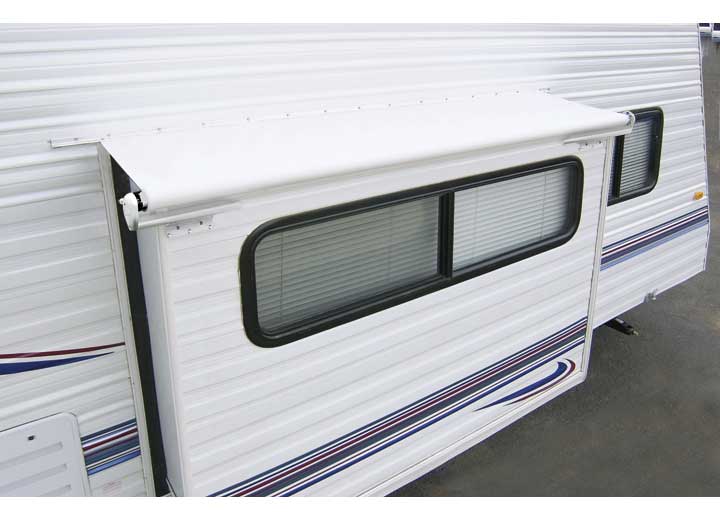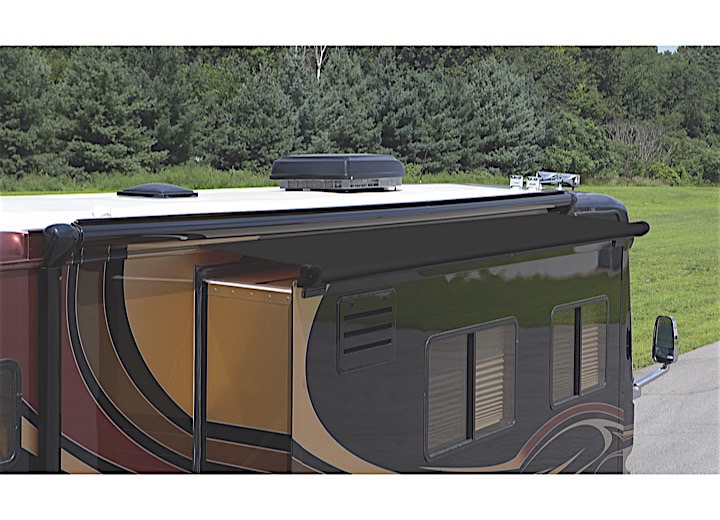
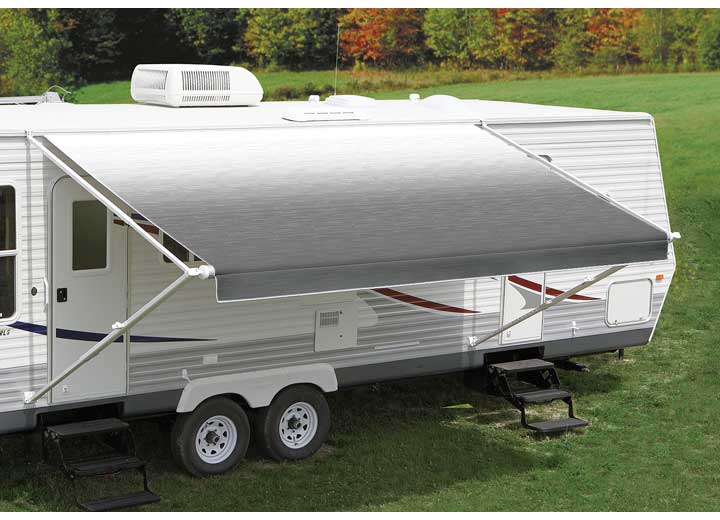
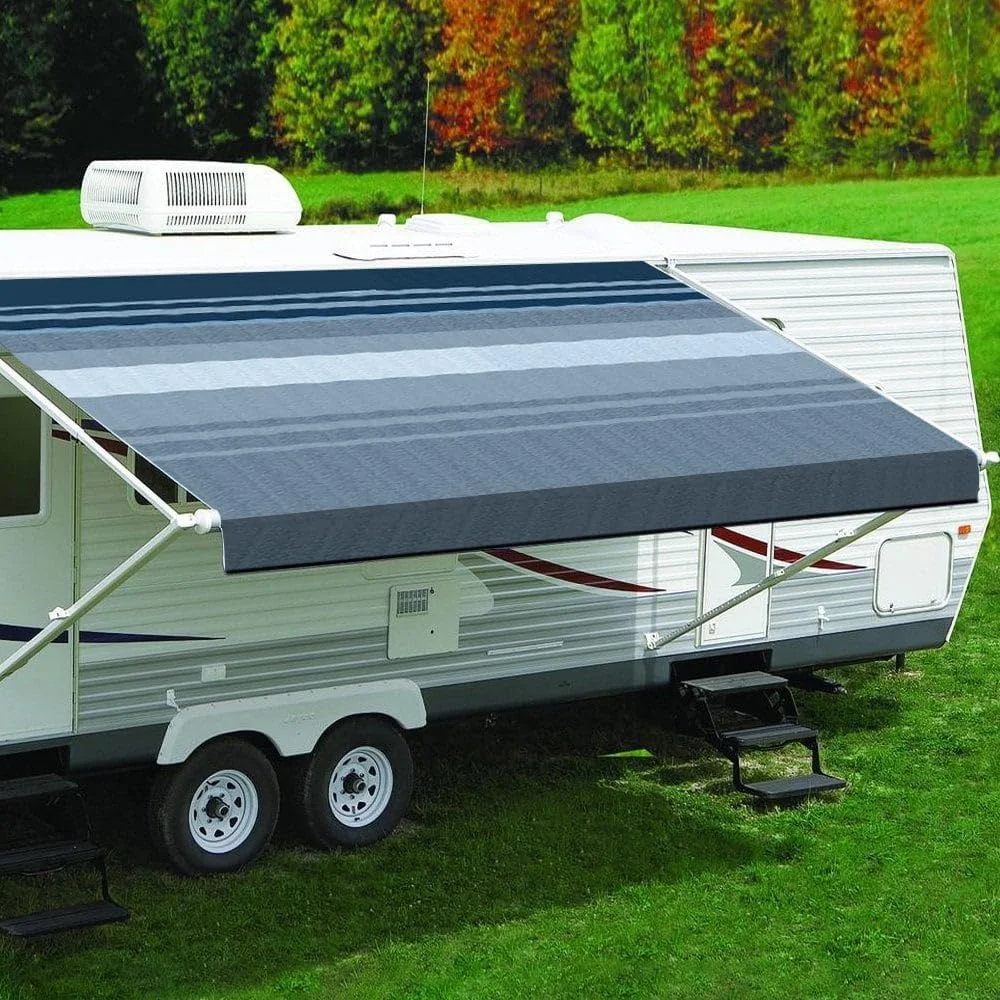
An awning is the cheapest square footage on an RV: shade, a dry spot by the door and a cooler coach. It is also the part most likely to get damaged by a gust of wind. Most awning shopping falls into one of four jobs: replacing worn or torn fabric, replacing a complete awning (manual or power), adding or replacing slide-out covers, or fixing arms and hardware.
The good news is that most RV awnings are built from standard parts, so a careful measurement usually gets you the right piece. Most of what we stock comes from Carefree of Colorado (Fiesta, Campout, Eclipse, Pioneer, Alpine, Ascent and Leisure lines), with power awnings from Dometic, LED roll tubes and slide toppers from Velarium, and care and anchor kits from Camco and Valterra. If you camp out of a truck or SUV instead, we also cover vehicle-mounted awnings from Overland Vehicle Systems, Front Runner and Ironman 4x4.
Types of RV awnings
| Type | How it works | Good to know |
|---|---|---|
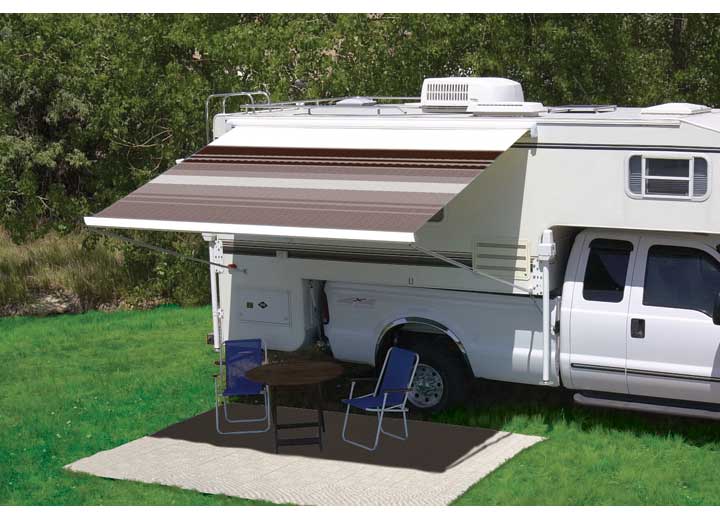
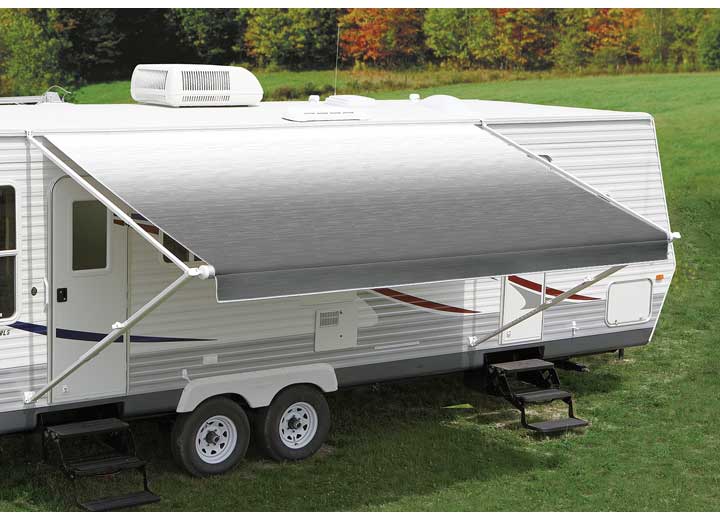
| Manual patio awning | Spring-loaded roller, extended and retracted by hand with an awning rod | Lower cost, no wiring. Carefree Fiesta and Campout are common examples |
| Power patio awning | 12 volt motor opens and closes it from a switch or remote | Convenient and easy to stow in a hurry. Carefree Eclipse, Dometic 9100 |
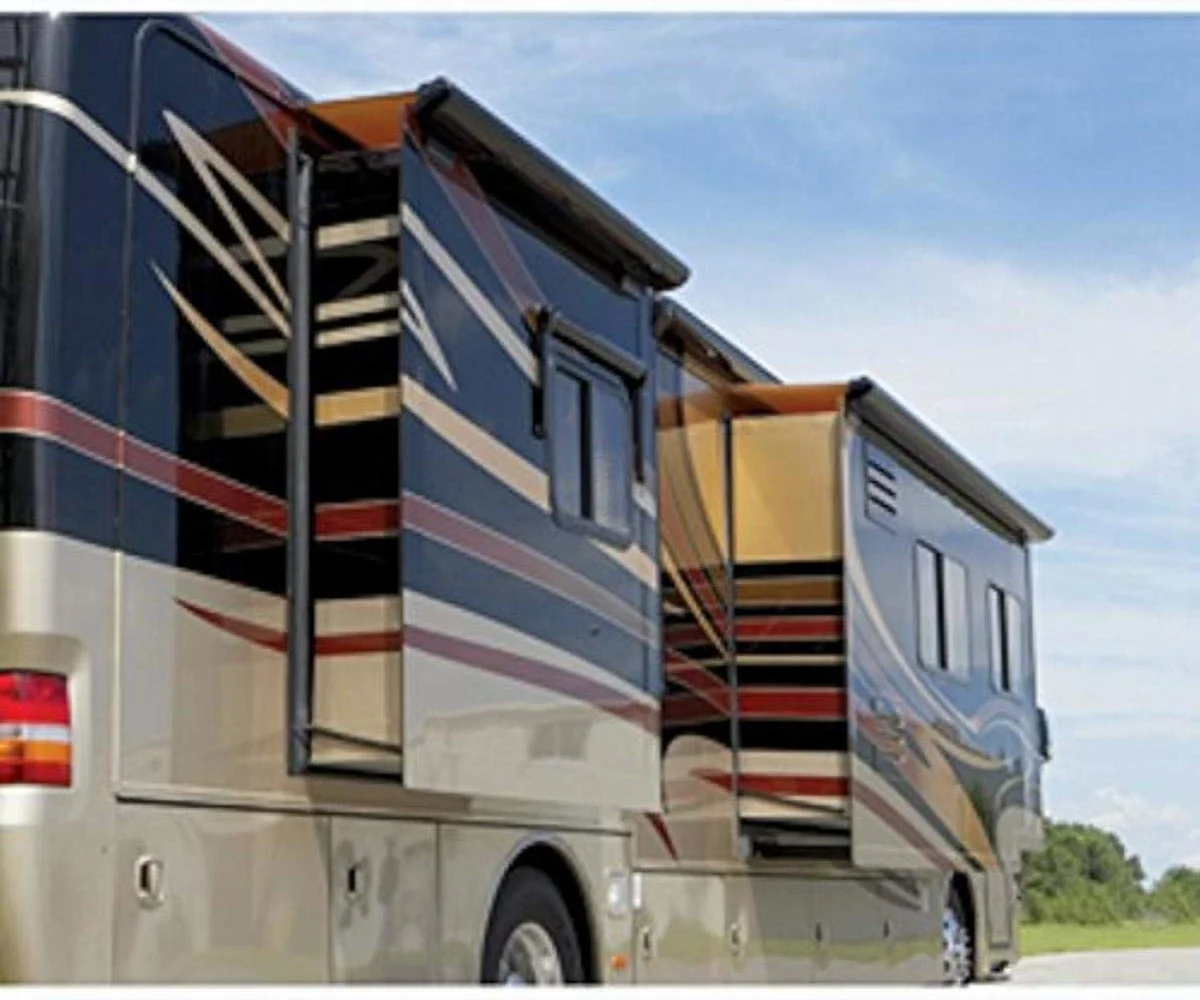
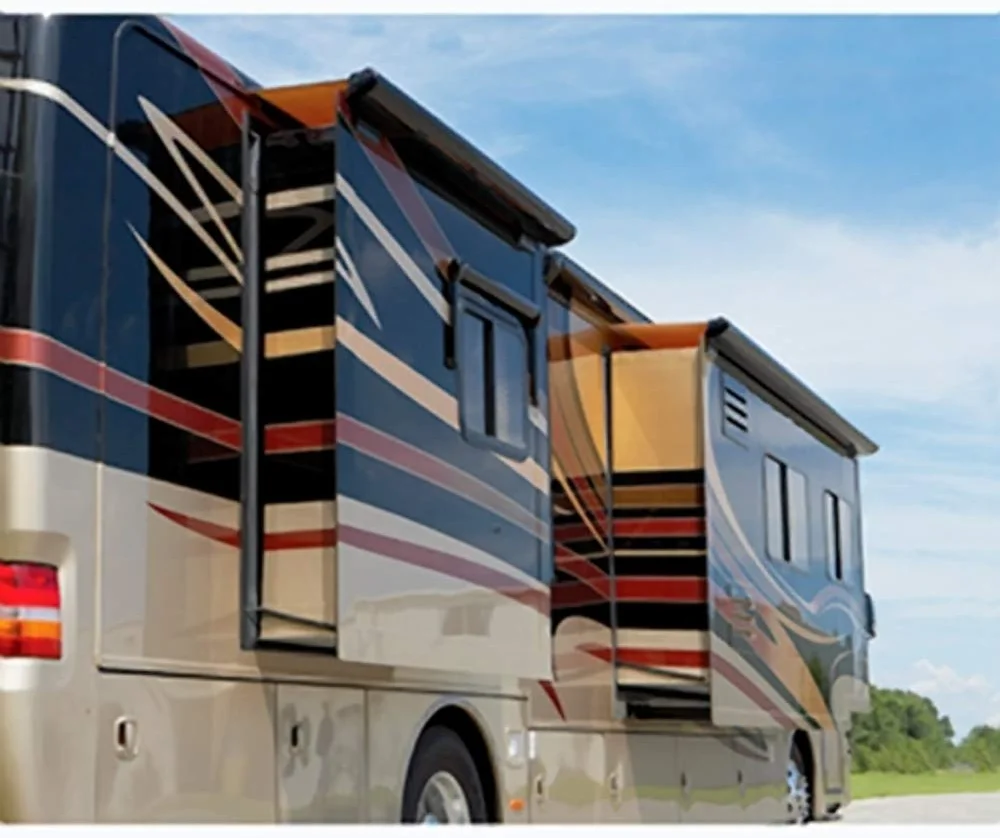
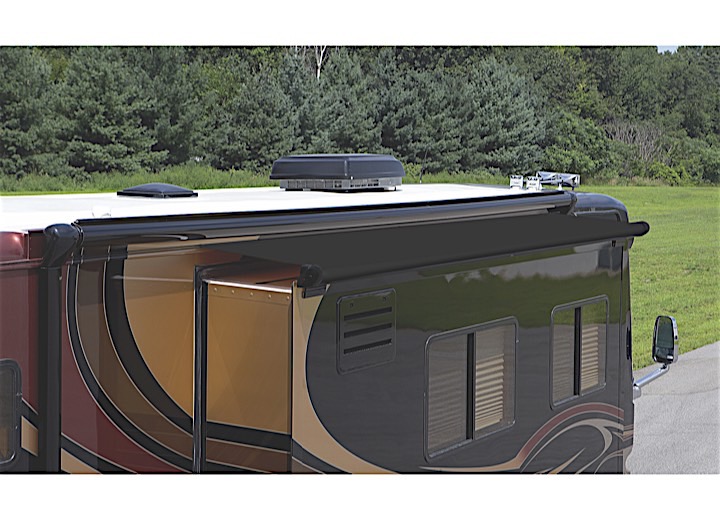
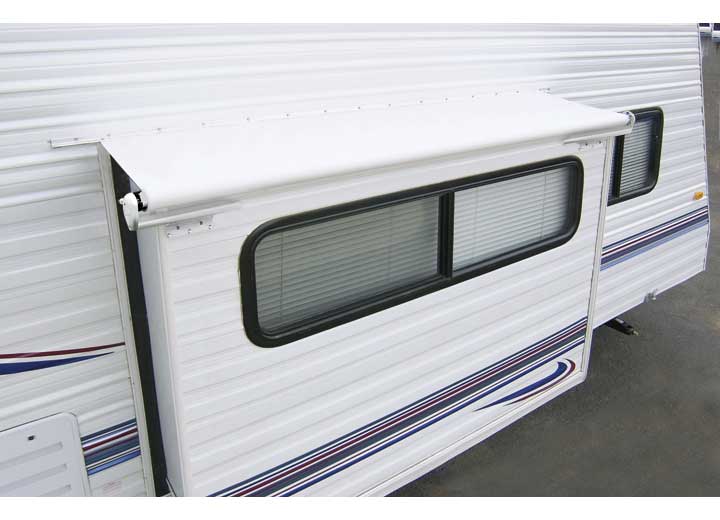
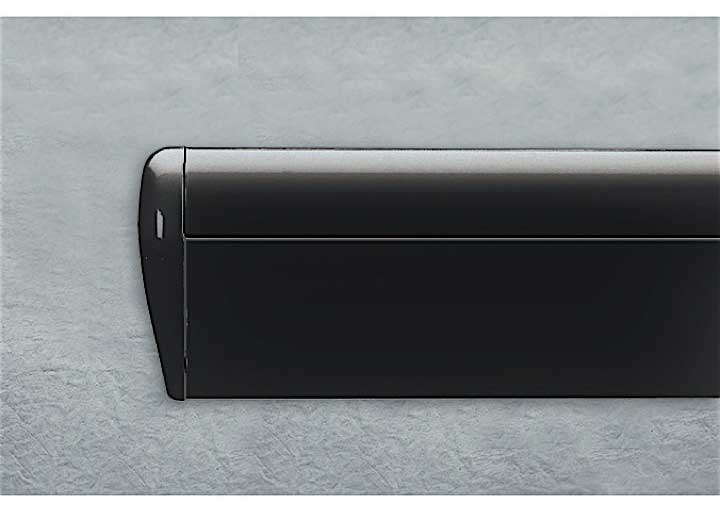
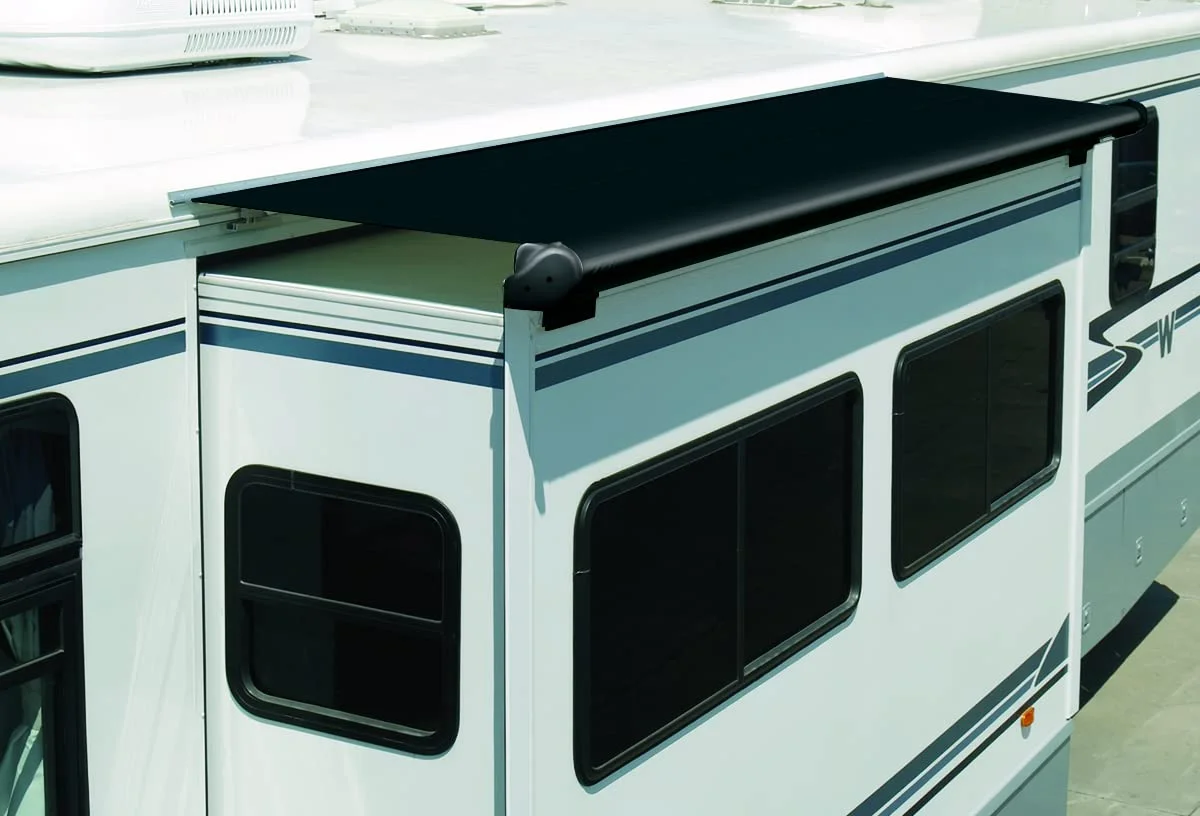
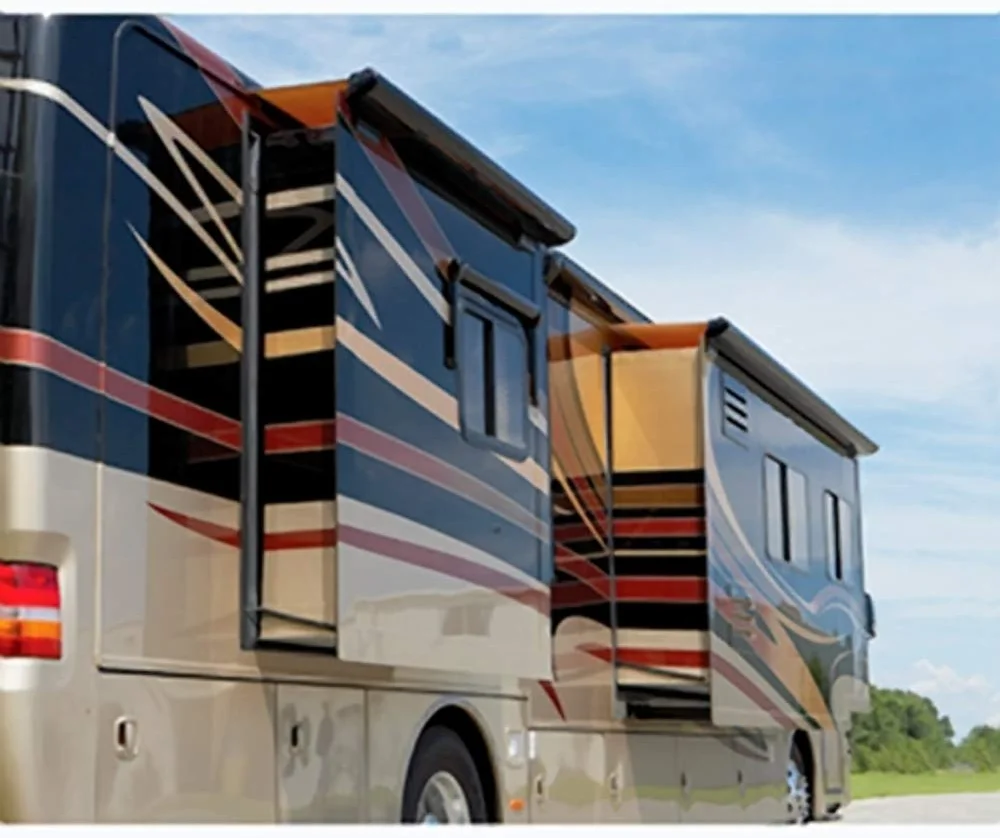
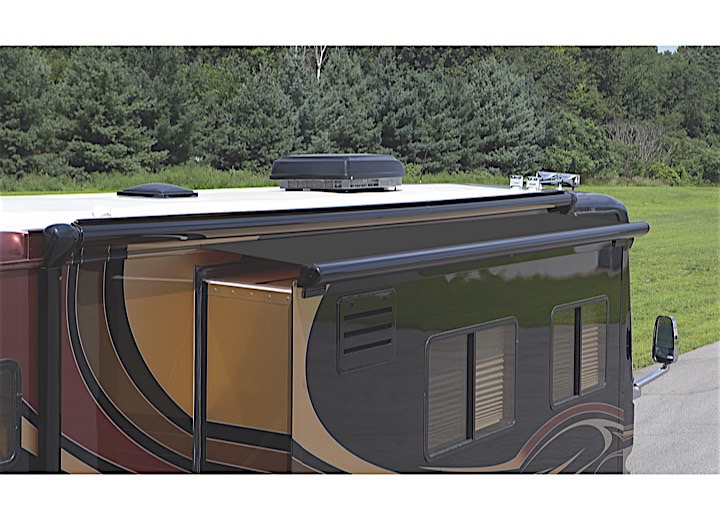
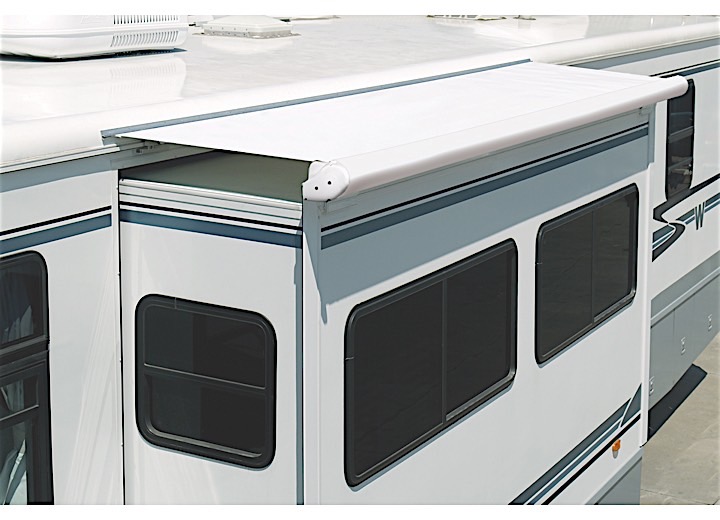
| Slide-out cover (slide topper) | Small awning above a slide room that rolls out as the slide extends | Keeps leaves, water and debris off the slide roof and seals |
| Window and door awnings | Short awnings over a single window or entry | Shade and rain protection where a patio awning does not reach |
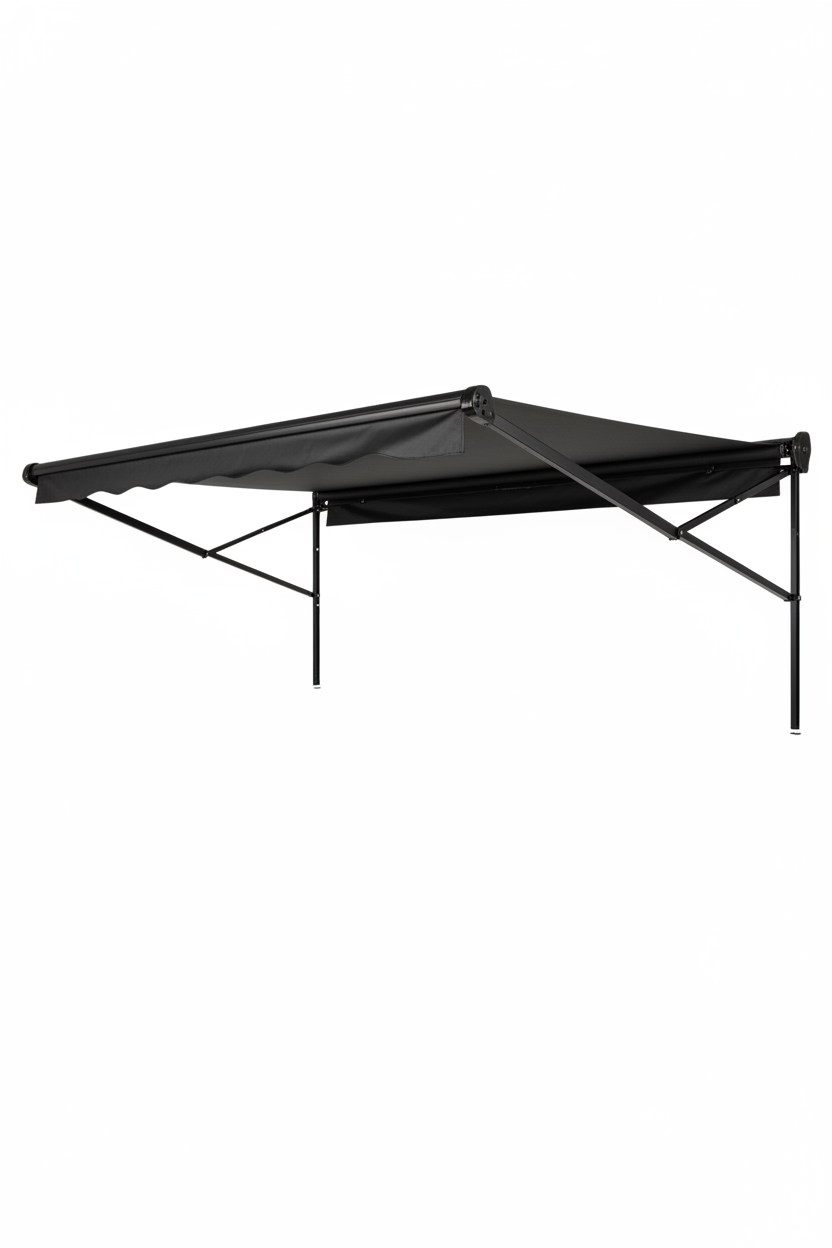
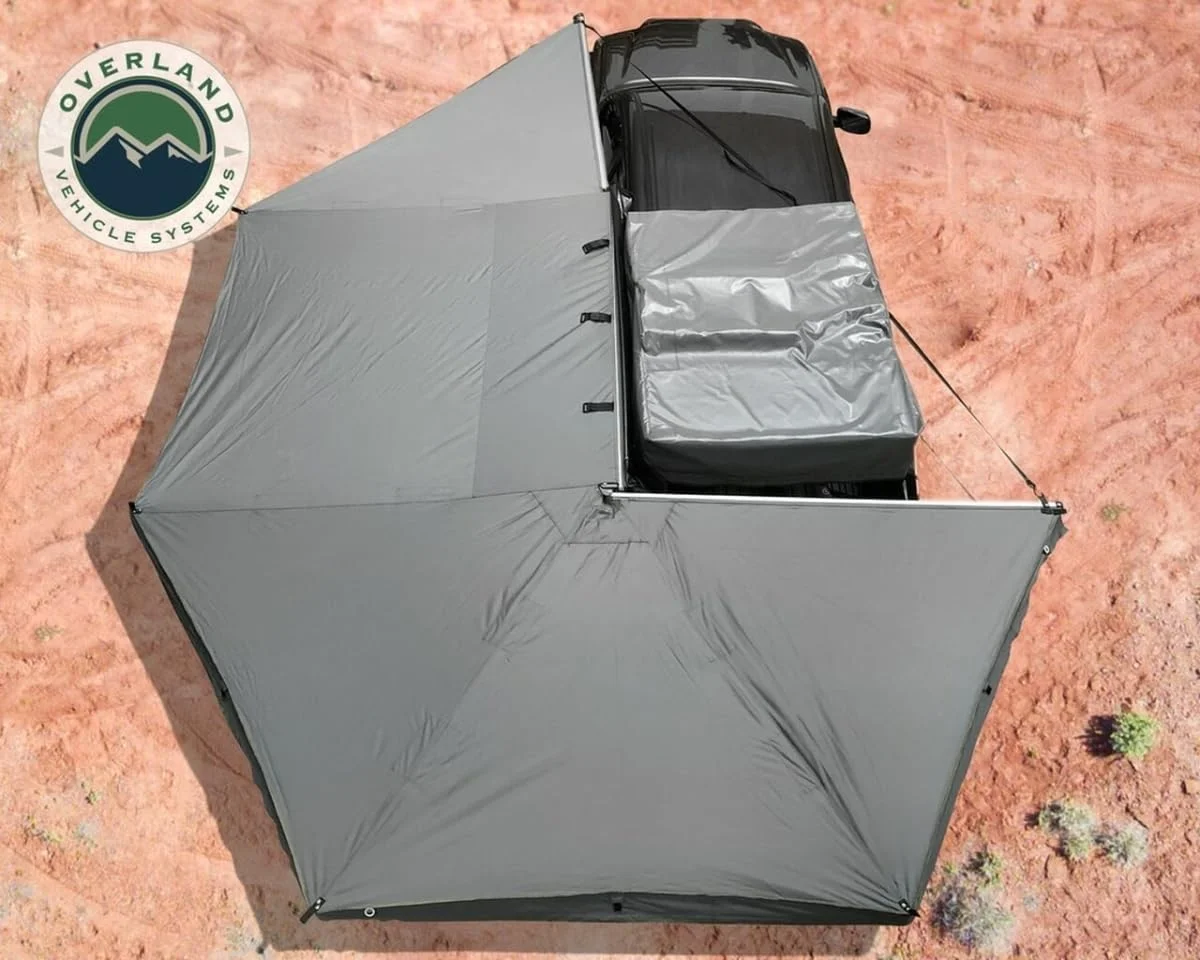
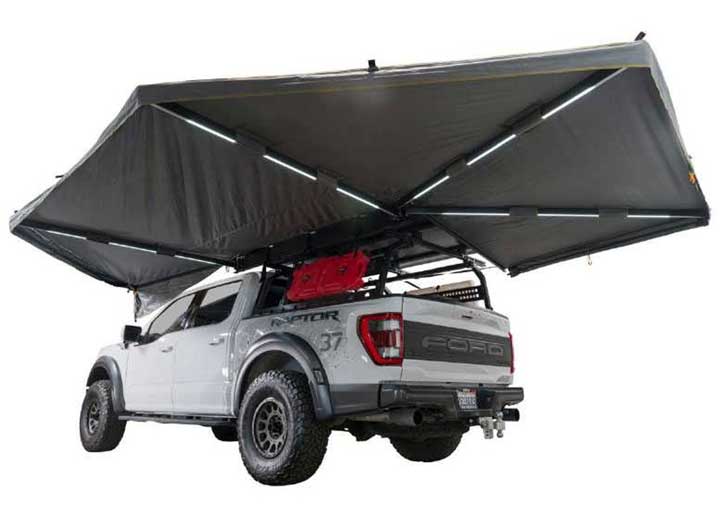
| Vehicle awning | Pull-out or swing-out awning bolted to a roof rack | Truck, SUV and overland rigs. 180 and 270 degree styles |
Manual vs power. A manual awning is simple and reliable, but it takes a minute and both hands to open and close. Power awnings let you retract in seconds when the wind picks up, which is often what saves the fabric. Some power models add LED lighting along the roll tube or options like wind sensing, so check the specific model's features.
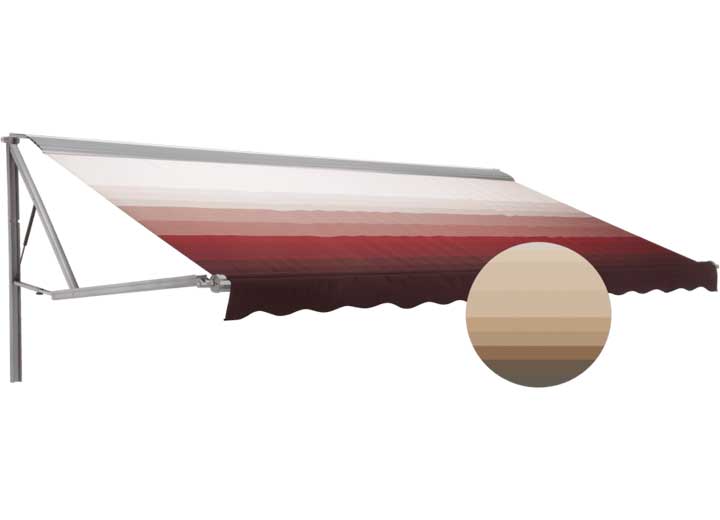
Vinyl vs acrylic fabric. Vinyl is waterproof and easy to wipe clean, which is why most patio awnings use it. It should be dried before it stays rolled up for long, or mildew can form. Woven acrylic breathes and dries quickly but is not fully waterproof. Pick whichever matches your awning model and how you camp.
Measuring for replacement fabric and parts
Replacement fabric is the most common repair, and getting the size right is everything.
- Measure the awning, not the old fabric. Measure from the center of one arm to the center of the other. That number is your awning size.
- Match it to the fabric chart. Replacement fabric is usually listed a little shorter than the nominal awning size, because the fabric fits between the end caps. For example, fabric listed as 16 ft 2 in is commonly used on a 17 ft awning. Always confirm with the manufacturer's sizing chart for your brand and model.
- Check the extension. Many patio awnings extend around 8 feet; confirm yours before ordering a complete awning.
- Note the brand and model. Fabric for a Carefree awning is built for Carefree hardware. Some listings, like the Carefree Alpine fabric, come with a new roller already installed.
Slide-out covers are sized by the width of the slide box. Carefree Leisure covers, for instance, are listed by a length range (130 to 137 inches, 162 to 169 inches and so on), so measure the slide room's outside width and choose the range that contains it.
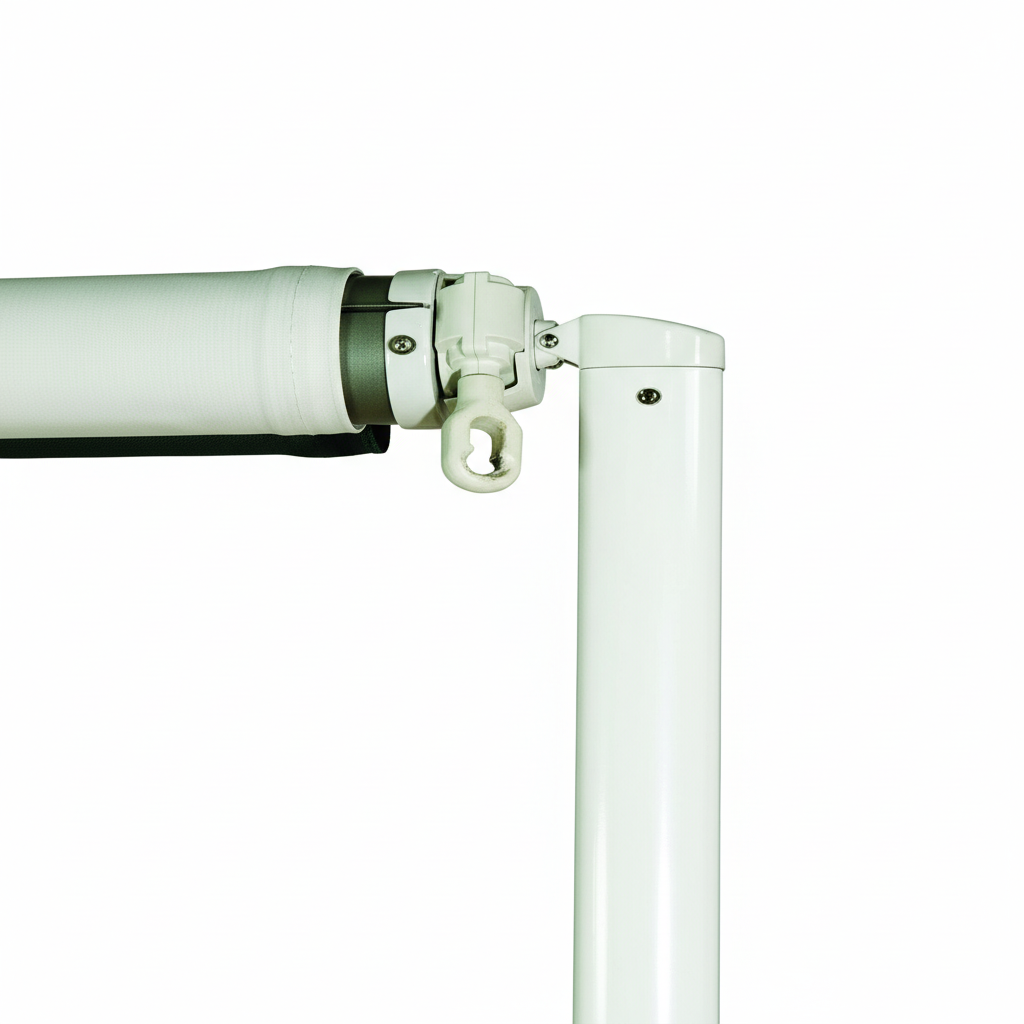
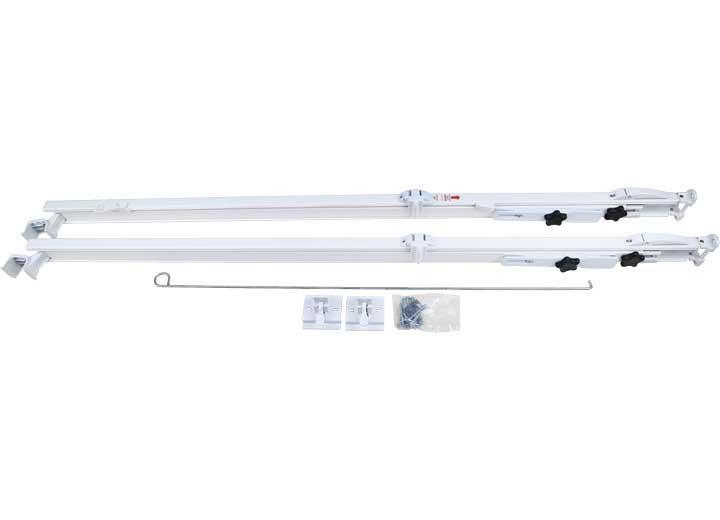
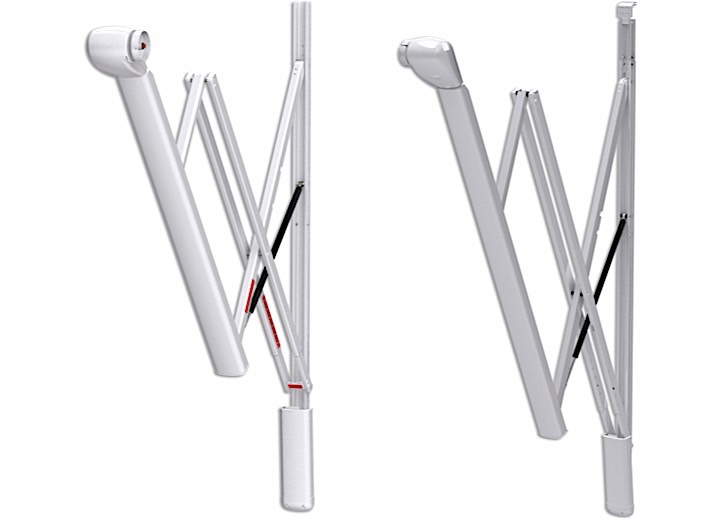
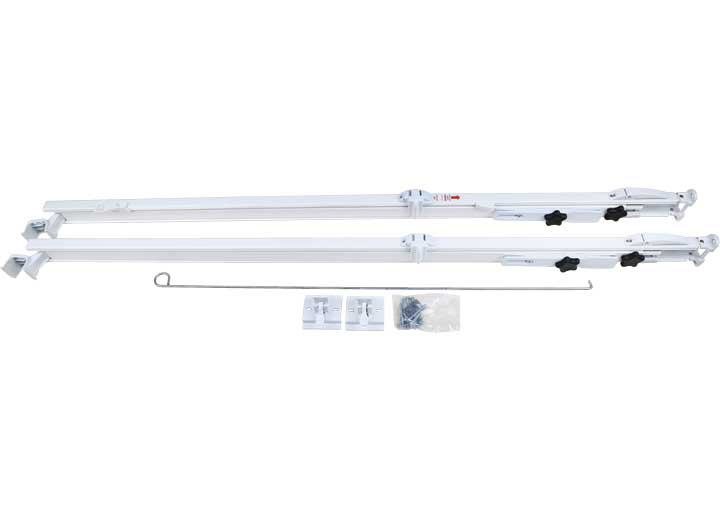
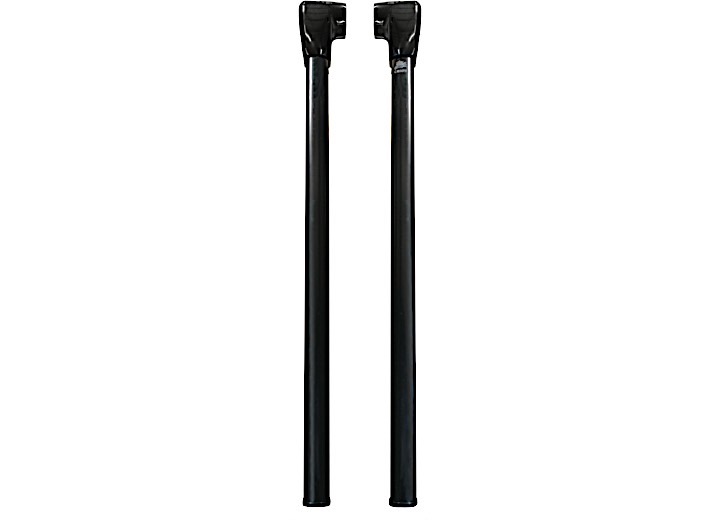
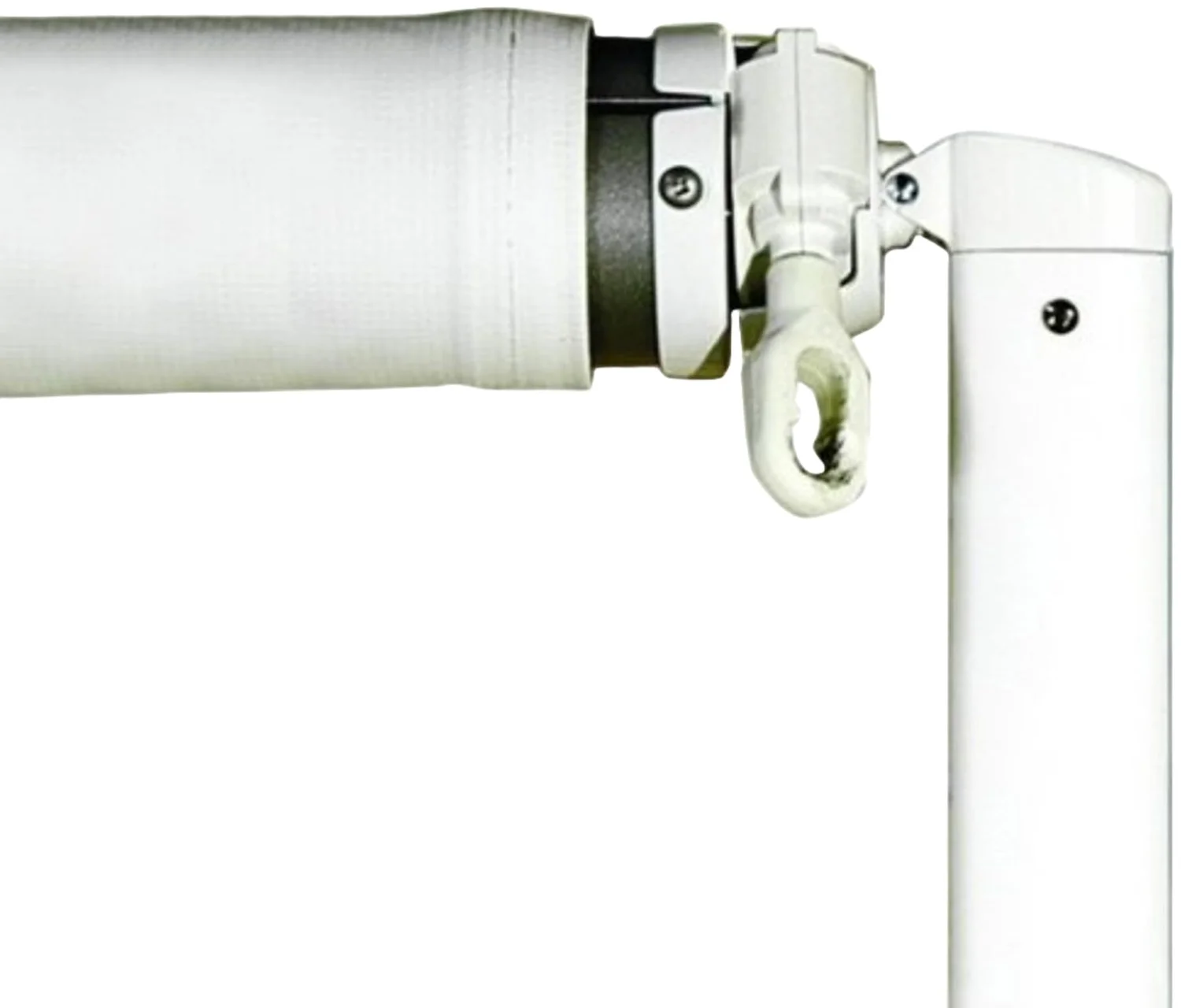
Arms and hardware come in lengths and finishes to match your awning. Carefree sells arm sets (Alpine, Fiesta HD, Pioneer), rafters with gas shocks, sliders, inserts, remote lock assemblies and motor and idler covers. Read the part number on the old part whenever you can.
Using, cleaning and storing an awning
- Wind is the enemy. Retract the awning when you leave the site and when gusts pick up. A few minutes of strong wind can bend arms or tear fabric off the roller.
- Let rain run off. Lower one end so water drains instead of pooling. Pooled water stretches fabric and can collapse the arms.
- Anchor it on longer stays. Tie-down kits like the Camco awning anchor kit with pull tension straps help steady the canopy, but they do not make it safe to leave out in a storm.
- Clean gently. Use an awning cleaner such as Valterra's with a soft brush, then rinse well. Avoid harsh solvents, and follow the fabric maker's guidance.
- Dry before storage. If you must roll it up wet, open it again to dry as soon as you can to prevent mildew.
- Inspect the hardware. Check arm pivots, rivets and mounting brackets each season, and replace worn sliders and inserts before they fail.
Caution on springs: manual awning rollers use a torsion spring that stays under heavy tension. Releasing or re-tensioning it incorrectly can cause serious injury. Follow the manufacturer's instructions exactly, consider a springless roller assembly where offered, or have an RV technician do the job.
Awning rooms, lights and vehicle awnings
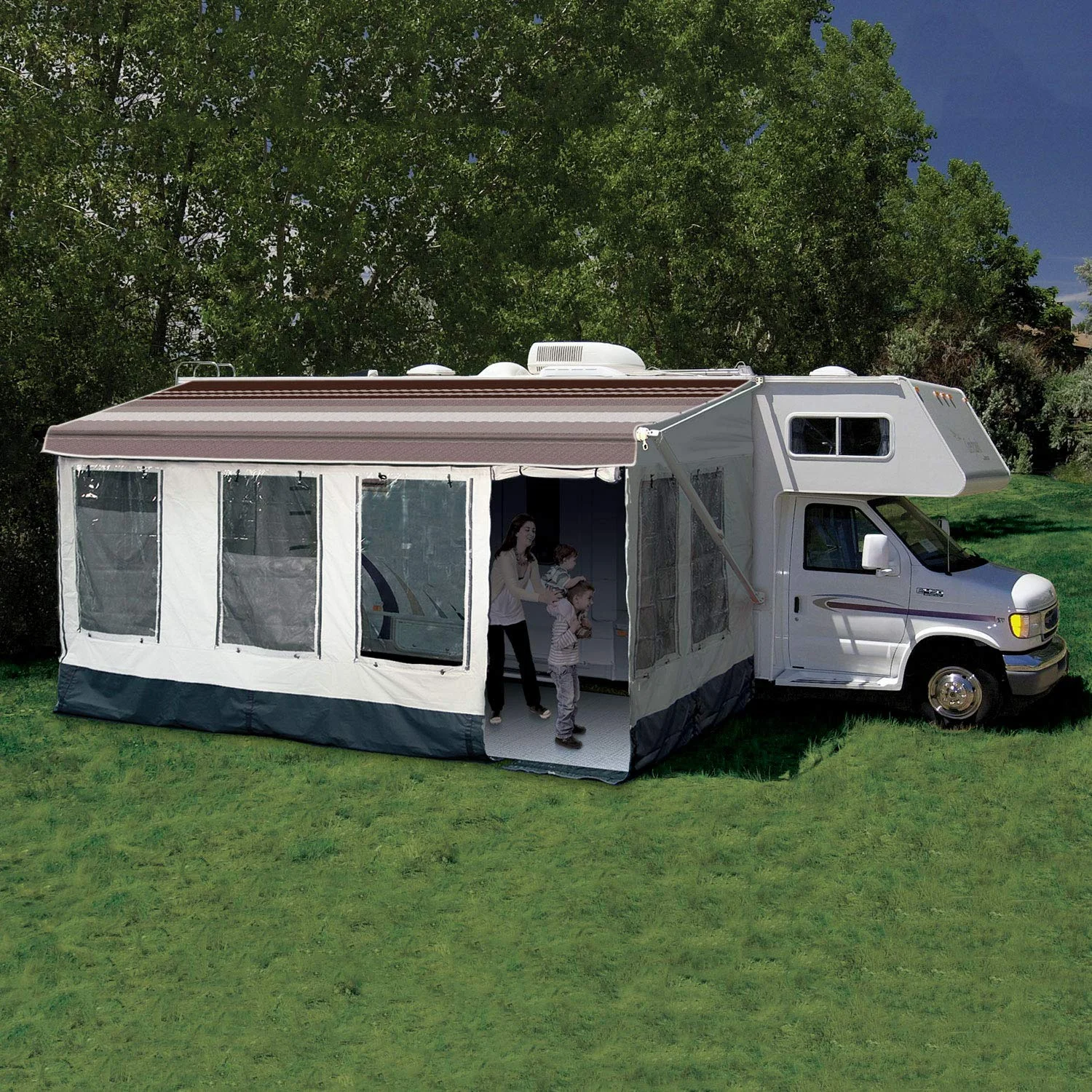
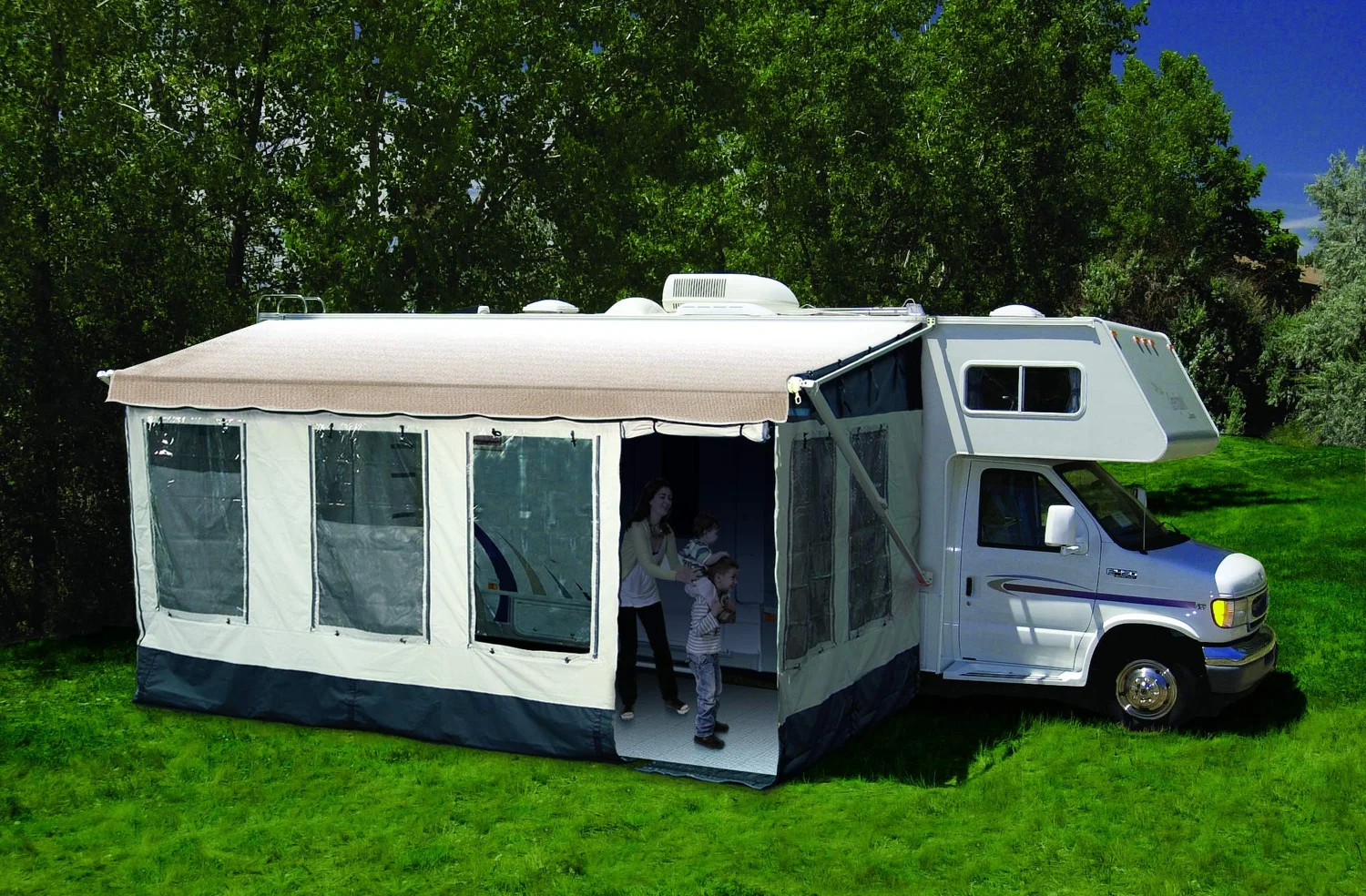
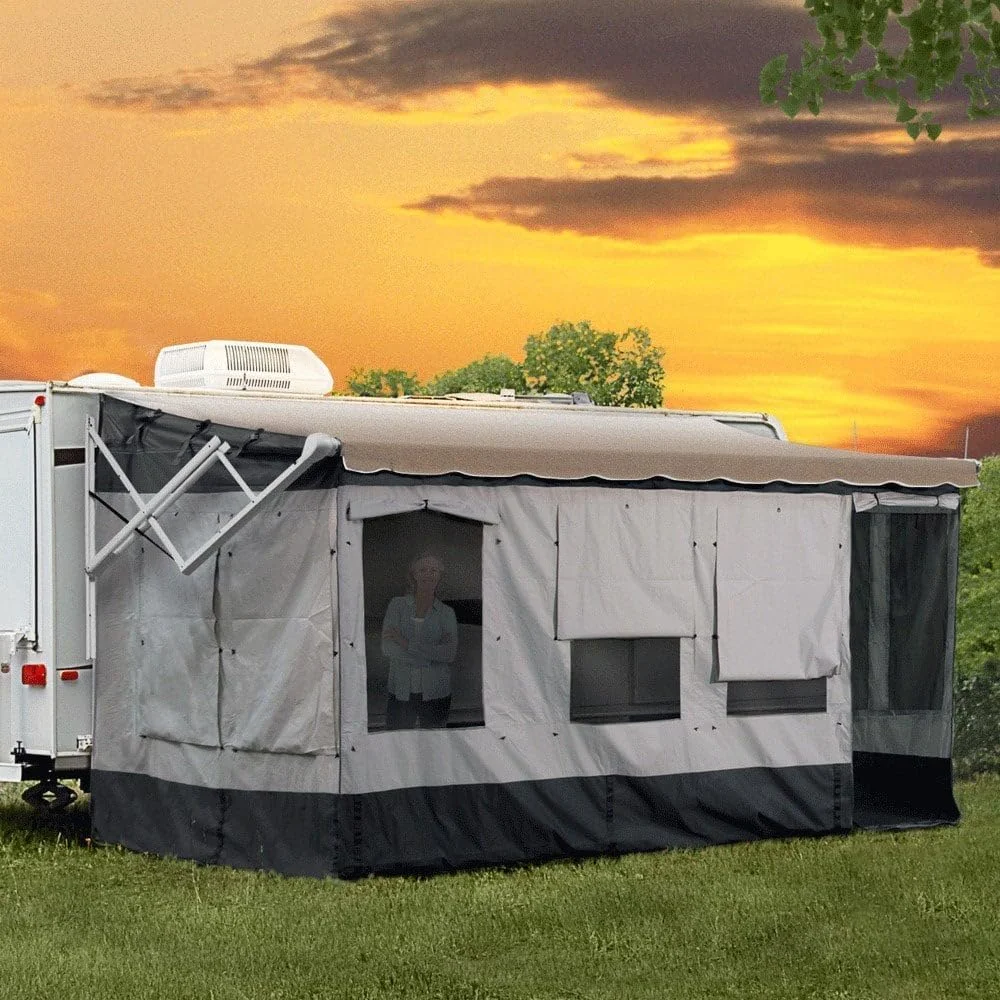
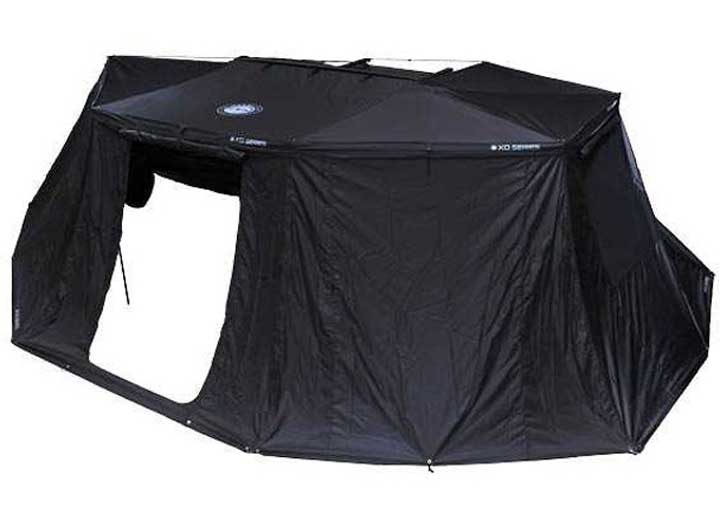
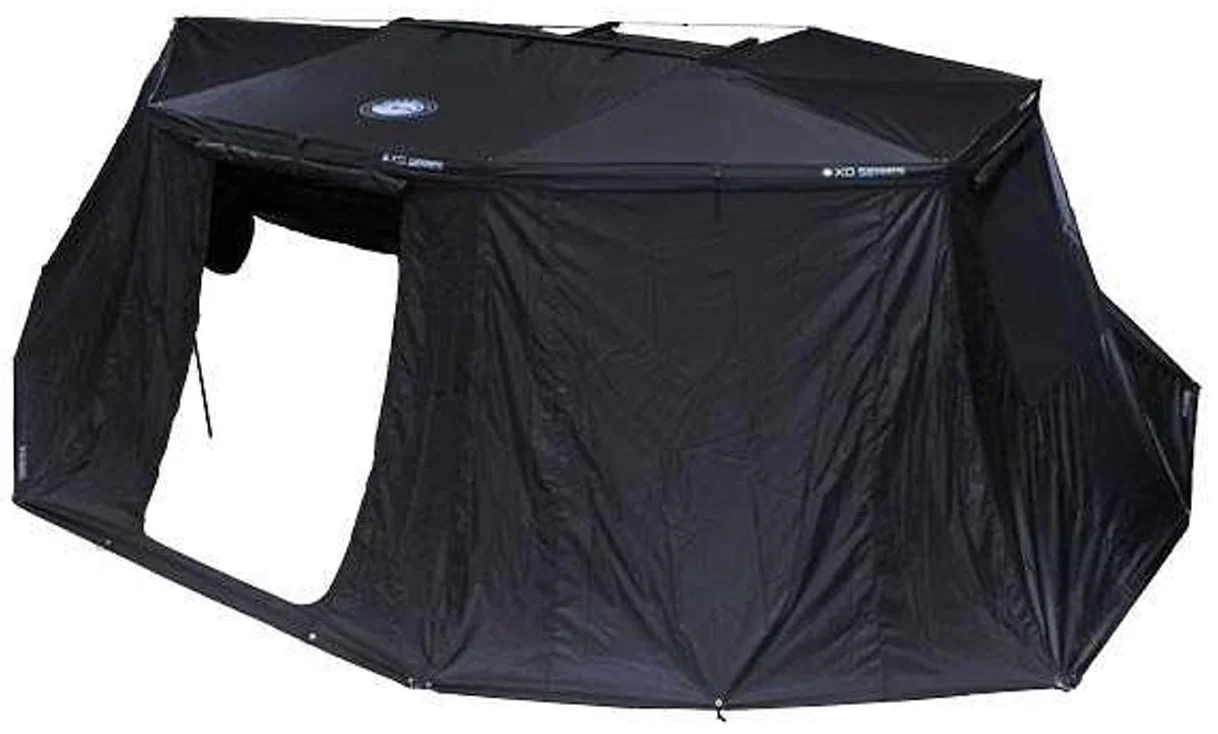
Awning rooms such as the Carefree Buena Vista Plus enclose the space under a patio awning for bug-free, sheltered living space. Match the room to your awning length.
LED lighting makes the patio usable after dark. Options range from universal LED rope light that slides into the awning channel to complete roll tubes with a 12 volt light strip built in, like Velarium's.
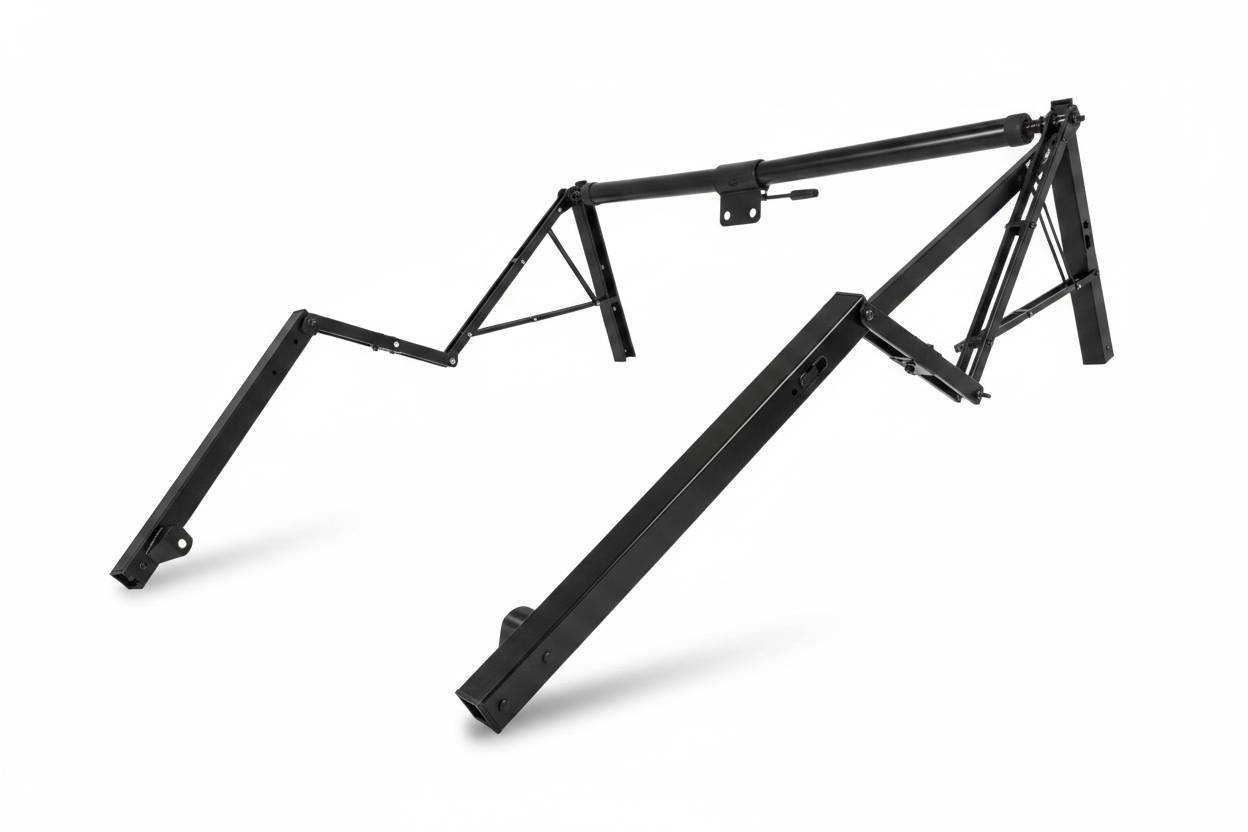
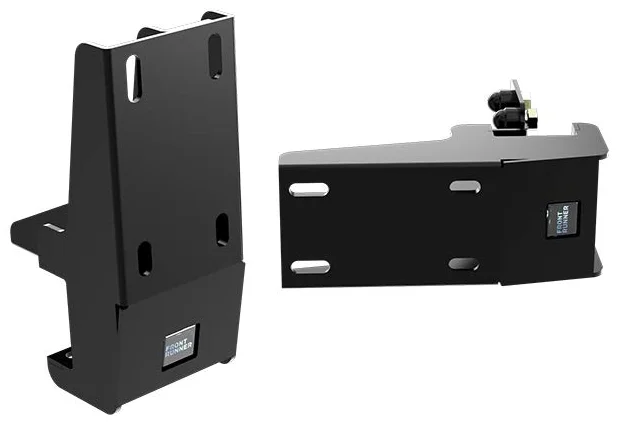
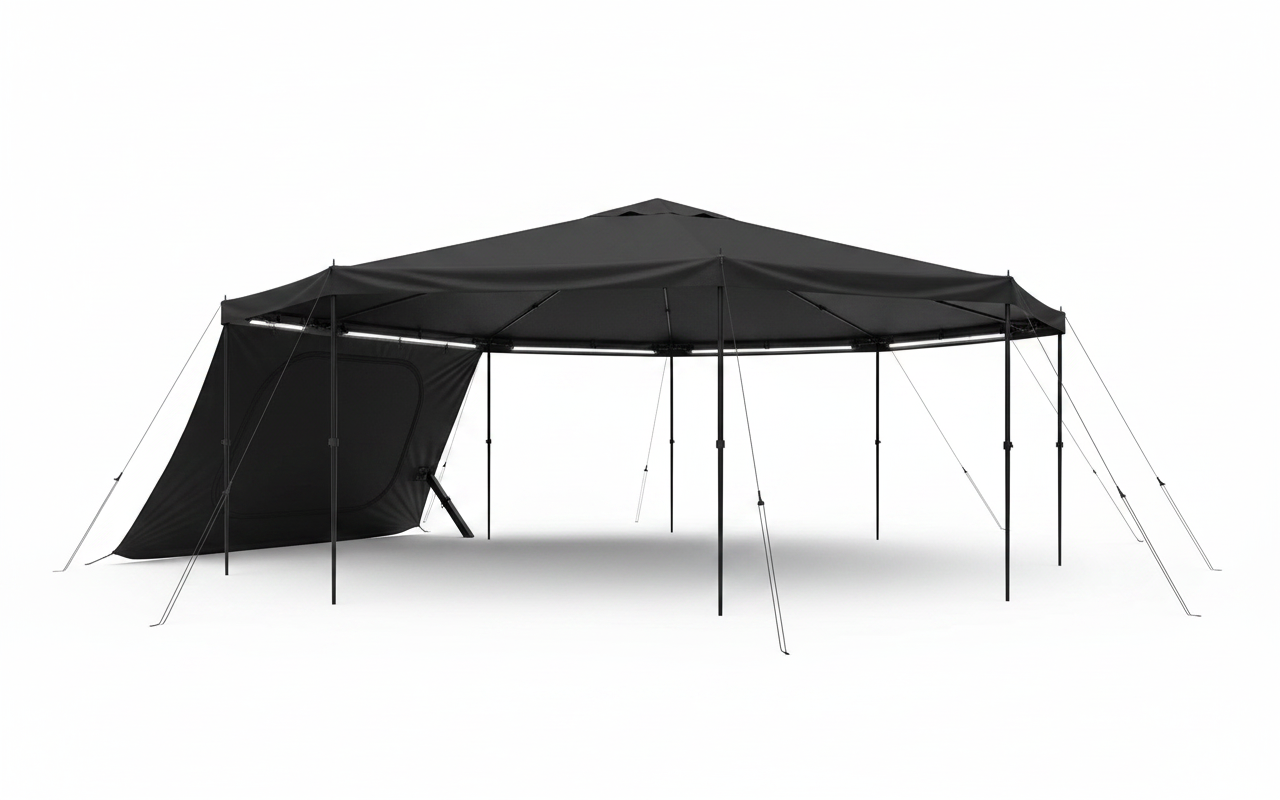
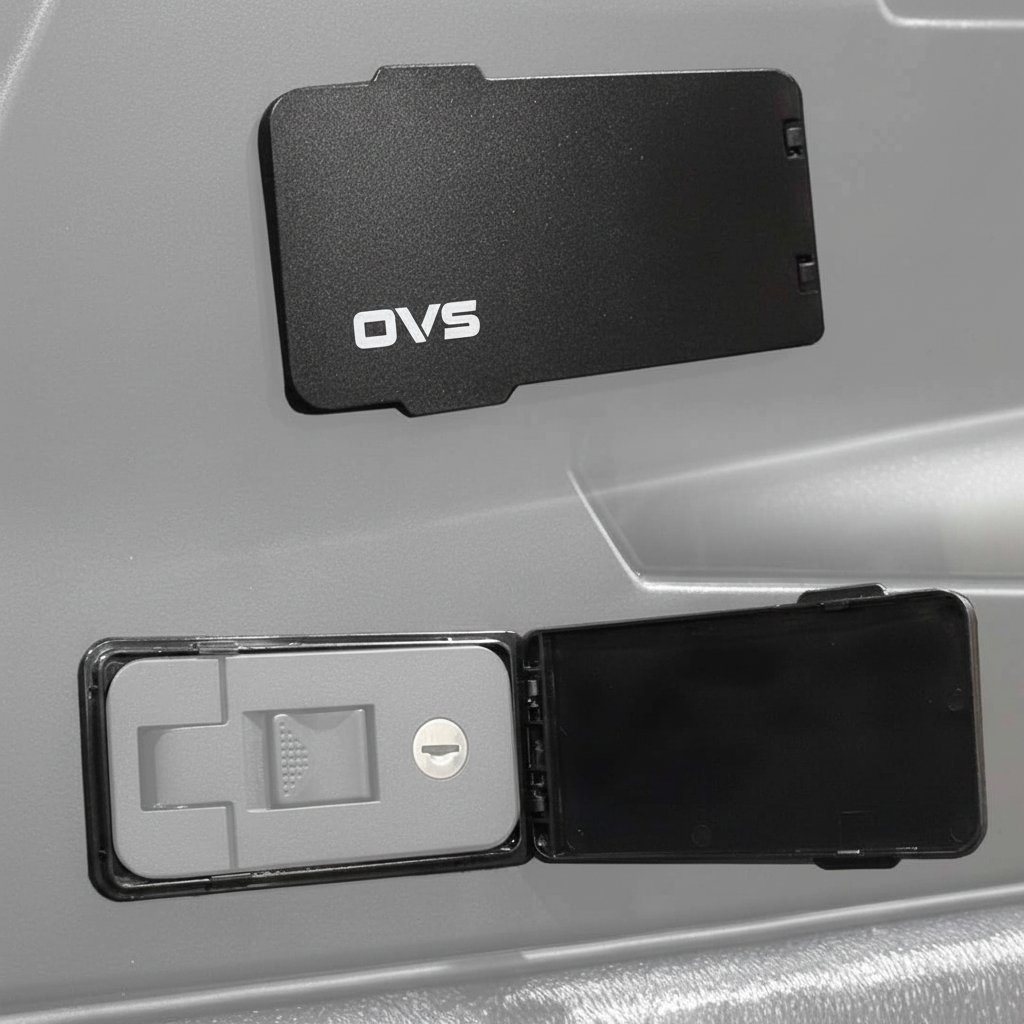
Vehicle-mounted awnings serve truck campers, SUVs and overland rigs. Swing-out designs like the Overland Vehicle Systems Nomadic 270 and 180 wrap shade around the side and rear, while straight pull-out awnings like the Ironman Deltawing cover one side. Most mount to a roof rack through dedicated brackets, so confirm your rack can accept them (see our roof racks and crossbars guide). Matching rooms and enclosures turn the awning into a sheltered camp.
Setting up camp on uneven ground? Level and steady the rig first with our RV stabilizer and leveling jacks guide.