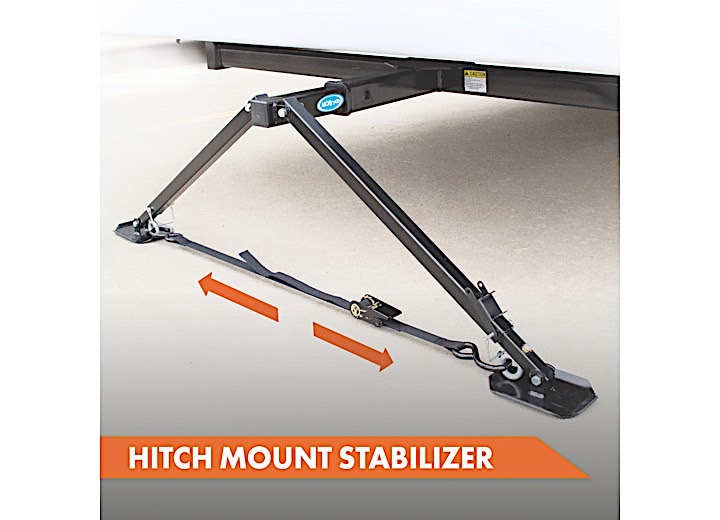
Two jobs get mixed up all the time: leveling (getting the camper flat so doors close, the fridge works and you don't roll out of bed) and stabilizing (stopping the bounce and sway when people walk around inside). Different gear does each one, and using stabilizer jacks to lift the camper is the most common way people bend them.
The right order: level, then stabilize
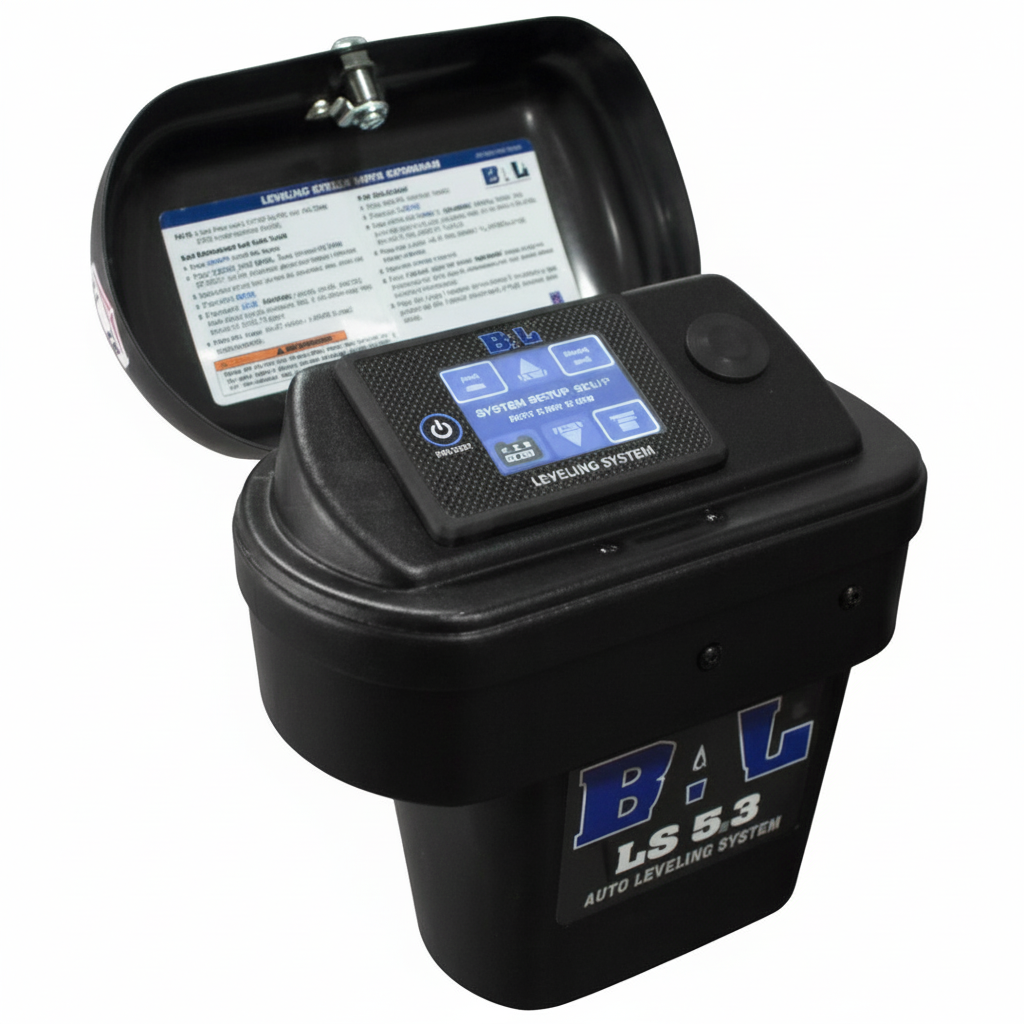
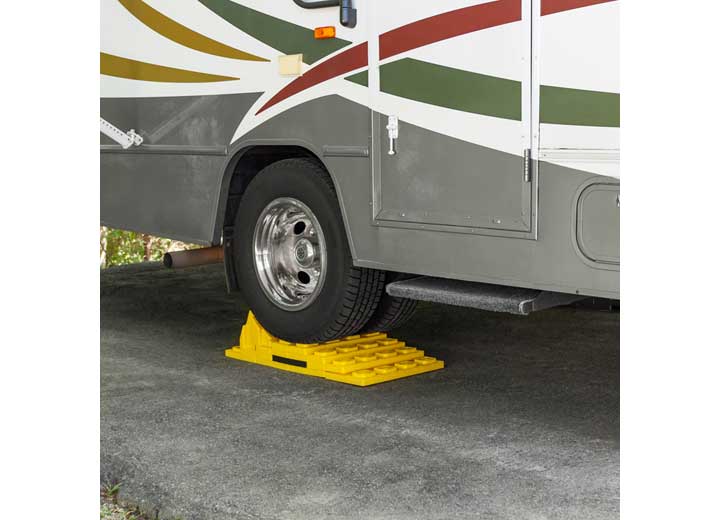
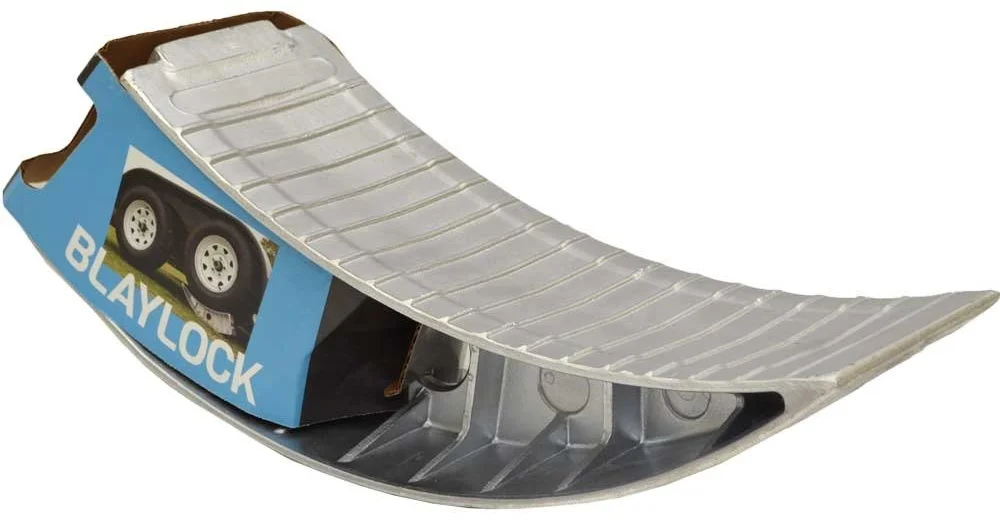
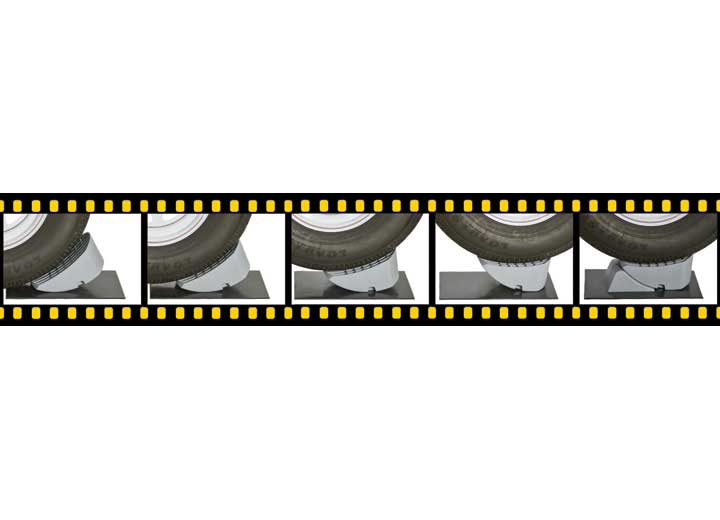
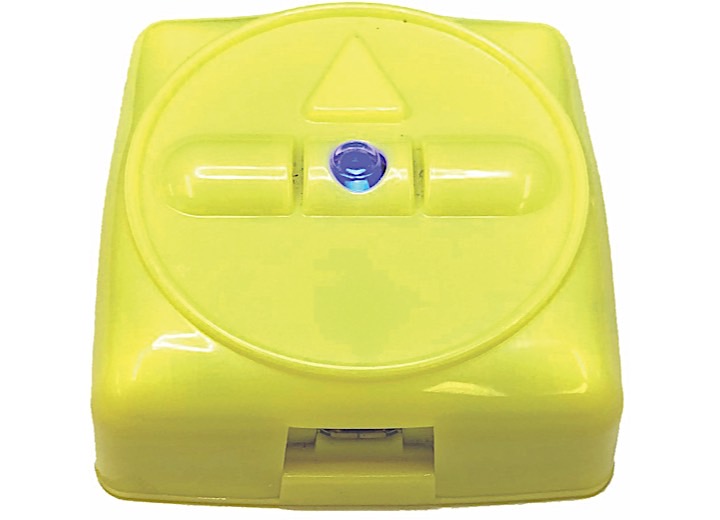
- Level side to side by driving the low-side wheels onto leveling blocks or ramps. A bubble level or an app-based sensor (like Hitch Pitch) tells you how much to raise.
- Chock the wheels before unhitching.
- Level front to back with the tongue jack (travel trailer) or landing gear (fifth wheel).
- Lower the stabilizer jacks until they're snug against the ground, on pads if the ground is soft. Snug, not lifting: their job is to stop movement, not to carry the weight.
Choosing stabilizer jacks
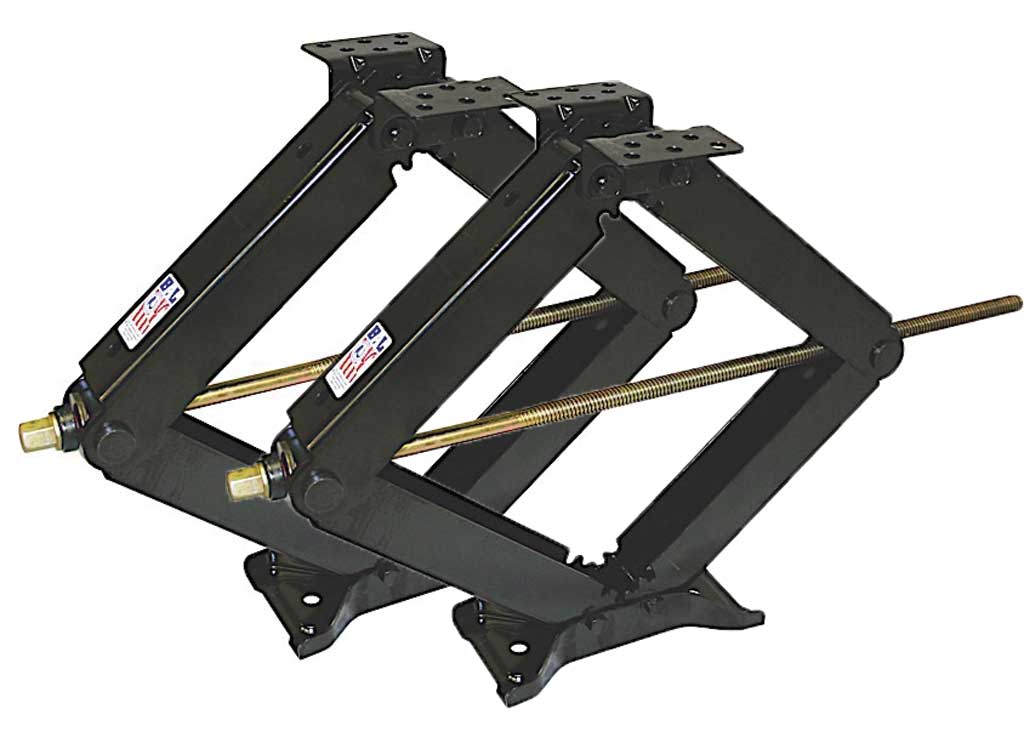
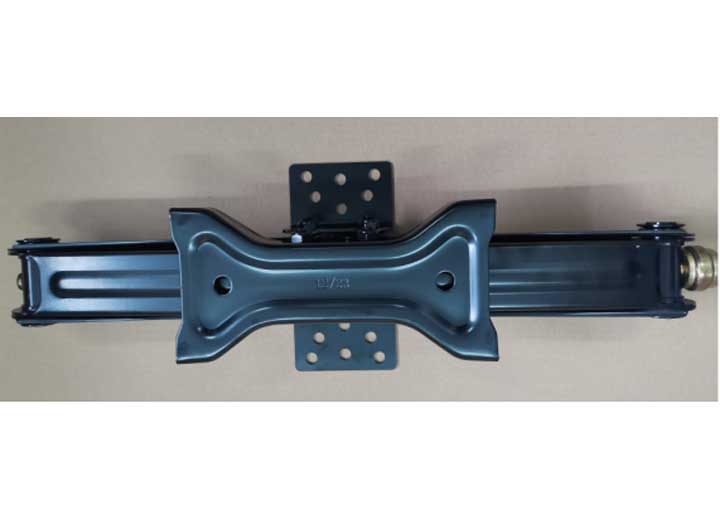
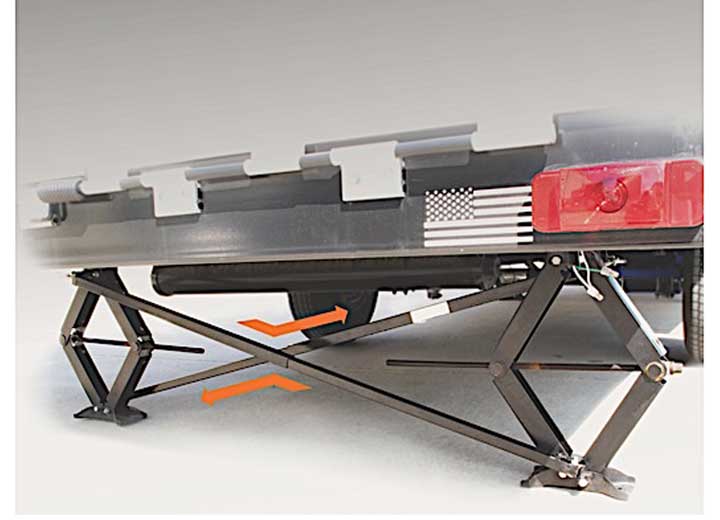
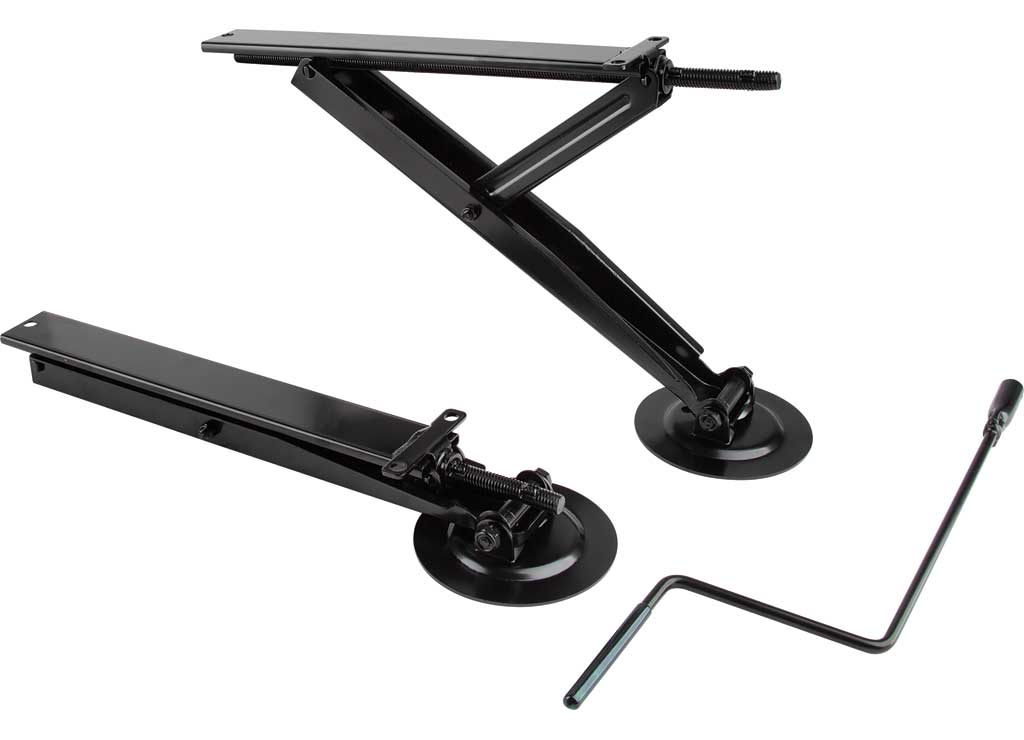
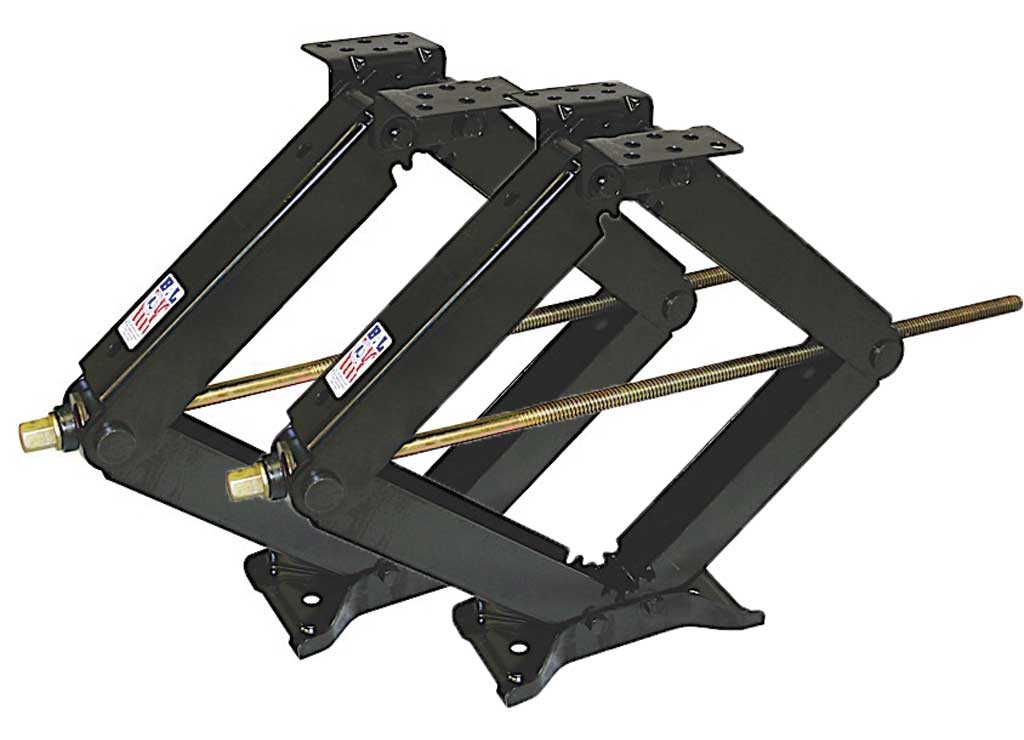
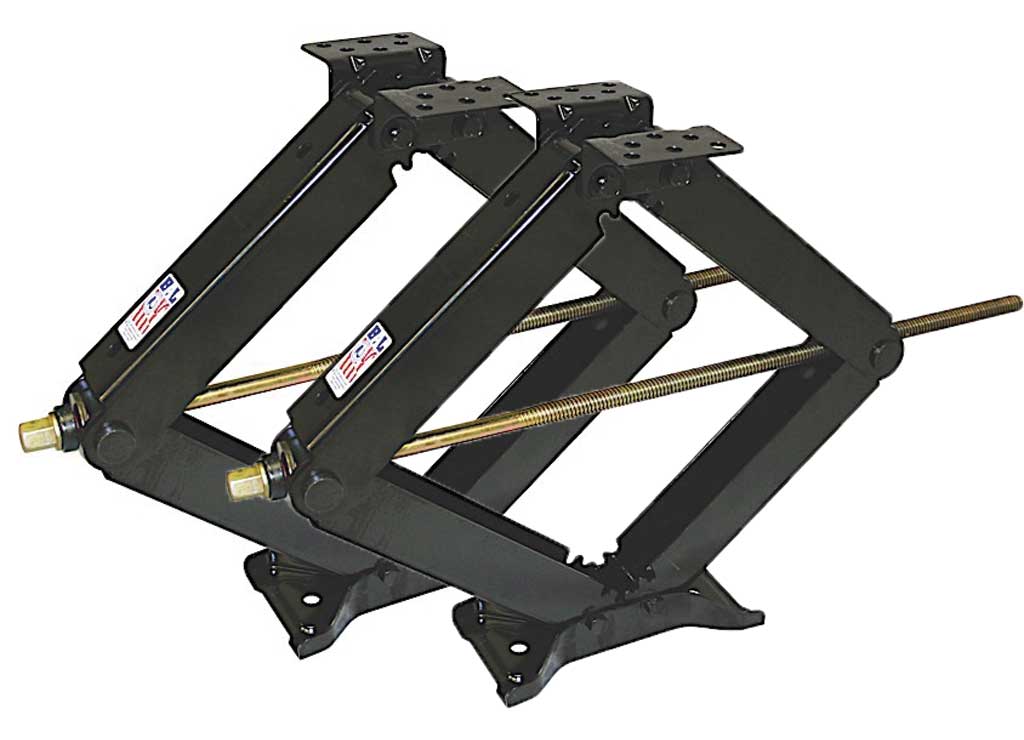
Scissor jacks are the most common stabilizers on travel trailers and fifth wheels. Size them by how far your frame sits off the ground: a 24 inch jack suits most trailers, while a 30 inch jack helps on lifted or tall units and uneven sites. Sets of four (one per corner) give the most solid feel.
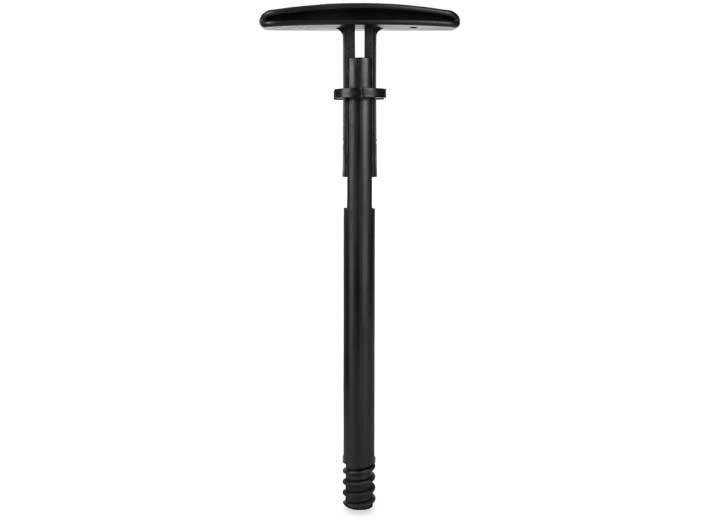
- Crank handles: a deluxe speed handle saves your wrists; many owners use a cordless drill with a socket adapter instead.
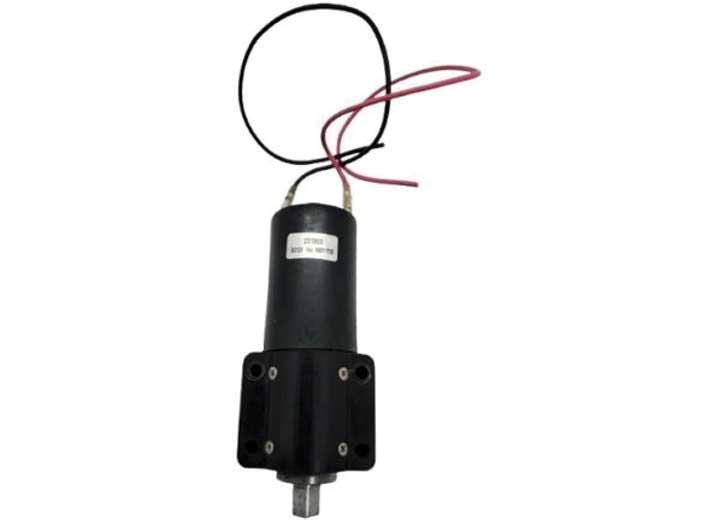
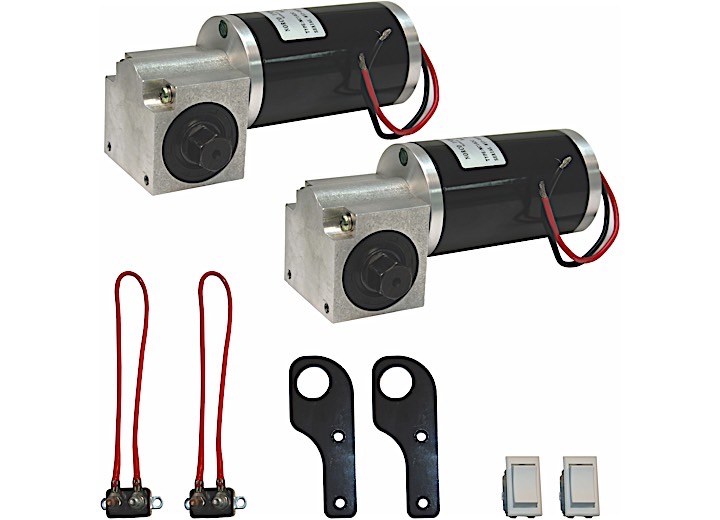
- Replacement motors are available for powered BAL Norco stabilizing jacks.
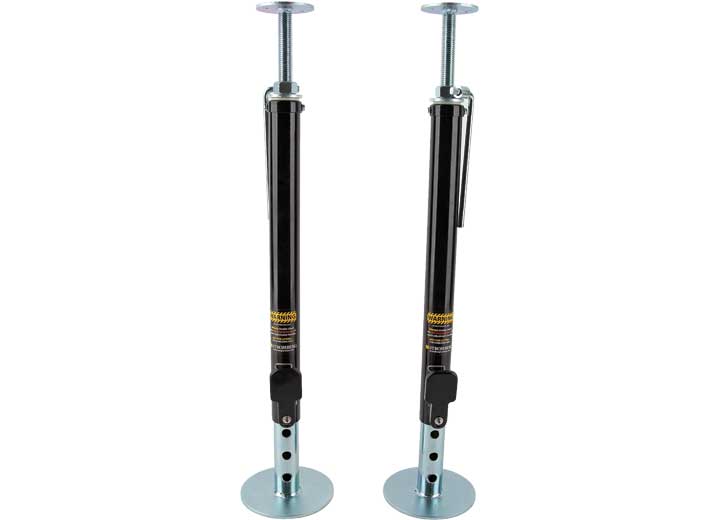
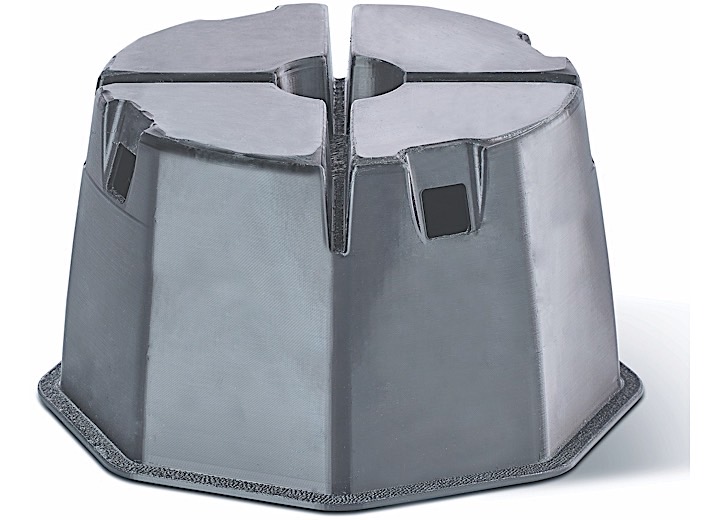
- Tripod and stack-style stands are a quick add-on for extra support at the corners.
Fifth wheels: stop the front-end bounce
Fifth wheels tend to rock fore and aft on their landing gear. Two fixes are popular:
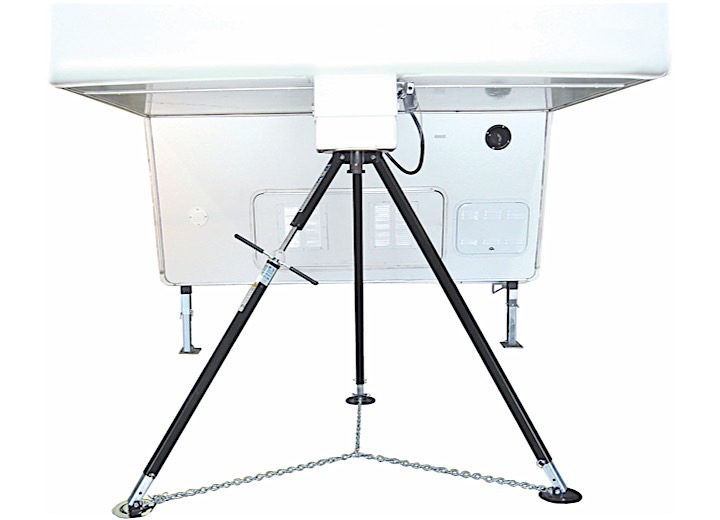
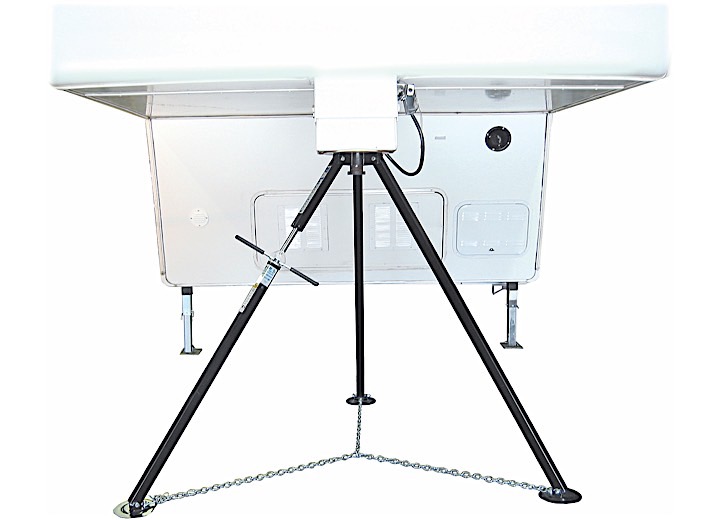
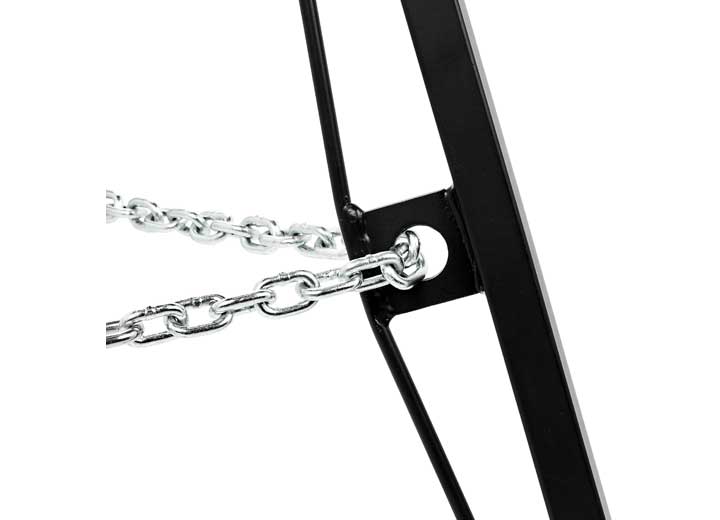
- King pin stabilizers (BAL tripod, Camco Eaz-Lift, RV Pro) brace the king pin against the ground in a tripod, taking out most front-end movement. Many lock with a padlock, which doubles as theft deterrence.
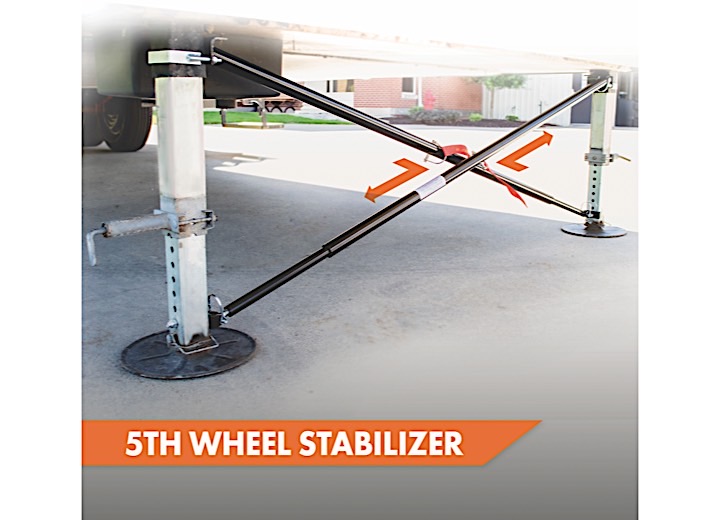
- X-brace systems (MORryde X-Brace) tie the landing gear legs together diagonally so they can't sway.
Pads, blocks and the little stuff that matters
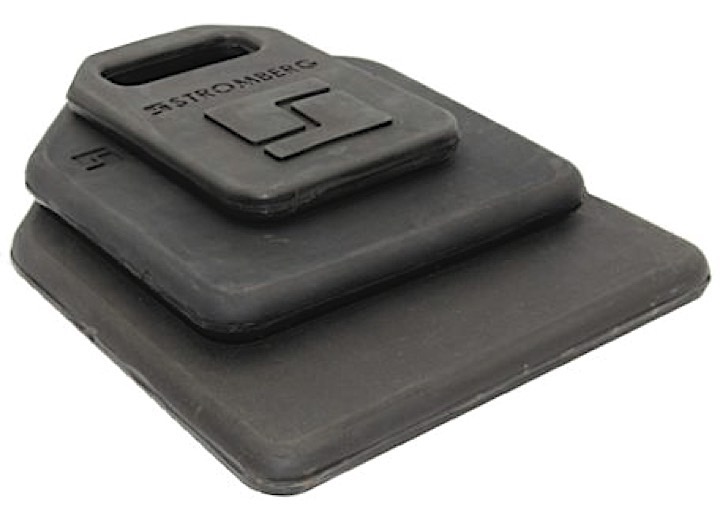
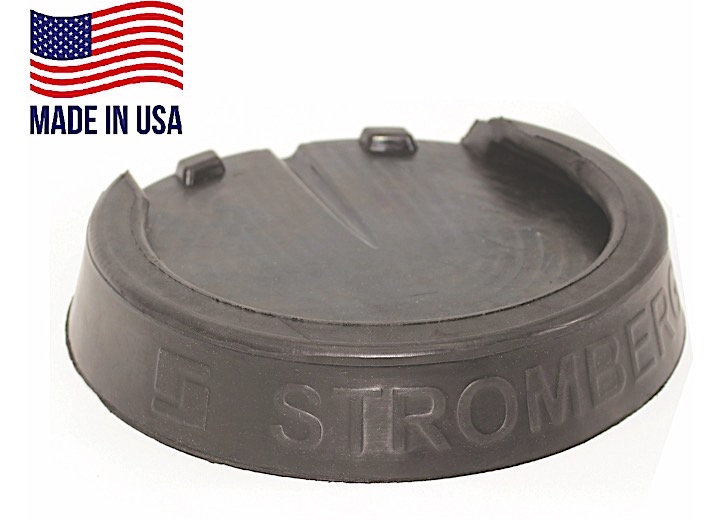
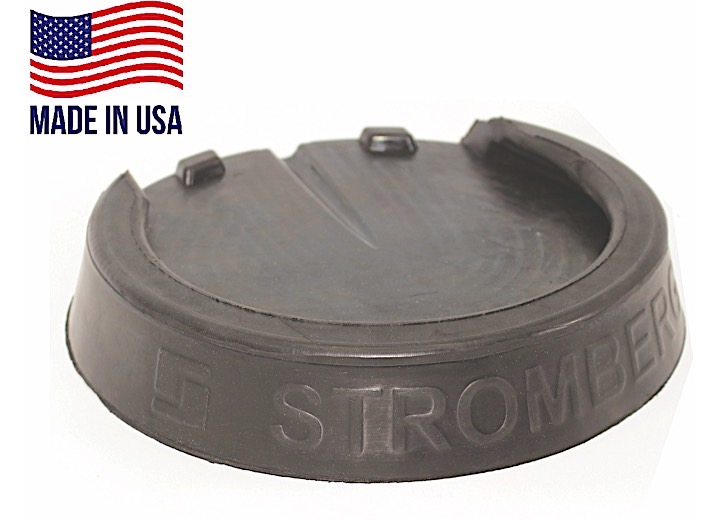
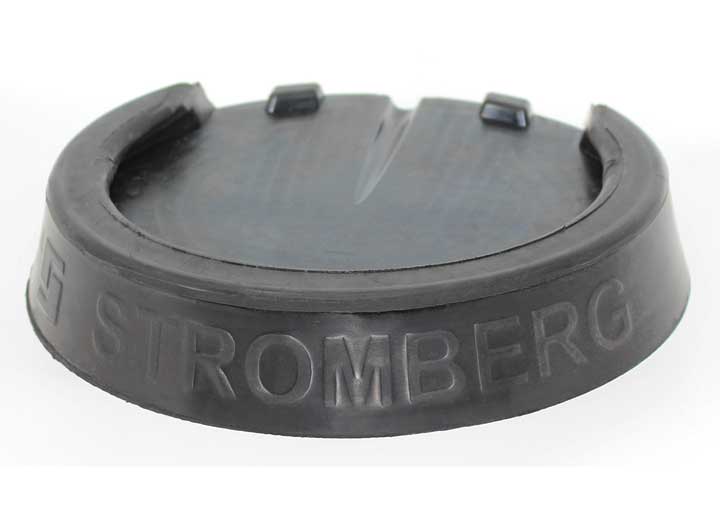
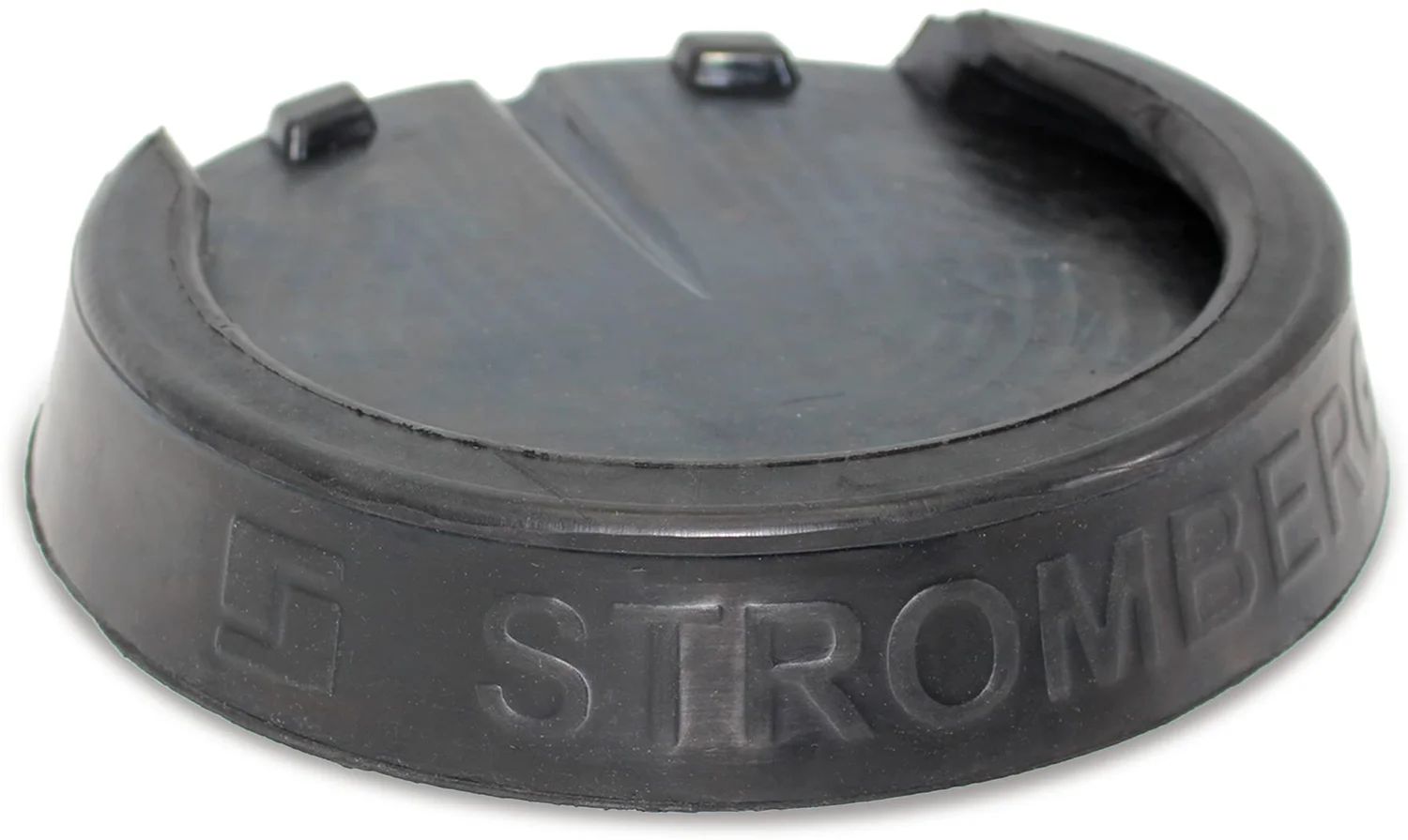
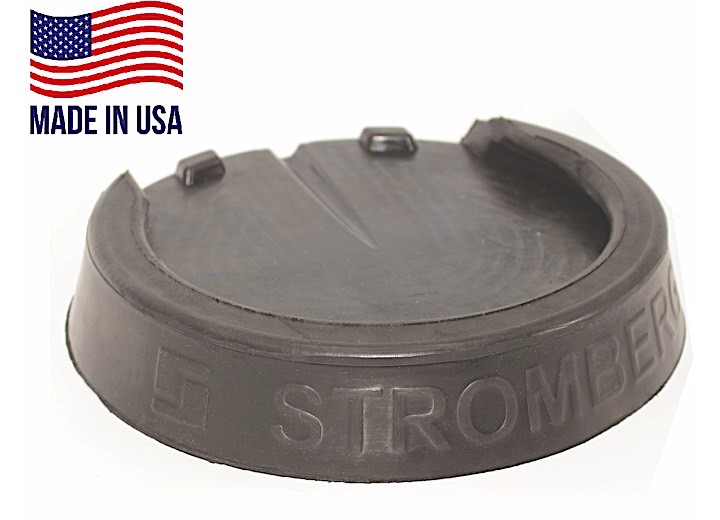
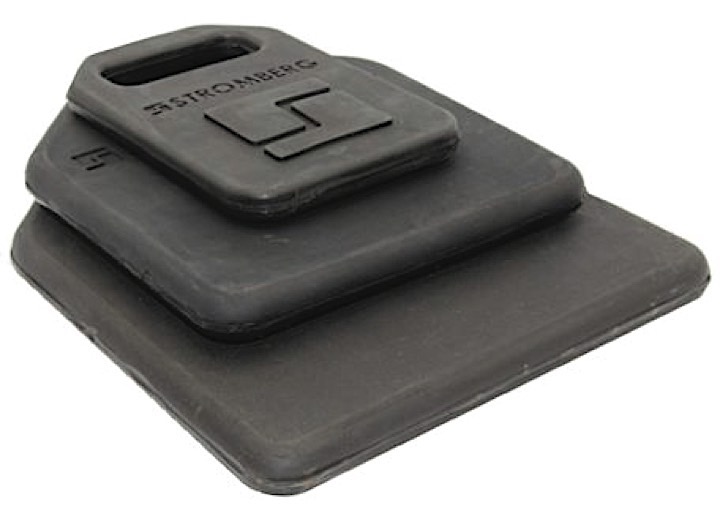
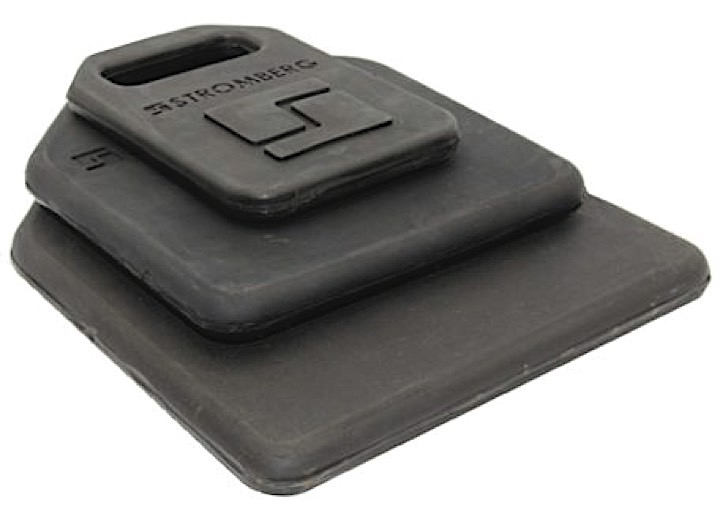
- Jack pads spread the load on dirt, gravel or hot asphalt so jacks don't sink. EPDM rubber pads (Stromberg Carlson) grip and don't crack like wood.
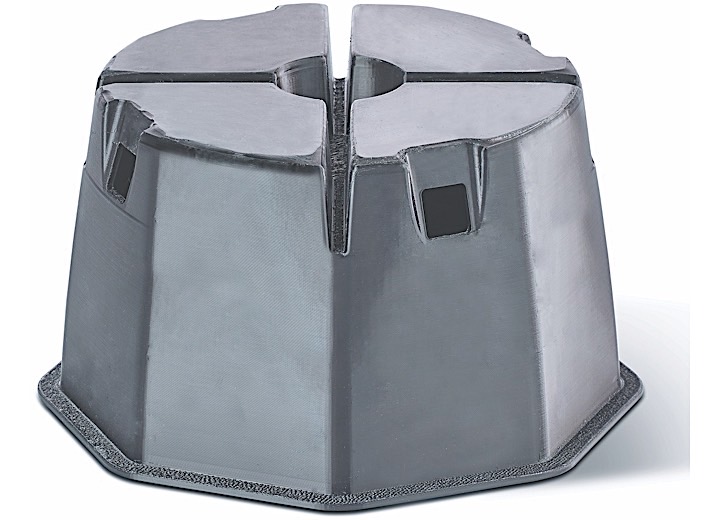
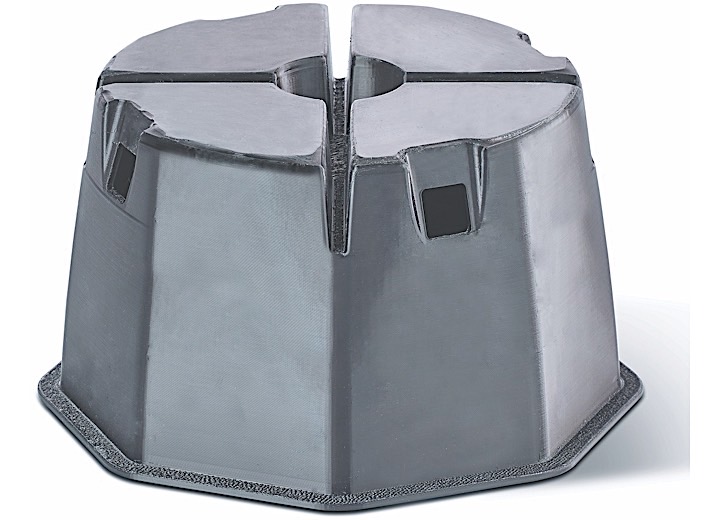
- Leveling blocks stack like building bricks to whatever height you need, and double as pads under jacks.
- Step stabilizers go under the entry steps so the camper doesn't dip every time someone walks in.
Before a trip, check your trailer tires too. They're the other half of a stable setup. See why RV tires fail differently.