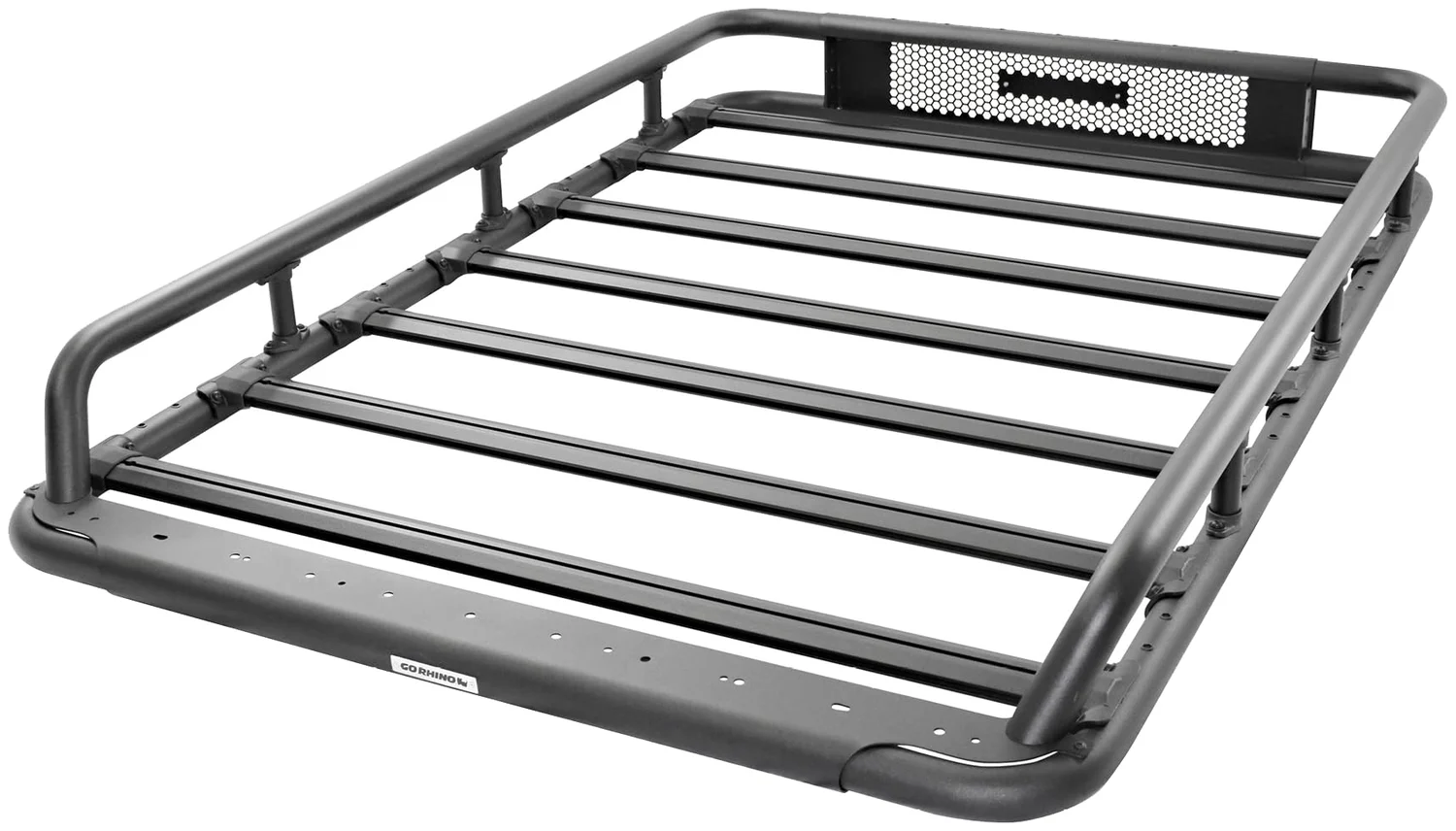
A roof rack turns unused roof space into room for kayaks, bikes, cargo boxes, ladders or a rooftop tent. Every rack system has the same three jobs: attach to the roof (through feet or legs matched to your vehicle), span it (crossbars or a platform), and carry the load (through carriers, baskets or tie-down points). Getting the first part right is what makes a rack quiet, solid and safe.
This guide walks through the main choices: crossbar systems vs platform racks, how to match a rack to your roof type, how much weight your roof can really carry, and the work-van racks and accessories that finish the job. We stock Rhino-Rack Vortex and Heavy Duty bar systems, platform racks from Front Runner, ARB, Overland Vehicle Systems, Body Armor 4x4, Tyger and Go Rhino, commercial van racks from Holman, Weatherguard and Westin, and fitting parts from Exposed Rack, Surco and G3.
Crossbars vs platform racks
| Two-bar crossbar system | Platform (flat) rack | Van / work rack | |
|---|---|---|---|
| What it is | Two bars across the roof on vehicle-specific feet | A flat tray of slats or a frame covering most of the roof | Heavy crossbars or a ladder-style rack for commercial vans |
| Best for | Kayaks, bikes, skis, cargo boxes, everyday use | Overlanding, rooftop tents, lights, recovery boards, jerry cans | Ladders, pipe, conduit, lumber |
| Trade-offs | Lighter and cheaper; loads need a carrier | Heavier and pricier; more wind noise and drag | Vehicle-specific; usually stays on full time |
| Examples | Rhino-Rack Vortex 2500, Heavy Duty 2500, Exposed Rack Oland bars | Front Runner Slimsport, ARB flat rack, Go Rhino SRM 600, Tyger platform | Holman crossbar racks, Weatherguard and Westin van racks |
Bar profile matters. Rhino-Rack's Vortex bars use an aerodynamic wing shape that cuts wind noise and drag, which suits daily drivers. The Heavy Duty bars use a rectangular profile built for heavier, rougher use. Many accessories fit both, but check the accessory's mounting method (T-slot channel or clamp) against the bar you choose.
Platform racks spread the load across more of the roof and give you dozens of tie-down points. They are the usual choice for light bars, rooftop tents and long trips. Several are made for specific vehicles, such as the Front Runner Slimsport for the Tacoma, the OVS rack for the 4-door Bronco hardtop and the Body Armor hardtop rack for the Wrangler.
Matching a rack to your roof
The single biggest fit question is what your roof looks like. Rack systems are sold as a set of bars plus a vehicle-specific fitting (legs, feet, pads and clips), so start here:
- Bare (naked) roof: no rails at all. The feet sit on rubber pads and clamp into the door openings with vehicle-specific clips. Rhino-Rack's DK fitting kits (4 pads and 4 clamps) are an example; each kit is shaped for particular models.
- Raised rails: rails that run front to back with a gap underneath. These are the easiest to fit, and universal clamps or fixing kits (like G3's kit for integrated rails) often work.
- Flush rails: rails bonded to the roof with no gap. These need a specific leg kit, such as the Rhino-Rack Vortex Aero SX leg kit for factory flush rails.
- Fixed points and tracks: threaded mounting points under trim covers or channels in the roof. Many trucks, Jeeps and vans use these, along with dedicated mounting kits and brackets (for example ARB's 4Runner mounting kit or Exposed Rack's mid brackets for the Jeep JL/JT).
Always confirm fitment with the rack maker's vehicle lookup using your exact year, model and body style. A rack that fits a 4-door may not fit a 2-door, and hardtop and soft-top Jeeps often take different kits. If your bars use a T-slot channel, adapters like the Surco channel adapter set let you bolt on accessories from other systems.
Load limits, install and noise
Dynamic vs static load. Your vehicle manual lists a dynamic roof load limit for driving. It is far lower than the static load the roof can hold when parked, because braking, bumps and cornering multiply forces. The dynamic number must cover the rack itself plus everything on it. A rooftop tent is the classic example: the tent must be within the dynamic limit while driving, but when parked the roof and rack can support the sleepers too, provided the rack is rated for it. When the vehicle, rack and accessory ratings differ, the lowest number wins.
Install tips:
- Measure and set the bar spread to the rack maker's spec, keeping the bars level and centered.
- Torque the fittings to spec. Over-tightening can dent roof panels; under-tightening lets the rack walk.
- Recheck every bolt after the first drive or two and again periodically, especially after off-road use.
- Keep the rack's height in mind for garages, parking structures and drive-thrus.
Noise and fuel economy. Any rack adds some drag. Aero bars, trimming bar overhang, adding a wind fairing and removing empty carriers all help. A loaded platform rack has a noticeable effect on mileage, so some owners take theirs off between trips.
Work van racks and rack accessories
Commercial vans need racks built for their roofs and payloads. Holman makes crossbar racks for the Ford Transit and Transit Connect, Ram ProMaster City, Nissan NV200 and GM vans, in steel or aluminum, along with third middle crossbars for longer loads and a conduit carrier kit for pipe. Weatherguard and Westin racks cover the Ram ProMaster and Mercedes Sprinter by wheelbase, so match the 136, 144, 159 or 170 inch length to your van.
Carriers and tie-downs finish the system:
- Bike carriers like the Inno fork-lock carrier for T-slot crossbars.
- Kayak and canoe carriers (J-cradles, saddles and rear-loaders). See our kayak racks guide.
- Tent and accessory brackets, such as Exposed Rack's click-in universal brackets.
- Straps rated for roof loads, like a 12 foot boat strap, plus bow and stern lines for long items.
Carrying bikes behind instead of on top is often easier to load; compare options in our hitch bike racks guide.