
A boat trailer does two jobs: it carries the hull safely at highway speed, and it lets you launch and load without a fight at the ramp. Most of the parts that make that happen are simple wear items: bunk carpet and bunk brackets, keel and bow rollers, guide-ons, bow stops, plus lights and tires. They live in water, sun and road grime, so they wear out on a schedule, and replacing them is one of the cheapest ways to protect a boat.
Before you order, know which kind of trailer you have (bunk, roller or a mix), and measure the parts you are replacing: roller width and shaft size, bracket height, bunk lumber size and frame tube size. Most of what we stock comes from C.E. Smith, the long-time standard for boat trailer hardware, with bunk wraps and glides from Caliber, swivel bunk brackets and bunk covers from Extreme Max, plus parts from Dutton-Lainson, Attwood, Eze Way, Grote and Power King.
Bunk vs roller trailers
| Bunk trailer | Roller trailer | |
|---|---|---|
| How the hull sits | On long carpeted or wrapped boards (bunks) along the hull | On sets of rollers, often on pivoting bogies |
| Launch and load | Back in until the boat floats on or off; needs deeper water | Boat rolls on and off with less water; easier at shallow ramps |
| Support | Spreads weight over a large area of hull | Concentrated contact points; must be adjusted well |
| Maintenance | Few moving parts; carpet or wrap wears out | More parts to inspect; rollers crack, flat-spot or seize |
Most trailers also use keel rollers along the centerline to guide the keel and help the boat slide, and a bow roller or Y-stop on the winch stand where the bow comes to rest. If you are replacing parts on an existing trailer, stay with the same type and size unless you are deliberately re-rigging it, since bunk height and roller height work together.
Sizing bunks, brackets and rollers
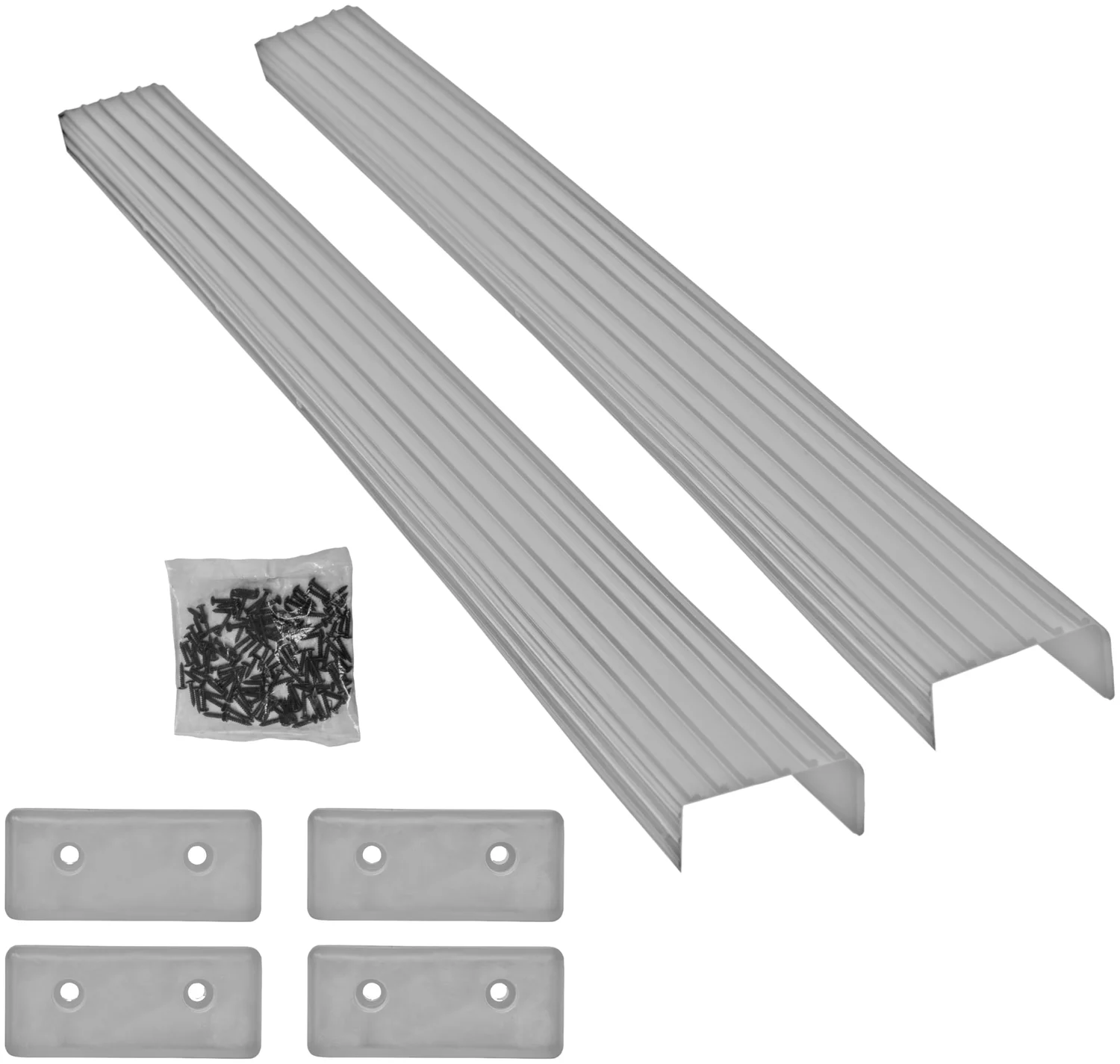
Bunks and bunk carpet. Bunks are usually treated 2x4 or 2x6 lumber covered in marine bunk carpet or a slick synthetic wrap. Replace the covering when it wears through, because exposed wood and staples will scratch the hull. Carpet rolls (12 inch wide by 12 or 40 feet) let you re-cover several bunks; Caliber Bunkwrap and Extreme Max bunk cover kits are sized by bunk length and board width. Synthetic wraps let the hull slide more easily than carpet, which helps at shallow ramps but means you should never unhook the bow strap until the boat is at the water's edge.
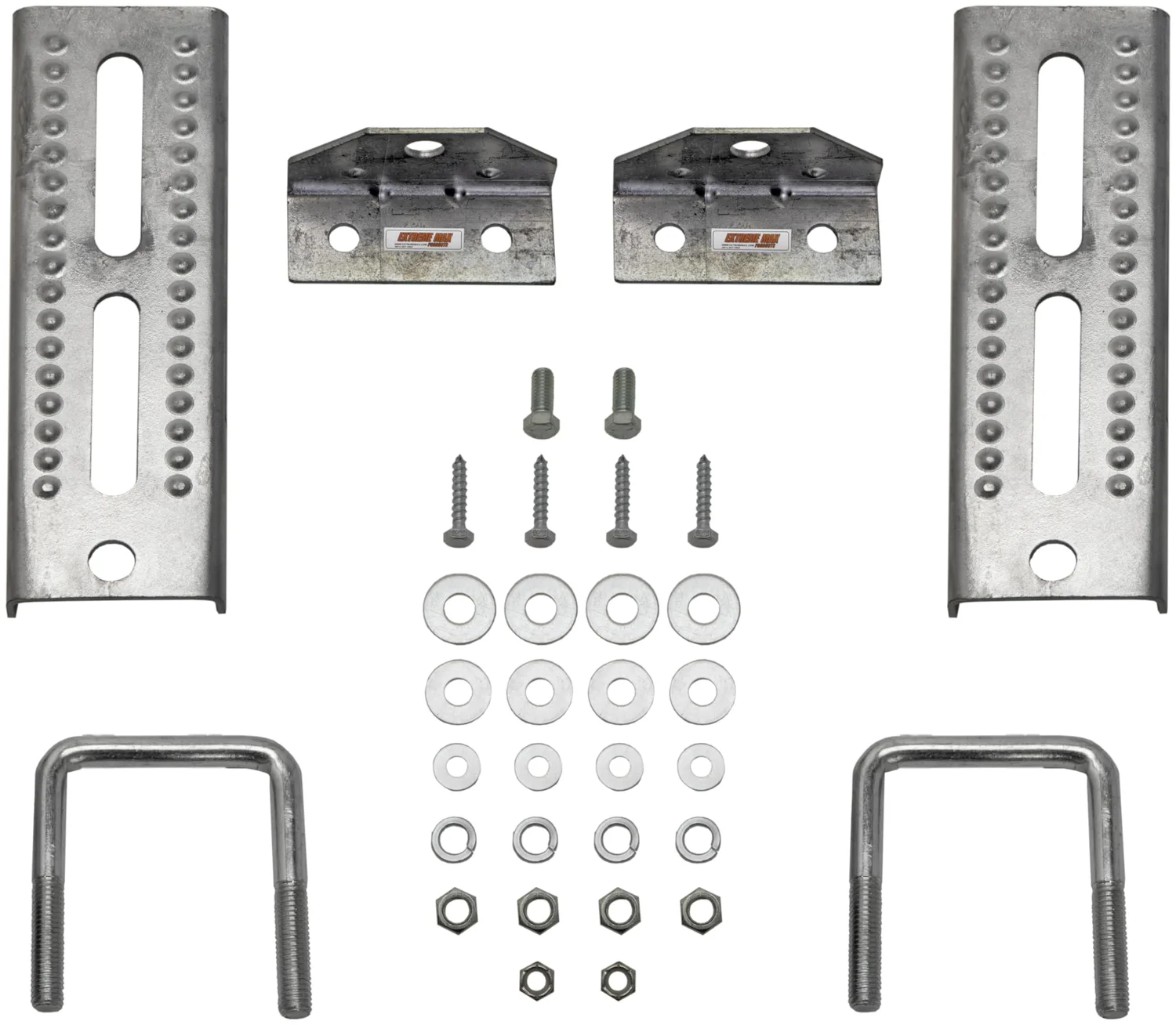
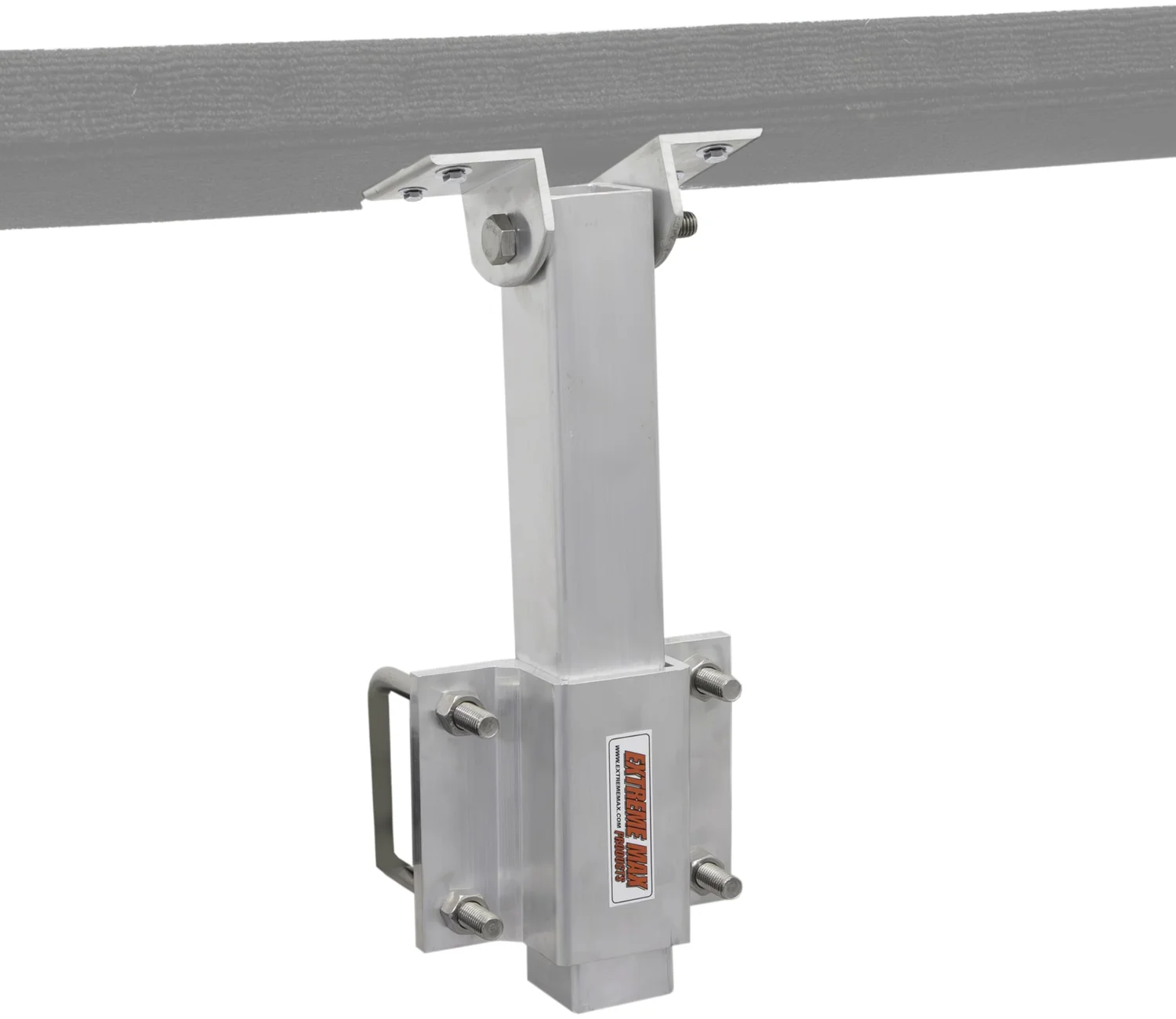
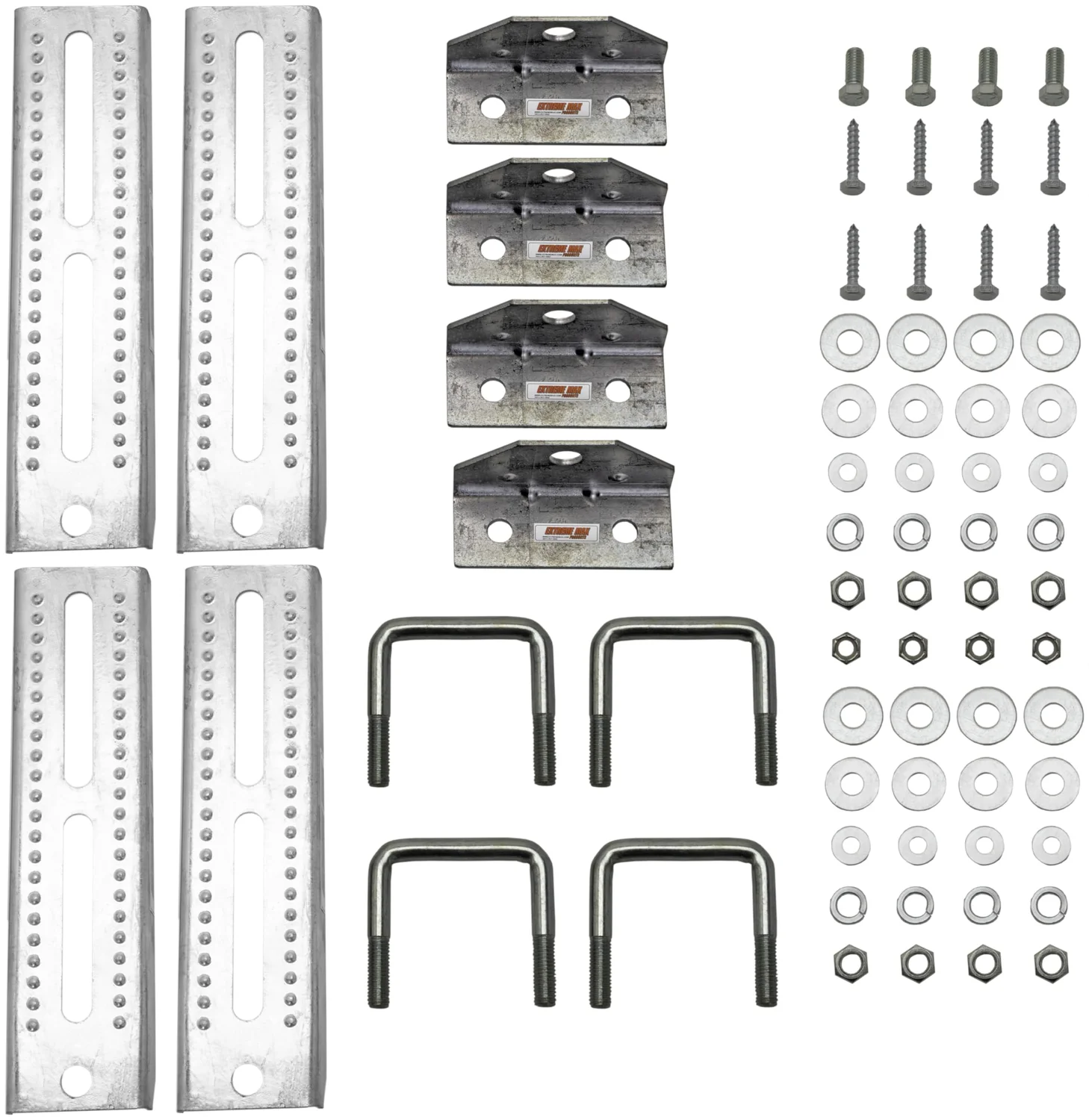
Bunk brackets hold the bunks to the frame. Swivel-top brackets let a bunk tilt to follow the hull's shape, and they are sold by height (for example 8, 10 or 14 inch) and by the frame tube they fit (such as 2x3 or 1.5x3). Fixed vertical brackets, bolster brackets and U-bolt brackets are matched by height and frame size too. Measure the old bracket and your frame before ordering.
Rollers are sized by three measurements: overall length (5, 8 and 12 inch keel rollers are common), the inside diameter of the shaft hole (such as 1/2 or 5/8 inch), and the style:
- Keel rollers support the keel along the centerline.
- Bow rollers (bell-shaped and similar) sit at the winch stand and cradle the bow.
- Spool rollers are short rollers used on brackets and for side support.
Replace roller shafts at the same time as worn rollers; a grooved or rusted shaft chews up a new roller quickly. Complete roller bracket assemblies are the fastest fix when the old bracket is bent or rusted through.
Guide-ons, bow stops and easier loading
Guide-ons mark the trailer and steer the hull onto the center as you load, which makes a huge difference in crosswind or current.
- Post guide-ons (PVC poles, 40 or 60 inch) stand above the water so you can see the trailer when it is submerged. Taller posts suit deeper ramps.
- Bunk board guide-ons (2 or 5 foot carpeted boards) give the hull a long, gentle surface to lean on.
- Roller guide-ons use rollers instead of boards, and glide strips like Caliber Multi-Glides do a similar job with less friction.
Set guide-ons just wider than the hull at its widest point so they center the boat without squeezing it.
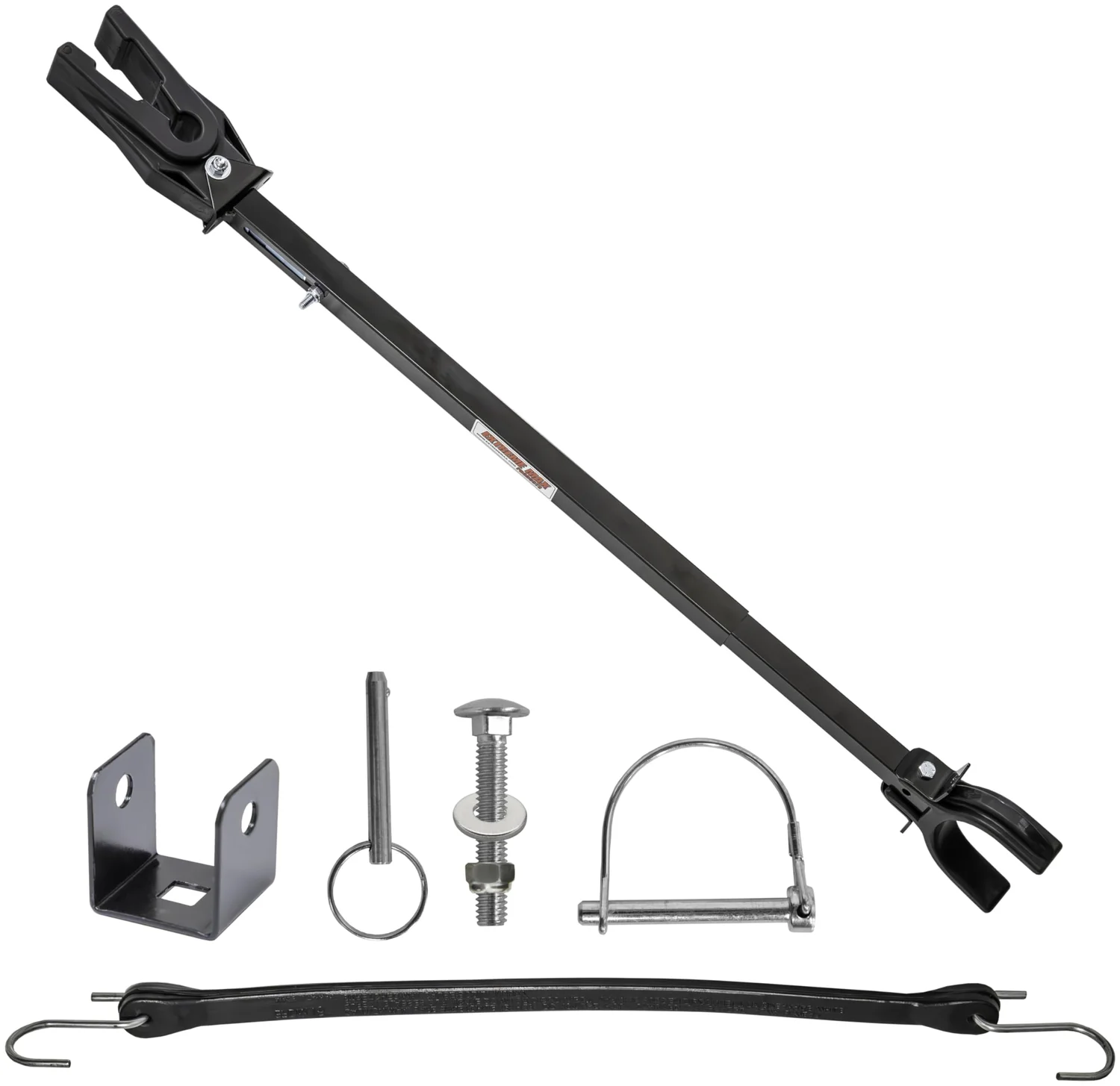
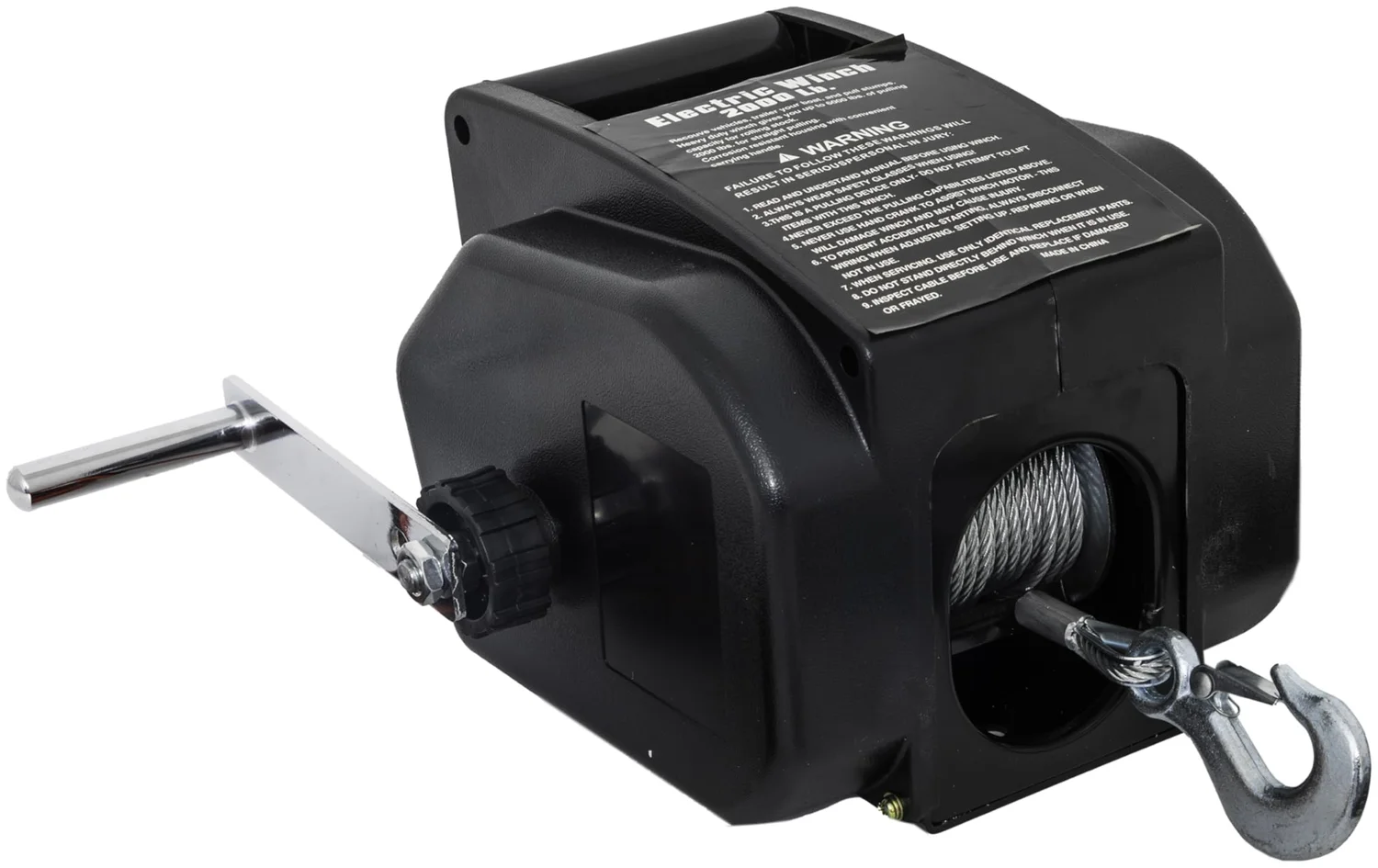
Bow stops stop the bow at the right spot on the trailer. Rubber Y-stops come in sizes such as 2x2 and 3x3 inch to match the winch post. An automatic boat latch such as the Eze Way Drotto catches the bow eye as you drive or winch the boat on, which helps when you launch and load alone. Always attach the winch strap and a bow safety chain before you pull out of the water, and stay clear of a strap or cable under tension.
Setup tips: position the boat so the transom is well supported at the back of the bunks, follow the boat builder's guidance on support points, and keep enough tongue weight for stable towing. Our trailer hitch classes guide covers hitch ratings for your tow vehicle.
Lights, tires and routine care
Lights. Boat trailer lights get dunked every trip, so use submersible-rated lights, like the Grote Perlux kit with side markers. If your trailer still has incandescent bulbs, unplug the trailer lights and let them cool before backing into the water, since cold water on a hot bulb can crack it. Wiring problems are the most common trailer failure; our trailer wiring and brake controllers guide covers connectors and testing.
Tires. Small boat trailers often run 12 inch bias-ply trailer tires such as 4.80-12 and 5.30-12. Match the size and load range on your current tire, inflate to the pressure on the sidewall, and replace by age as well as tread, since trailer tires often time out before they wear out. See trailer tires vs passenger tires and how to read a tire's DOT date code.
Routine care:
- Rinse the trailer with fresh water after every trip, especially in salt water.
- Check wheel bearings and grease them on the schedule your axle maker recommends.
- Spin rollers by hand each season and replace any that are cracked, flat-spotted or seized.
- Inspect bunk coverings, staples and bracket bolts for wear and rust.
- Check the winch strap for fraying and replace it before it fails.