A wheel that looks right in the photo can still be wrong for your truck. Four numbers decide whether it bolts on, clears your brakes and suspension, and keeps the tire inside the fender: the bolt pattern, the offset (or backspacing), the center bore and the load rating. Get those right and the rest is style and budget.
Most of the off-road wheels we carry come from Method Race Wheels, RTX, Dirty Life, Raceline and Weld, in the bolt patterns that cover most half-ton, heavy-duty and Jeep applications. Our best-selling wheels are actually simple RTX steel wheels, which shows how many people buy a second set for winter tires or a work rig. This guide walks through the fitment numbers first, then wheel types, then the hardware you need on install day.
The fitment numbers that matter
Wheel listings read like a code: 17x9 6x5.5 -12mm. That means a 17 inch diameter, 9 inch wide wheel with six lugs on a 5.5 inch (139.7 mm) circle and a 12 mm negative offset. Here is what each number does.
- Bolt pattern is the number of lugs and the diameter of the circle they sit on. It must match your hub exactly. A 6x135 wheel will not safely fit a 6x139.7 hub. See how to measure bolt pattern.
- Offset is the distance in millimeters from the wheel's centerline to its mounting face. Positive offset (ET35, ET42) tucks the wheel in, zero sits centered, and negative offset pushes the wheel outward for a wider stance.
- Backspacing measures the same thing a different way: inches from the mounting face to the inner lip. Less backspacing means more poke. As a rule of thumb, a 9 inch wide wheel at 0 mm offset has about 5 inches of backspacing.
- Center bore is the hole in the middle. It has to be equal to or larger than your hub. If it is larger, a hub-centric ring fills the gap.
- Load rating is how much weight each wheel can carry. Multiply by four and compare it to your truck's axle ratings, especially on heavy-duty pickups that tow.
Common truck and Jeep bolt patterns (always confirm for your exact year and model):
| Bolt pattern | Inch equivalent | Commonly found on |
|---|---|---|
| 6x139.7 | 6x5.5" | GM half-tons, many Toyota and Nissan trucks, newer Ram 1500, Ranger and Bronco |
| 6x135 | none | Ford F-150 and Expedition (2004 and newer) |
| 5x127 | 5x5" | Jeep Wrangler JK and JL, Gladiator |
| 5x114.3 | 5x4.5" | Many cars and crossovers, older Wrangler YJ and TJ |
| 8x165.1 | 8x6.5" | Ram 2500/3500, older GM 2500HD/3500HD |
| 8x170 | none | Ford Super Duty |
| 8x180 | none | 2011 and newer GM 2500HD/3500HD |
For a deeper look at offset and backspacing on trucks, read wheel offset and backspacing explained.
Choosing diameter, width and offset for bigger tires
Most people shopping off-road wheels are also going up in tire size. Three decisions drive whether the combination works.
- Diameter. 17 inch is the sweet spot for off-road: it clears most factory brakes, leaves room for a tall sidewall that airs down well, and has the widest tire selection in all-terrain and mud-terrain sizes. 18 and 20 inch wheels look bigger but leave less sidewall to absorb rocks and potholes. See 17 vs 18 vs 20 inch wheels.
- Width. 8 to 9 inch wide wheels suit most 33 to 35 inch tires. Check the tire maker's approved rim width range for your size.
- Offset. A wider tire needs to move outward to clear the upper control arm or frame, which is why lifted trucks often run 0 mm or negative offset. The trade-off: more poke means more chance of rubbing the fender at full lock or full compression, more mud thrown on the paint, and more leverage on wheel bearings. A modest offset change with a leveling kit is a common, well-behaved setup.
| Offset | Look | Good for | Watch for |
|---|---|---|---|
| Positive (+18 to +45 mm) | Flush or tucked | Stock or leveled trucks, factory-size tires | Upper control arm clearance with wider tires |
| Zero to slightly negative (0 to -12 mm) | Slight poke | Leveled or lifted trucks on 33 to 35 inch tires | Fender rub at full turn on some trucks |
| Aggressive negative (-18 mm and beyond) | Wide stance | Show builds, wide tires on lifted rigs | Rubbing, bearing wear, fender coverage rules in some states |
Going bigger on tires also throws off your speedometer. Our plus-sizing guide covers how to keep the overall diameter in check, and lift and leveling kits covers the suspension side.
Cast, flow-formed, steel and beadlock-style wheels
Cast aluminum is what most aftermarket truck wheels are, including most Method, Raceline and RTX alloys. It is light, takes a nice finish and is affordable. Flow-formed and forged wheels cost more and are stronger for their weight. Our forged vs cast vs flow-formed guide goes deeper.
Steel wheels are heavier but cheap and tough, and a bent steel rim can sometimes be hammered back into shape on the trail. They are a popular choice for a dedicated winter set or a work truck. Compare the two in steel vs aluminum wheels for trucks.
You will also see bead-related features in wheel names:
- Bead Grip (on wheels like the Method MR708) uses a textured bead seat that helps the tire stay put at lower air pressures. It is not a beadlock.
- Simulated beadlock styling (Method's Street Loc wheels, for example) gives the look of a beadlock ring on a standard wheel.
- True beadlocks clamp the tire bead with a bolted ring so you can run very low pressures. Many are sold for off-highway use, need periodic bolt checks, and add cost. Read beadlock wheels explained before you buy one.
Finishes matter for upkeep: gloss and satin black, bronze, titanium and machined faces all need different cleaning care. See powder coat vs paint.
Install day: lugs, hub rings, spacers and TPMS
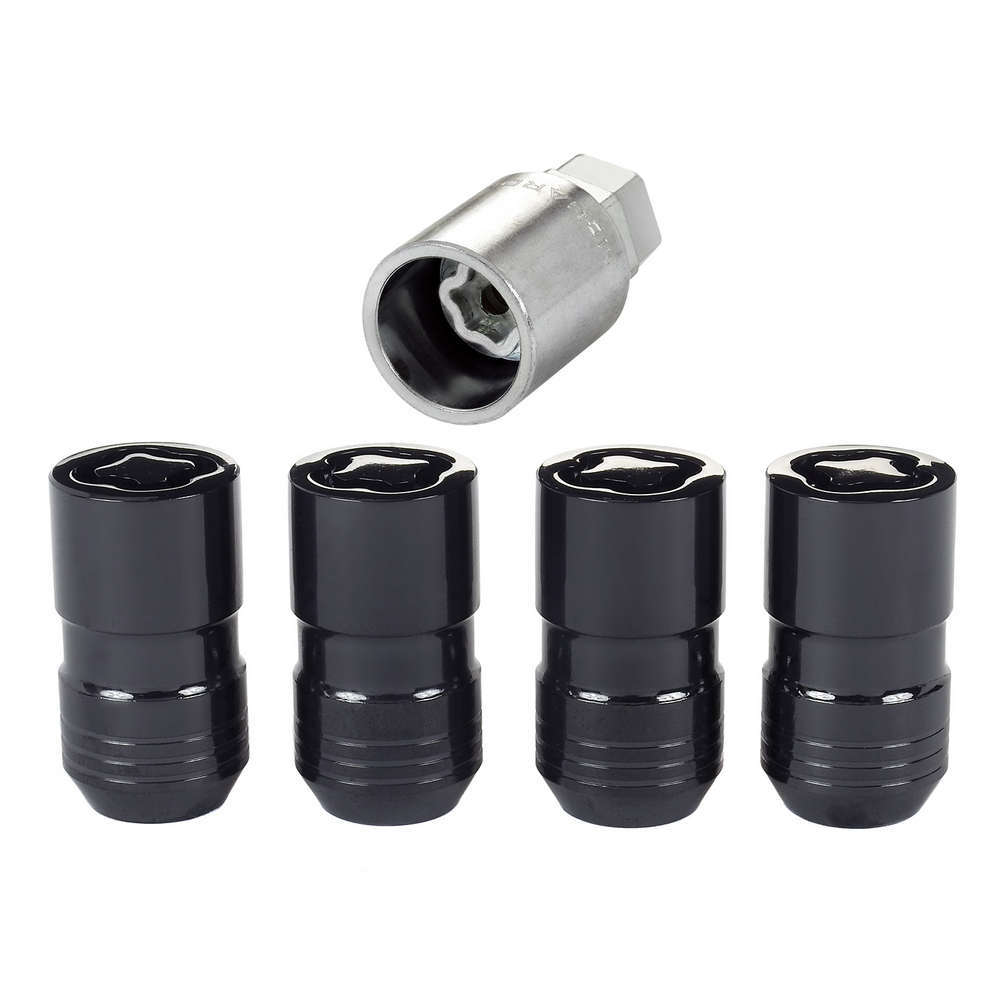
- Lug nuts. Aftermarket wheels usually need conical (60 degree) seat lug nuts, and some factory wheels, notably many Toyota alloys, use flat-seat lugs instead. Match the seat type and thread size (M14x1.5, 1/2-20 and so on) to your studs and wheels. McGard and similar sets include matching locks. See conical vs ball seat lug nuts.
- Hub-centric rings. If the wheel's center bore is larger than your hub, a ring sized to both (for example 72.6 mm outer, 64.1 mm inner) centers the wheel and helps prevent vibration. See hub-centric vs lug-centric wheels.
- Wheel spacers. Spacers push the wheel outward to clear brakes or suspension, or to widen the stance. Use hub-centric spacers made for your bolt pattern, torque both sets of nuts to spec, and recheck them. Spacers add leverage on bearings, just like negative offset.
- TPMS. Swap your sensors into the new wheels or buy a second set so the dash light stays off. See TPMS sensor basics.
- Torque and re-torque. Tighten in a star pattern with a torque wrench to your vehicle's spec, then recheck after the first 50 to 100 miles. Alloy wheels can settle against the hub. See lug nut torque specs.