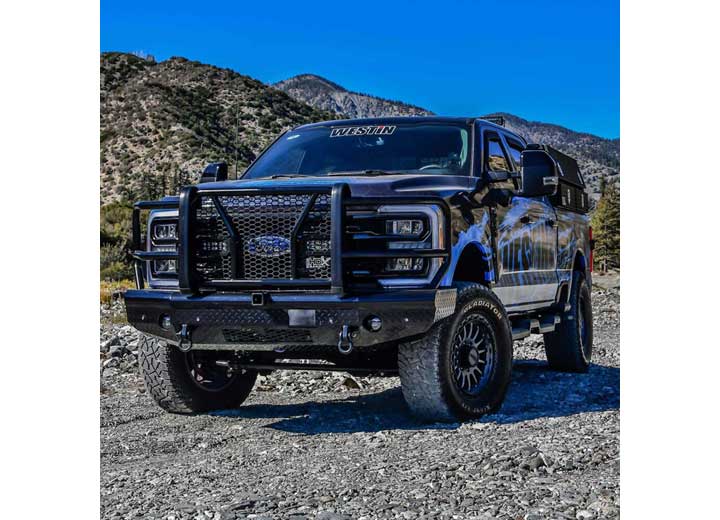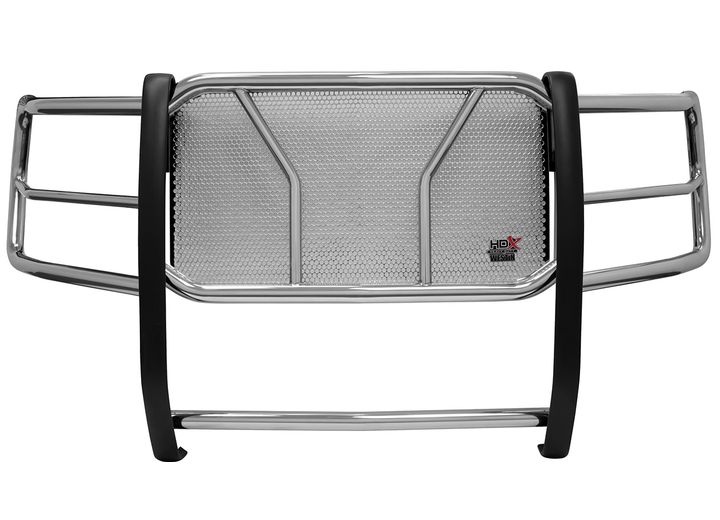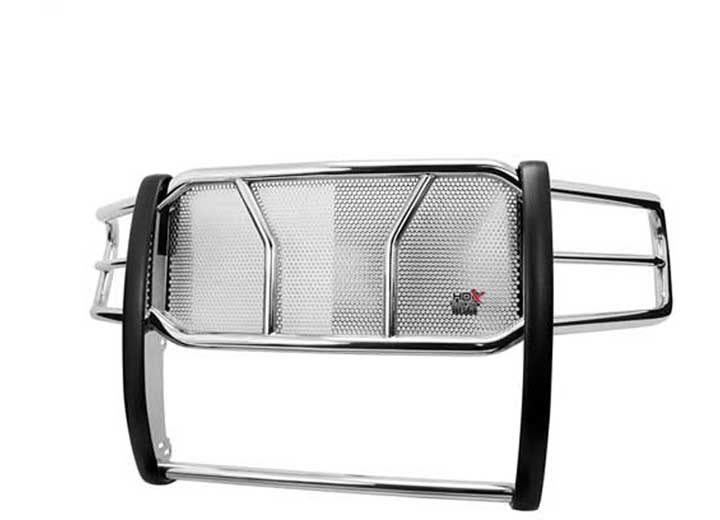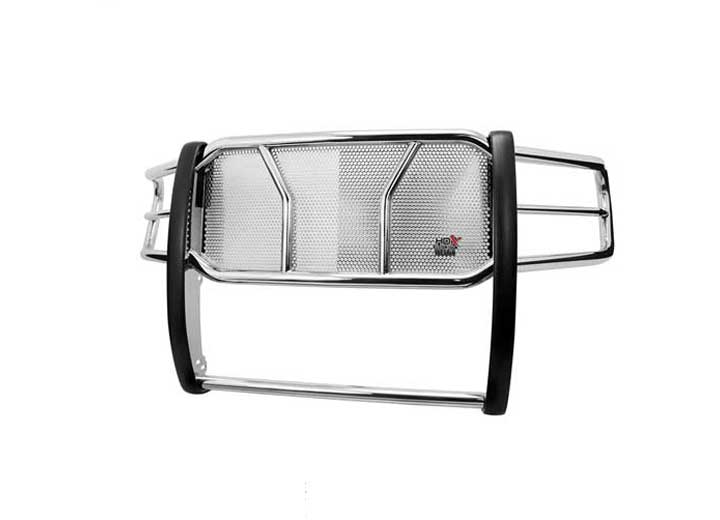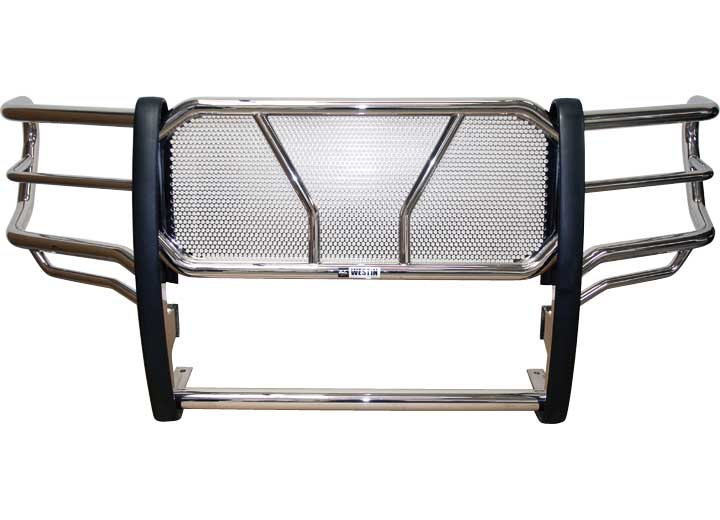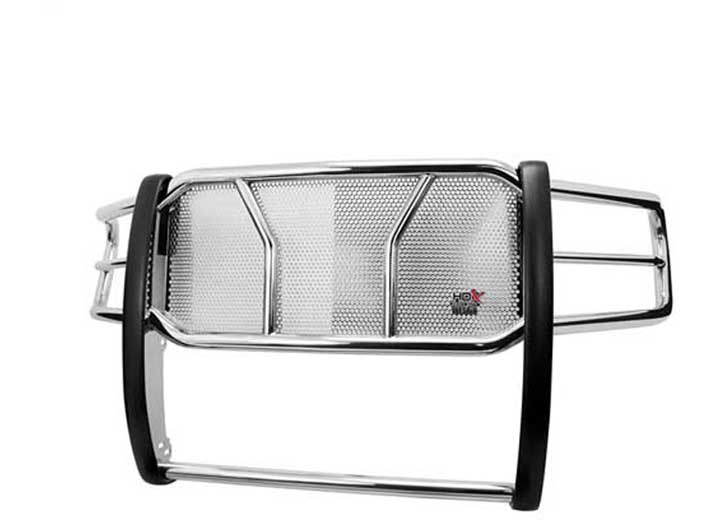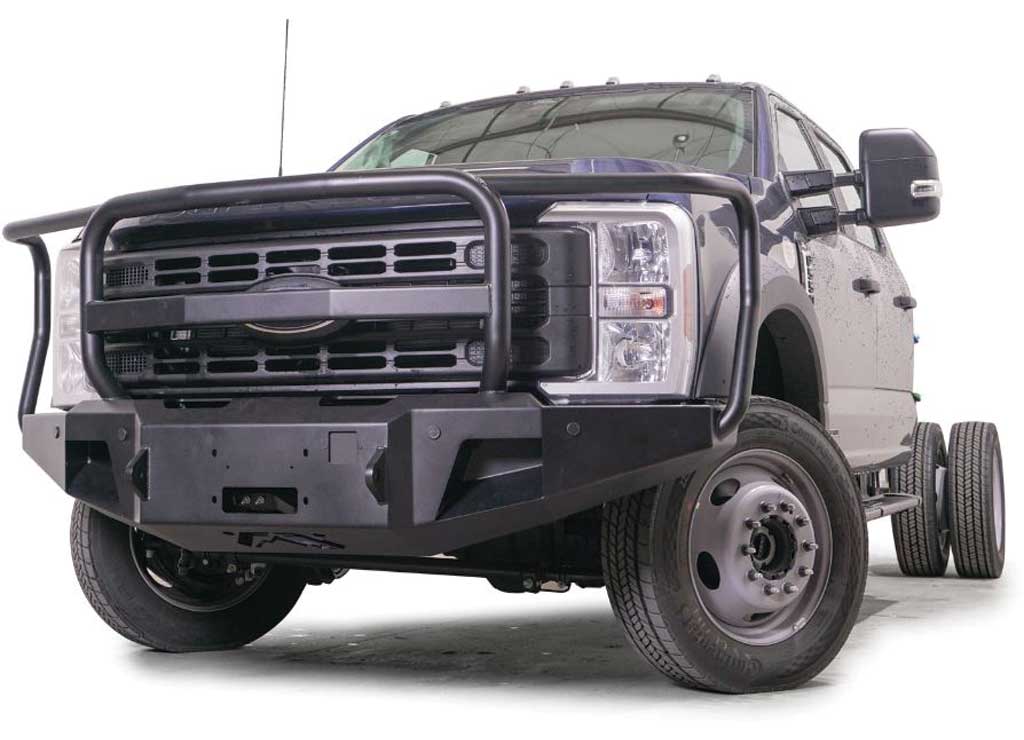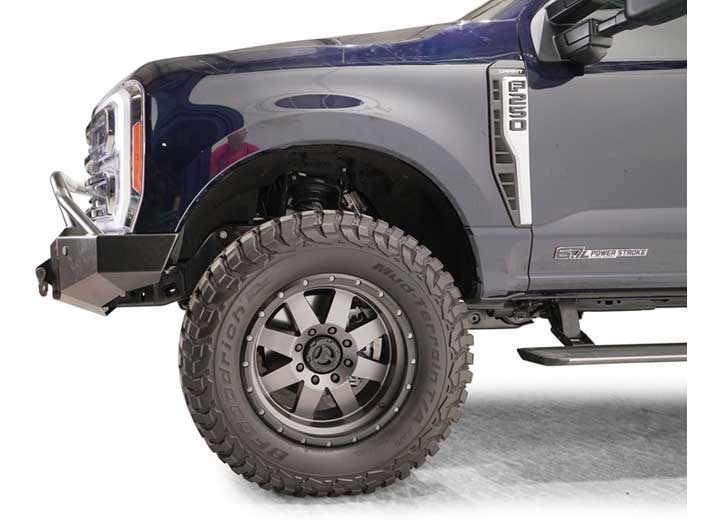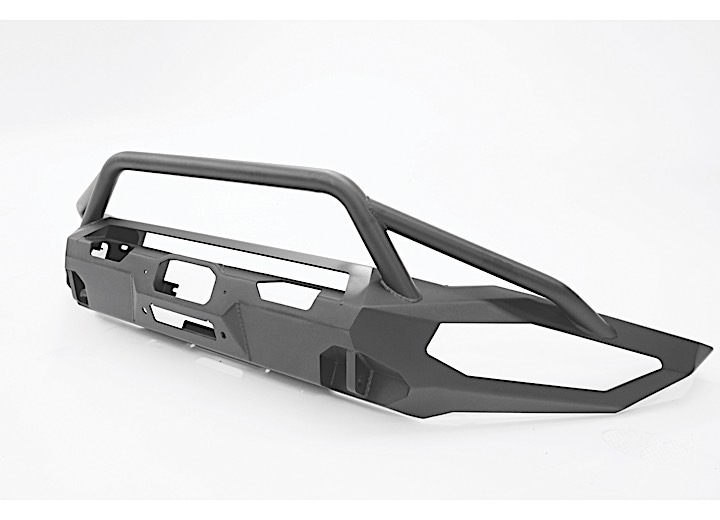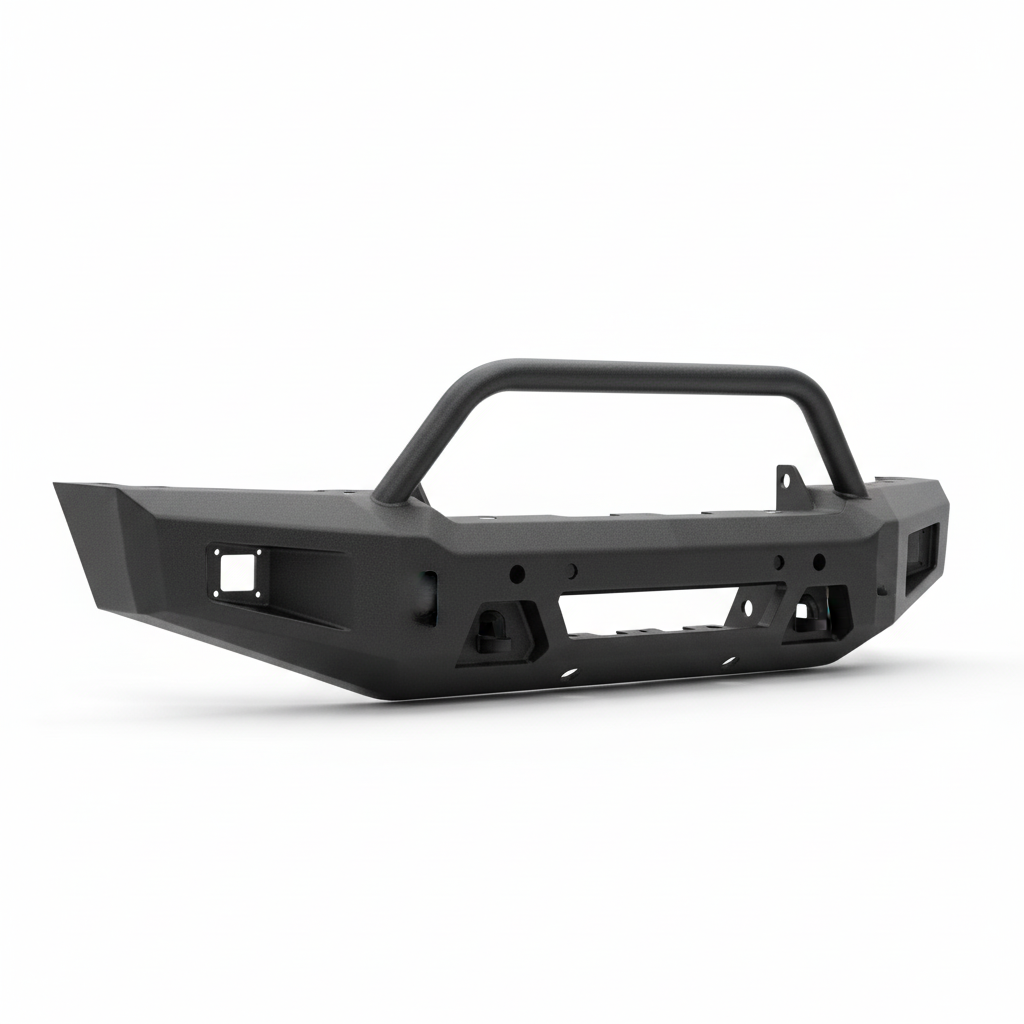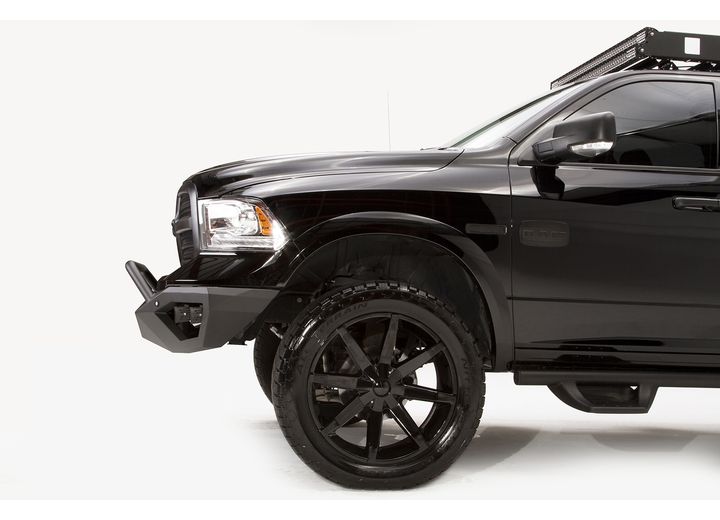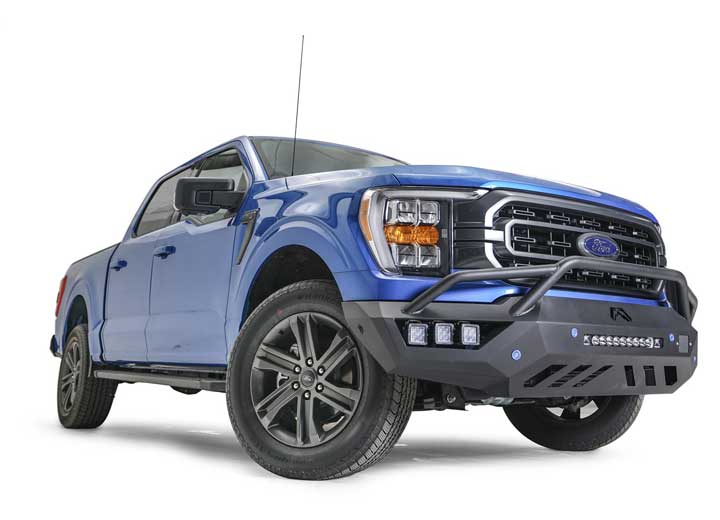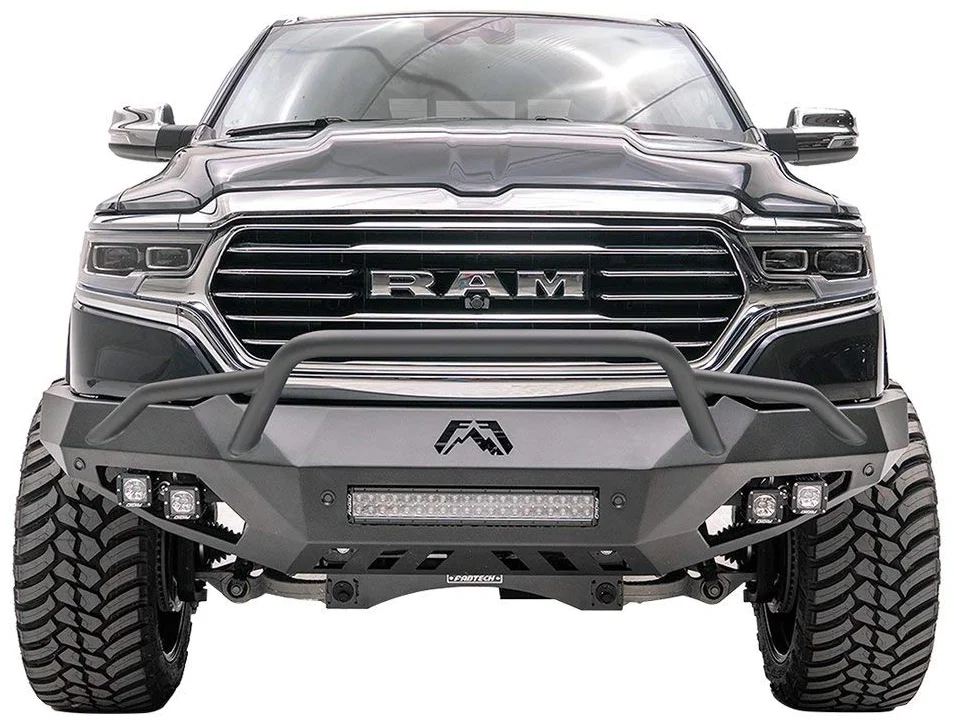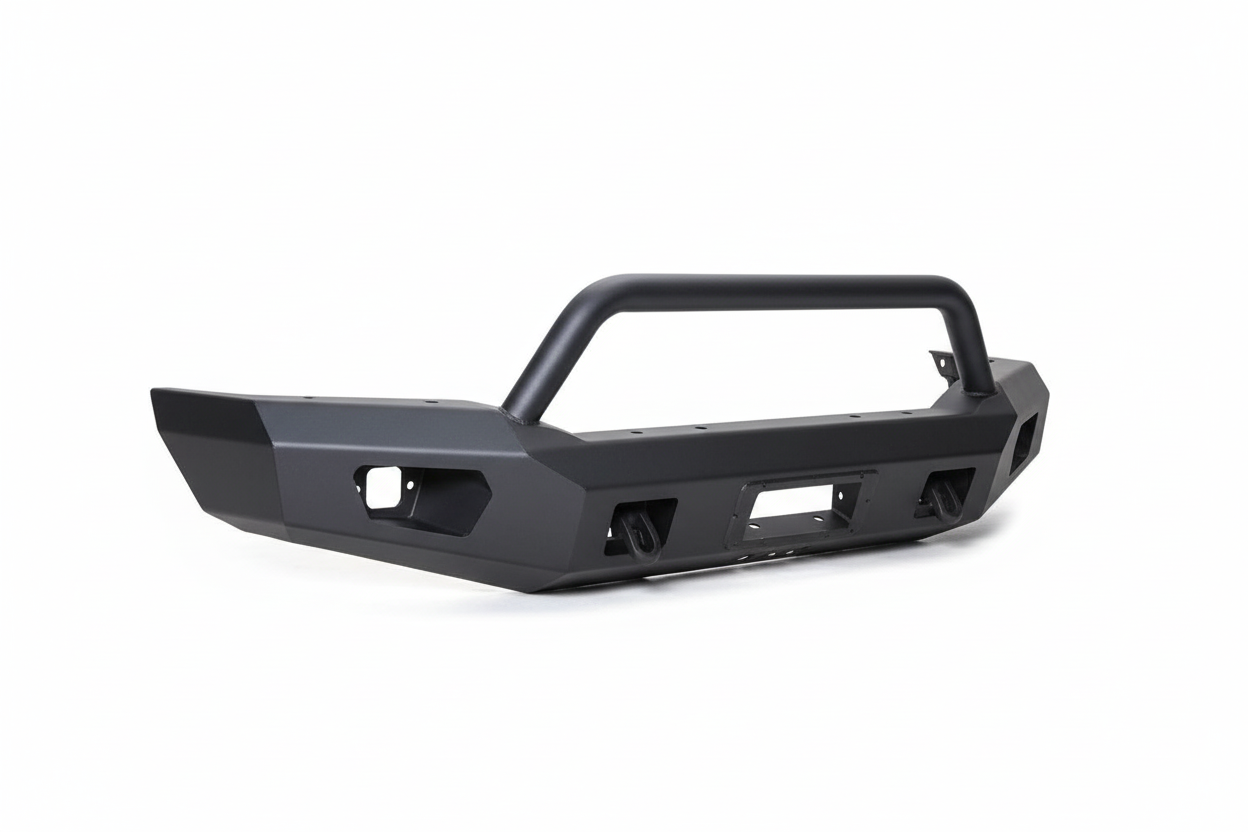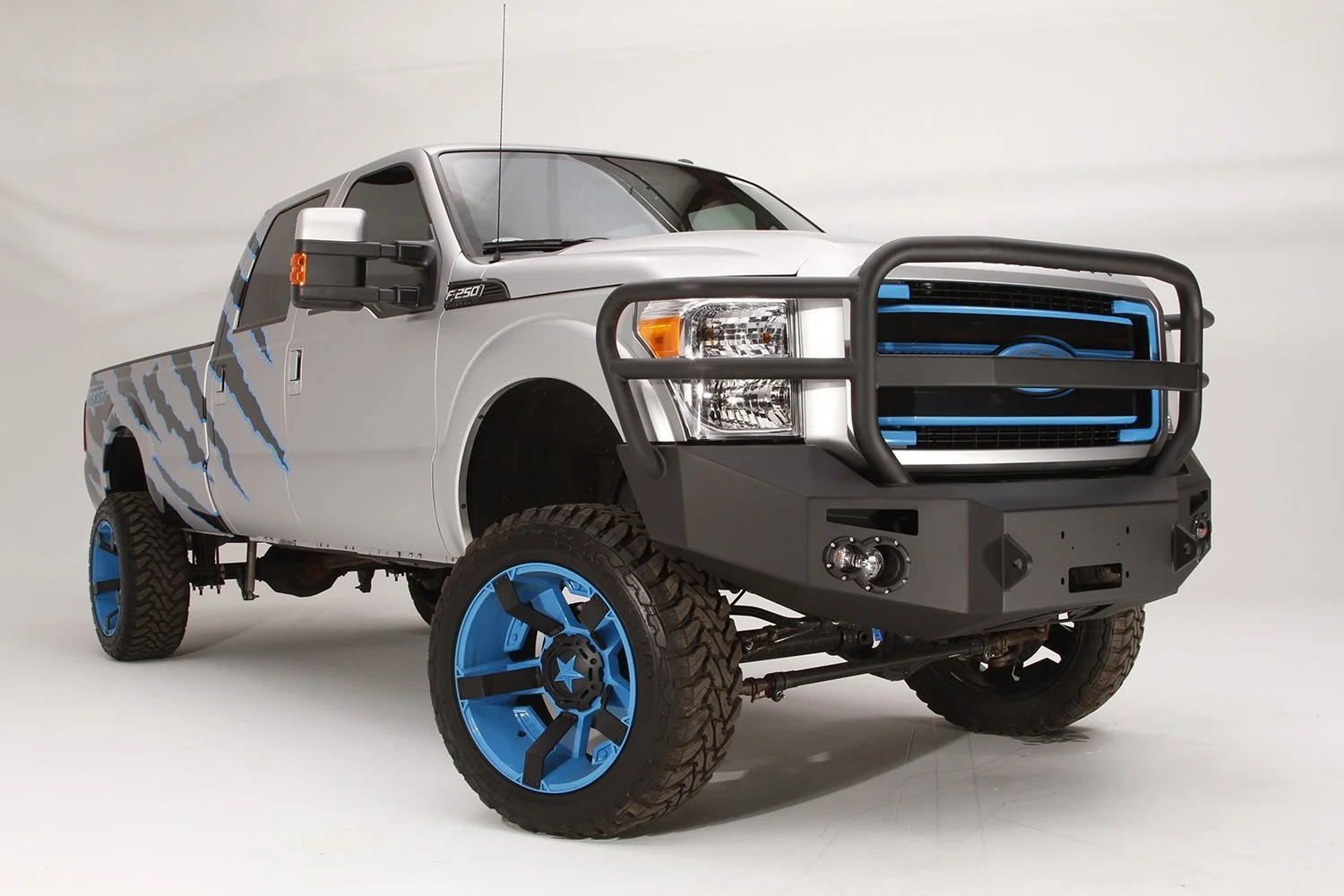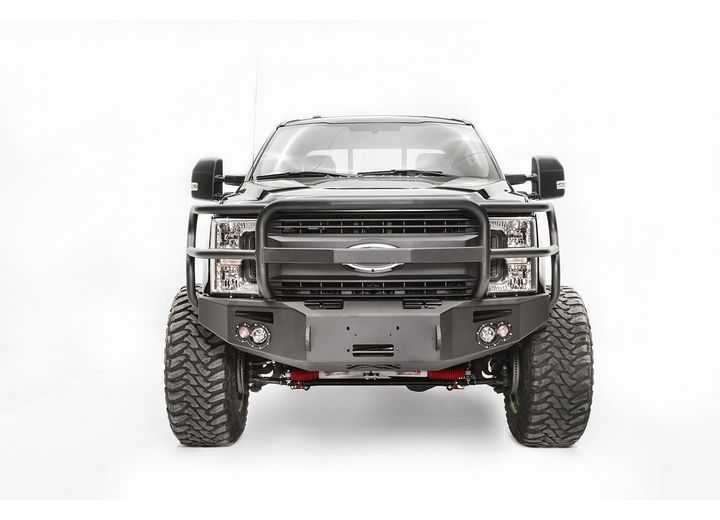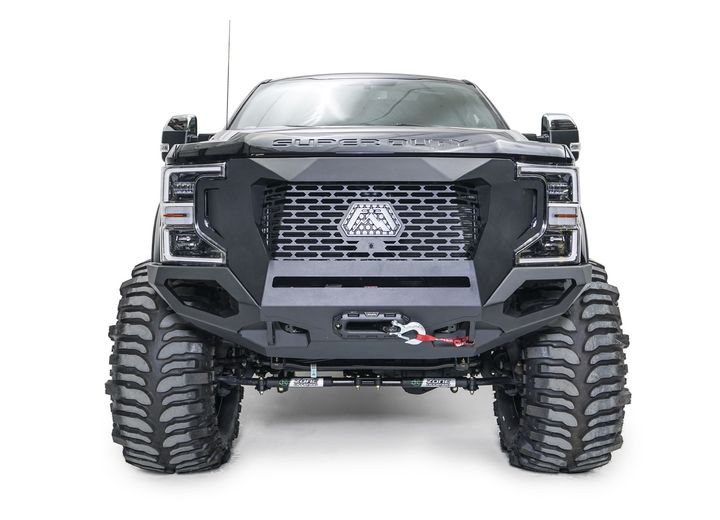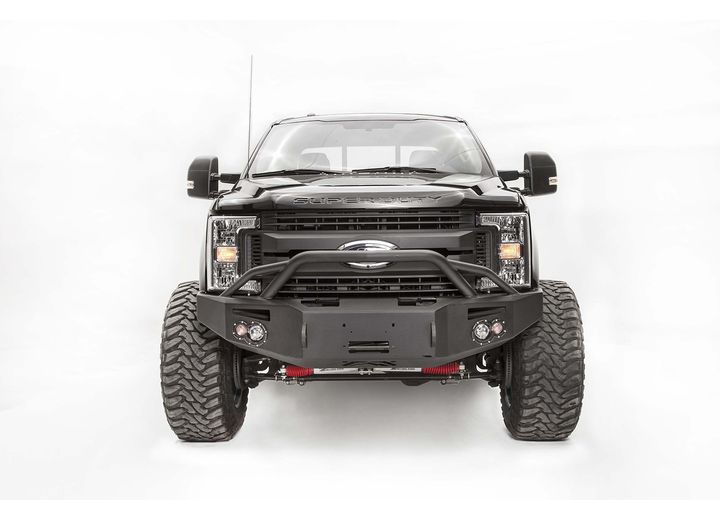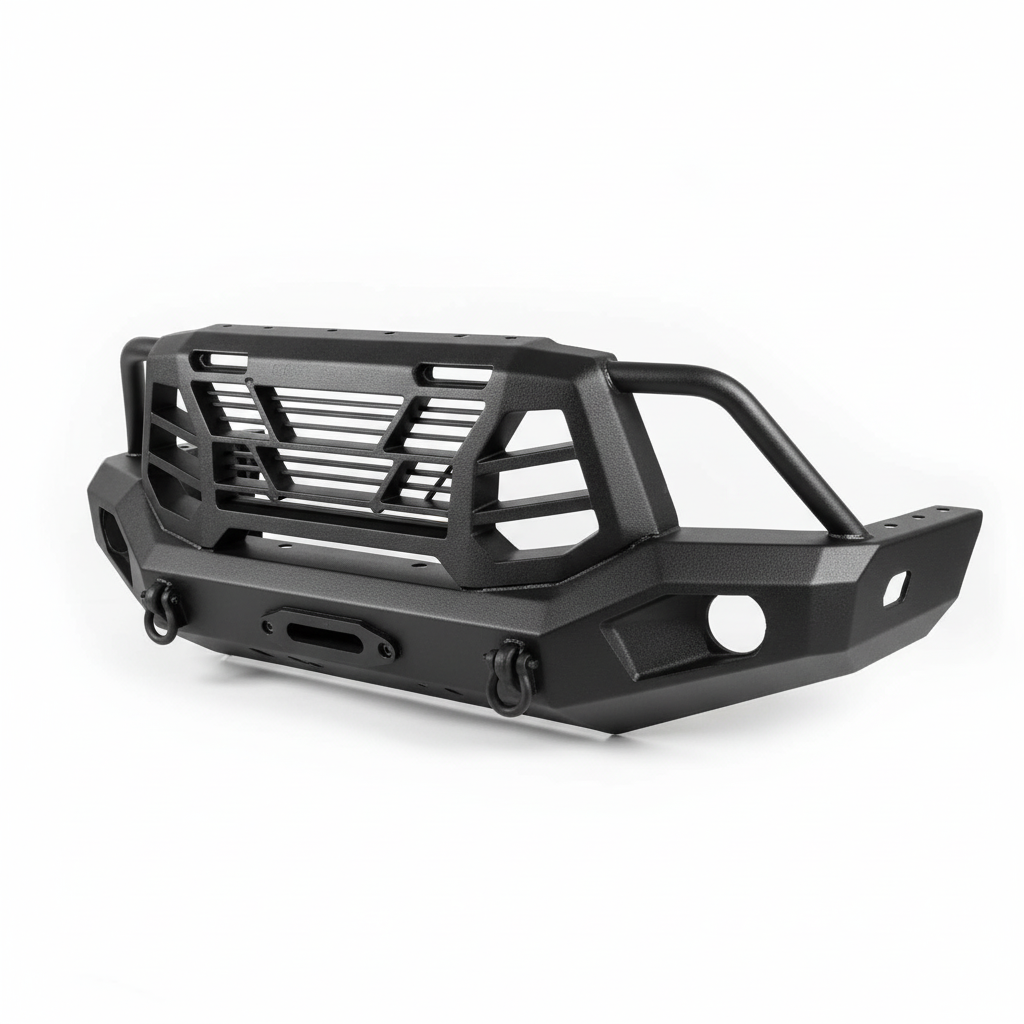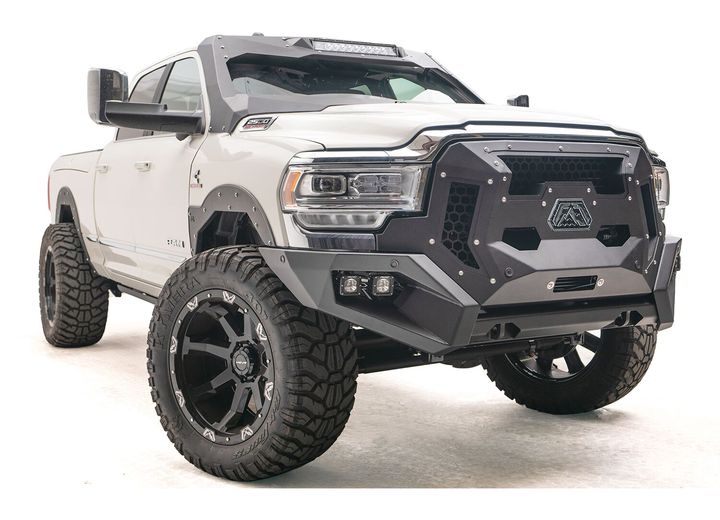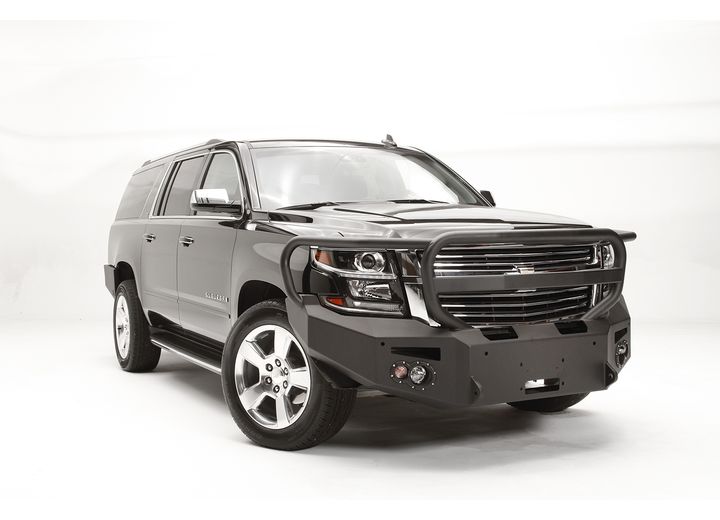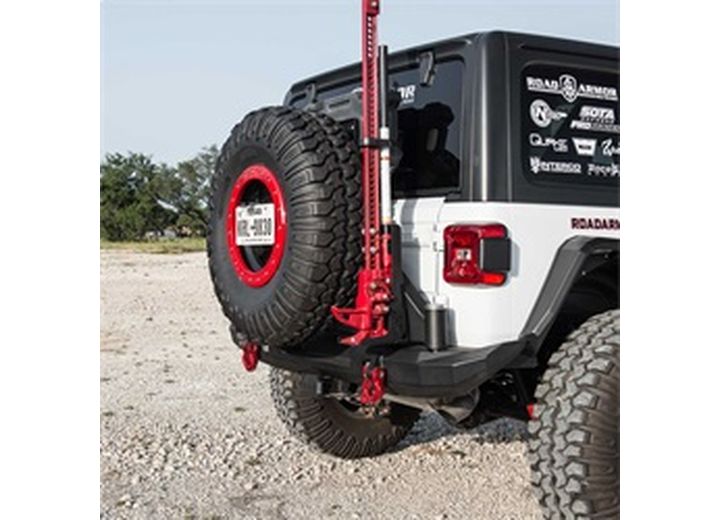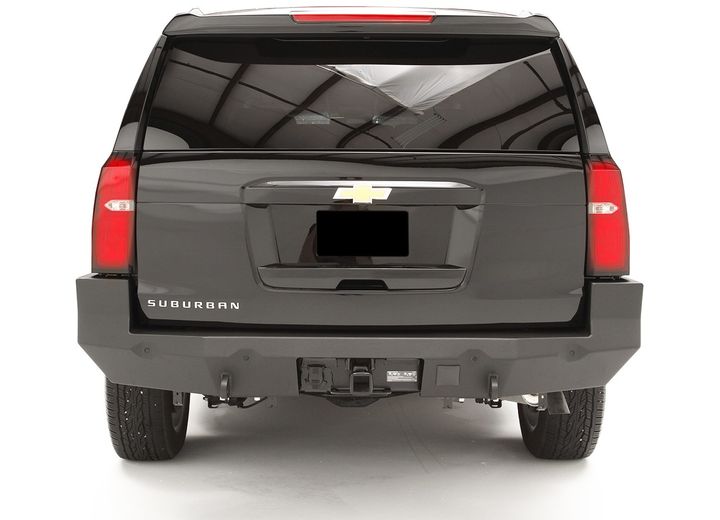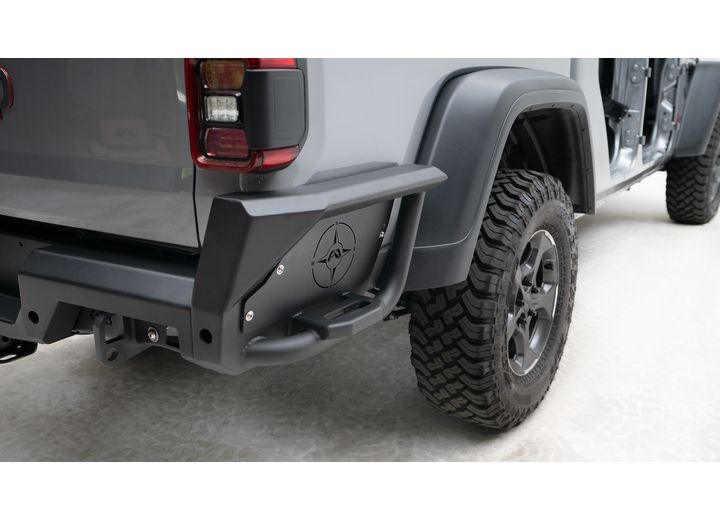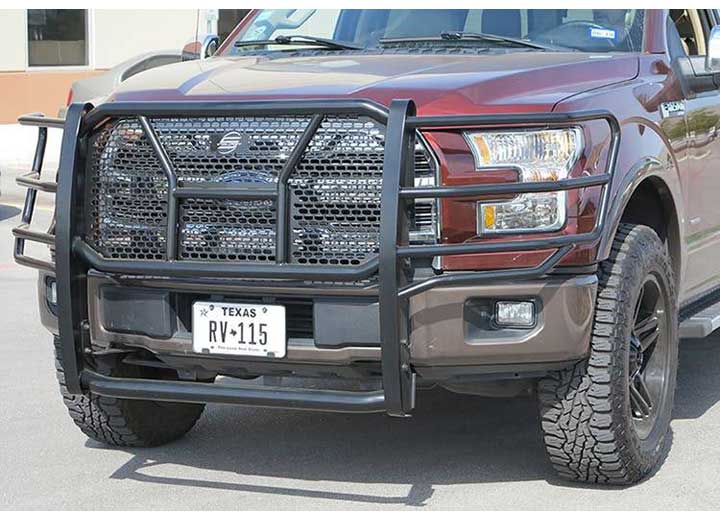
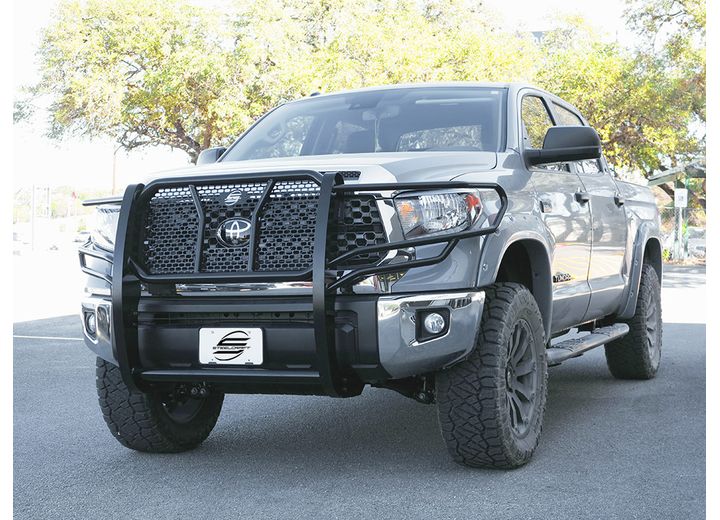
Front-end protection comes in three main forms. A grille guard bolts to the frame in front of your factory bumper and covers the grille and usually the headlights. A bull bar is a smaller center hoop that protects the middle of the front end and gives you a place to mount lights. A replacement bumper removes the factory bumper entirely and swaps in heavy steel, often with a winch mount and recovery points built in.
We carry grille guards from Westin (Sportsman and HDX), Steelcraft, Black Horse and Go Industries; bull bars from Black Horse and Westin; and front and rear bumpers from Fab Fours (Matrix, Vengeance, Premium, Elite and Black Steel Elite), Westin (Pro-Mod, WJ2), Steelcraft, Go Rhino and Fishbone Offroad. Our best-selling item in this category is the Steelcraft Heavy Duty grille guard for the F-150. This guide covers how they compare and what to check for your truck.
Grille guard vs bull bar vs replacement bumper
| Type | Covers | Factory bumper | Winch | Typical price here |
|---|---|---|---|---|
| Bull bar | Center of the front end | Stays | Some models have a winch tray | About $250 to $800 |
| Grille guard | Grille and headlights (full-width designs) | Stays | Winch-mount versions available | About $400 to $2,000 |
| Replacement front bumper | Full width, often with a pre-runner or full guard option | Removed | Often winch-ready | About $700 to $3,000+ |
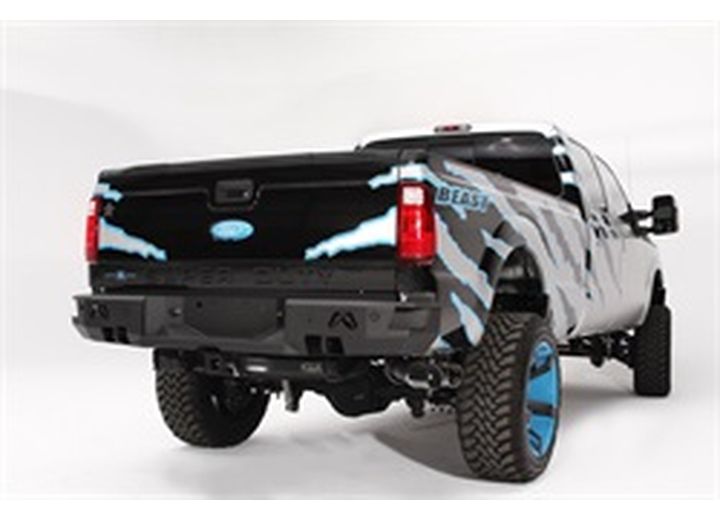
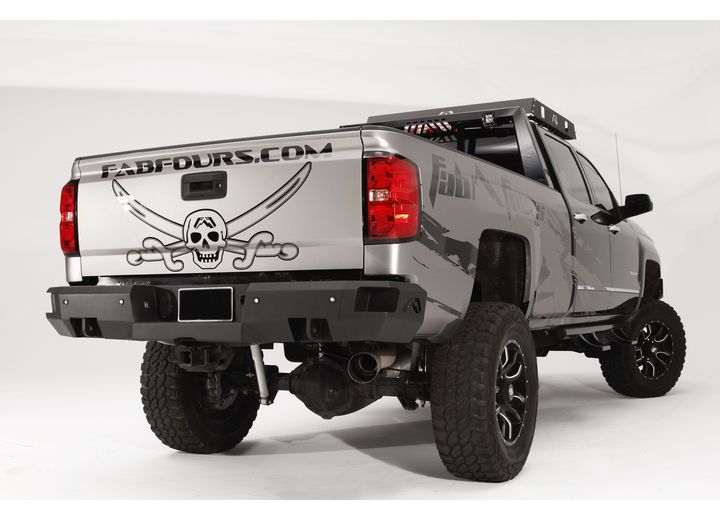
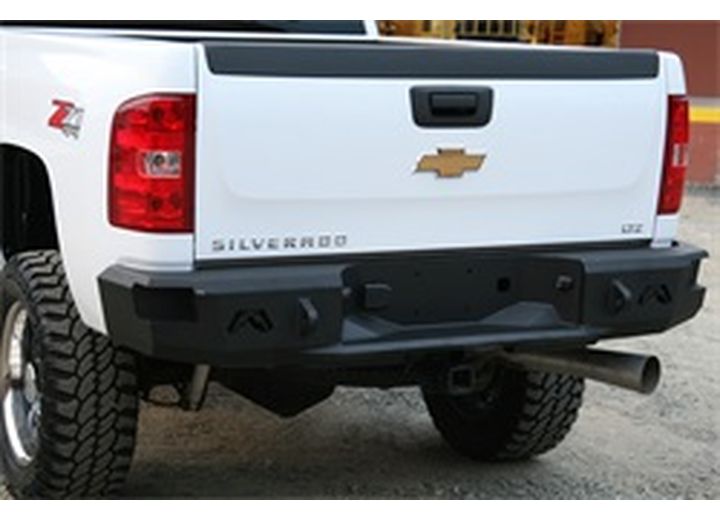
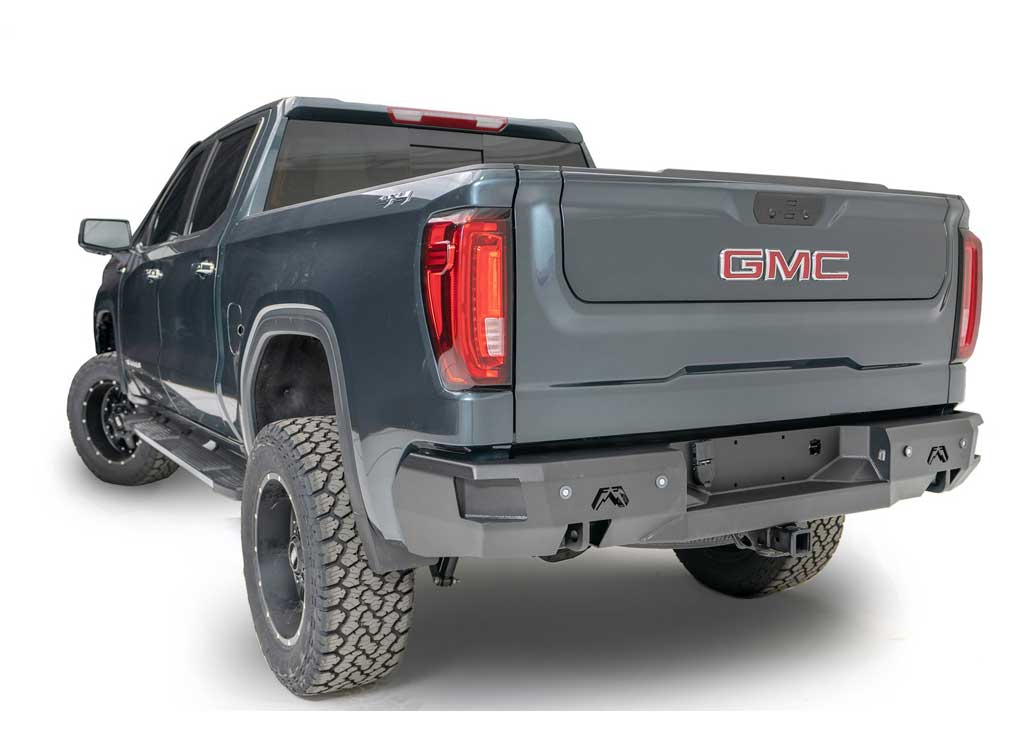
| Replacement rear bumper | Rear corners, often adds a step and recovery points | Removed | Rarely | About $850 to $1,800 |
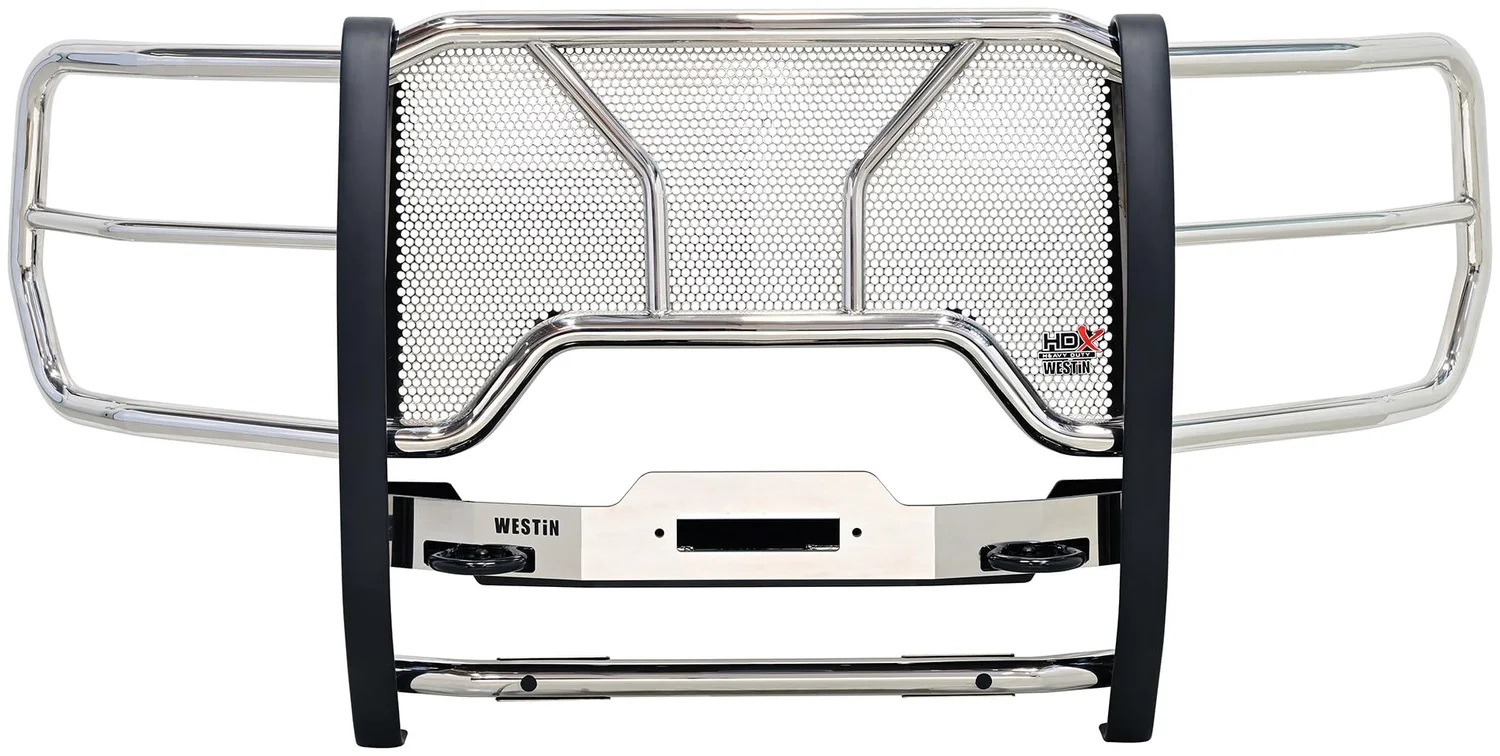
Bull bars (like the Black Horse Max T and Max Beacon) are the lightest option and a common place to mount a 20 inch light bar. Grille guards such as the Westin HDX and Steelcraft HD add headlight wraps, which matters on rural roads where deer strikes are common. Replacement bumpers like the Fab Fours Matrix or Westin Pro-Mod are the strongest and the most involved to install, and are the usual choice if you want a winch.
Construction varies too. Most guards and bull bars are steel tube, typically finished in black powder coat, with a center section that bolts to frame brackets. Replacement bumpers are usually heavier plate steel, which is why they can carry a winch and rated recovery points. Heavier is not always better: for a daily driver that mostly sees highway miles and the occasional deer, a grille guard keeps weight down and leaves the factory crumple zones and bumper in place, while a plate bumper makes the most sense if you go off-road, winch or want maximum protection.
Shopping for a factory-style replacement after a fender bender instead? Bumper covers and collision parts are covered in our Sherman body panels guide.
What to check before you buy
- Exact fit. Guards and bumpers are made for specific years, cabs and trims. Heavy-duty trucks (2500/3500, F-250/F-350) usually need different parts than half-tons, and some listings exclude certain trims or engines.
- Sensors and cameras. If your truck has front parking sensors, a front camera or adaptive cruise radar, choose a product made to work with them. Look for wording like "with sensor mounts", "with sensor holes" or "with front camera" in the listing.
- Airbag and crash systems. Frame-mounted steel changes how the front end behaves in a collision. Reputable manufacturers design around airbag sensors for their listed vehicles; read their notes and do not modify mounting points.
- Weight. A steel replacement bumper, especially with a winch, adds significant weight up front. On some trucks that causes the front to sag, which a leveling kit or stiffer springs can correct.
- Winch plans. If you might add a winch later, buy a winch-ready bumper or winch-mount guard now. Check the maximum winch size the mount is designed for.
- Lights. Many bull bars, guards and bumpers have built-in tabs or cutouts for a light bar or pods. If you plan to add lighting, check the size the mount takes (often 20 inch on bull bars) so you can buy the right bar.
- Tow hooks and front plate. Some products remove or relocate factory tow hooks or the front license plate bracket. If your state requires a front plate, make sure there is a place for it.
- Finish. Textured black powder coat hides chips. Polished stainless (like the Westin HDX stainless guard) resists rust but costs more.
Winch bumpers and recovery
A winch needs a mount that ties into the frame. Winch-ready bumpers and winch-mount grille guards provide that plate, plus a fairlead opening. A common rule of thumb is to choose a winch rated for about 1.5 times your vehicle's loaded weight, then confirm the bumper is designed for that winch's size and weight.
- Look for D-ring or shackle mounts rated for recovery, not just tie-downs.
- Many winch bumpers have room for a light bar or pod lights. See LED light bars.
- Plan your winch wiring and a disconnect before you finish the install.
- Synthetic rope is lighter and safer if it breaks, but needs an aluminum hawse fairlead. Steel cable uses a roller fairlead. Make sure the bumper's fairlead opening fits the one you plan to use.
For choosing the winch itself, see our truck winch guide, and for straps, shackles and snatch blocks see off-road recovery gear.
Install and legal notes
Bull bars and grille guards usually bolt to existing frame or tow-hook mounting points. Expect a few hours with basic tools and a helper, since full guards are heavy and awkward. Some trucks need the factory air dam or tow hooks removed.
Replacement bumpers require removing the factory bumper, transferring or relocating sensors and fog lights, and sometimes trimming plastic. A second person (or a floor jack) to hold the bumper during install is a must.
- Torque all frame bolts to the manufacturer's spec and recheck after a few hundred miles.
- Make sure headlights, turn signals and your license plate are not blocked. Some states regulate bumper height, front plate visibility and lights that cover headlights, so check your state's rules.
- Re-aim headlights if your front ride height changes. See how to aim headlights.
- Touch up any chips in the powder coat early to keep rust out.