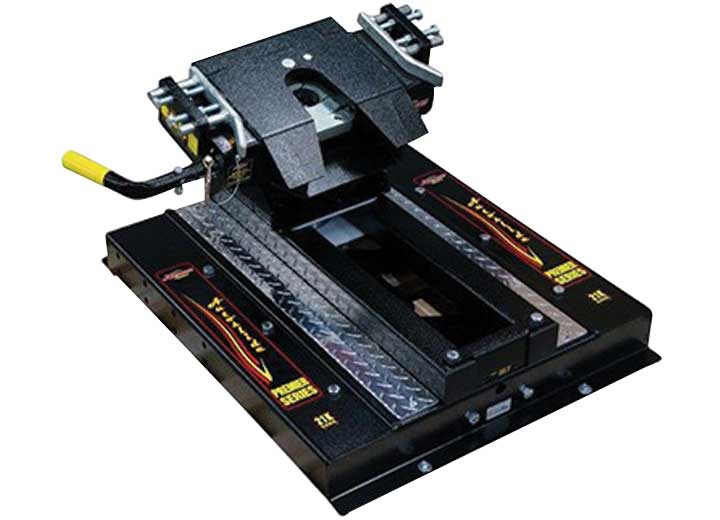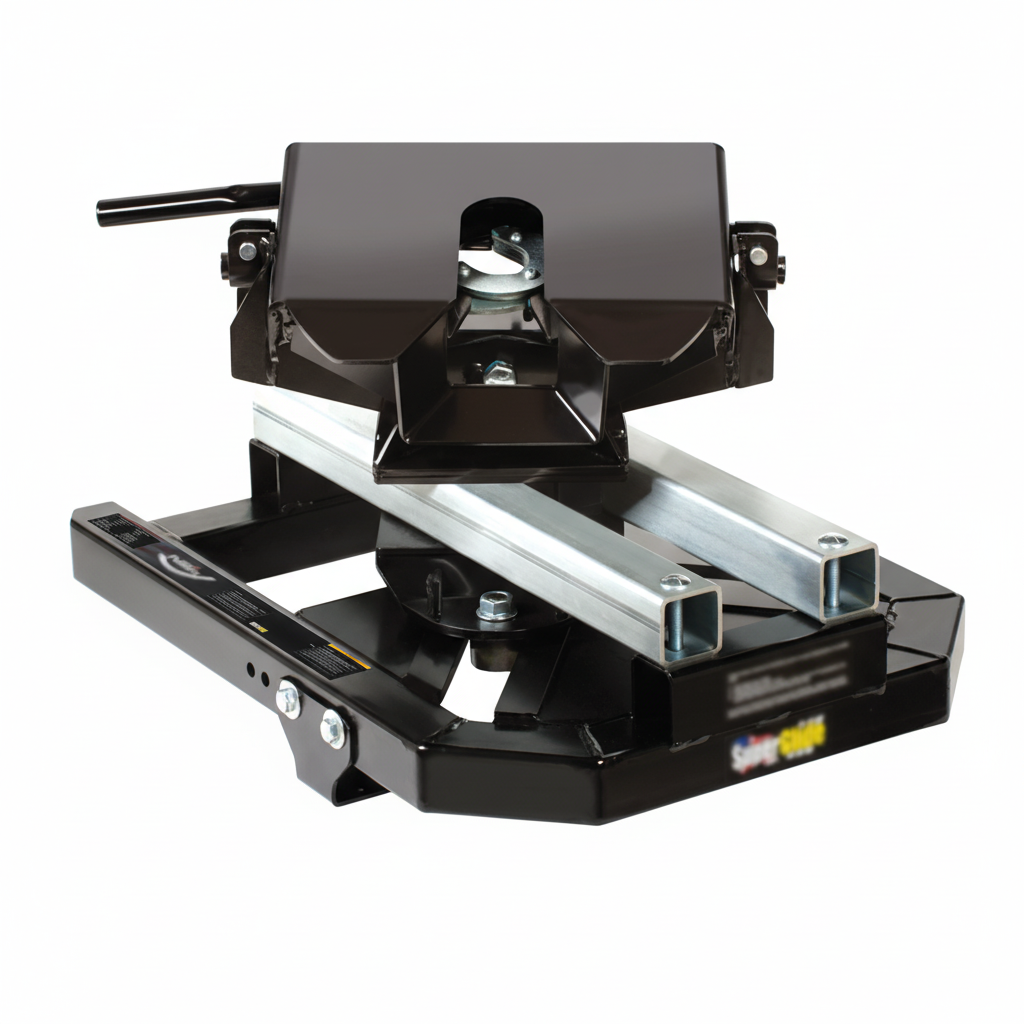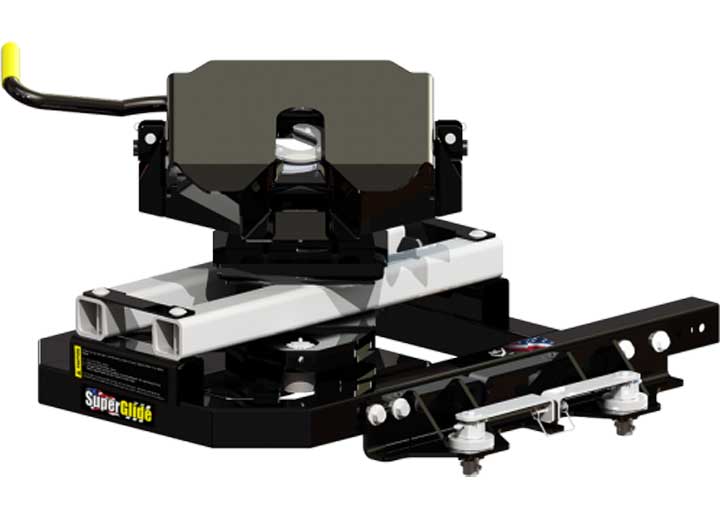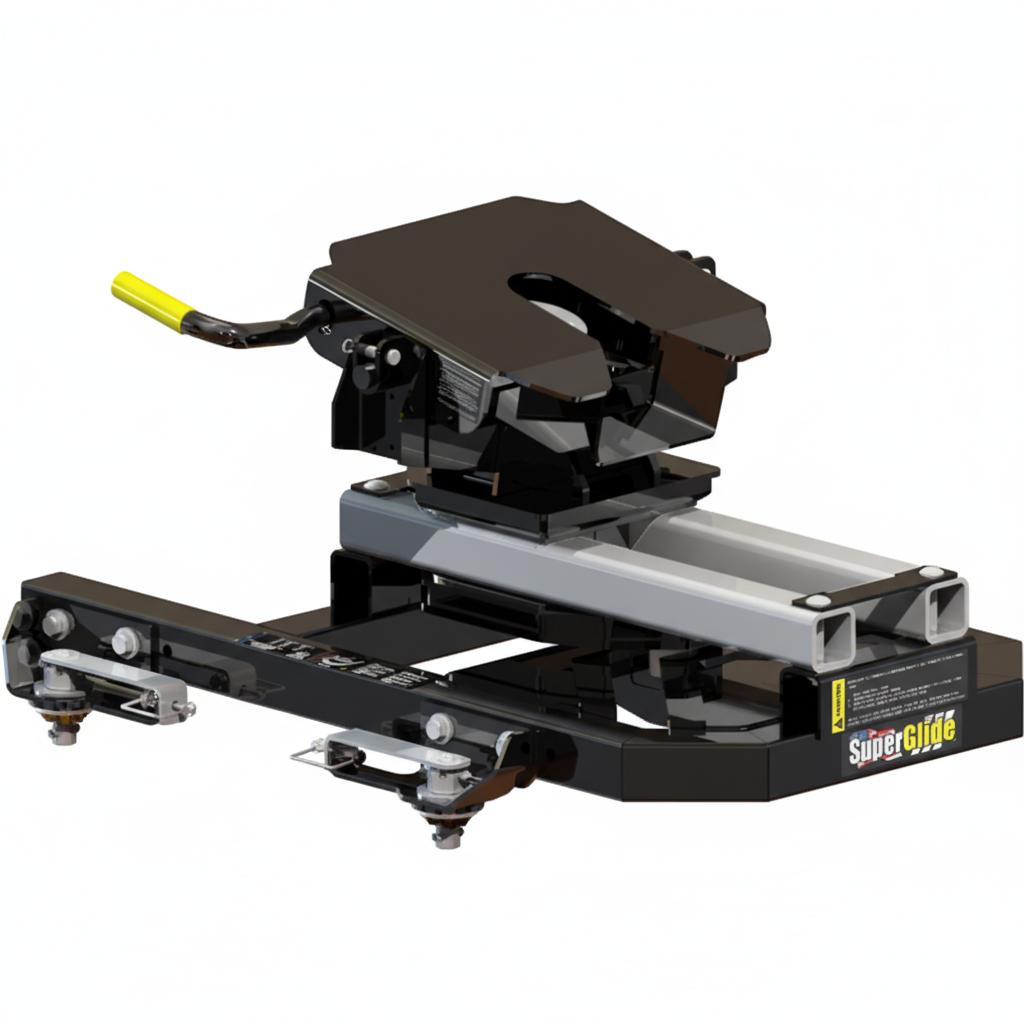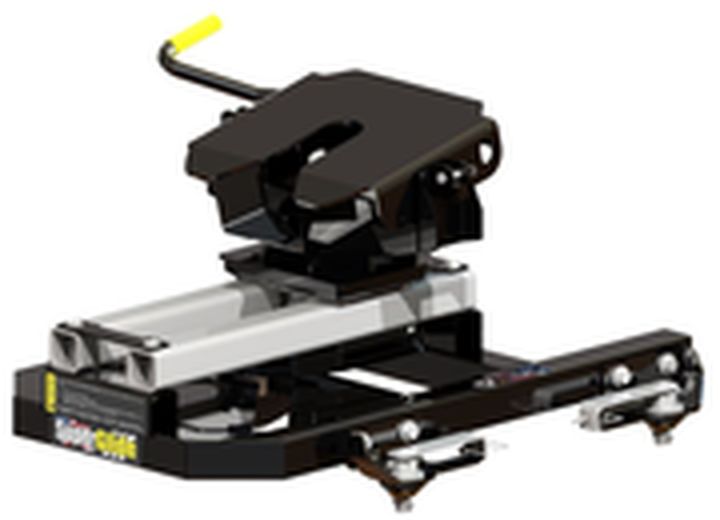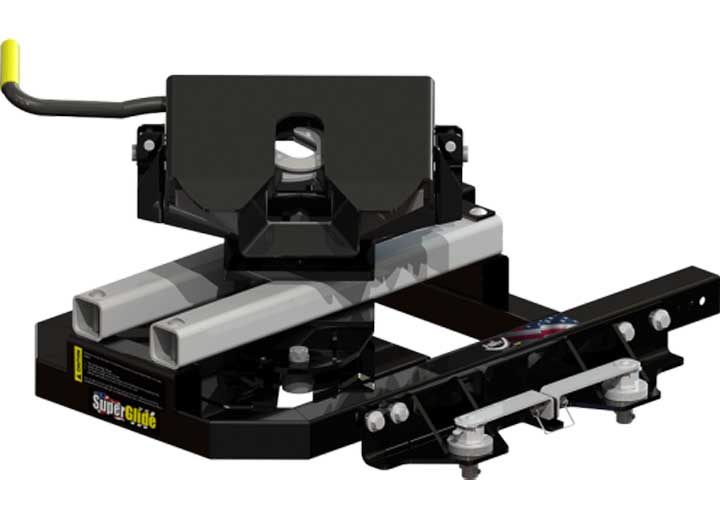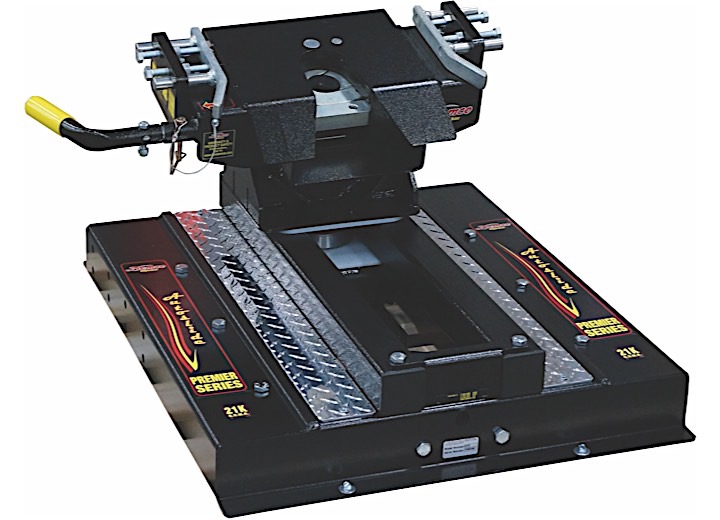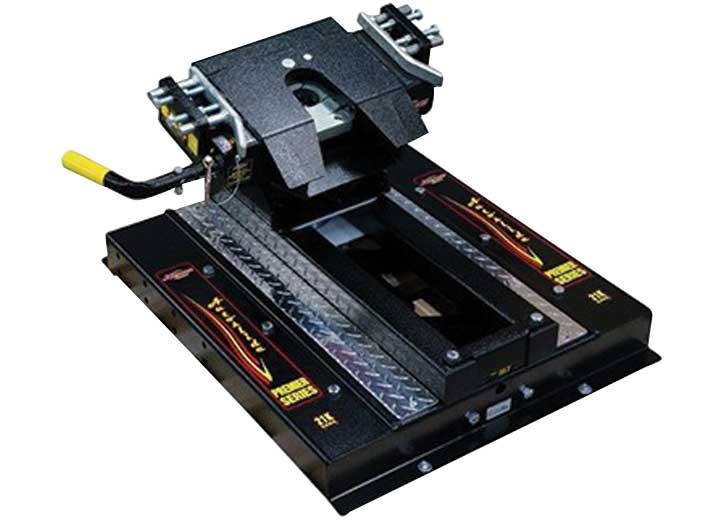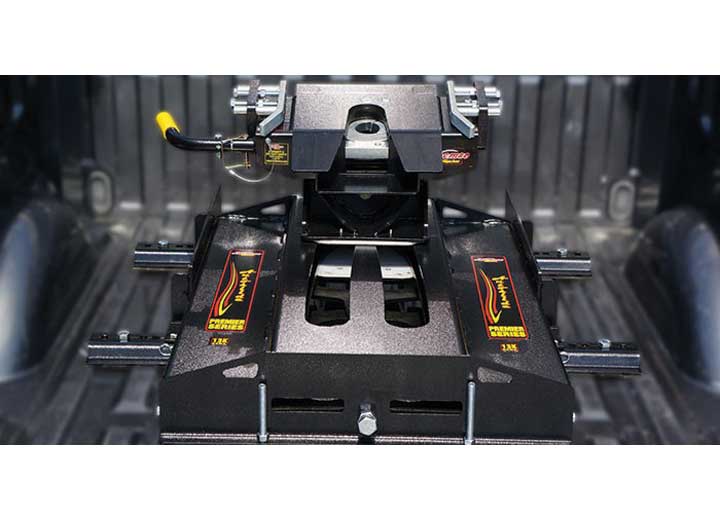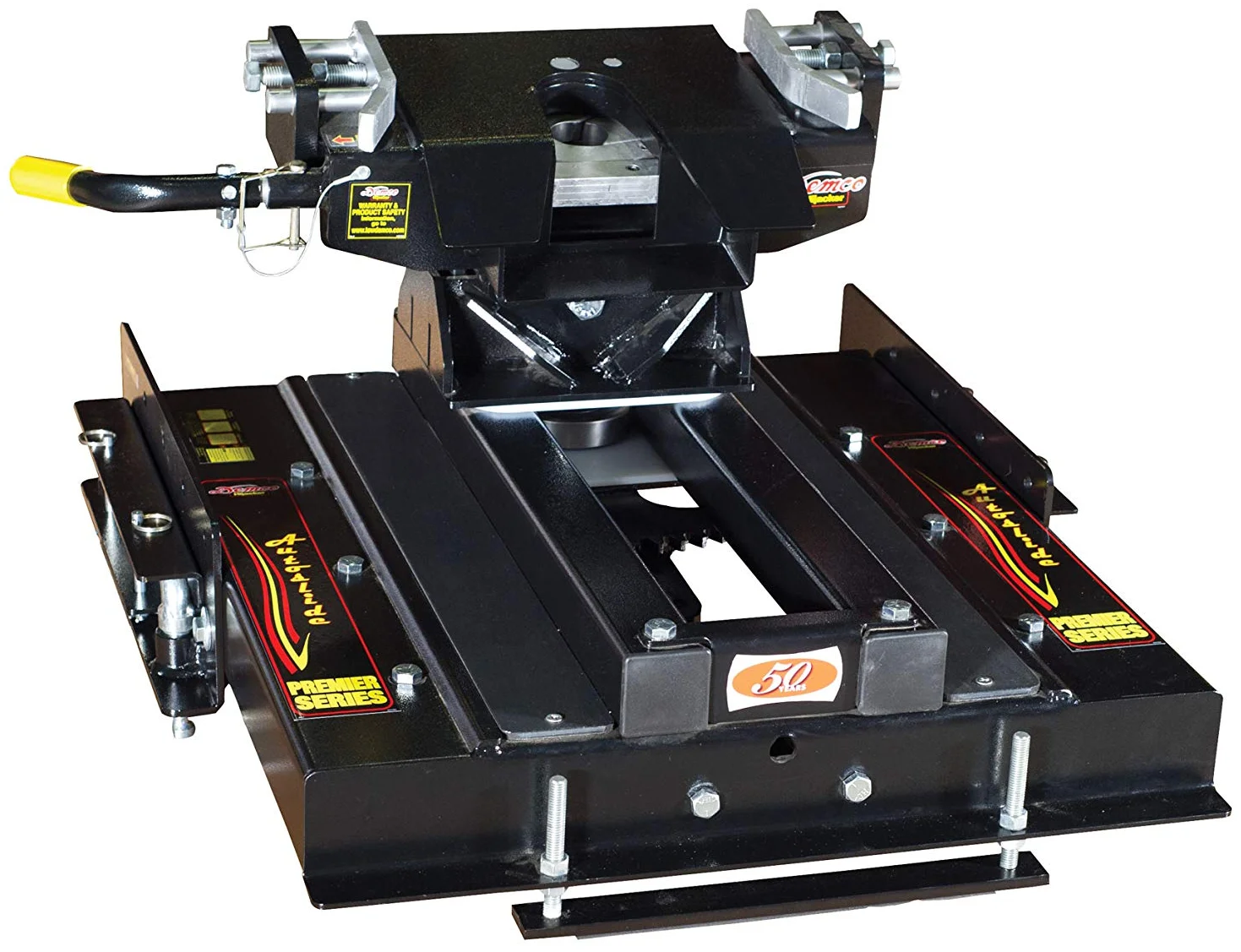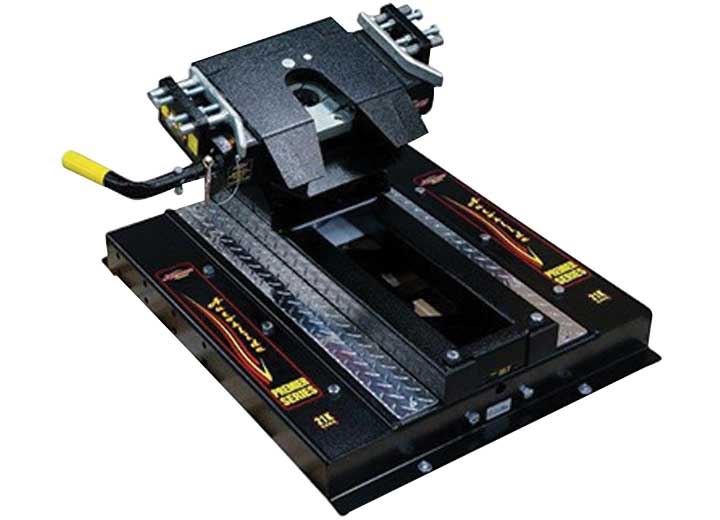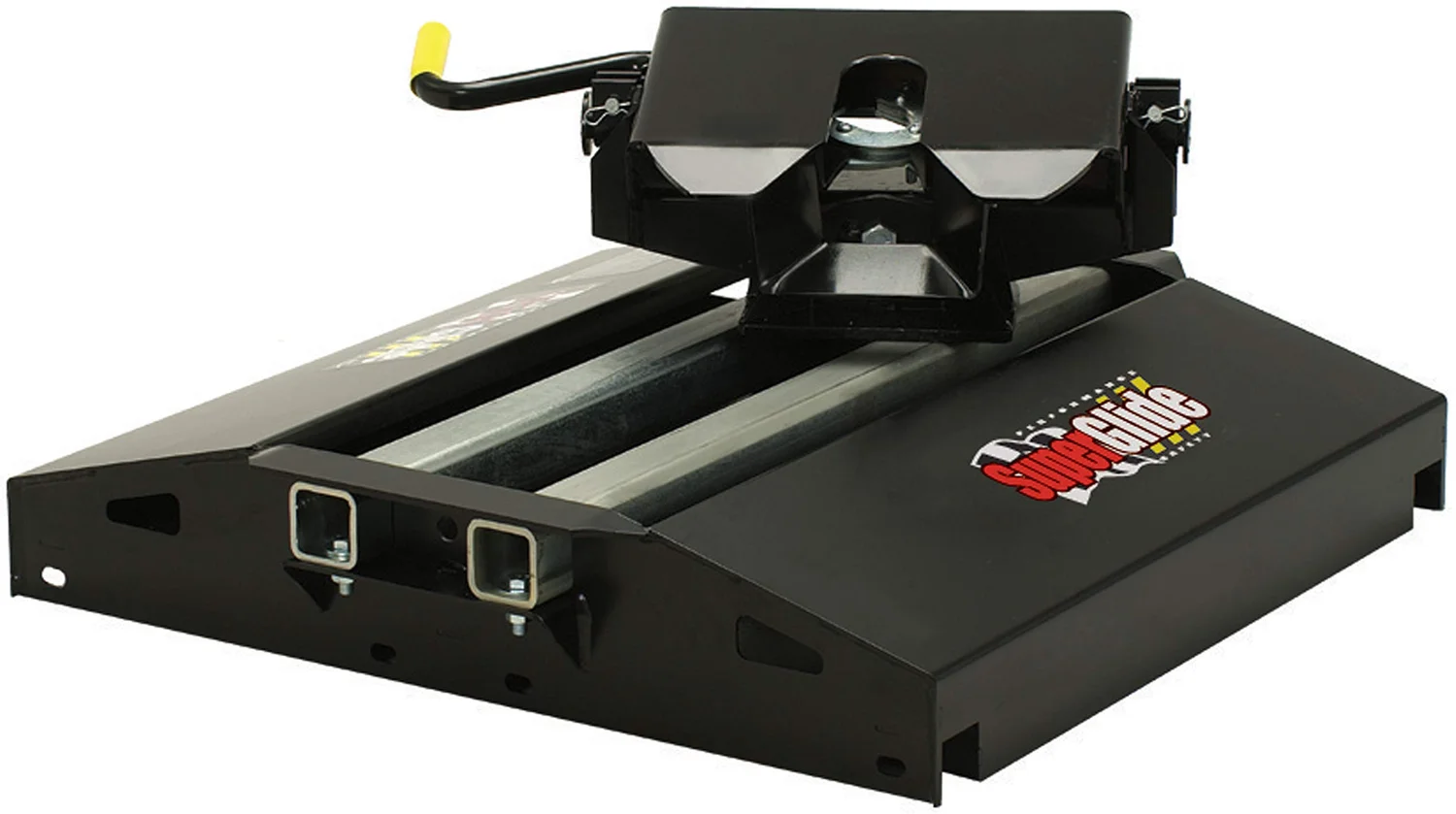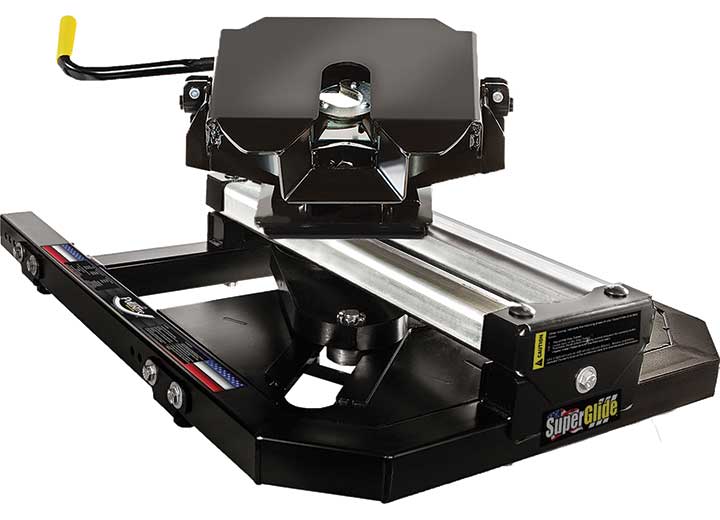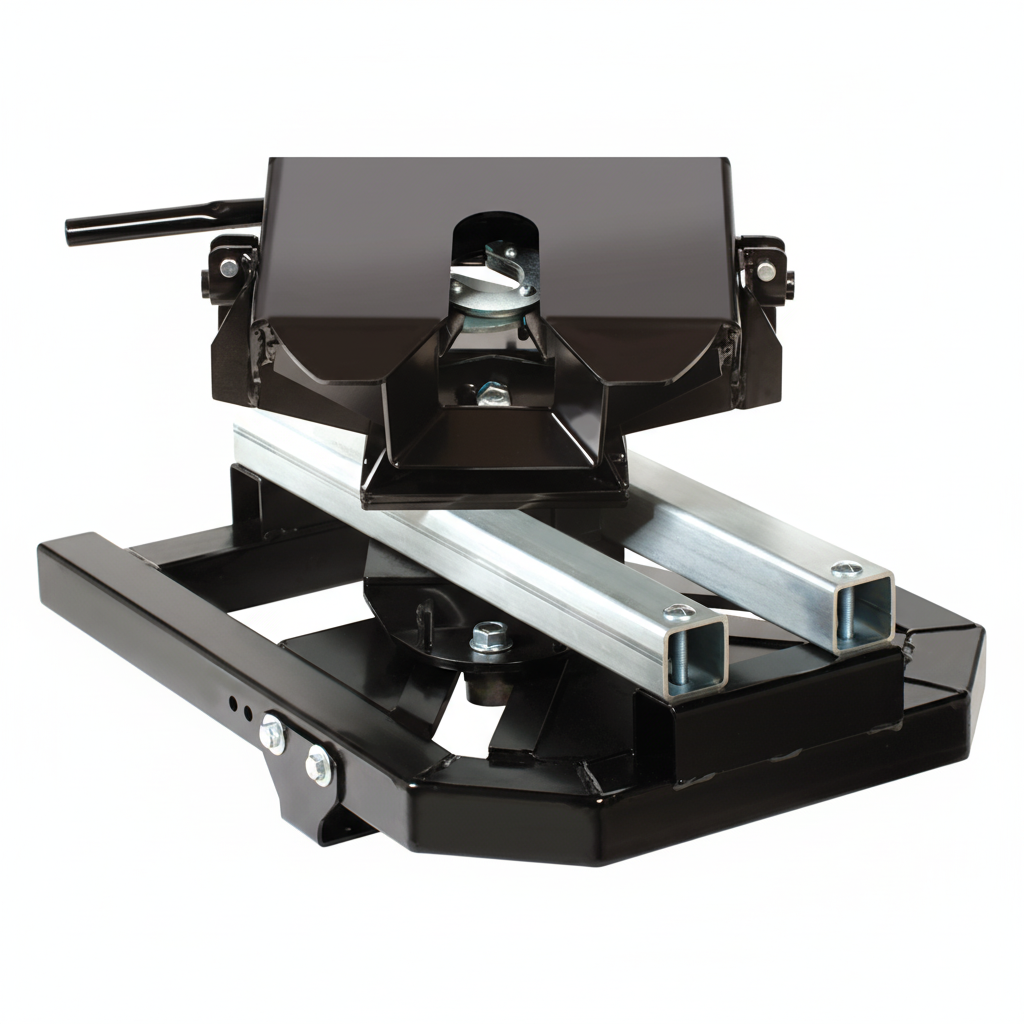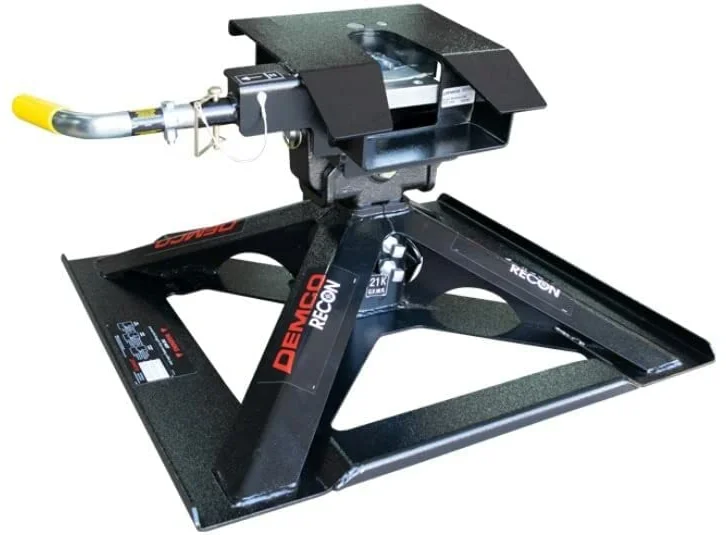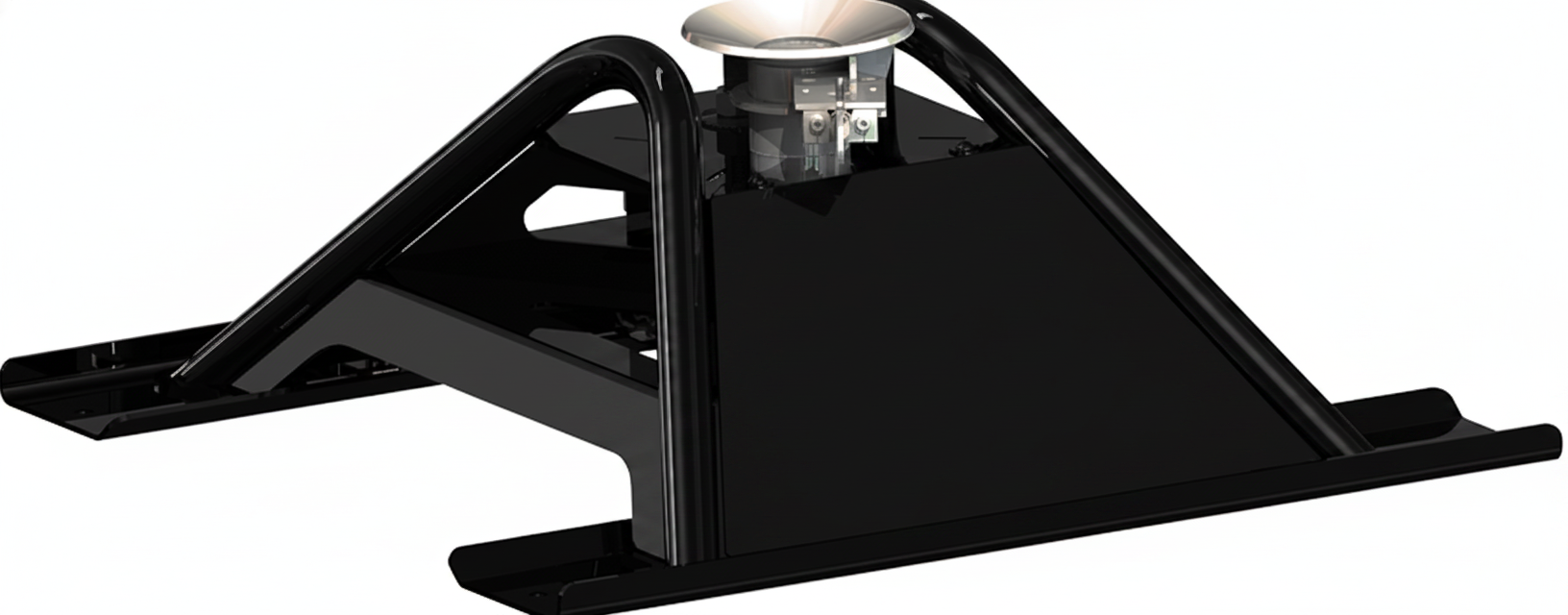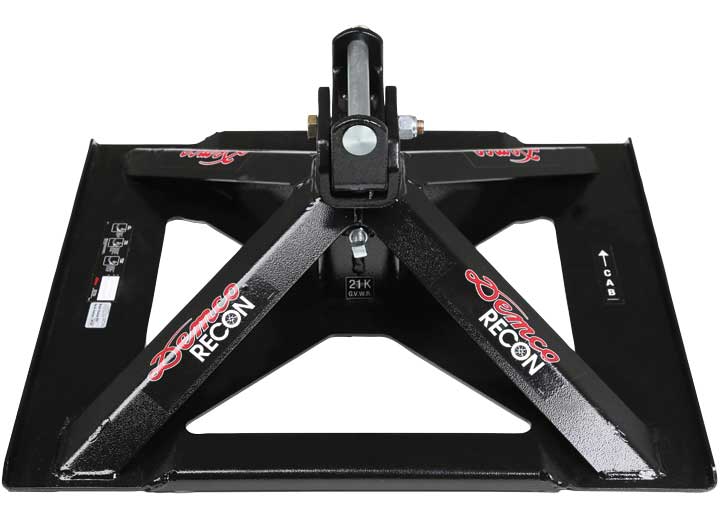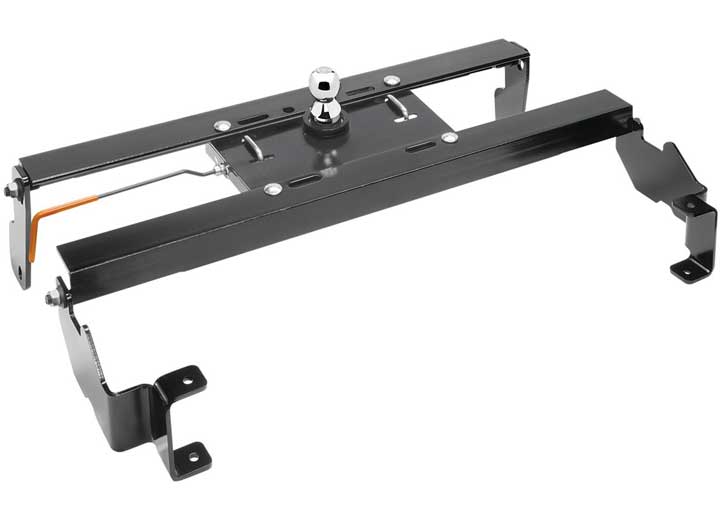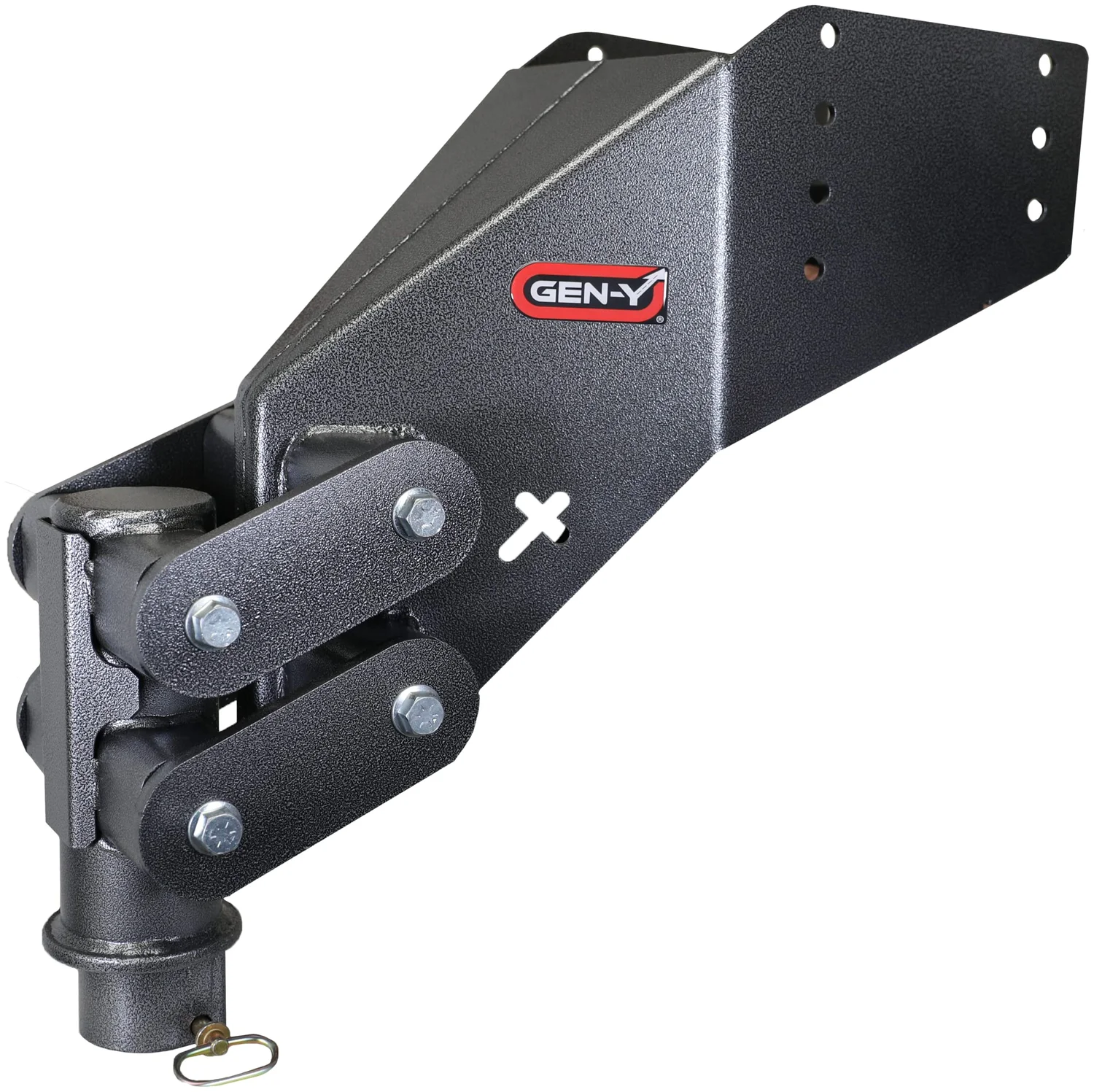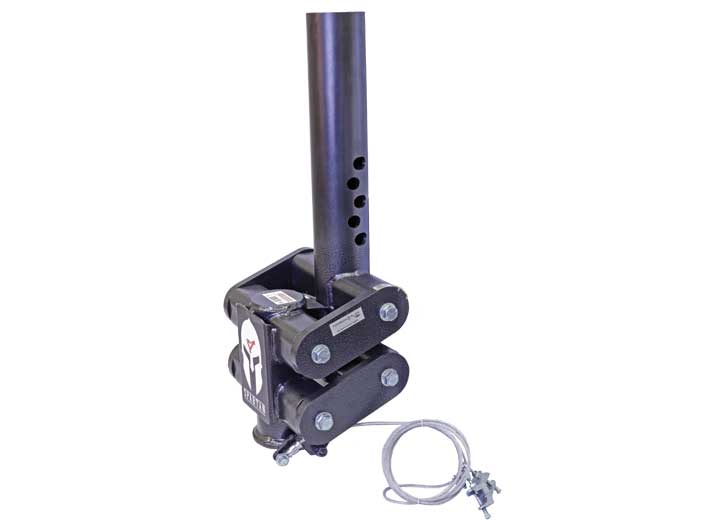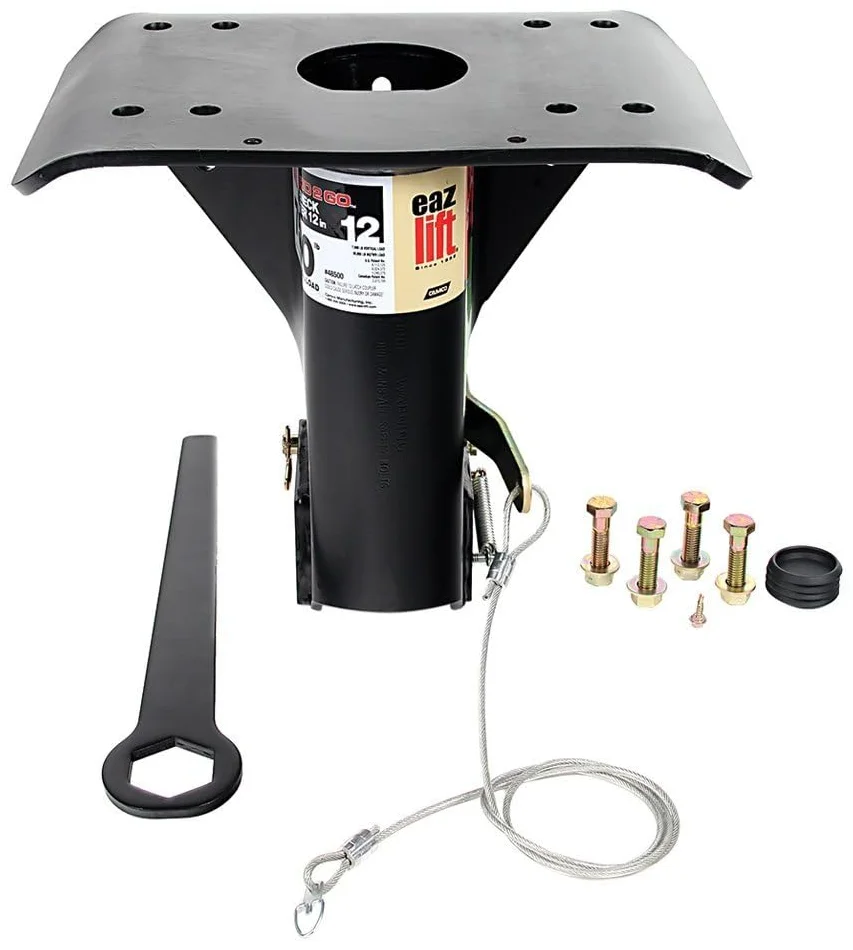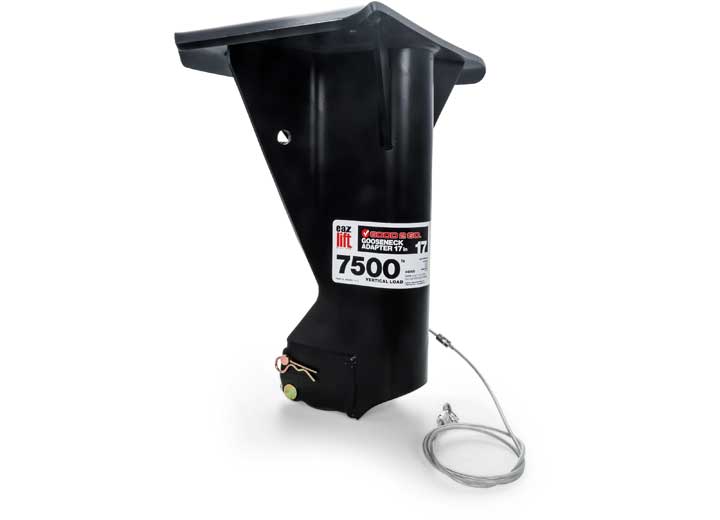
Bumper-pull hitches top out where big trailers begin. For heavy RVs, flatbeds, livestock and equipment trailers, the coupling point moves into the truck bed, over or slightly ahead of the rear axle. That puts the trailer's weight where the truck is strongest, makes the rig far more stable, and allows much higher ratings than a receiver hitch. There are two ways to do it: a fifth wheel hitch, which uses jaws that lock around a king pin on the trailer, and a gooseneck hitch, which uses a ball in the bed and a coupler on the trailer.
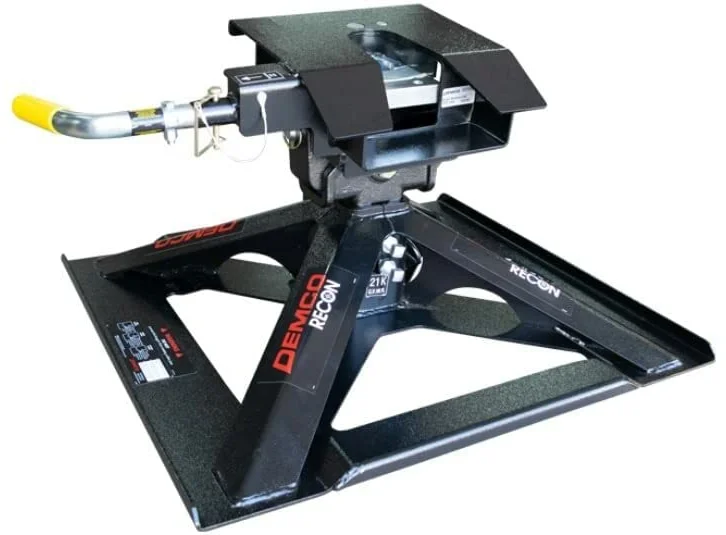
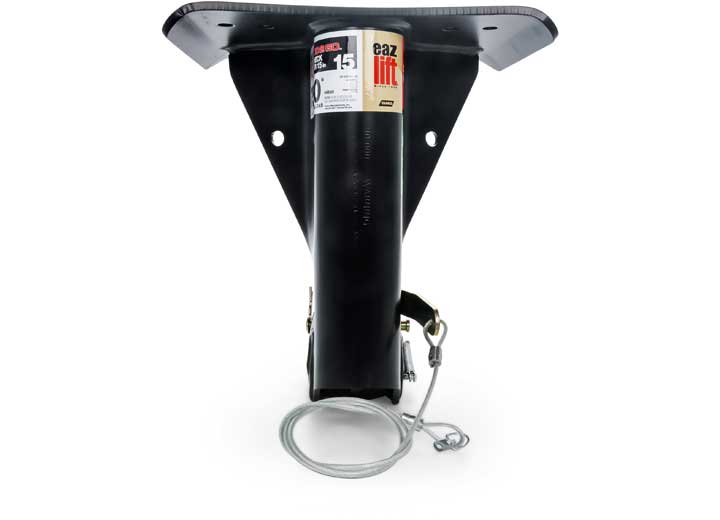
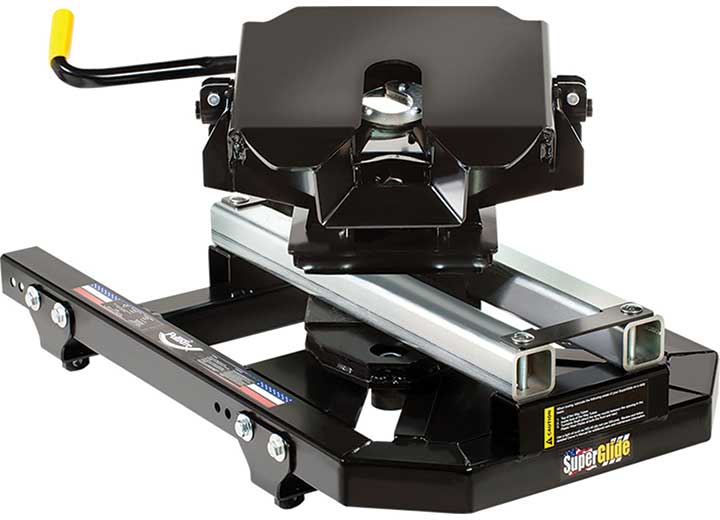
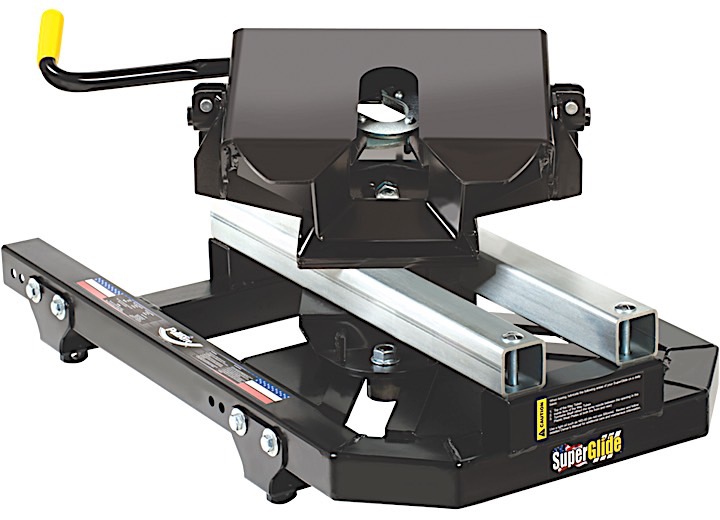
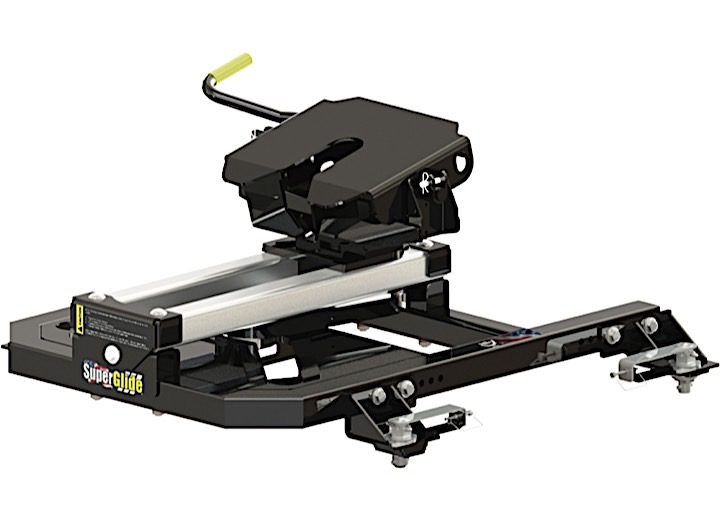
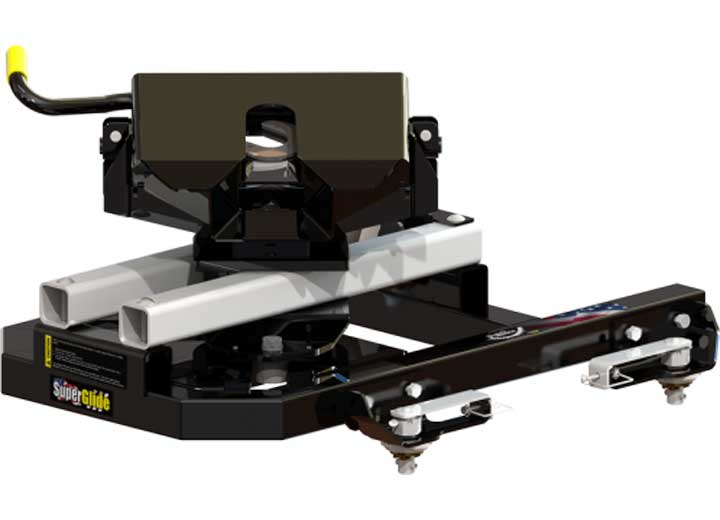
Most RV fifth wheels come with a pin box, and most flatbed and stock trailers come with a gooseneck coupler. We carry fifth wheel hitches from Pullrite (SuperGlide auto-sliding, SuperLite and OE puck series), Demco (Hijacker Autoslide and Recon) and Camco Eaz-Lift, gooseneck hitches and rails from Draw-Tite (Hide-A-Goose) and Pullrite, plus gooseneck adapters, bed rails and mounting parts.
Fifth wheel vs gooseneck at a glance
| Fifth wheel | Gooseneck | |
|---|---|---|
| Coupling | King pin on trailer locks into hitch jaws | Ball in bed (2-5/16" is typical) under a trailer coupler |
| Typical trailers | RV fifth wheels and toy haulers | Flatbed, livestock, horse, dump and equipment trailers |
| Ride and feel | Smoother, less clunk; jaws and pivots absorb movement | Tighter, simpler connection; more chuck on rough roads |
| Bed space when unhitched | Head and often rails stay unless removed (heads can be heavy) | Ball flips or pulls out; bed is nearly flat |
| Typical cost | Higher, especially auto-slide models | Lower |
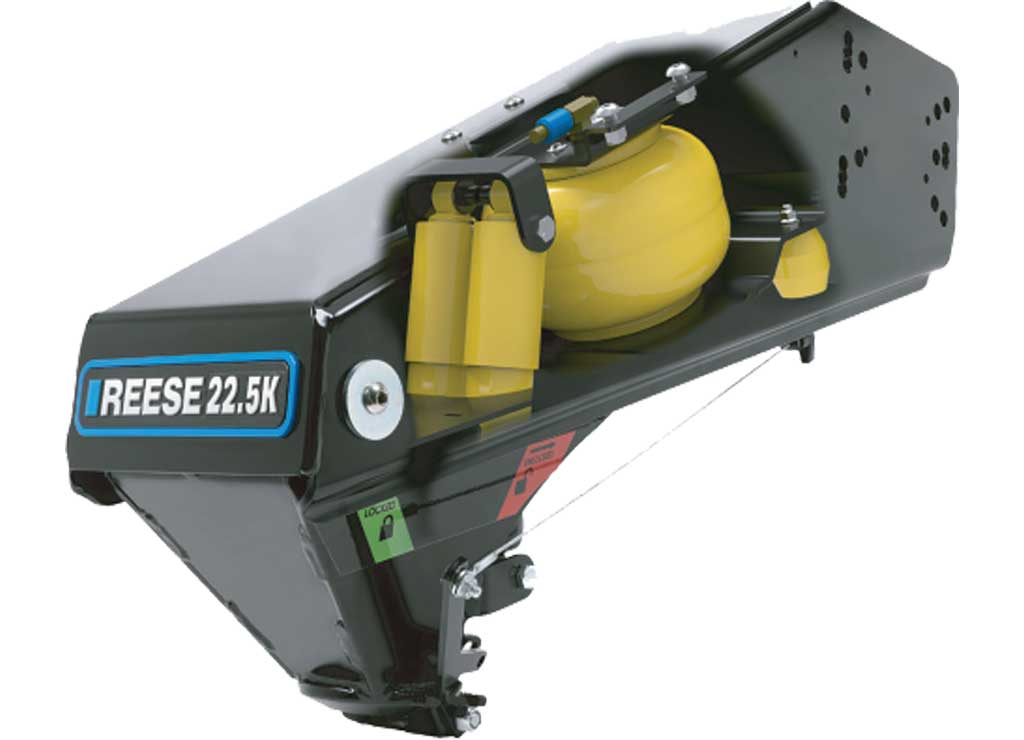
Ratings for both run from roughly 12,000 to over 25,000 lb depending on the model, but the hitch is rarely the limit. A fifth wheel or gooseneck puts a large share of trailer weight on the truck, commonly around 15 to 25% of loaded trailer weight. A 14,000 lb fifth wheel can easily put 2,500 lb or more in the bed, which is why truck payload and rear axle rating usually run out before the hitch does. Check the door-jamb sticker before you shop.
Choosing a fifth wheel hitch: slide, pivot and capacity
- Fixed vs sliding. On a long-bed truck (roughly 8 ft) a fixed hitch usually has enough clearance between the trailer's front corners and the cab. On a short bed (around 6.5 ft and shorter), a tight turn can bring the trailer into the cab, so most short-bed owners buy a slider. Manual sliders (Demco Recon Slider) move back when you set them before maneuvering; auto-sliding hitches such as the Pullrite SuperGlide and Demco Hijacker Autoslide move automatically as you turn.
- Pivot style. A single-pivot head tilts fore and aft. Double-pivot heads (Demco Hijacker double pivot) also allow some side-to-side movement, which helps on uneven ground. Single-point and ISR designs (Pullrite SuperLite, Super 5th) aim for a lighter head that's easier to remove.
- Capacity. Pick a rating at or above the trailer's GVWR (its maximum loaded weight), not its dry weight. Kingpin weight rating matters too.
- Pin box compatibility. Some auto-slide hitches need a capture plate matched to the trailer's pin box, such as Pullrite QuickConnect plates for Lippert 1116, 1621 and 1716 pin boxes or Demco capture plates for Helux boxes. Know your pin box model before ordering.
A few listings are sold as a head only, a box that's one of several shipping cartons, or a hitch without rails. Read the listing title carefully so you get every part of the system.
Mounting: universal rails, OEM puck and gooseneck rails
How the hitch attaches to the truck often decides which hitch you buy.
- OEM puck systems. Ford, GM and Ram trucks with a factory fifth wheel / gooseneck prep package have mounting points (pucks) built into the bed. Puck-mount hitches like the Pullrite OE Series SuperGlide and SuperLite, and the Demco Hijacker Ford Factory Prep, drop in with no drilling. They are specific to the truck brand and sometimes to the model year, so match the listing exactly.
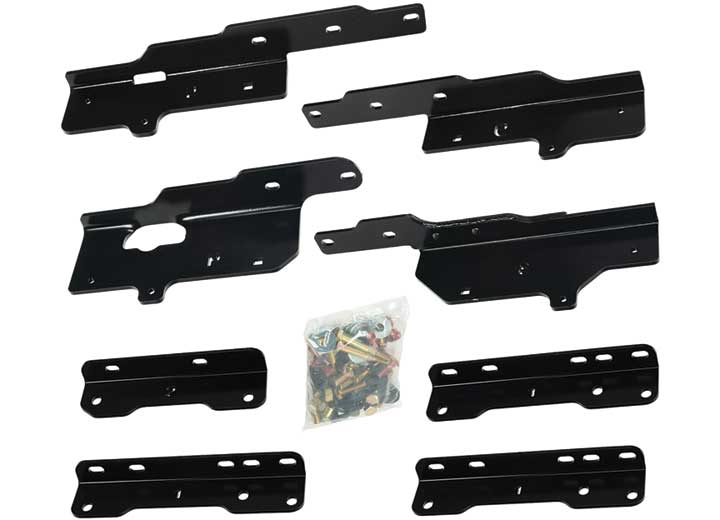
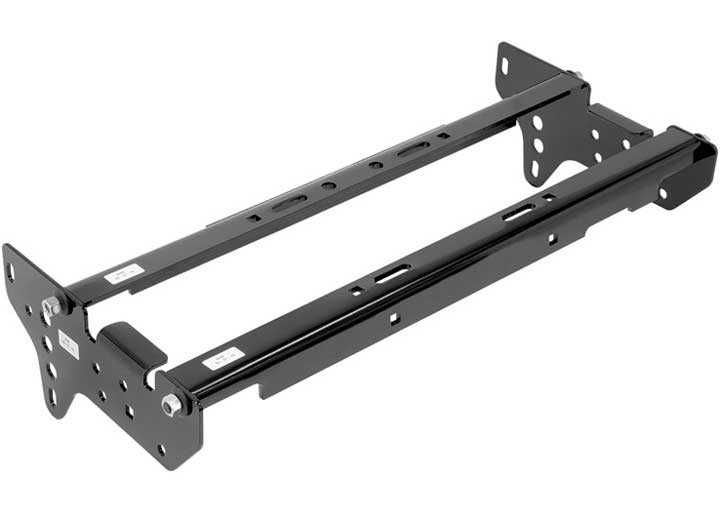
- Universal rails. Trucks without a prep package use bed rails bolted through the bed to brackets on the frame (Demco Hijacker bed rails, manual slider siderails). The hitch head and base then mount to those rails. Installing them usually means drilling the bed, so plan on several hours or a professional install.
- Underbed gooseneck. Hide-A-Goose and similar kits mount a ball receiver under the bed with the ball dropping into a hole in the bed floor. Draw-Tite also sells gooseneck rail kits for specific Ford and GM trucks, and Pullrite OE gooseneck balls fit factory prep trucks.
- Convert between them. A Demco Recon gooseneck ball mount base lets some fifth wheel setups pull a gooseneck, and gooseneck adapters (Camco Eaz-Lift, Morryde) let a fifth wheel trailer couple to a gooseneck ball. Many RV makers restrict gooseneck adapters under the trailer warranty, so check with your trailer manufacturer first.
Whichever you choose, torque all hardware to spec and recheck after the first trips. Also plan for wiring: most in-bed hitches need a 7-way connector in the bed. See our trailer wiring and brake controller guide.
Hitching safely and the accessories that help
- Check the lock every time. On a fifth wheel, confirm the jaws are fully closed around the king pin and the handle is locked and pinned; do a pull test with the trailer brakes applied. A visible gap between the pin box plate and the hitch head is a warning sign you may have "high hitched" over the jaws.
- Tailgate and bed height. Set trailer height so the pin box or coupler clears the bed rails with room for suspension travel. Older trucks and some lifted trucks may need a raised setup.
- Safety chains and breakaway. Gooseneck trailers use safety chains to bed loops; both styles need the breakaway cable attached to the truck, not to the hitch head.
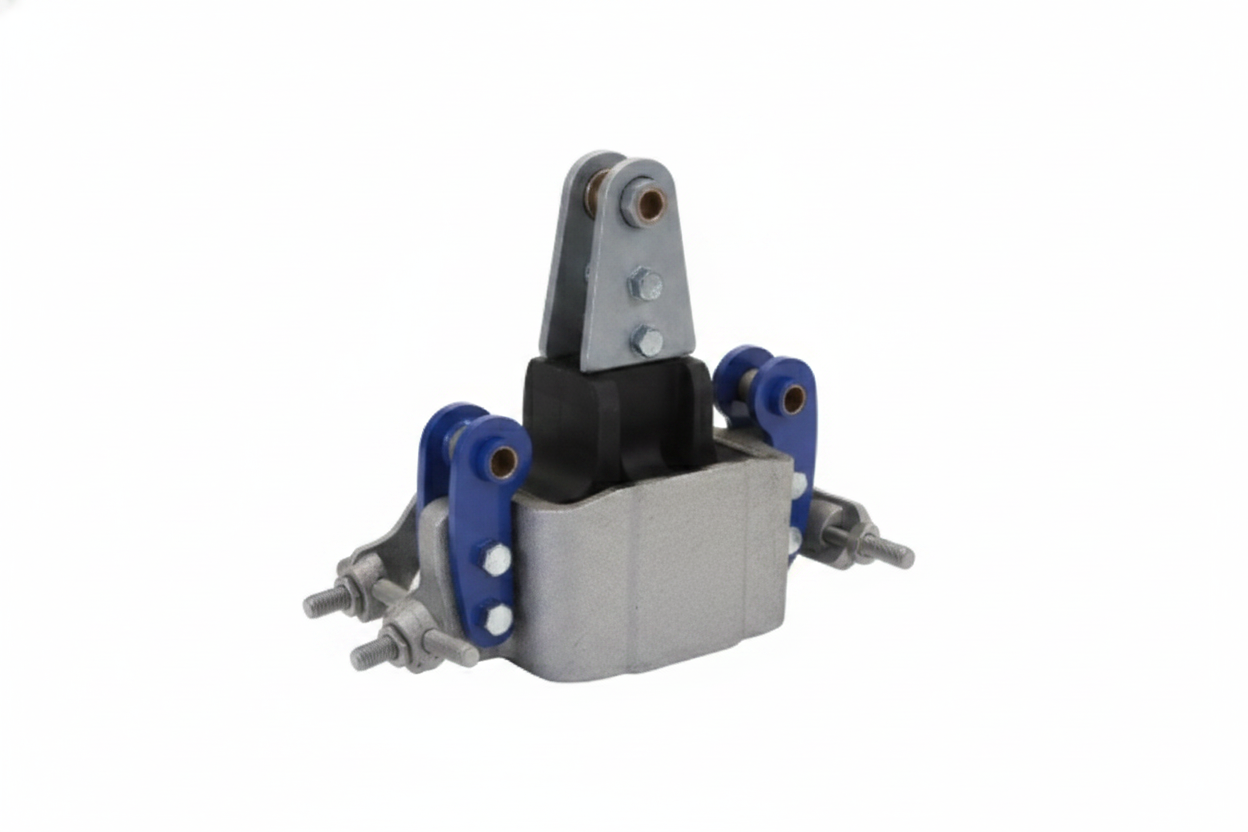
- Lube and maintenance. Many fifth wheel hitches call for grease or a lube plate on the skid plate; follow the hitch maker's guidance. Pin box isolators (Pullrite Rotaflex) can reduce chucking.
- Security and covers. Coupler locks (Blaylock), locking plates, hitch covers and gooseneck ball covers keep things clean and discourage theft.
Heavy trailers also need tires and brakes in good condition; see why RV and trailer tires fail differently. Once parked, stabilize the front of a fifth wheel with the gear in our RV stabilizer jack guide.