Every trailer needs working lights, and anything with electric brakes needs a way for the tow vehicle to apply them. That comes down to two parts: the wiring connection (a plug on the vehicle that matches the plug on the trailer) and, for braked trailers, a brake controller in the cab that sends the right amount of power to the trailer brakes when you slow down.
The connector family tells you a lot about the trailer. A small utility trailer usually has a 4-way flat; a camper, car hauler or equipment trailer with electric brakes almost always has a 7-way RV blade. We stock vehicle-specific tow harnesses from Draw-Tite (T-One plug-in kits and complete 7-way packages), connectors and adapters from Pollak, Hopkins, RV Designer and Wesbar, and brake controllers and harnesses from Tekonsha, Redarc, Hayes and Dorman. Here's how to match them up.
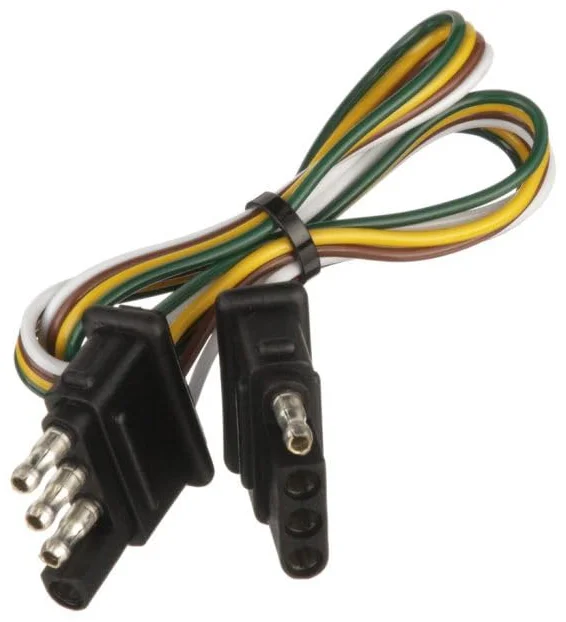
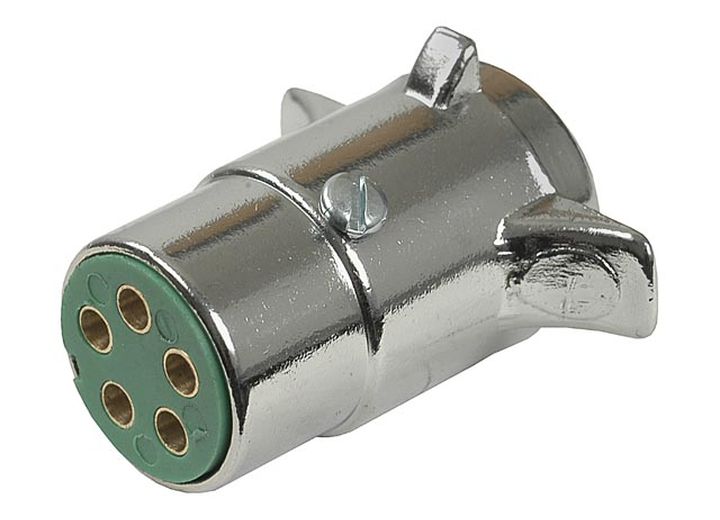
Trailer connectors compared: 4-way to 7-way
Each extra pin adds a function. Match the vehicle side to the trailer side, or bridge them with an adapter.
| Connector | What it carries | Typical trailers |
|---|---|---|
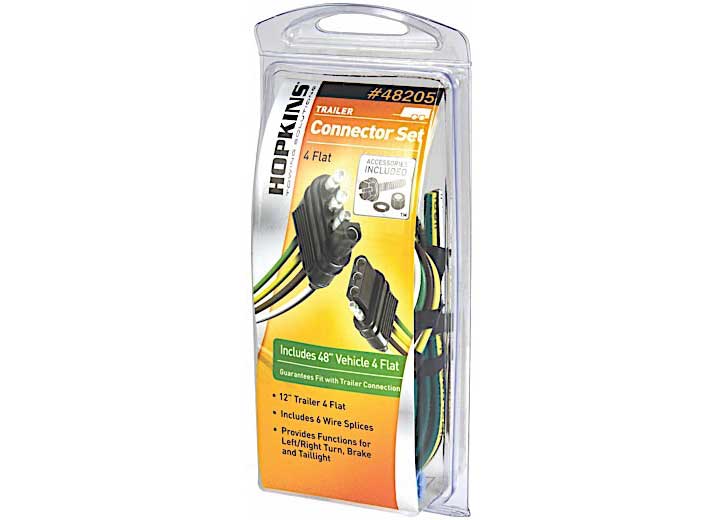
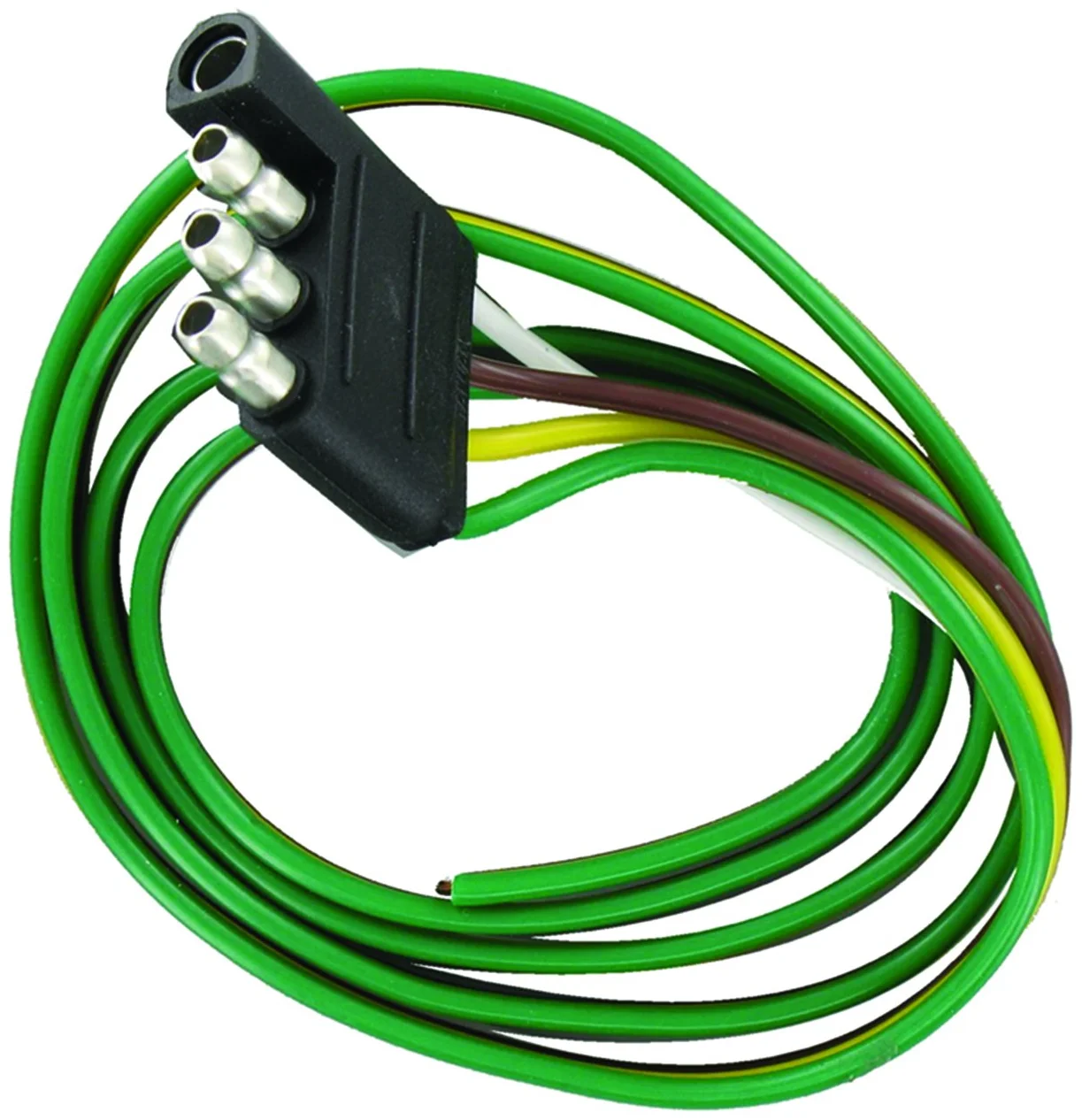
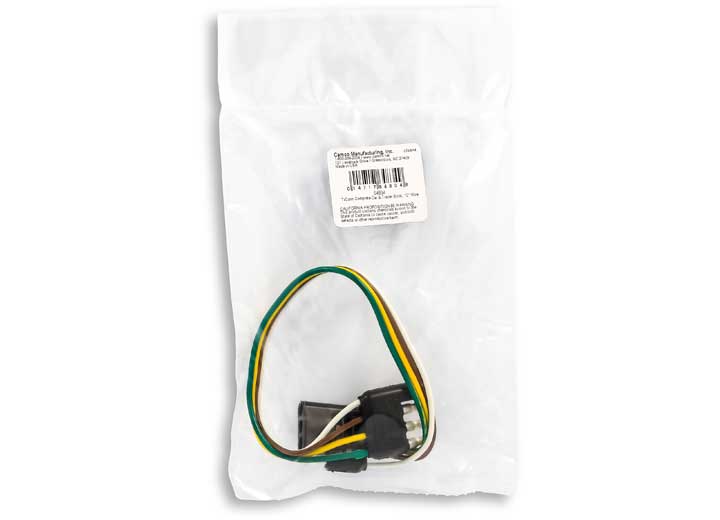
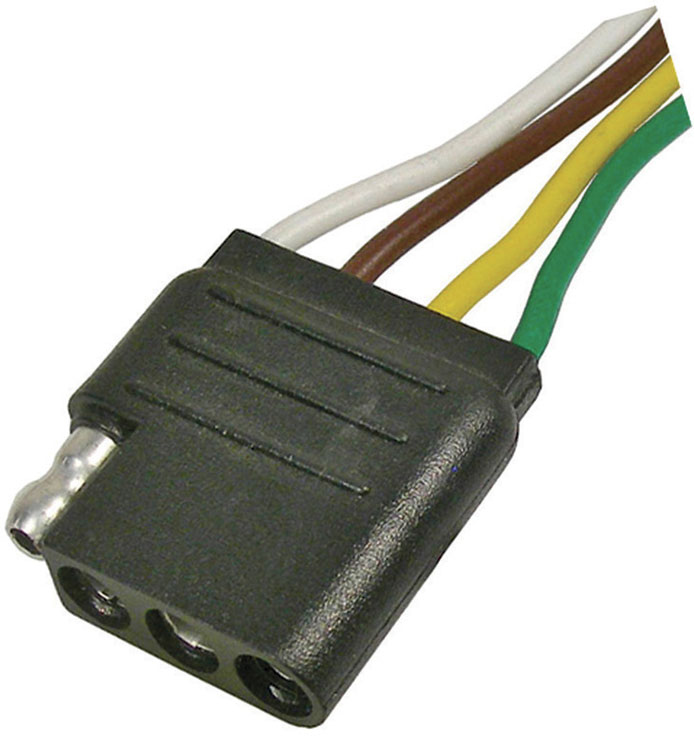
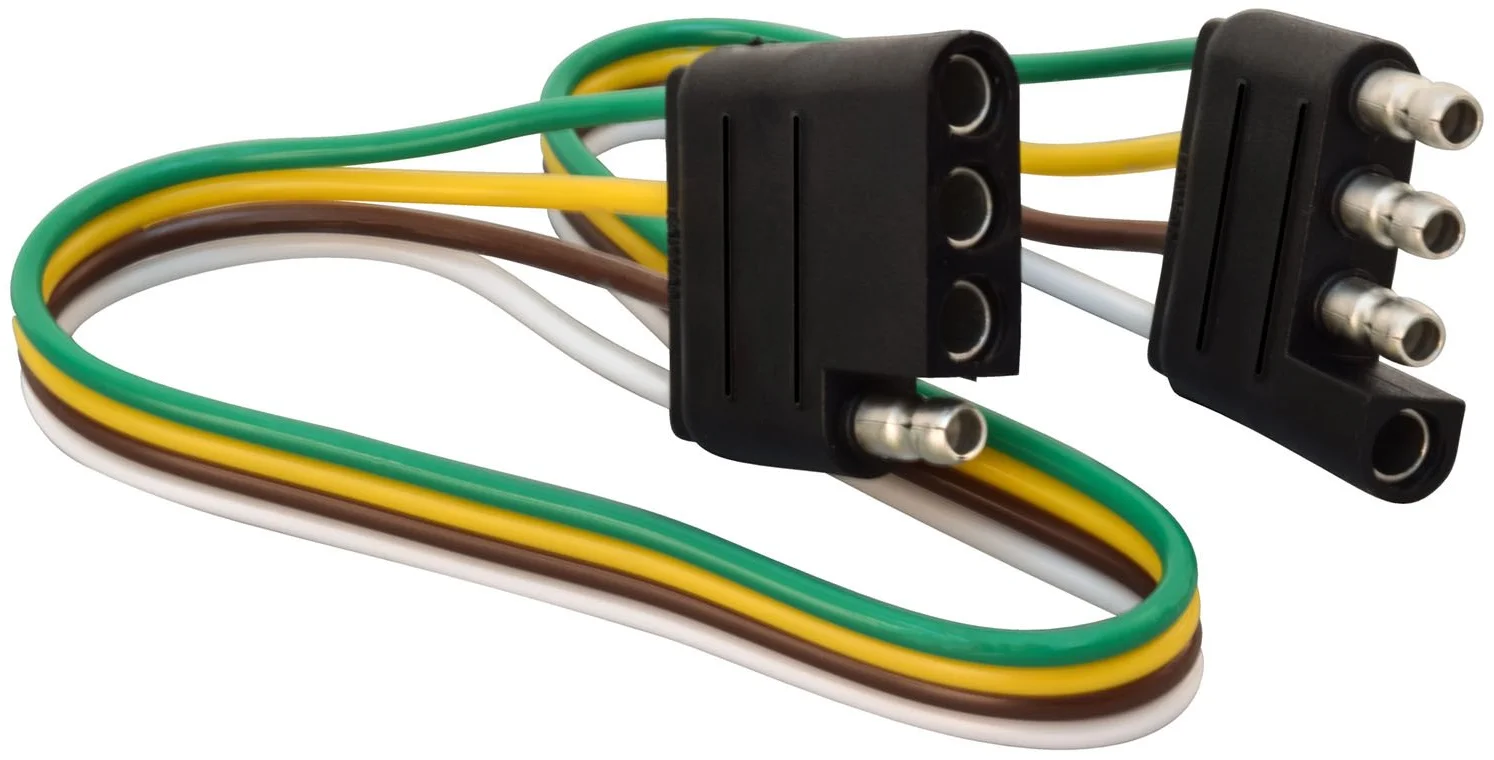
| 4-way flat | Ground, tail/running lights, left turn/brake, right turn/brake | Small utility, jet ski, light boat trailers |
| 5-way flat | 4-way plus one extra circuit, most often a reverse signal that locks out surge brakes | Boat trailers with surge brakes |
| 6-way round | 4-way plus electric brake output and a 12V auxiliary or reverse circuit | Older horse and utility trailers, some farm trailers |
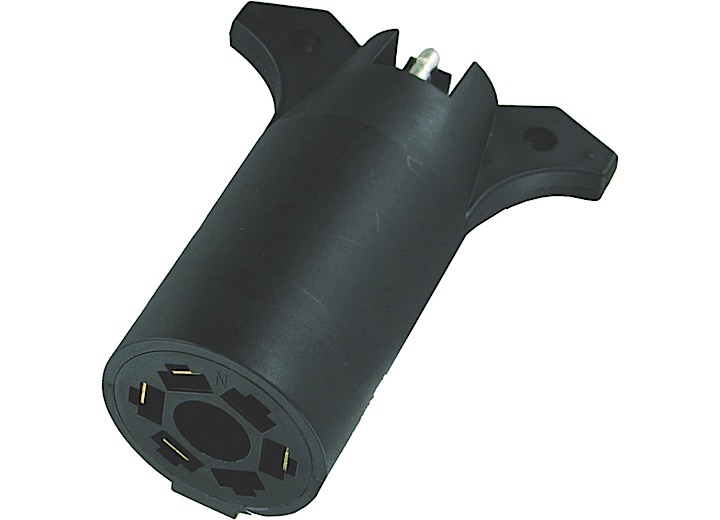
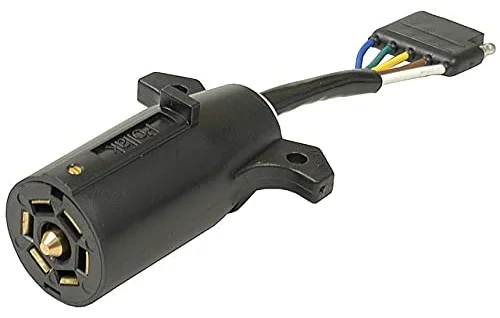
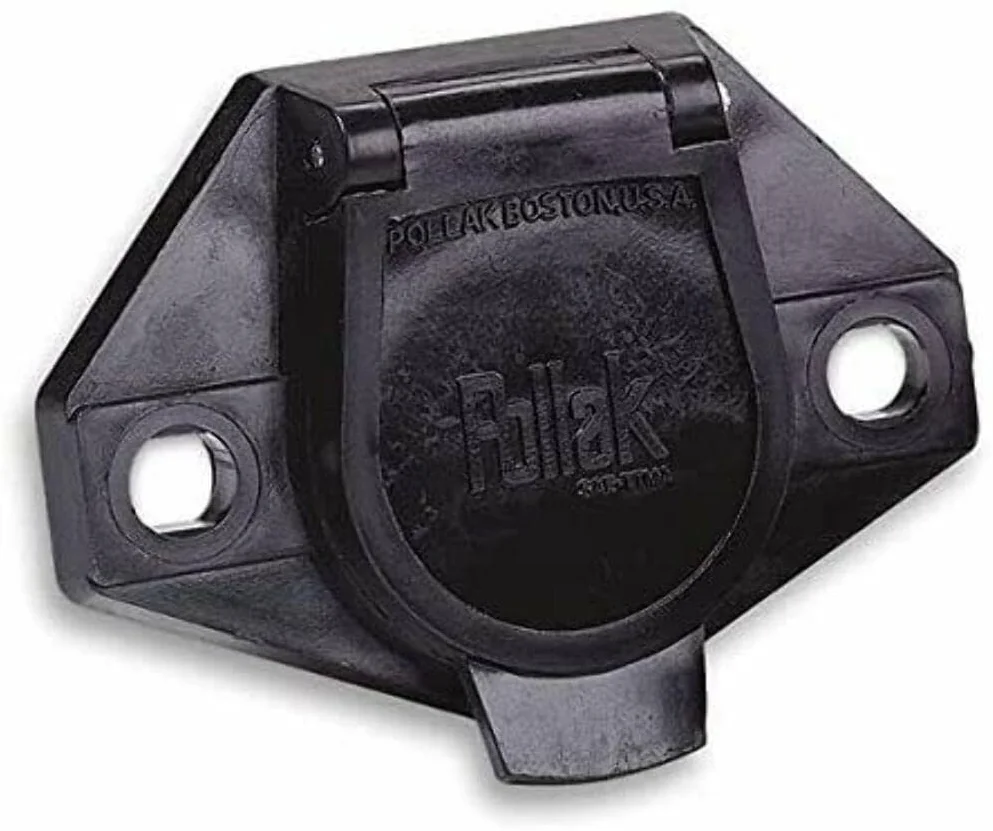
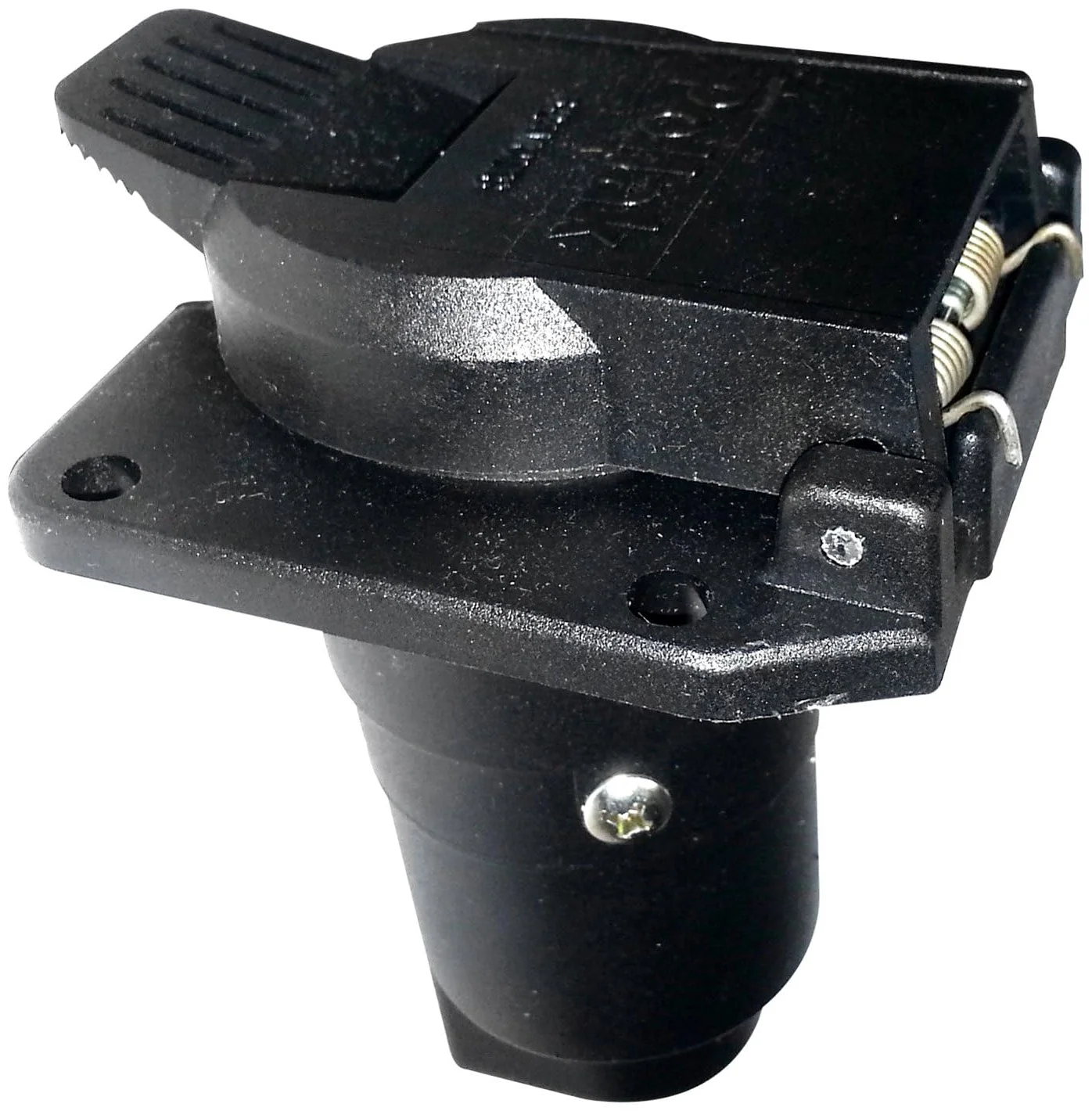
| 7-way RV blade | Lights, electric brake output, 12V battery charge line and reverse | Campers, car haulers, equipment and most braked trailers |
| 7-way round pin | Similar functions, different pin layout (not interchangeable with RV blade) | Some commercial and agricultural trailers |
Pin assignments for 6-way and 7-way connectors vary between manufacturers and trailer builders, so test with a circuit tester before your first trip. For a deeper look at the two most common plugs, see 4-pin vs 7-pin trailer wiring.
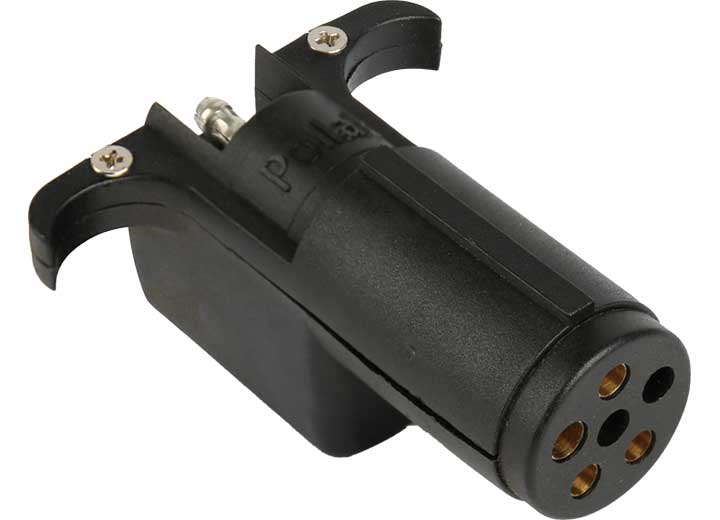
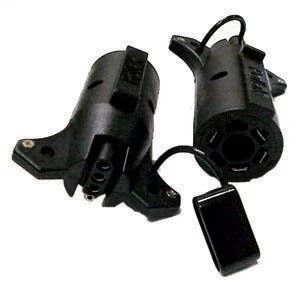
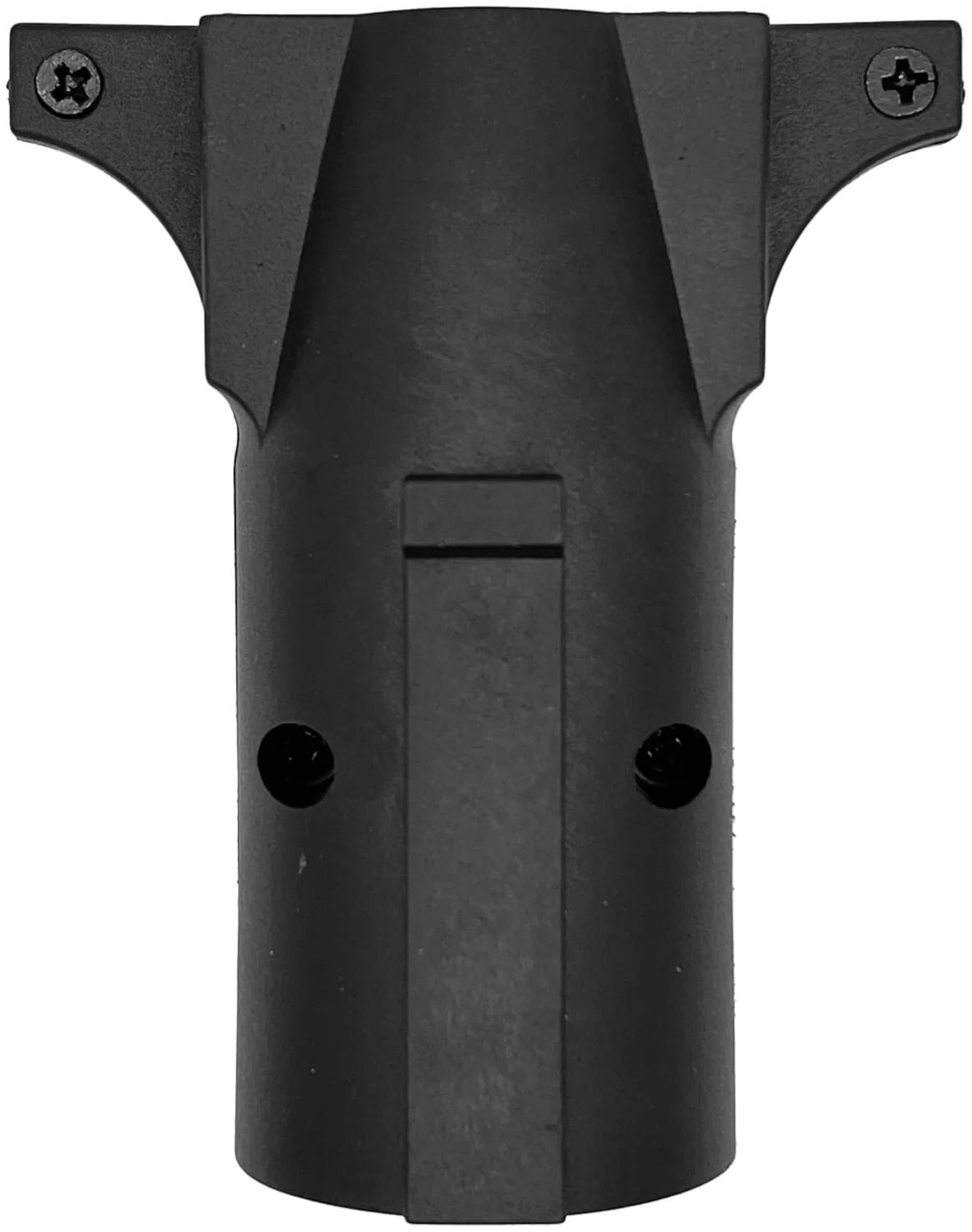
Adapters let one vehicle tow several trailers: a 7-way to 4-way or 5-way flat adapter (Pollak, Draw-Tite coiled, RV Designer) is the most common, and Hopkins and RV Designer make 6-way to 7-way adapters. Adapters only pass through functions both sides have. A 4-way can never run electric brakes.
Getting wiring on your vehicle: plug-in harness vs splice
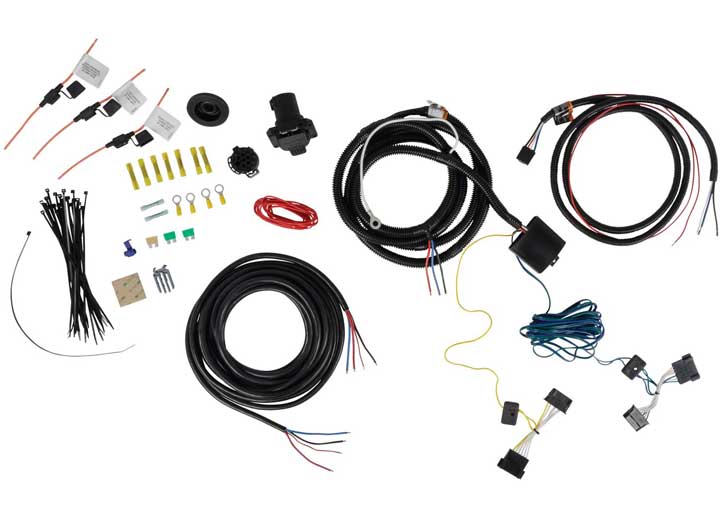
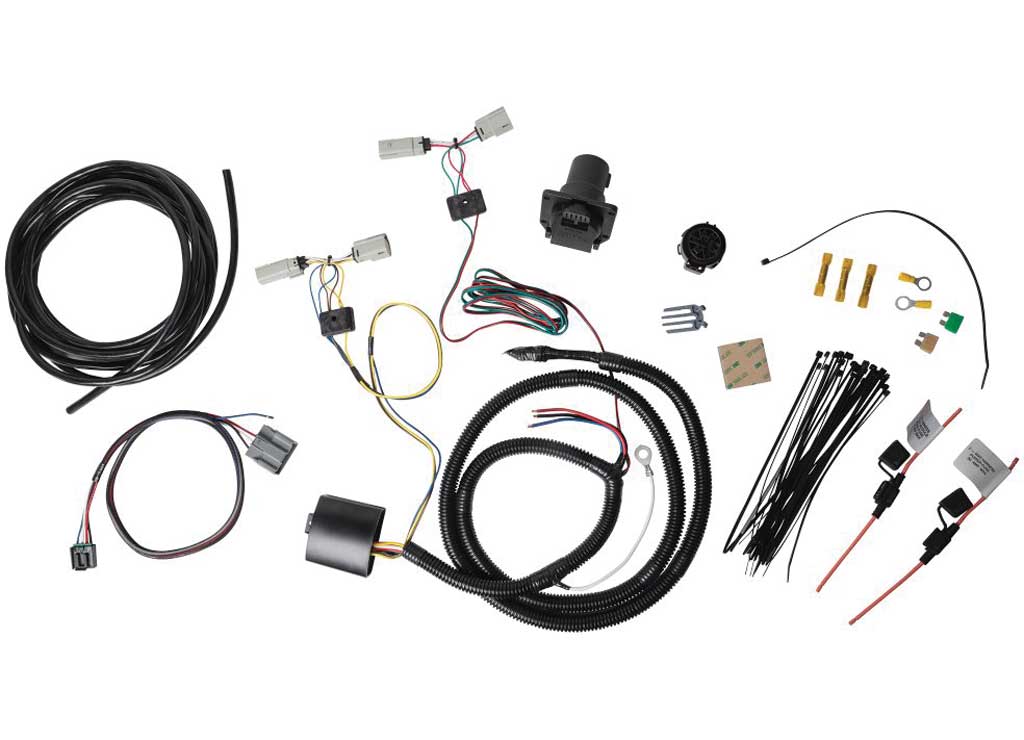
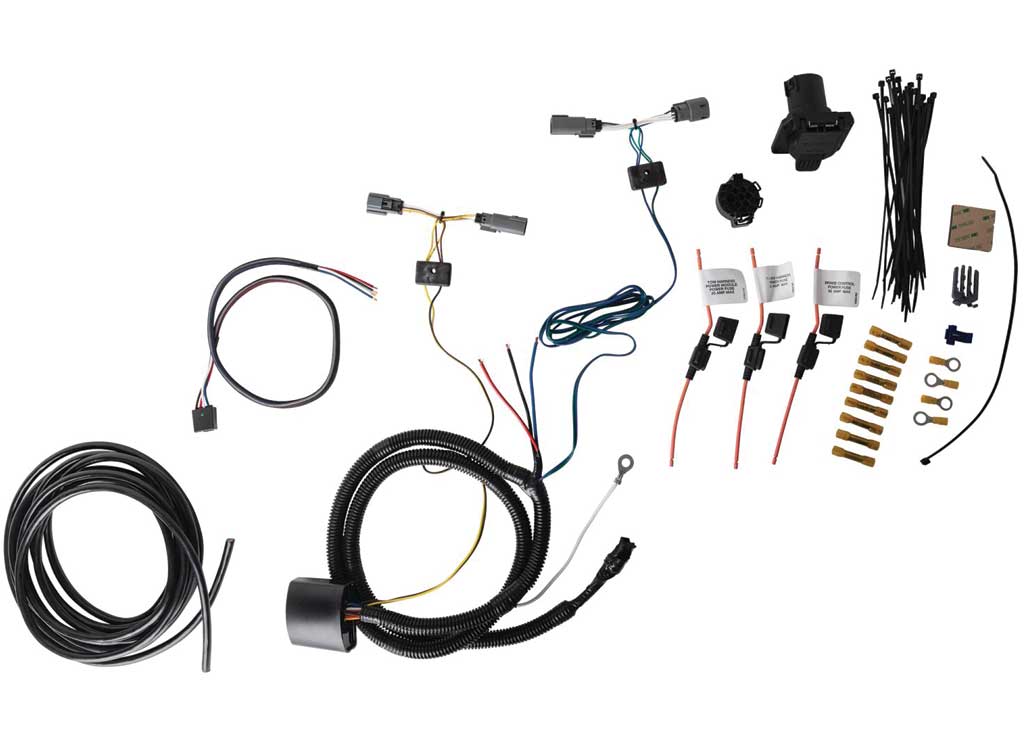
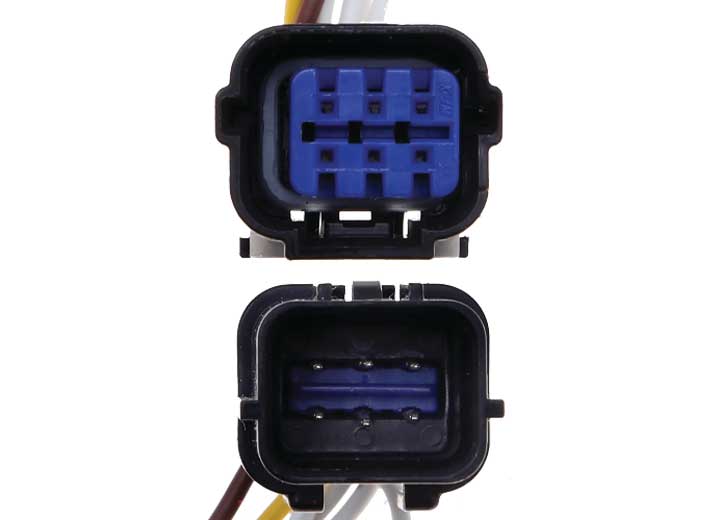
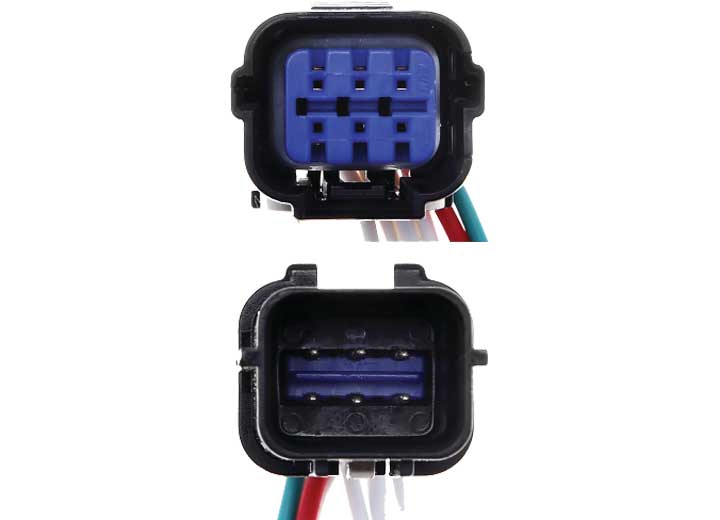
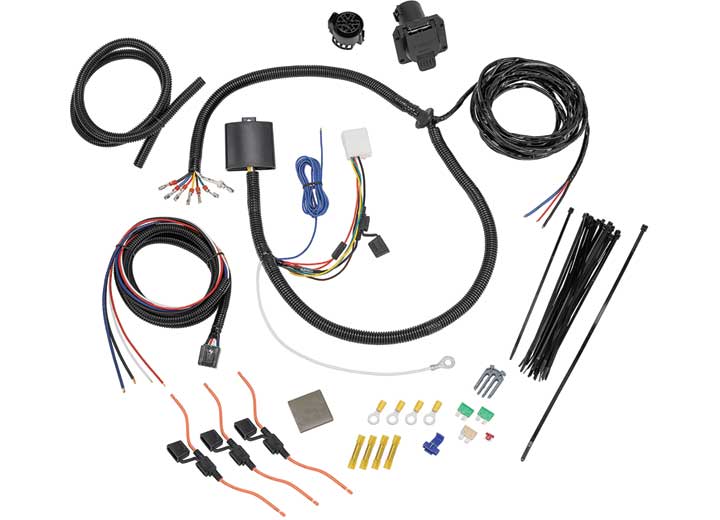
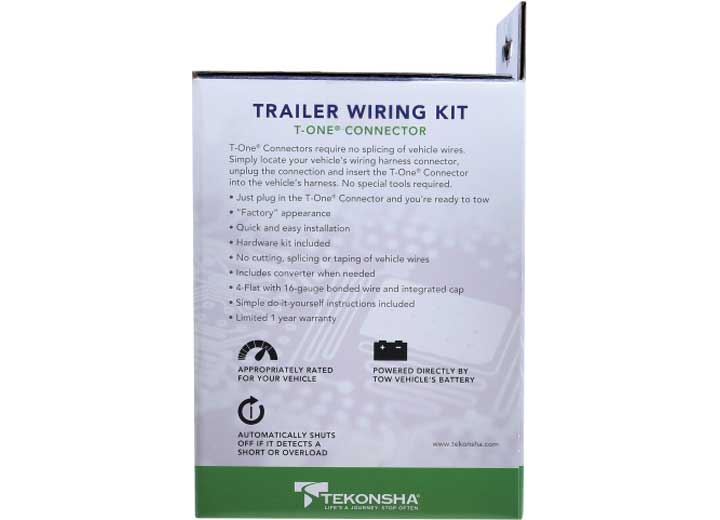
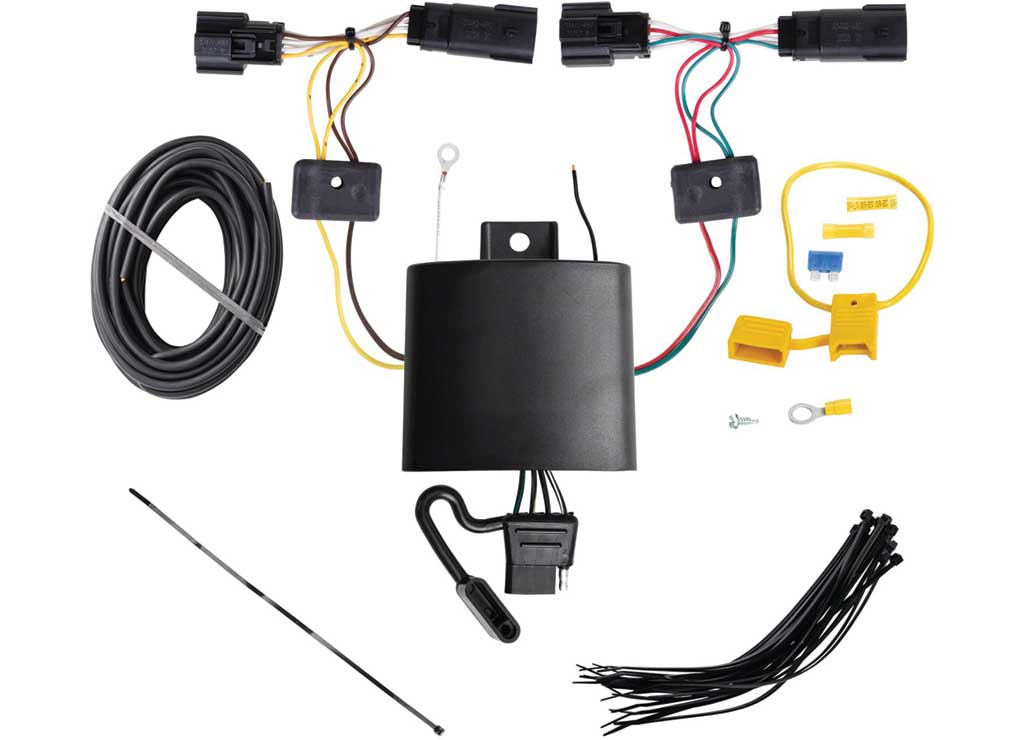
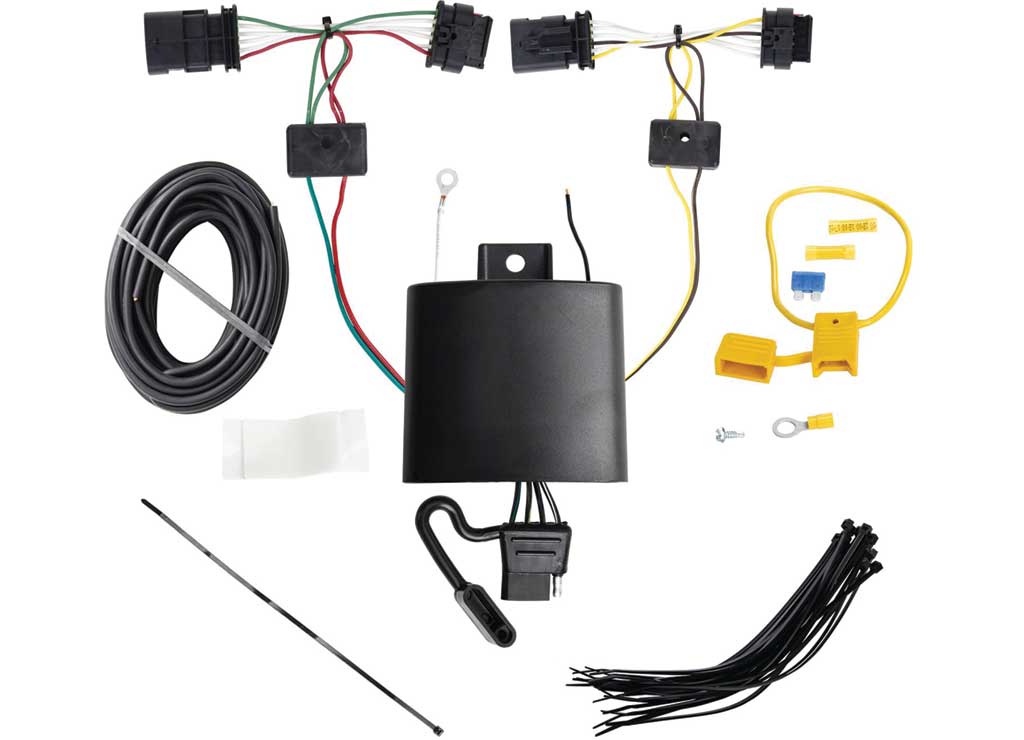
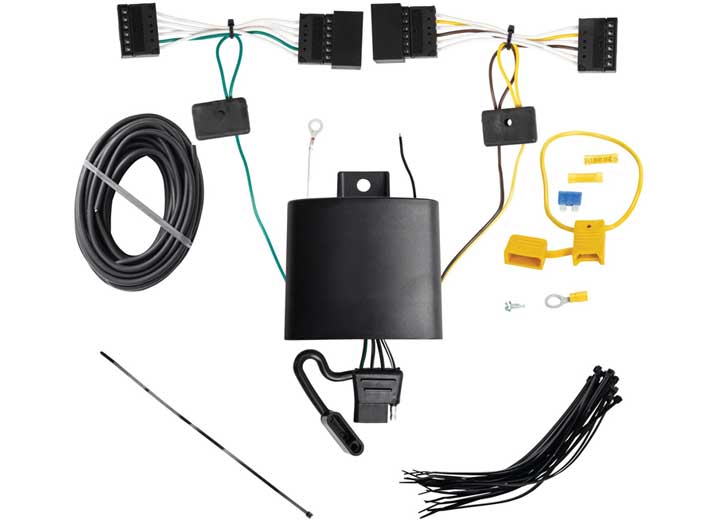
The cleanest way to add trailer wiring is a vehicle-specific harness that plugs into connectors your vehicle already has.
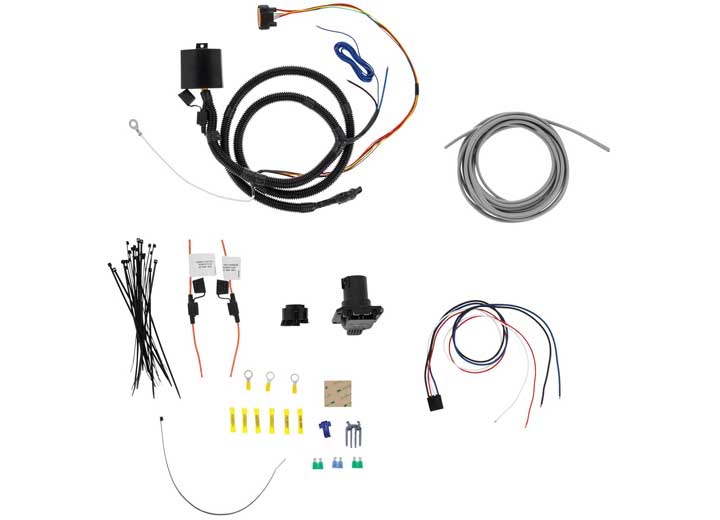
- Factory tow package? Many trucks and SUVs already have a 7-way or a hidden plug near the hitch. Draw-Tite and Dorman make replacement and completion harnesses (for example 7-way packages for the F-150, Ranger, Highlander and Sprinter) that plug into that factory point.
- T-One connectors plug in between the vehicle's taillight harness and its lamps, so there's no cutting or splicing. You pick the kit by exact year, make and model.
- Powered converters (Draw-Tite ModuLite, circuit-protected modules) take power straight from the battery and isolate the vehicle's lighting circuits. Many modern vehicles with separate turn and brake bulbs or sensitive body computers need one so the trailer load doesn't trip warnings or damage modules.
- Splice-in or universal kits and bare connectors (Pollak 4-way with 12 ft lead, Pico and Battery Doctor pigtails, Wesbar 25 ft trailer-end) suit trailers, older vehicles and repairs.
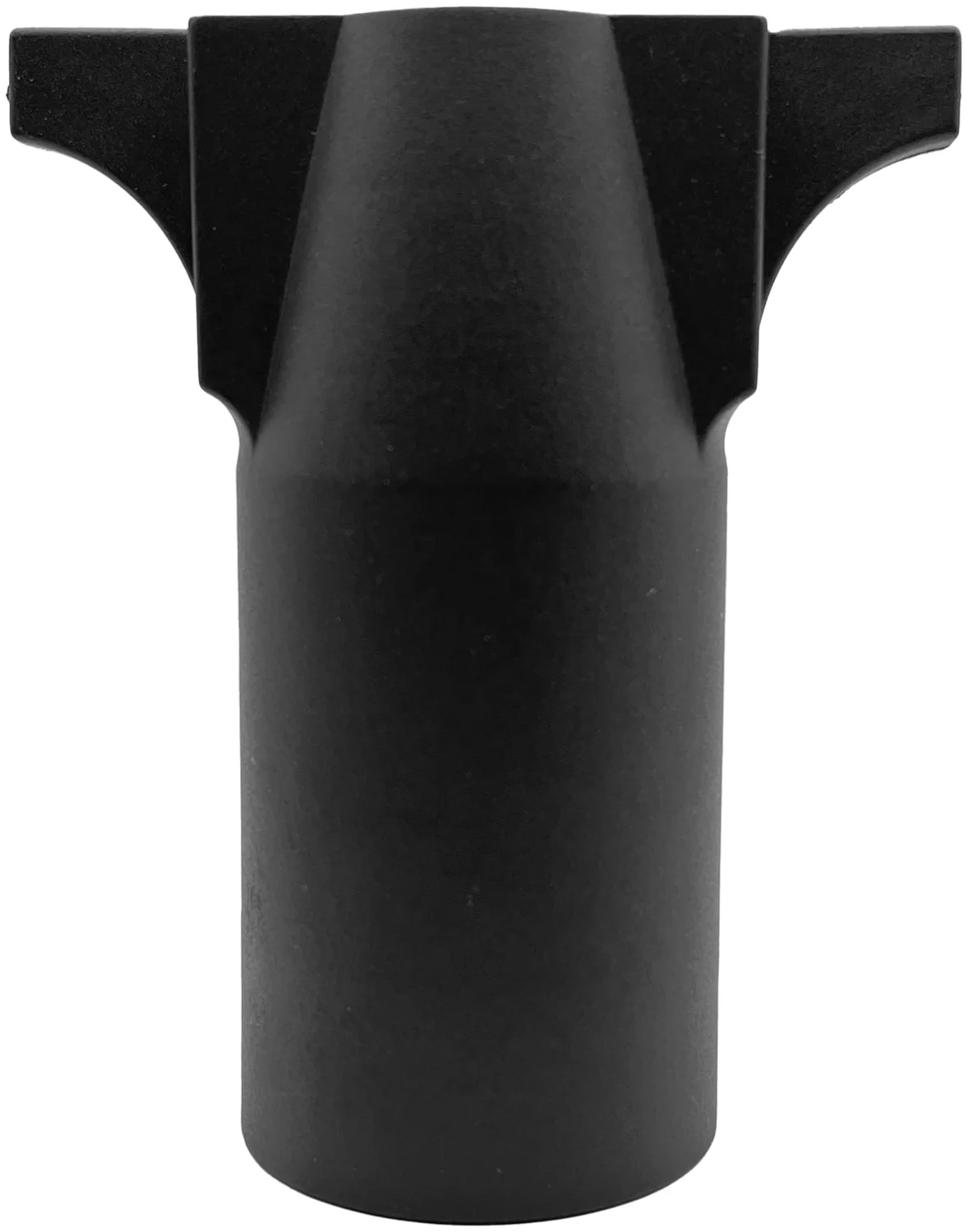
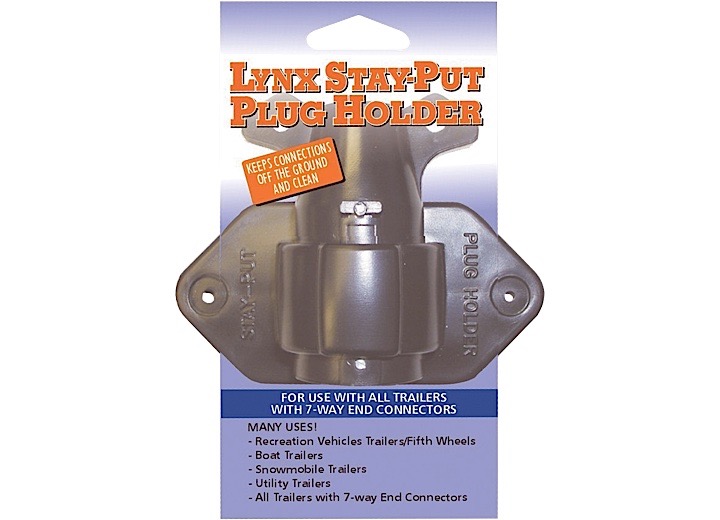
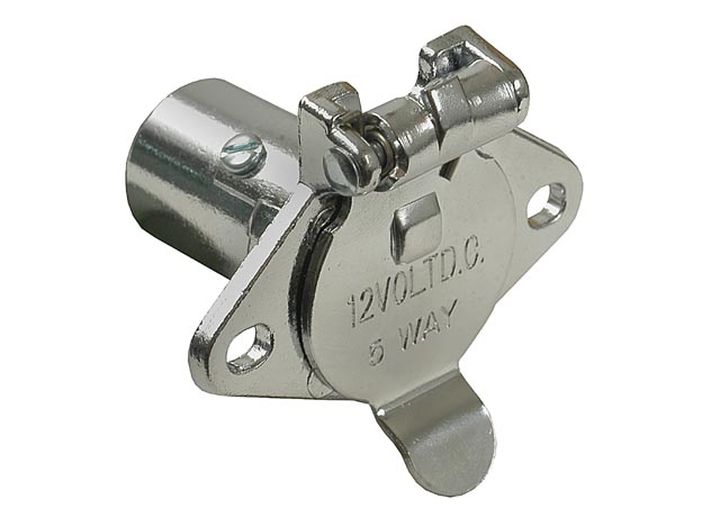
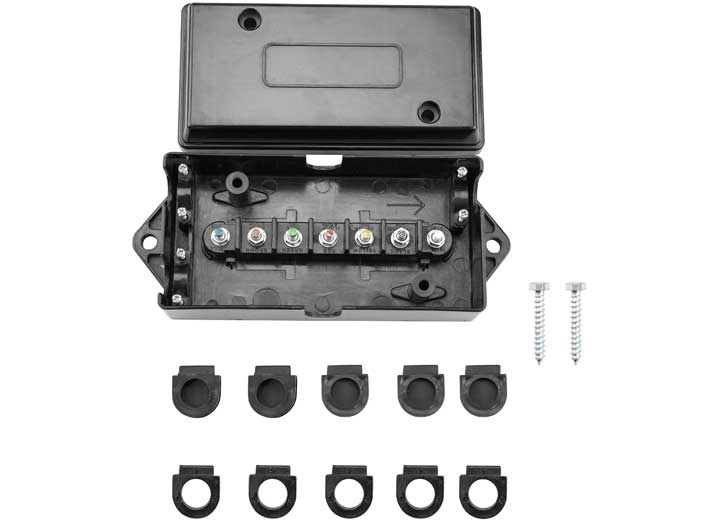
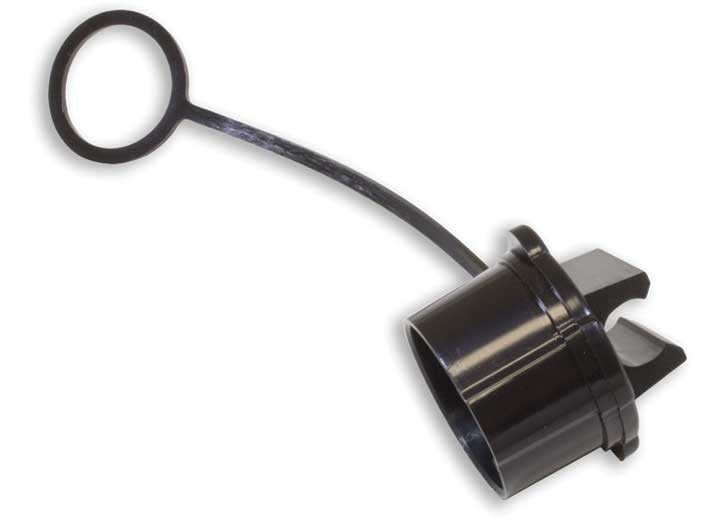
Fit details matter: trim levels, factory LED taillights, hybrid models and existing tow prep can change which harness is correct, so confirm the exact listing before ordering. On the trailer side, Pollak and RV Designer sell replacement 7-way sockets and assemblies, and a simple plug holder or cover keeps connectors off the ground and out of road spray. Corrosion is the number one cause of flickering trailer lights, so a little dielectric grease on the pins goes a long way.
Brake controllers: when you need one and which type
A brake controller mounts in the cab and powers electric trailer brakes through the 7-way (or 6-way) connector. Trailers with surge brakes (common on boat trailers) brake hydraulically on their own and don't need a controller.
Is it required? Most states require working trailer brakes above a certain trailer weight, and the threshold varies widely, commonly somewhere between 1,500 and 3,000 lb, with some states setting it differently. Many states also require a breakaway system that applies the brakes if the trailer separates. Check the rules in your state and any state you tow through. Regardless of the law, a heavy trailer without brakes adds a lot of stopping distance, which is exactly when brake fade shows up.
| Type | How it works | Best for |
|---|---|---|
| Proportional (inertia) | A sensor reads how hard the vehicle is slowing and applies matching trailer brake | Most RV and heavy towing; smoother stops (e.g. Tekonsha Prodigy P3) |
| Time-delayed | Ramps brake output up over a set time after the pedal is pressed | Budget setups, lighter trailers |
| Factory integrated | Built into the dash on many trucks; Dorman sells replacement modules for select Ford and Lincoln models | Trucks with an OEM controller option |
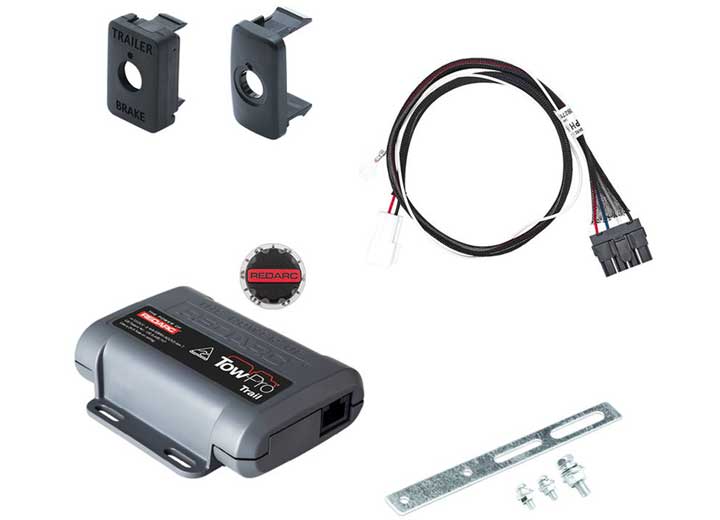
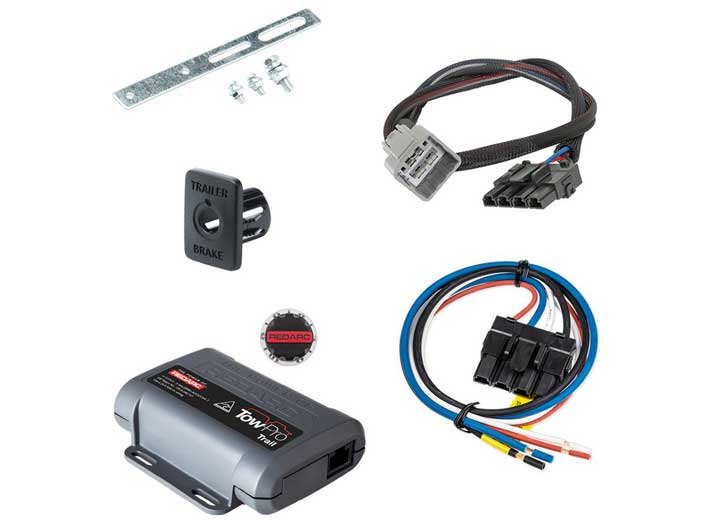
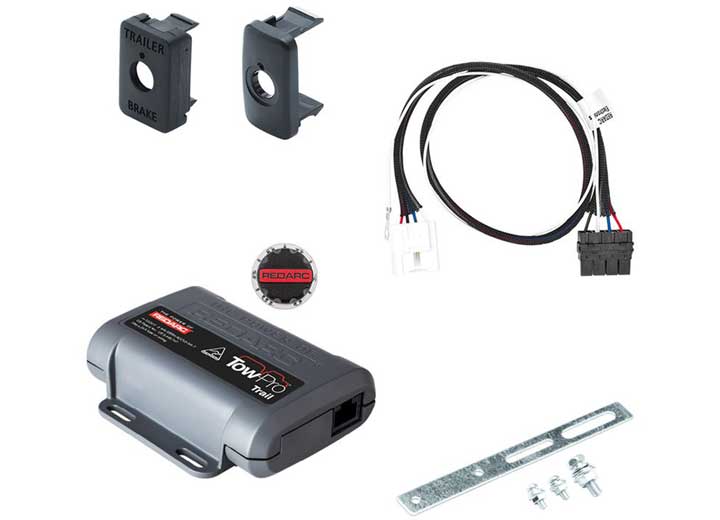
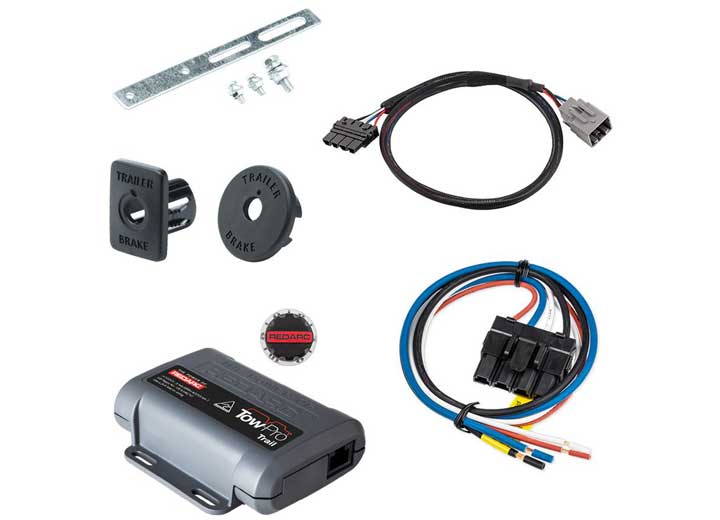
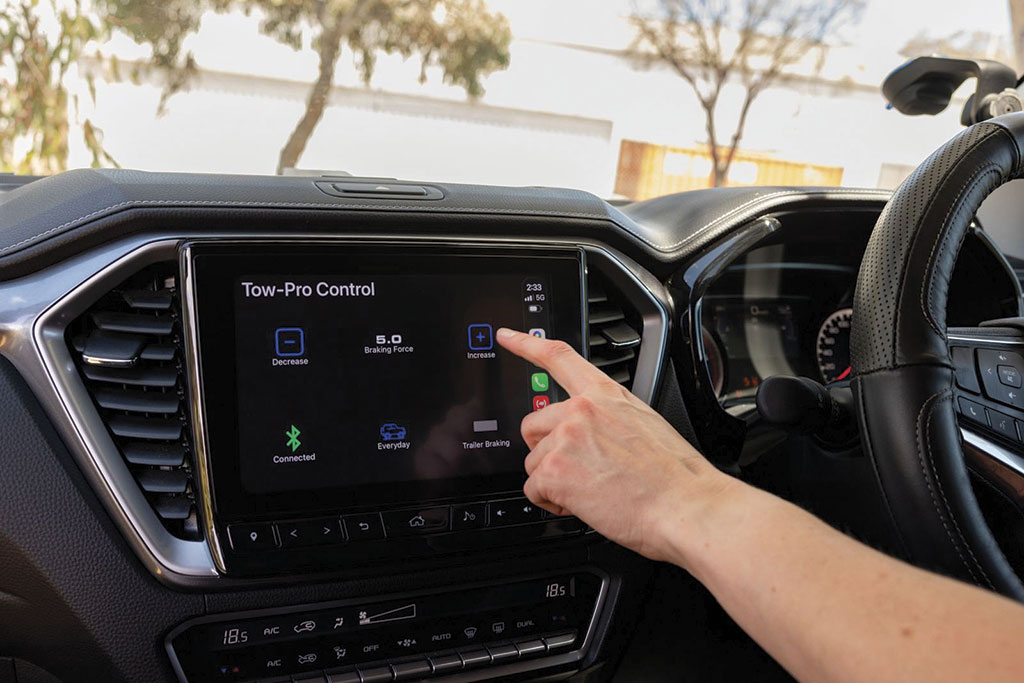
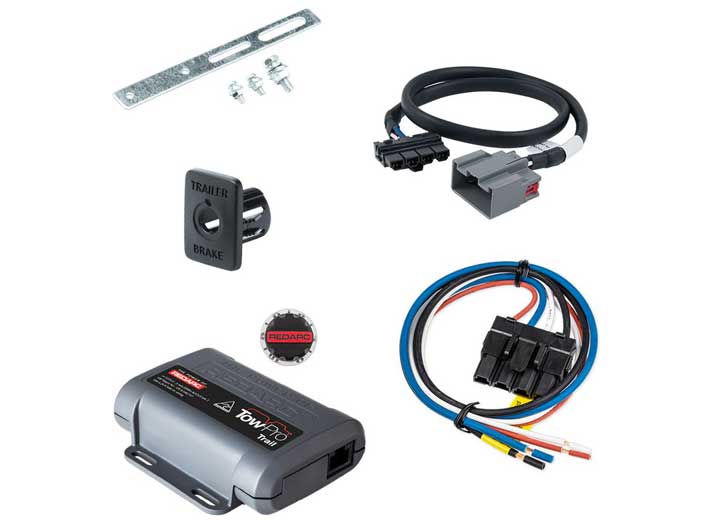
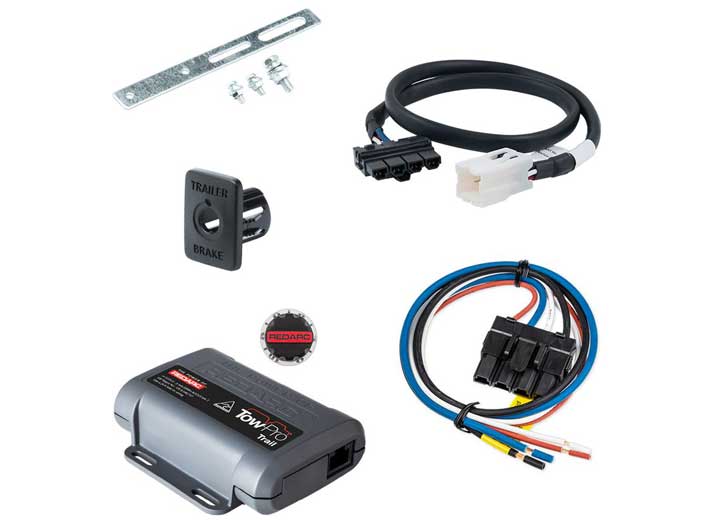
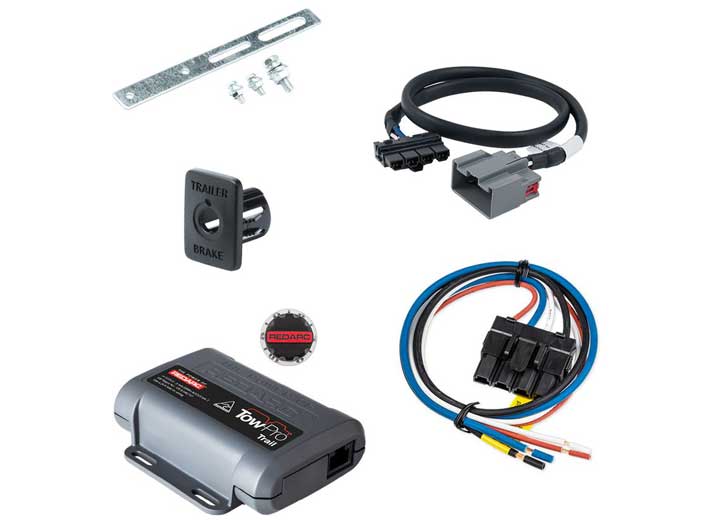
| Remote or app based | Control head with a remote or vehicle-specific kit, such as the Redarc Tow-Pro kits | Clean installs, multiple vehicles |
Most trucks and SUVs with a tow package have a brake controller plug under the dash. A plug-in harness (Tekonsha 2-plug adapters, Hayes universal harness) connects the controller to it without splicing. Vehicles without that plug need a wiring kit run to the battery and brake light circuit.
Setting up and testing
- Test every light with a helper or a tester: running lights, both turns, brake lights, and reverse if equipped. Fix grounds first; a bad ground causes most odd lighting problems.
- Set the brake controller gain on a dry, empty road. A common method is to roll at a low speed (around 20 to 25 mph) and apply the controller's manual lever: you want firm braking just short of locking the trailer wheels. Adjust for load; a loaded trailer usually needs more gain than an empty one. Follow the controller's own instructions.
- Check the breakaway battery and switch before trips. The pull pin cable should be connected to the tow vehicle, not to the safety chains or hitch ball.
- Route and protect wires. Keep slack for tight turns, but don't let the cord drag. Plug covers and holders keep water and dirt out.
Heading out with a fifth wheel or gooseneck? Many owners add an in-bed 7-way extension so the trailer cord reaches without stretching. See our fifth wheel and gooseneck guide, and check that your hitch rating matches the load with the hitch class guide.