Towing buying guide

Trailer Hitches by Class: How to Choose the Right One

Class I through Class V explained in plain English: what each can pull, which receiver size it uses, and how to match a hitch to your vehicle without guessing.

49 in-stock picks Updated November 11, 2026 30-day returns · Secure checkout
Shop the picks
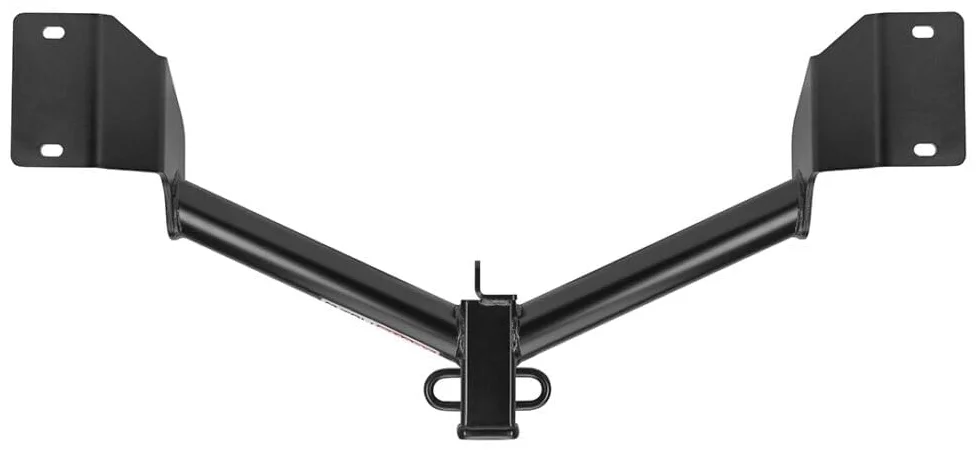
Towsmart 2 Inch Receiver Class III Trailer Hitch for 2019-2024 RamTowsmart 2 Inch Receiver Class III Trailer Hitch for 2021-2024 BroncoBlue Ox Class III 2 Inch Receiver Hitch for 2007+ WranglerTowsmart Class III Trailer Hitch 2 Inch Receiver for 2017+ Honda CRV (Excluding Hybrid)
Hitch classes at a glanceHow to choose: the weakest link ruleStandard, hidden and heavy-duty hitchesWhat you need after the hitchShop the picks ↓

A receiver hitch is rated by class. The class tells you roughly how much trailer it can pull (gross trailer weight, or GTW), how much downward weight it can carry on the ball (tongue weight, or TW) and what size receiver opening it has. Picking the right class comes down to three numbers: what your vehicle is rated to tow, what you actually plan to pull, and what accessories (bike racks, cargo carriers) you want to use.

The short version: Class I and II hitches use a 1-1/4 inch receiver and suit cars and small crossovers. Class III is the most common hitch in the country and uses a 2 inch receiver. Class IV and V are for full-size and heavy-duty trucks pulling big campers, boats and equipment trailers.

Hitch classes at a glance

ClassTypical max trailer weightTypical max tongue weightReceiverUsually fits
Class IUp to 2,000 lbUp to 200 lb1-1/4"Sedans, hatchbacks, small crossovers; bike racks
Class IIUp to 3,500 lbUp to 350 lb1-1/4"Midsize cars, crossovers, minivans
Class IIIUp to 8,000 lbUp to 800 lb2"SUVs, minivans, half-ton pickups
Class IVUp to 10,000 lbUp to 1,000 lb2"Full-size SUVs and pickups
Class V12,000 to 20,000 lb1,200 to 2,000+ lb2" or 2-1/2"3/4-ton and 1-ton trucks

These are the industry-typical ceilings for each class. Every hitch carries its own rating on its label, and that number is the one that counts. Some Class III hitches are rated well under 8,000 lb because the vehicle they bolt to can't handle more, and some manufacturers rate a hitch higher when it's used with a weight-distribution system.

How to choose: the weakest link rule

Your real towing limit is the lowest rating in the whole chain: the vehicle, the hitch, the ball mount, the hitch ball and the trailer coupler. A Class IV hitch on a crossover rated to tow 3,500 lb is still a 3,500 lb setup.

  1. Start with your vehicle's tow rating. It's in the owner's manual or on the door-jamb sticker. Never exceed it.
  2. Weigh what you'll actually pull. Use the trailer's loaded weight, not the empty weight on the brochure. Boats add fuel, batteries and gear; campers add water, propane and everything you pack.
  3. Check tongue weight. A stable trailer puts about 10 to 15% of its weight on the hitch ball. A 5,000 lb camper means roughly 500 to 750 lb of tongue weight, so you need a hitch rated for at least that.
  4. Think about accessories. Most hitch bike racks and cargo carriers want a 2 inch receiver. If you'll ever run a two-bike e-bike rack, a Class III is the safe pick even if you never tow.
  5. Buy for your exact vehicle. Hitches are vehicle-specific. Year, body style, trim and options (hybrid, tow package, spare-tire location, exhaust) can change which hitch fits.

Standard, hidden and heavy-duty hitches

Standard receiver hitches (Draw-Tite, Blue Ox, Towsmart) have a visible cross tube under the bumper. They're the strongest and most affordable option for most vehicles.

Hidden hitches (EcoHitch, Draw-Tite Hidden Hitch) tuck the cross tube behind the bumper fascia so only the receiver shows, and some use a removable receiver. You pay more for the clean look; capacity is usually Class I to III.

Heavy-duty Class IV and V hitches (Acme, Blue Ox) are built for full-size trucks. Several are designed around factory lift gates or long and short bed frames, so match the bed and any lift-gate option exactly.

Most hitches bolt into existing frame holes with basic hand tools and a torque wrench. Some vehicles need a fascia trim or a small amount of drilling, which the instructions will show. Trailer wiring is usually sold separately.

What you need after the hitch

  • Ball mount sized to your receiver (1-1/4" or 2") with the right rise or drop so the trailer rides level.
  • Hitch ball that matches the trailer coupler (1-7/8", 2" or 2-5/16") and meets or beats your trailer weight. See our tow ball size guide.
  • Hitch pin and clip, or a locking pin to keep your ball mount or bike rack from walking away.
  • Trailer wiring: 4-pin for small utility trailers, 7-pin for campers and anything with electric brakes. See 4-pin vs 7-pin wiring.
  • Brake controller for trailers with electric brakes (required in most states over 3,000 lb).

In-stock trailer hitches by class

Every product below is in stock now. Prices update daily.

Class III hitches (2" receiver)

The all-rounder: towing for SUVs, minivans and half-tons, and the receiver size most bike racks and cargo carriers want.

Towsmart 2 Inch Receiver Class III Trailer Hitch for 2019-2024 Ram
Winston Products - Smartstraps/Cargosmart/Towsmart
Towsmart 2 Inch Receiver Class III Trailer Hitch for 2019-2024 Ram
$99.99
In stock · ships fast
Towsmart 2 Inch Receiver Class III Trailer Hitch for 2021-2024 Bronco
Winston Products - Smartstraps/Cargosmart/Towsmart
Towsmart 2 Inch Receiver Class III Trailer Hitch for 2021-2024 Bronco
$124.29
In stock · ships fast
Blue Ox Class III 2 Inch Receiver Hitch for 2007+ Wrangler
Blue Ox
Blue Ox Class III 2 Inch Receiver Hitch for 2007+ Wrangler
$153.76
In stock · ships fast
Towsmart Class III Trailer Hitch 2 Inch Receiver for 2017+ Honda CRV (Excluding Hybrid)
Towsmart/Cargosmart/Smartstraps
Towsmart Class III Trailer Hitch 2 Inch Receiver for 2017+ Honda CRV (Excluding Hybrid)
$198.32
In stock · ships fast
Towsmart 2 Inch Receiver Class III Trailer Hitch for 2005-2017 Equinox 2010-2017 Terrain 2006-2009 Torrent 2002-2007 Vue
Winston Products - Smartstraps/Cargosmart/Towsmart
Towsmart 2 Inch Receiver Class III Trailer Hitch for 2005-2017 Equinox 2010-2017 Terrain 2006-2009 Torrent 2002-2007 Vue
$198.32
In stock · ships fast
Blue Ox Class III 2 Inch Receiver Hitch Black for 2017+ CRV
Blue Ox
Blue Ox Class III 2 Inch Receiver Hitch Black for 2017+ CRV
$199.96
In stock · ships fast
Draw-Tite Max-Frame Class III/IV Round Tube Receiver Hitch for Select Ford and Lincoln Vehicles
Draw-Tite
Draw-Tite Max-Frame Class III/IV Round Tube Receiver Hitch for Select Ford and Lincoln Vehicles
$204.99
In stock · ships fast
Draw-Tite Class III Max-Frame Receiver Hitch for 2007-2017 Jeep Patriot and Compass
Draw-Tite
Draw-Tite Class III Max-Frame Receiver Hitch for 2007-2017 Jeep Patriot and Compass
$206.99
In stock · ships fast
Towsmart 2 Inch Receiver Class III Trailer Hitch for 2005-2009 Frontier 2009-2012 Equator
Winston Products - Smartstraps/Cargosmart/Towsmart
Towsmart 2 Inch Receiver Class III Trailer Hitch for 2005-2009 Frontier 2009-2012 Equator
$207.33
In stock · ships fast
Draw-Tite Class III Hitch for 2004-2009 Dodge Durango 2007-2009 Chrysler Aspen
Draw-Tite
Draw-Tite Class III Hitch for 2004-2009 Dodge Durango 2007-2009 Chrysler Aspen
$208.16
In stock · ships fast
Blue Ox Class III 2 Inch Receiver Hitch for 2019+ TY RAV4 W/ RAV4 Prime
Blue Ox
Blue Ox Class III 2 Inch Receiver Hitch for 2019+ TY RAV4 W/ RAV4 Prime
$208.71
In stock · ships fast
Draw-Tite Class III Max-Frame Receiver Hitch for Dodge Journey 2009-2020
Draw-Tite
Draw-Tite Class III Max-Frame Receiver Hitch for Dodge Journey 2009-2020
$214.99
In stock · ships fast

Frequently asked questions

What hitch class do I need to pull a 5,000 lb camper?+
A Class III hitch rated for at least 5,000 lb gross trailer weight and 500 to 750 lb tongue weight, as long as your vehicle is rated to tow that much. For heavy campers near the limit, a Class IV or a weight-distribution setup gives you more margin.
Can I put a Class III hitch on a car?+
Only if a Class III hitch is made for that exact vehicle. The hitch doesn't raise your vehicle's tow rating, so the car's own limit still applies. Many people choose a Class III on a crossover simply to get the 2 inch receiver for bike racks.
What's the difference between a 1-1/4 inch and 2 inch receiver?+
The opening size. Class I and II hitches use 1-1/4 inch; Class III and IV use 2 inch; many Class V hitches use 2-1/2 inch. Adapters exist to go from a bigger receiver to a smaller accessory, but never adapt a small receiver up to a heavier load.
Do I need to drill to install a hitch?+
Most vehicle-specific hitches bolt into existing holes in the frame. Some vehicles need minor fascia trimming or drilling, and the instructions show exactly where. Always torque the bolts to the listed spec.
Does a hitch come with wiring and a ball mount?+
Usually not. Most receiver hitches are sold as the hitch alone (listings that say 'W/O ball mount' make that explicit). Plan on a ball mount, hitch ball, pin and the right wiring connector for your trailer.

Further reading

More buying guides

Find the perfect parts for your ride
Shop top brands at unbeatable prices.