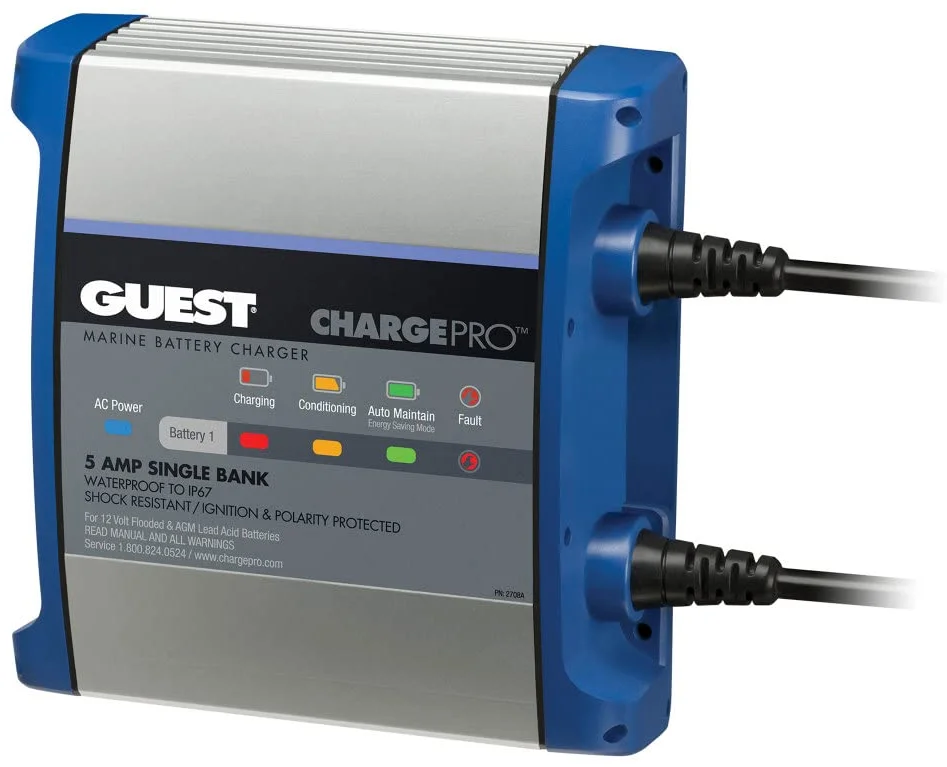

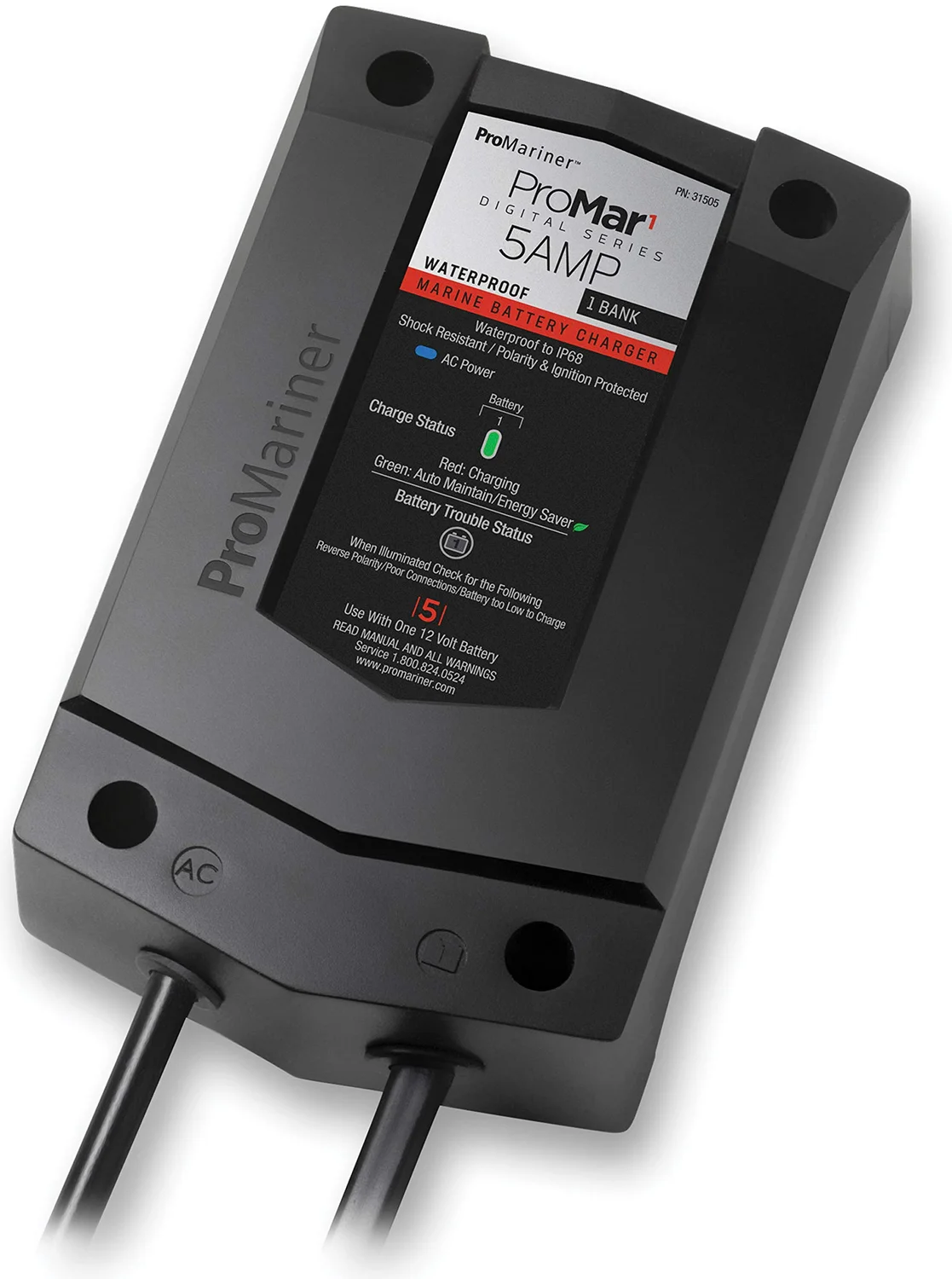
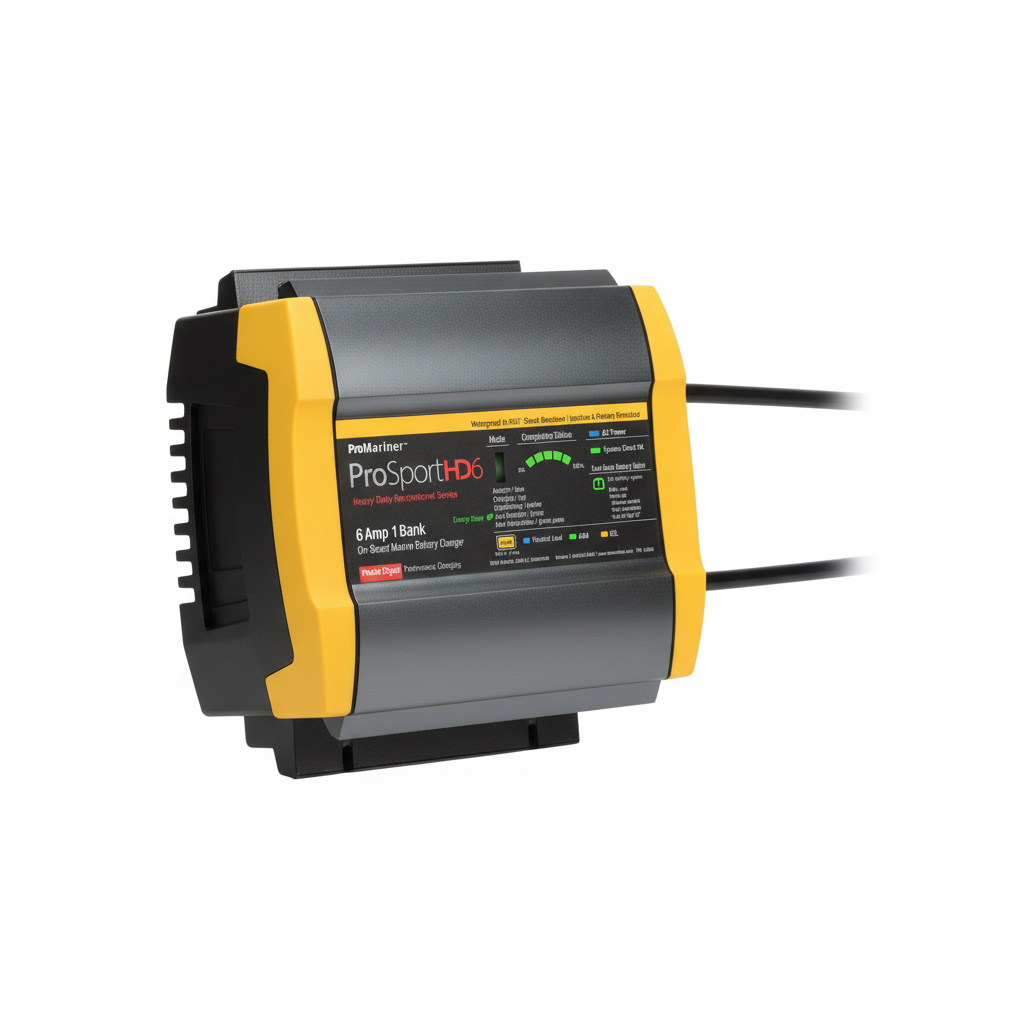
Dead batteries end more fishing trips than bad weather. A good marine charger keeps your cranking and trolling motor batteries full between outings and maintains them through the off season, which also makes them last longer. Picking one comes down to four questions: how many batteries (banks) you need to charge, how many amps each bank gets, what battery chemistry you run (flooded, AGM or lithium), and whether it should live on the boat or in the garage.
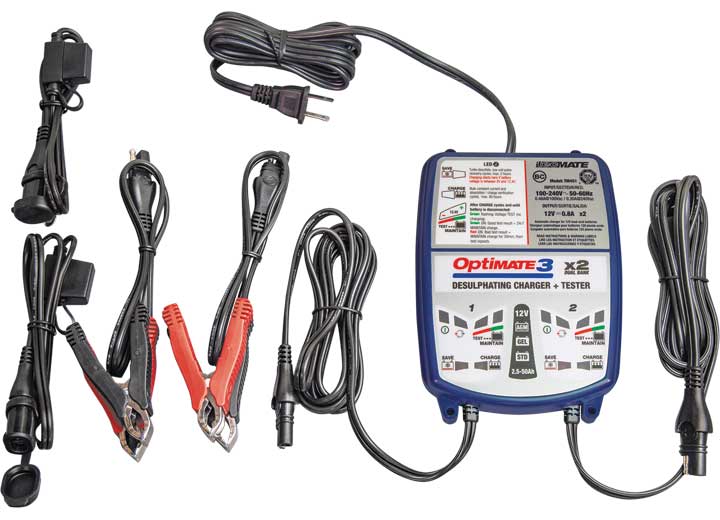
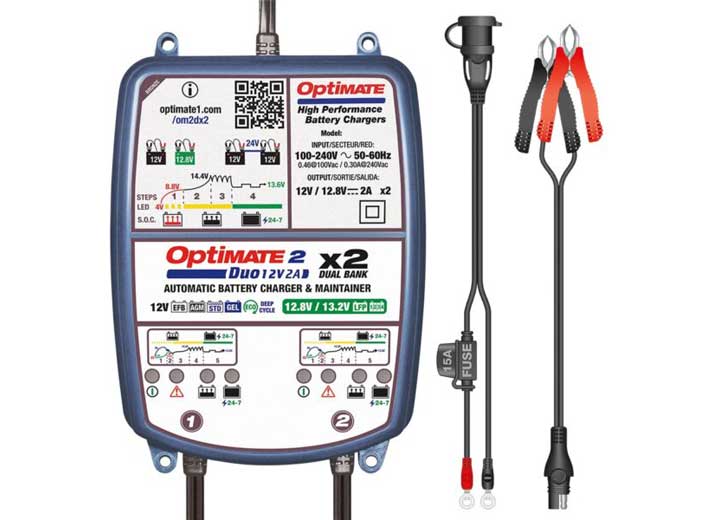
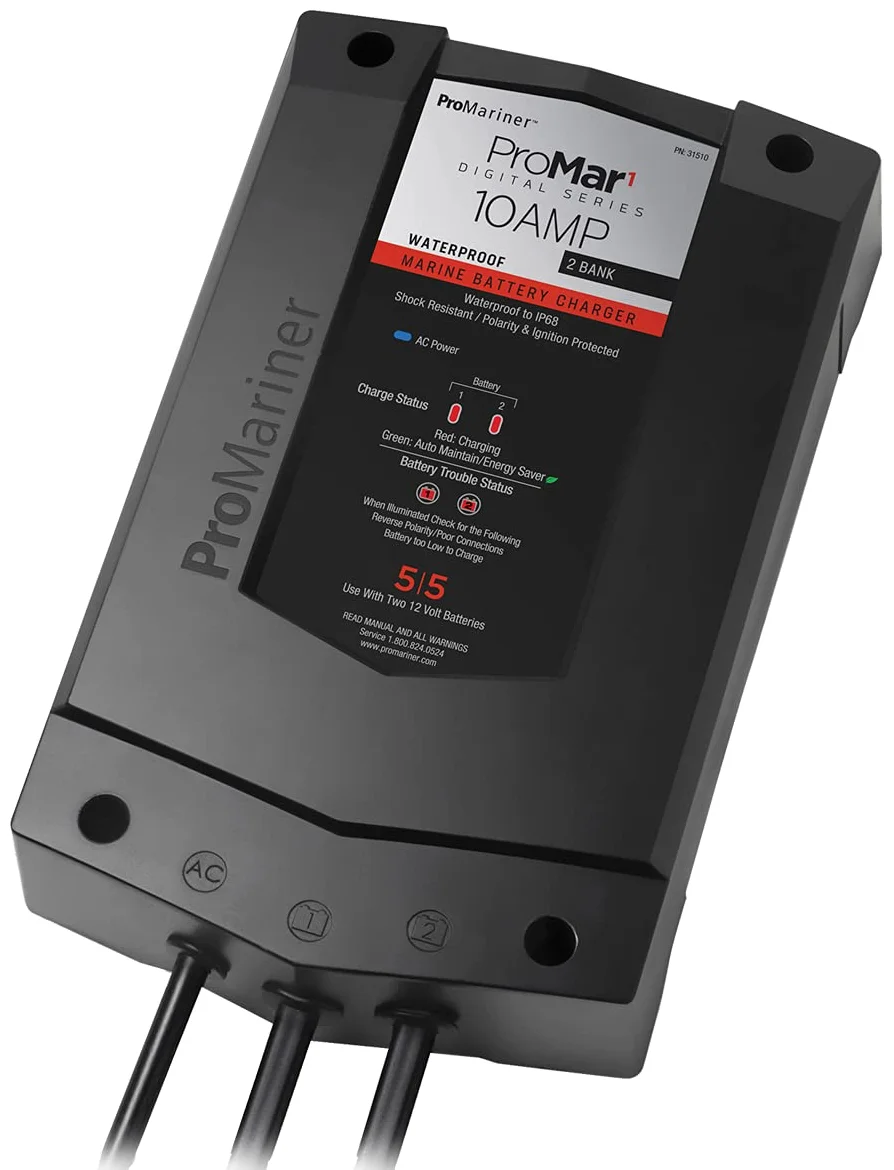
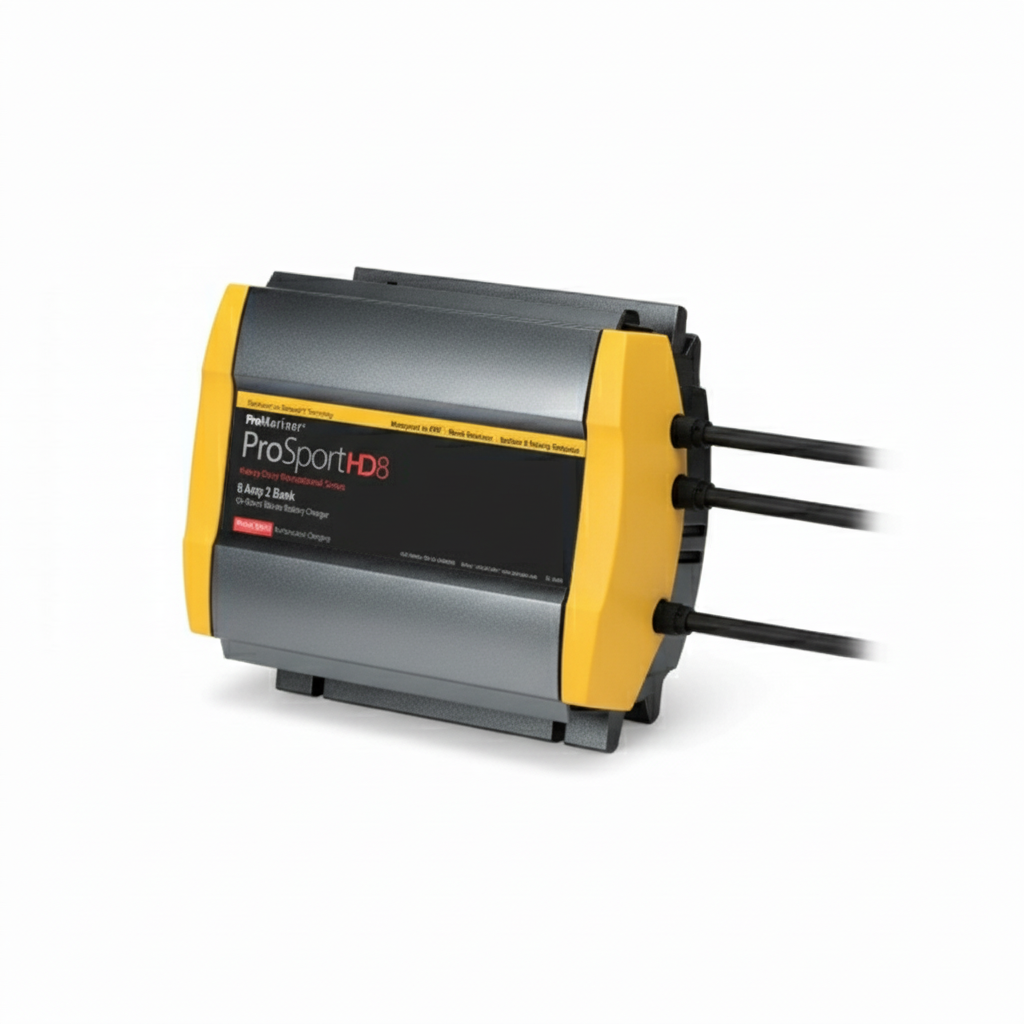
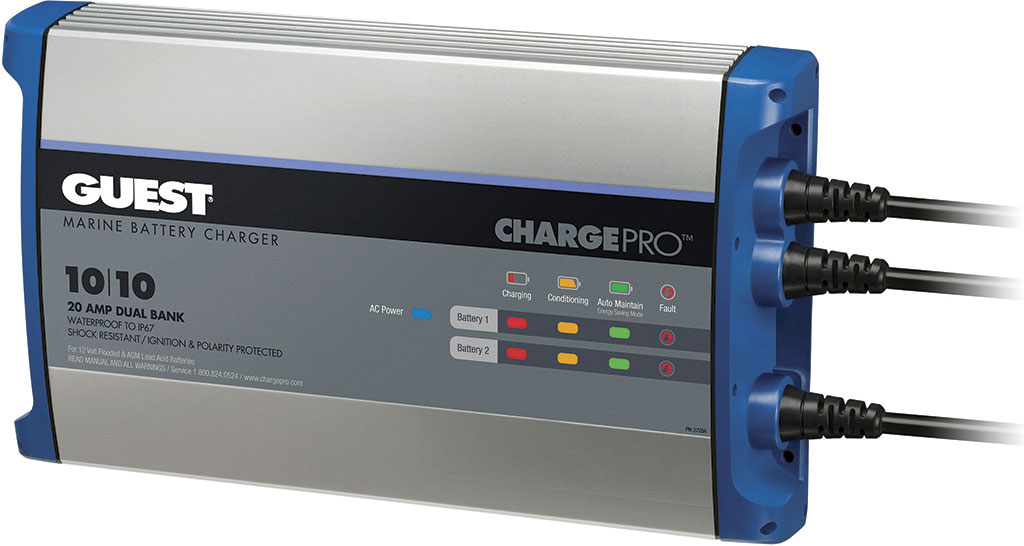
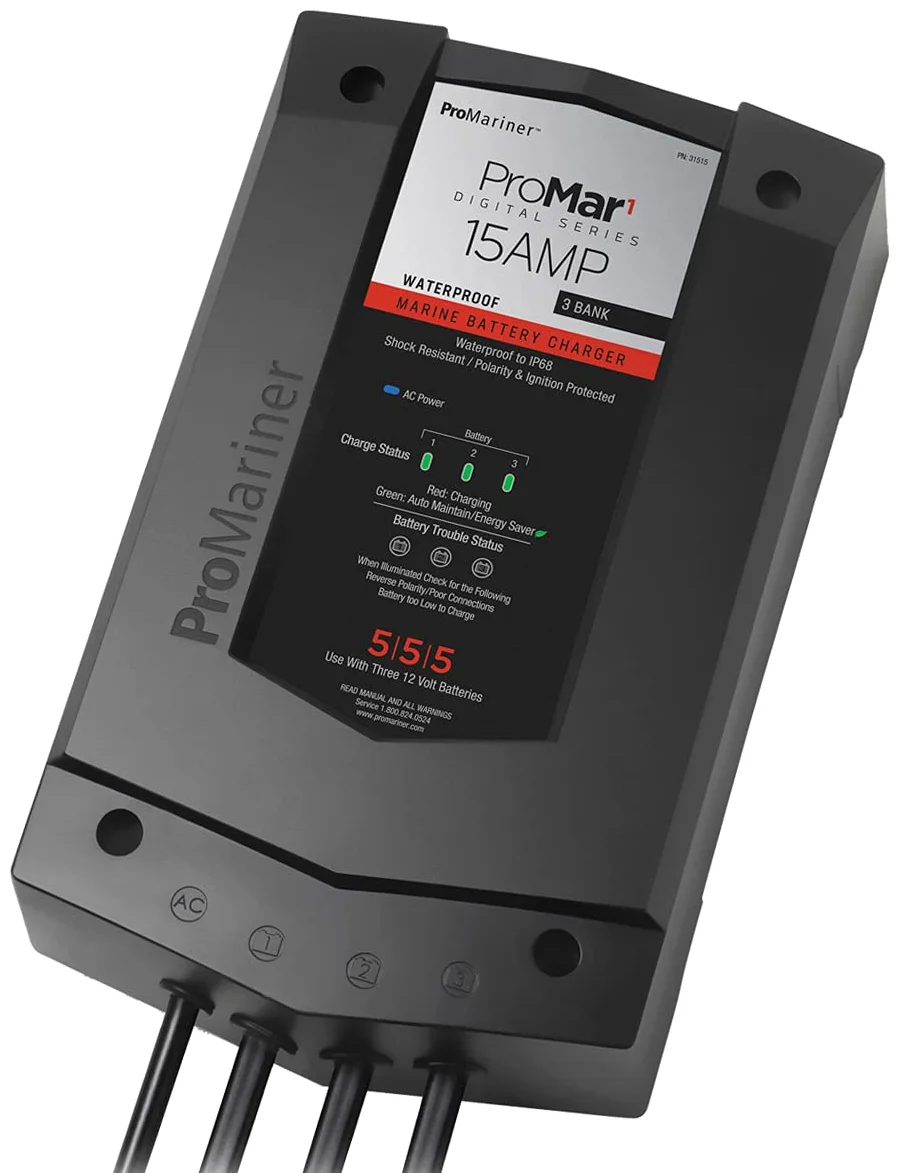
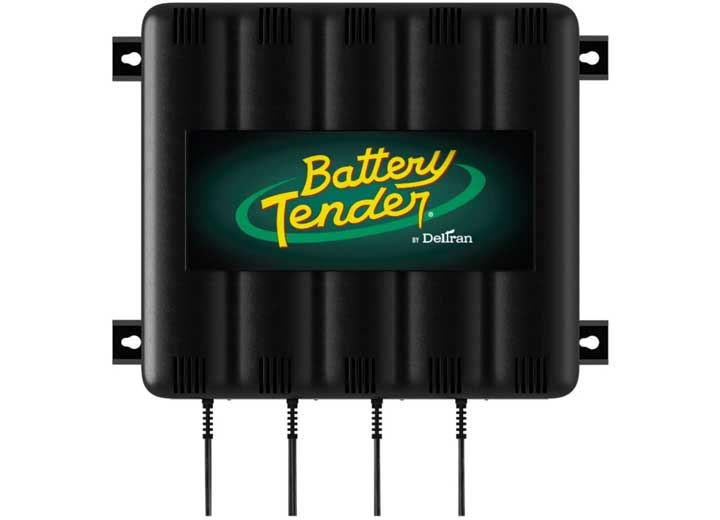
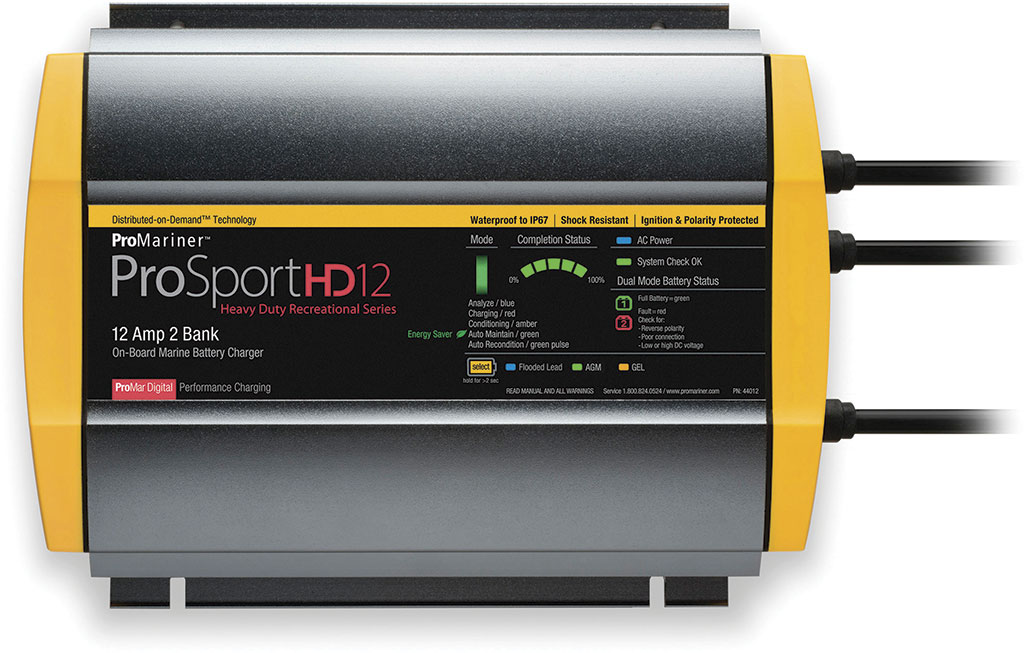
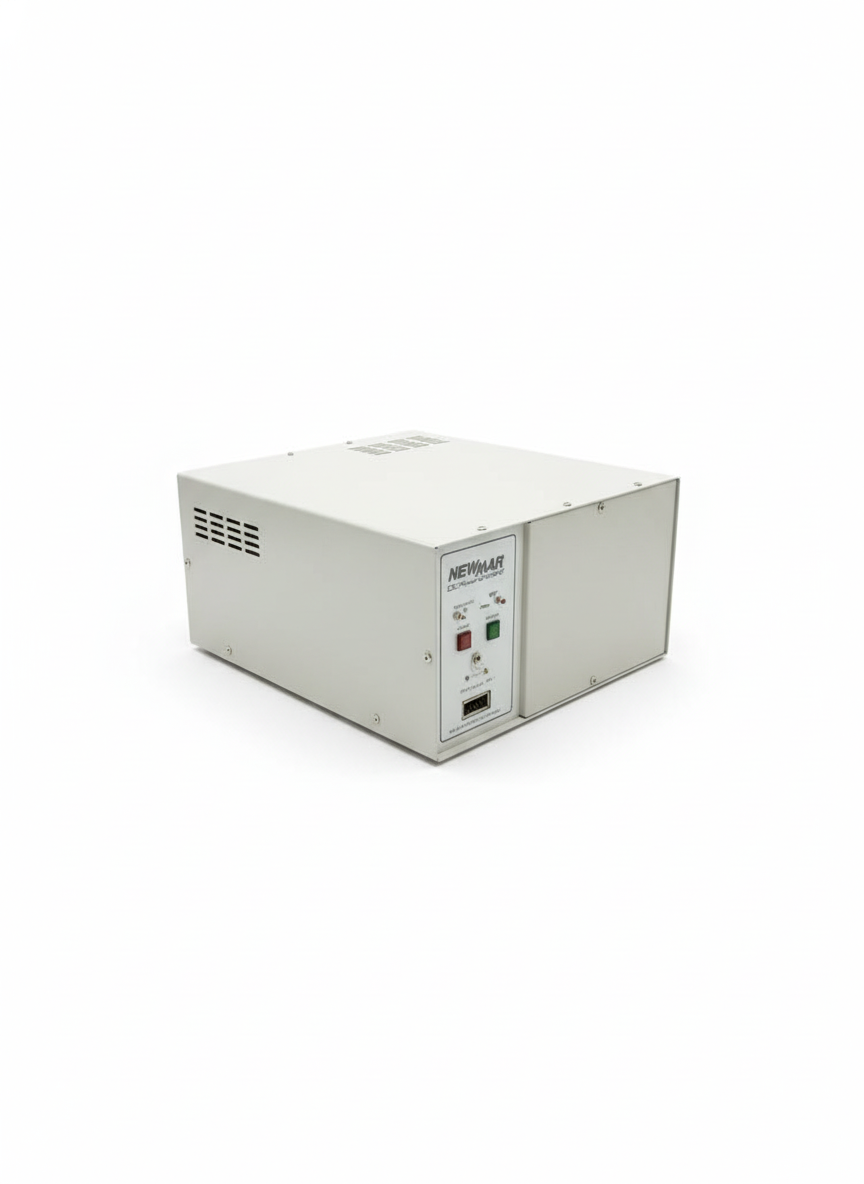
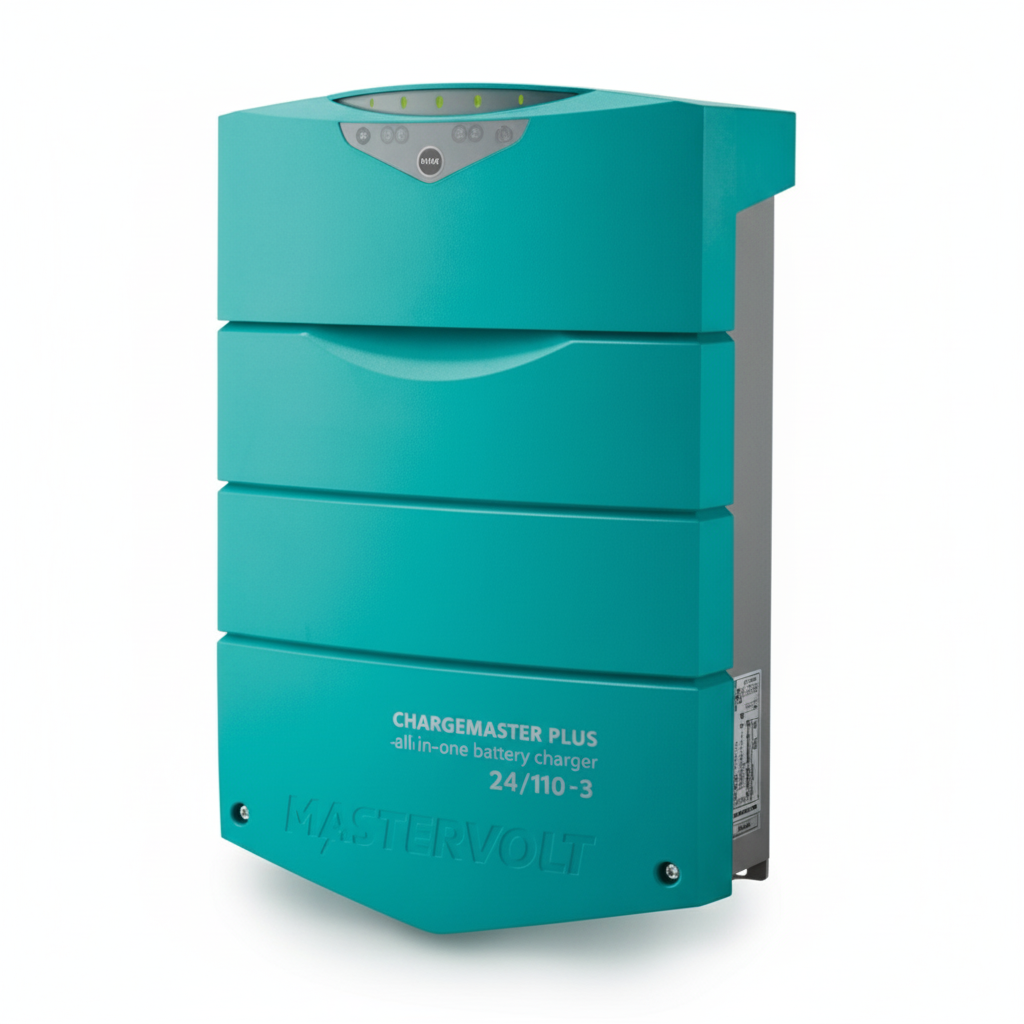
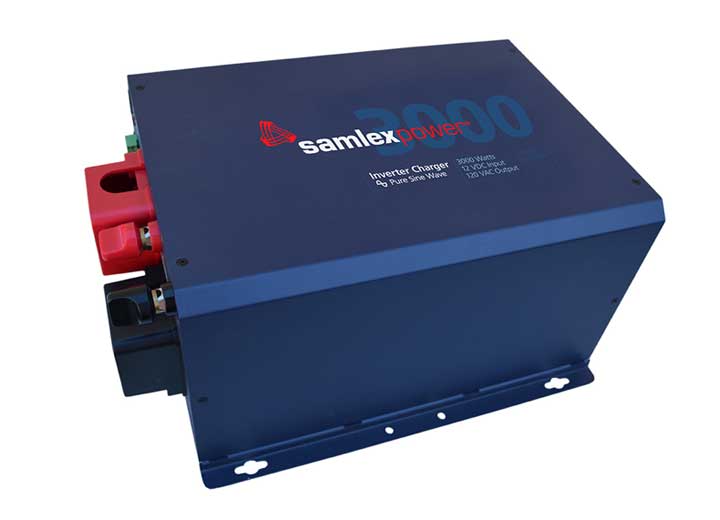
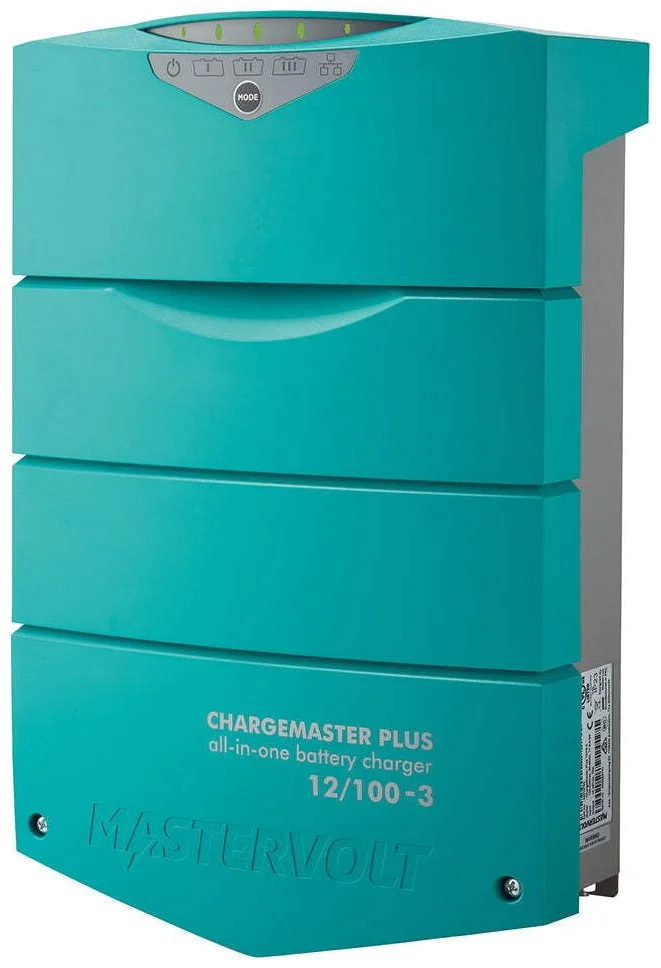
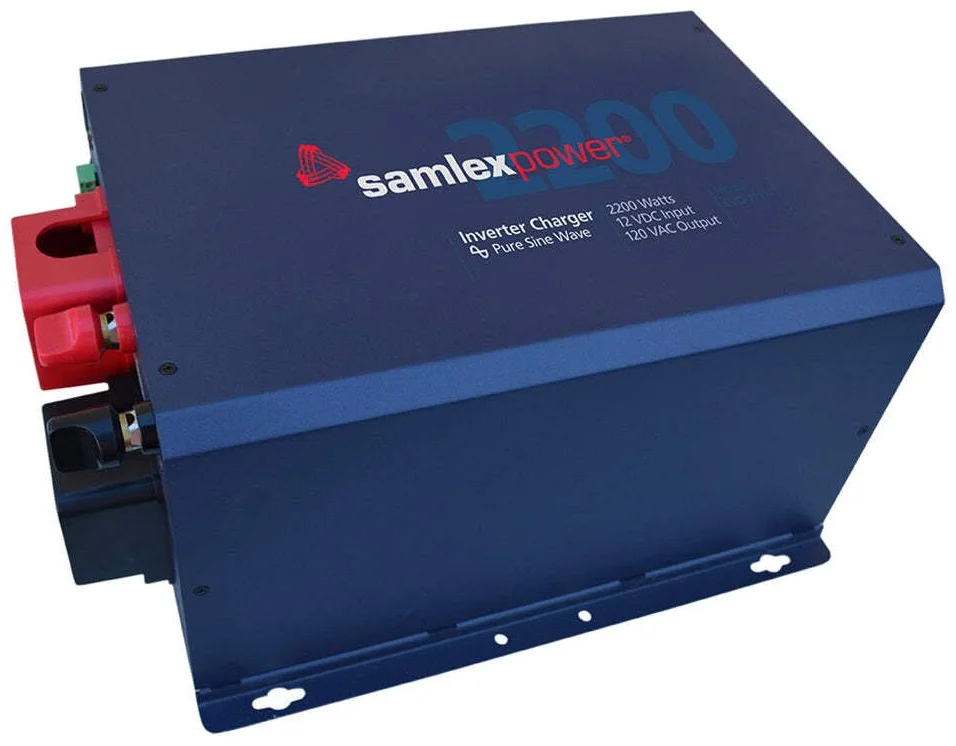
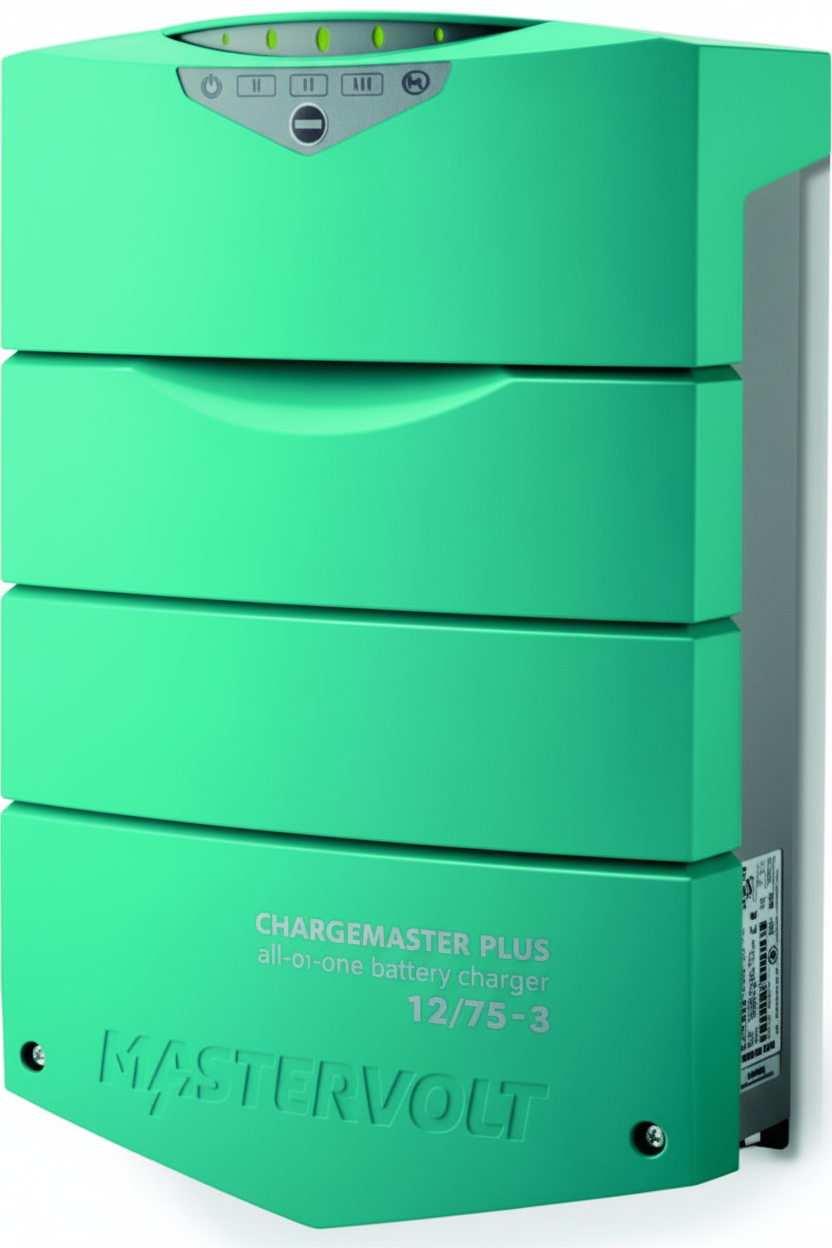
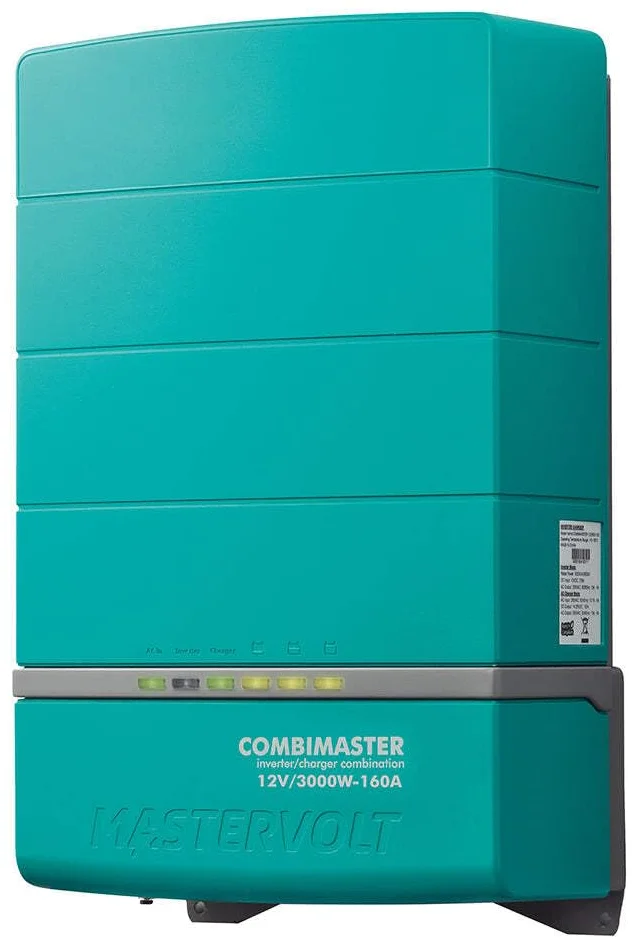
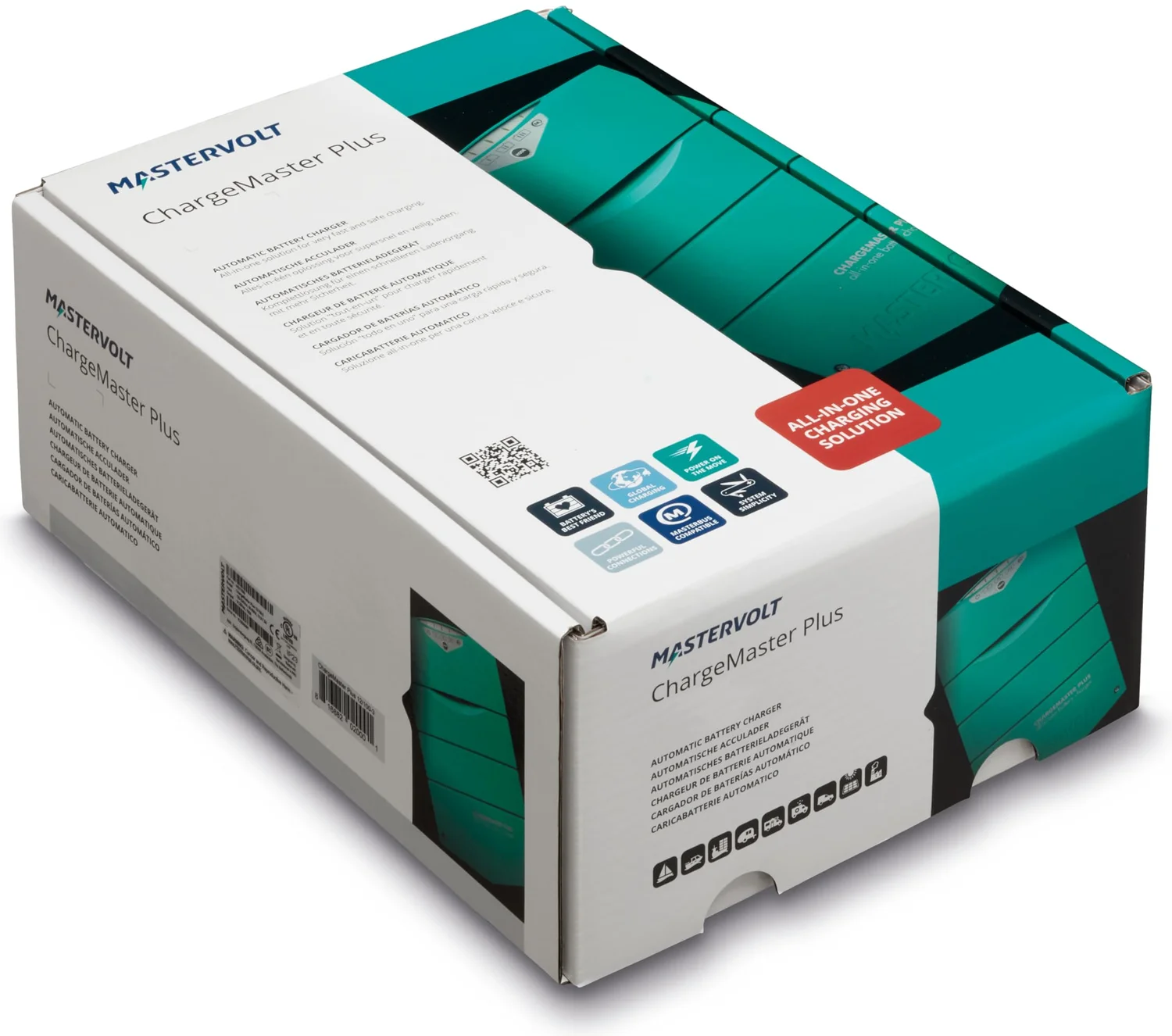
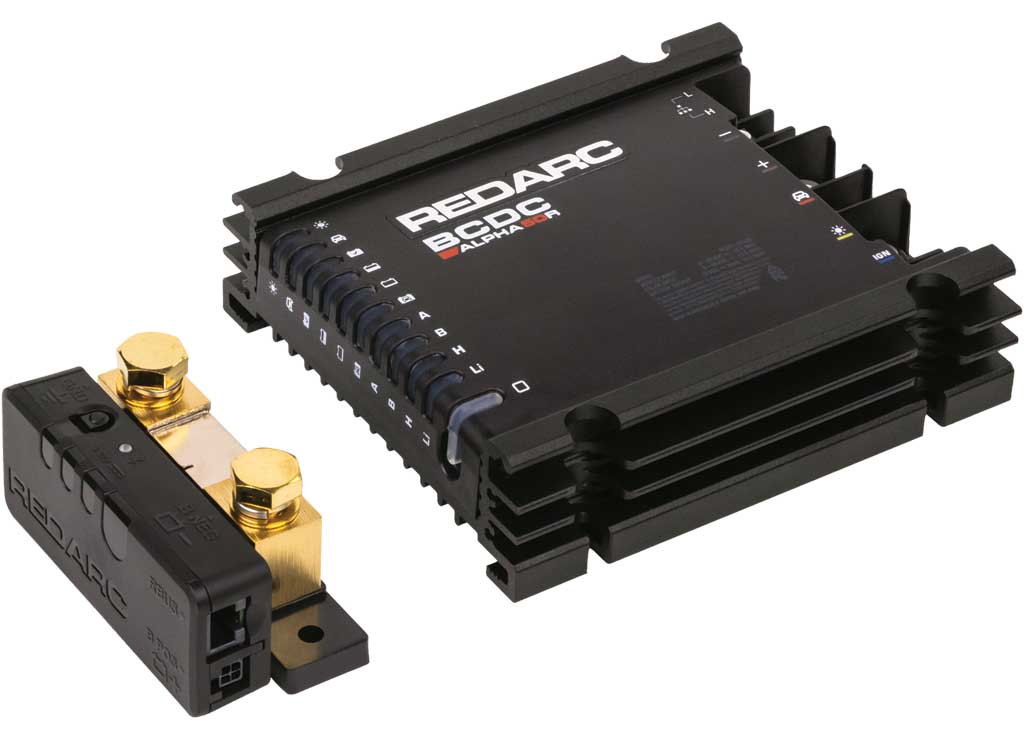
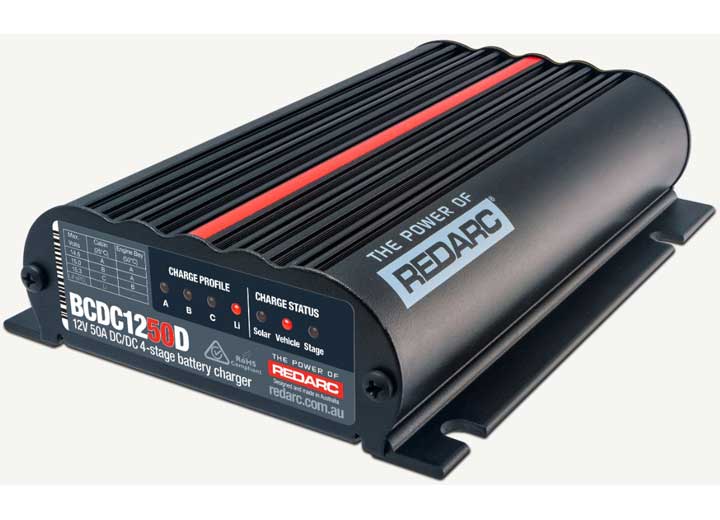
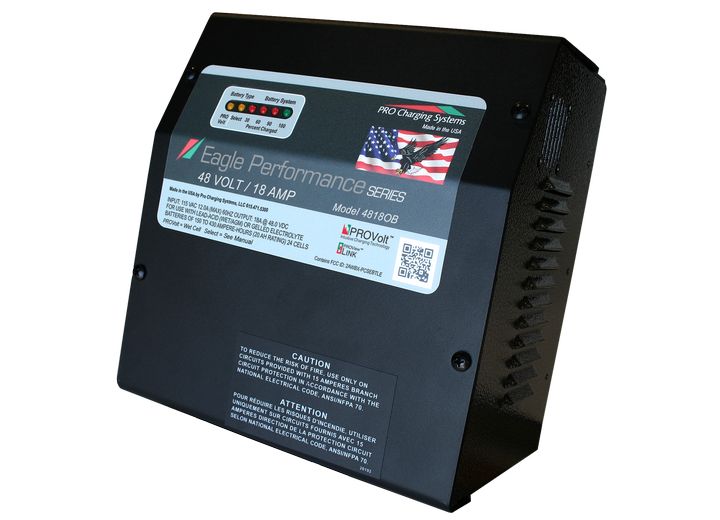
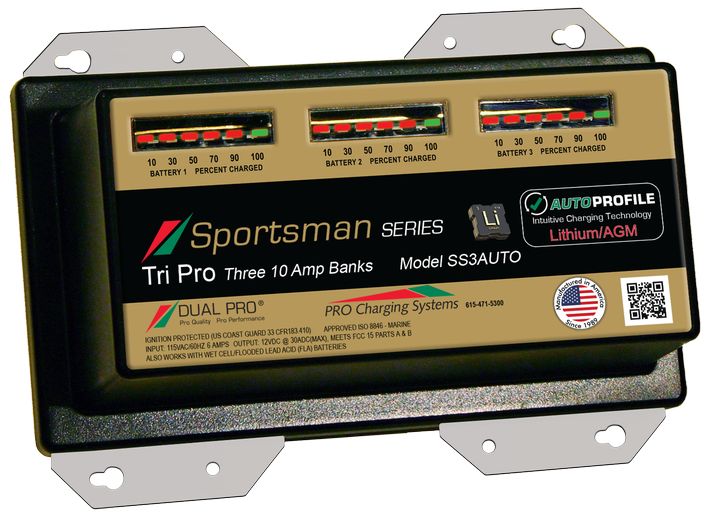
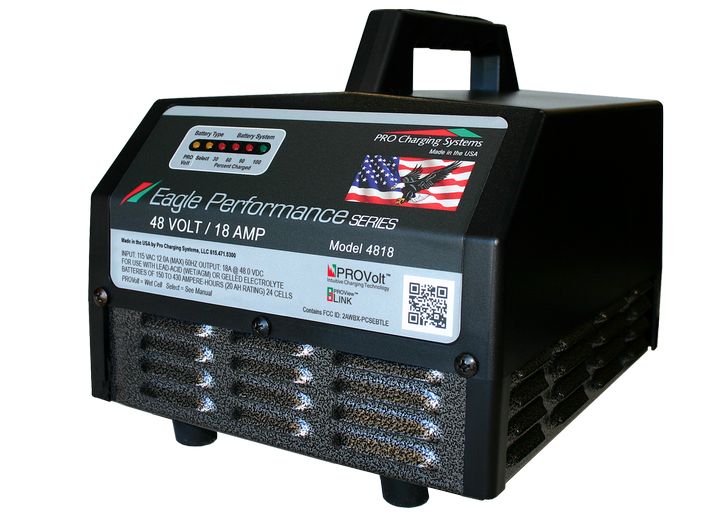
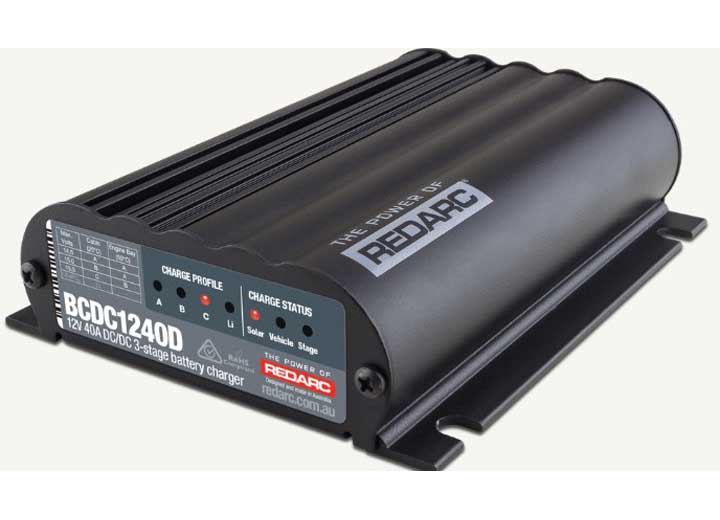
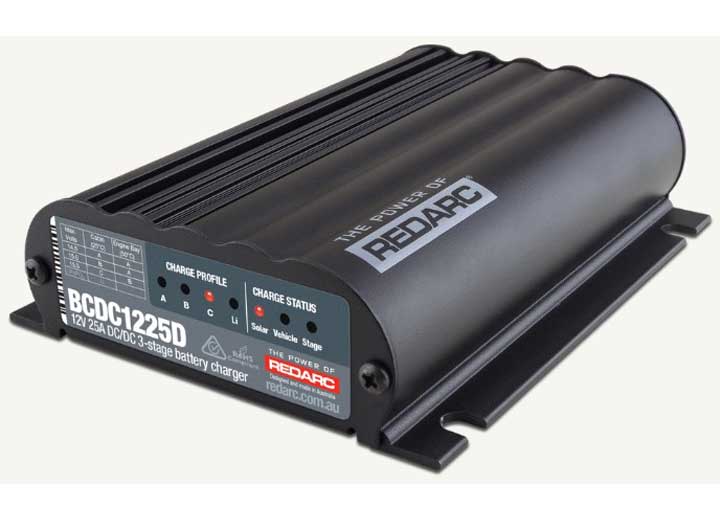
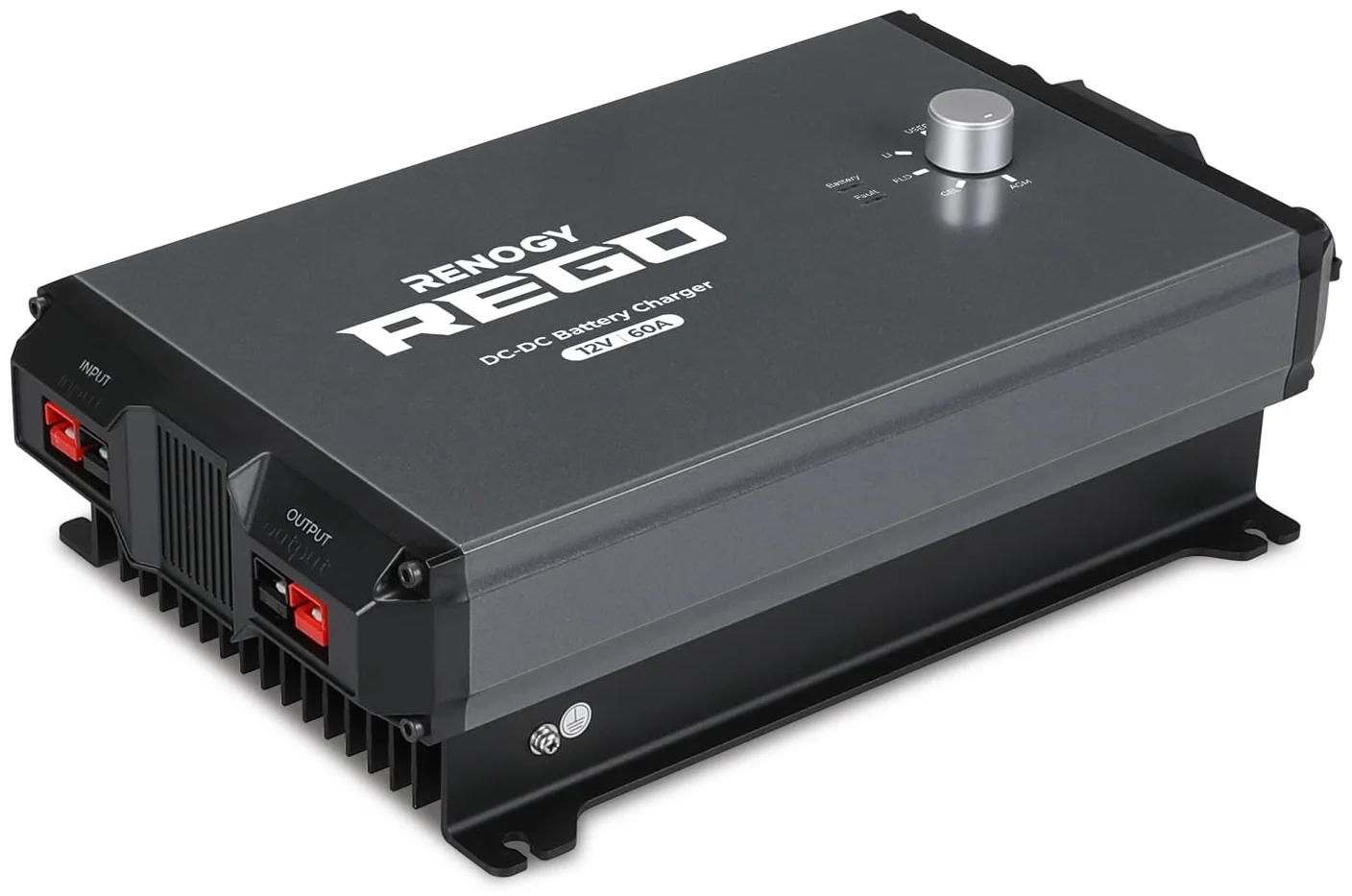
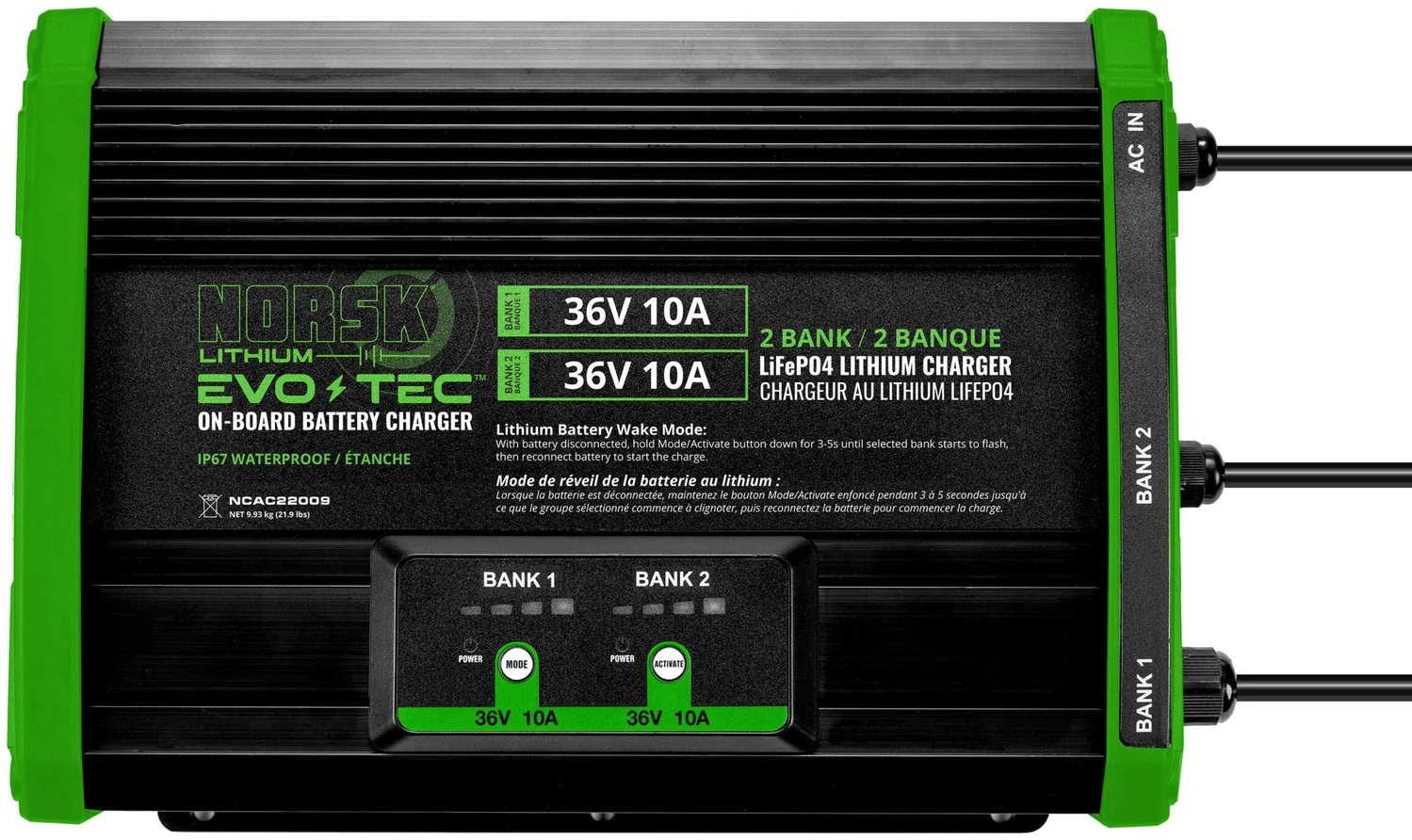
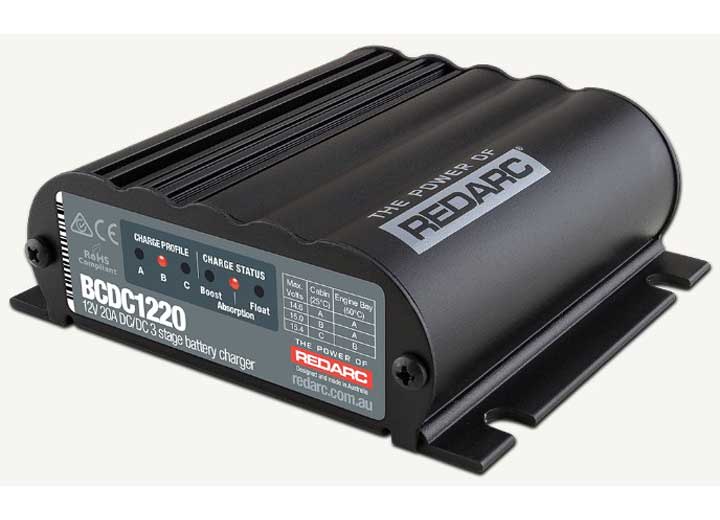
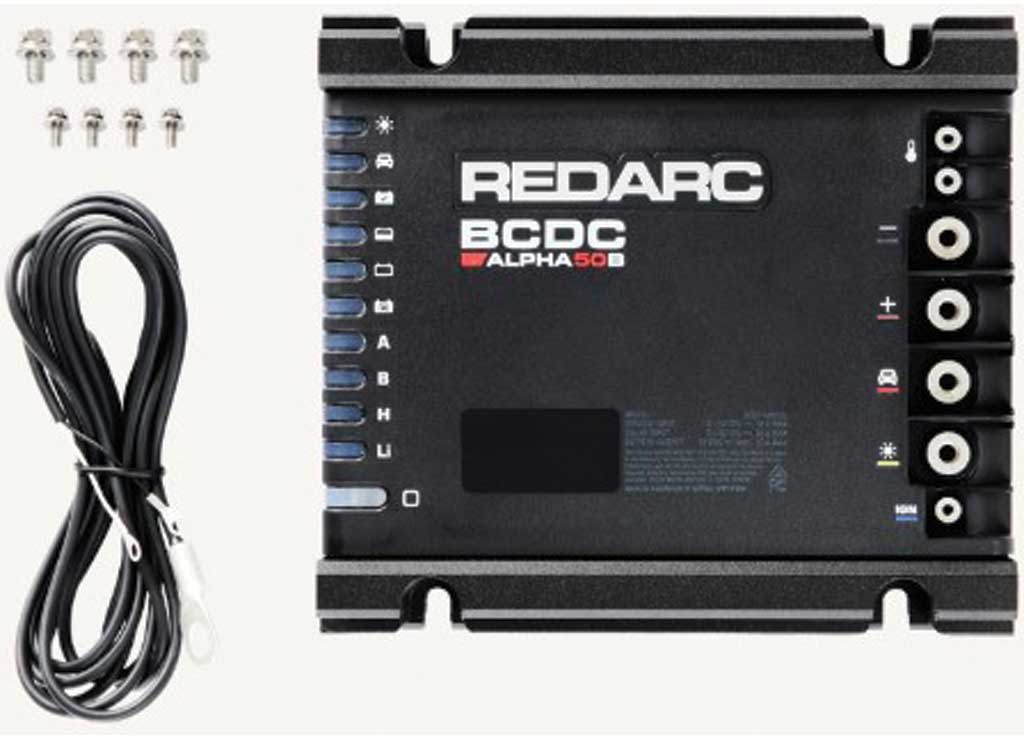
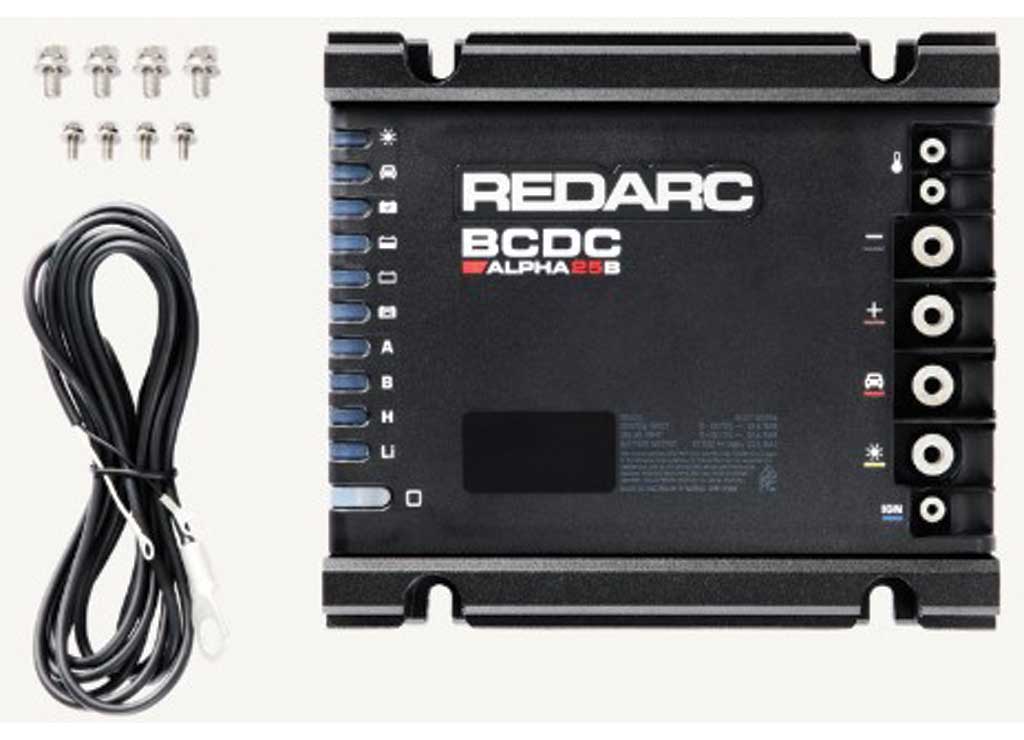
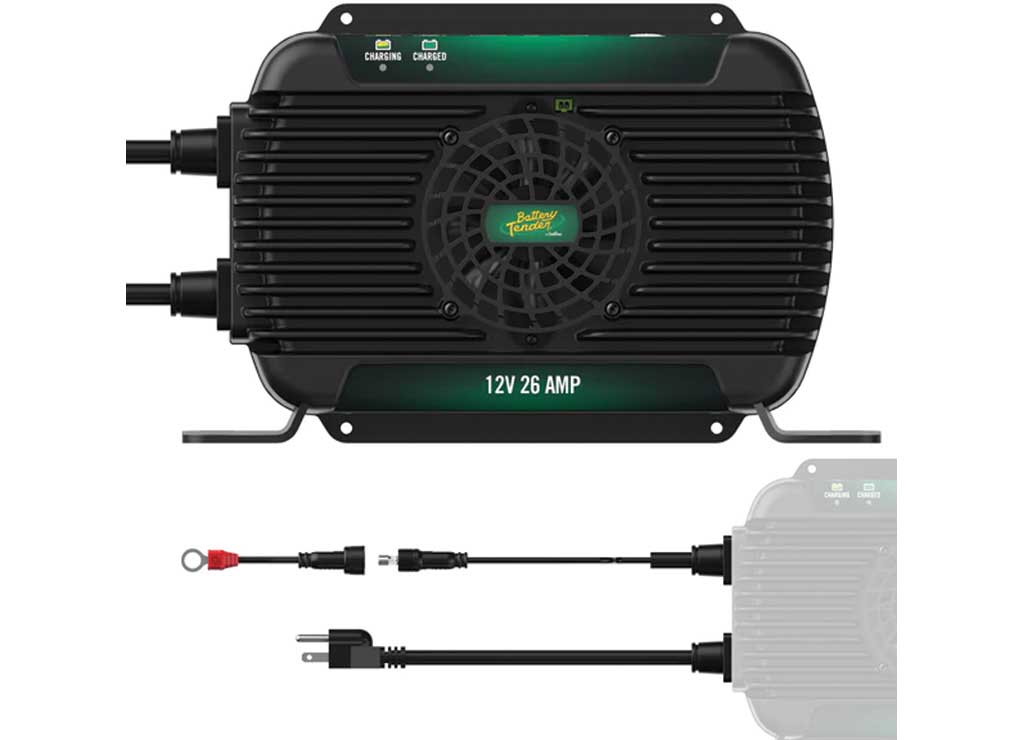
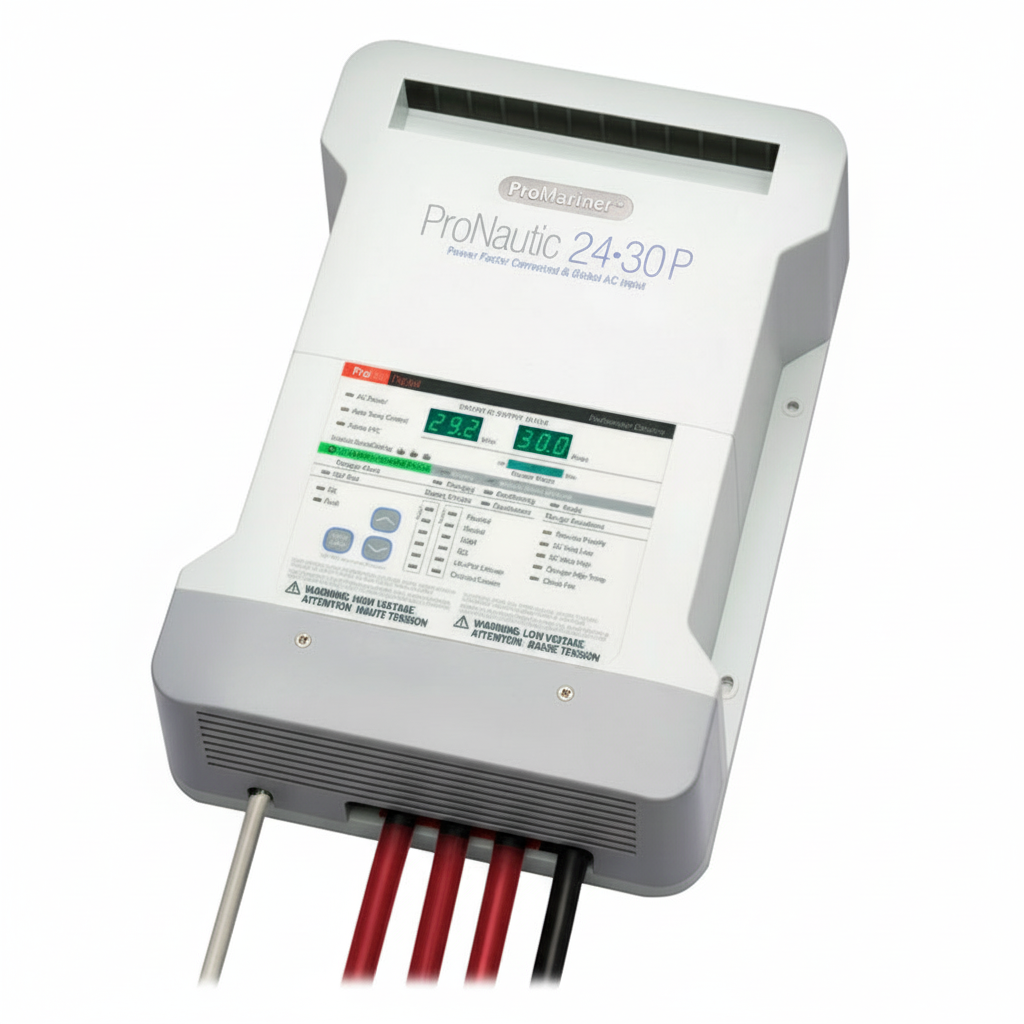
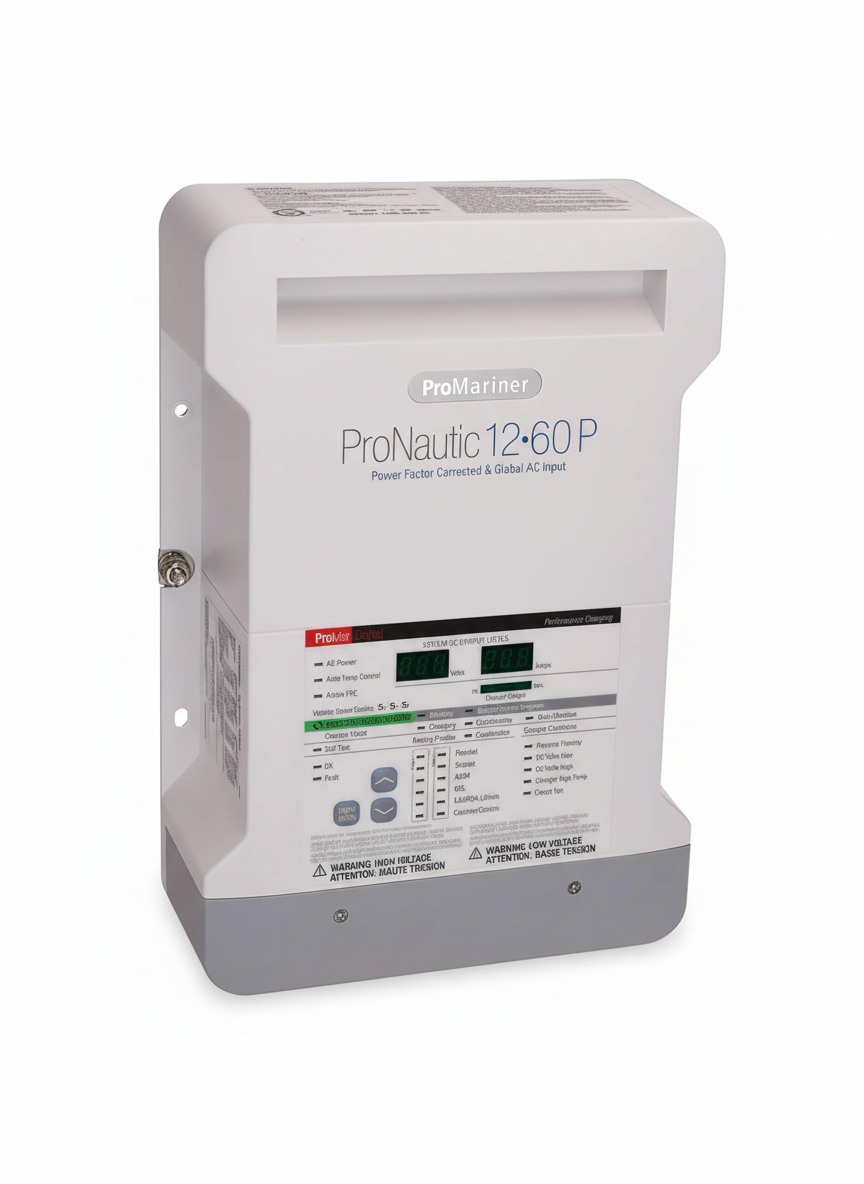
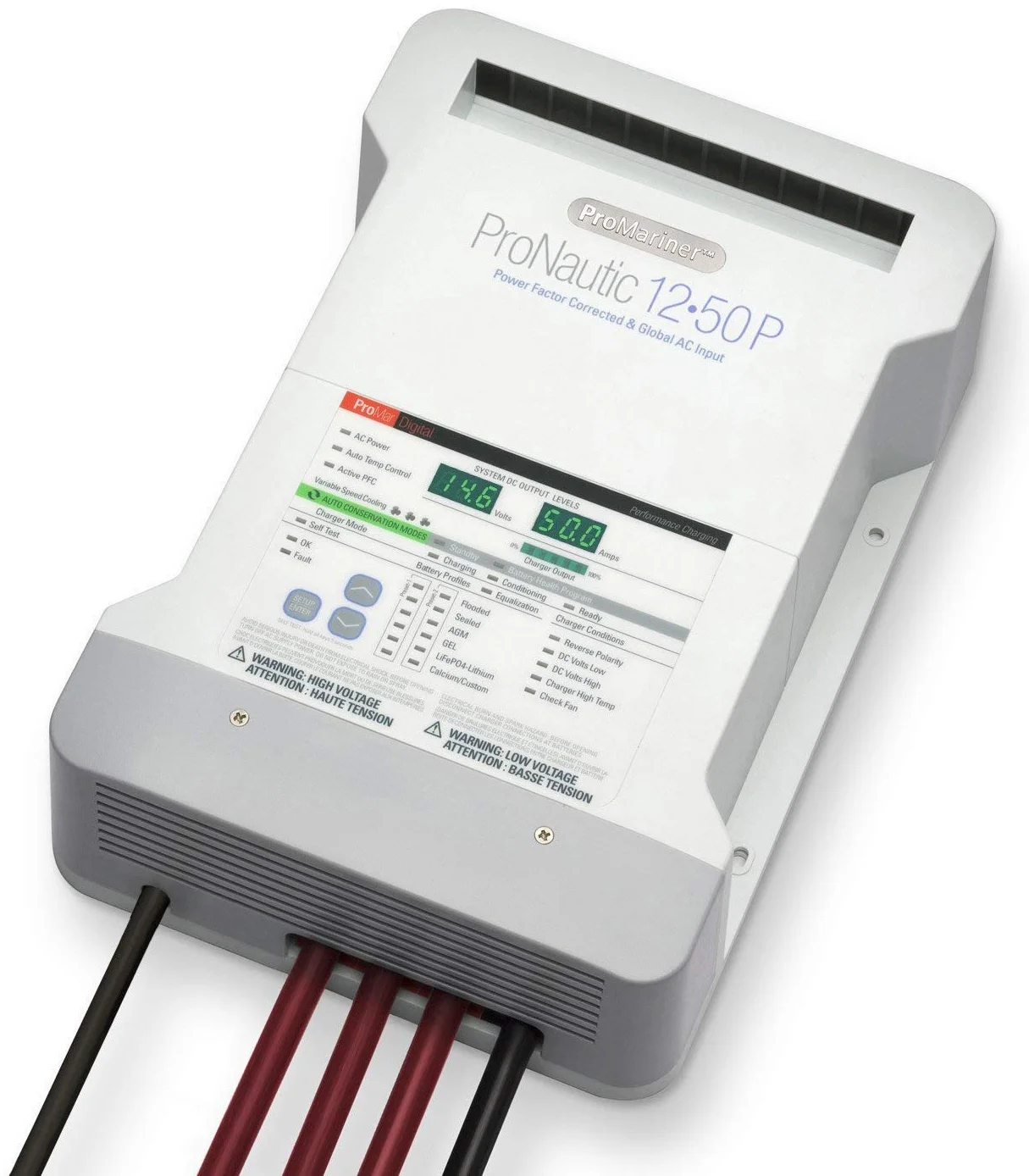
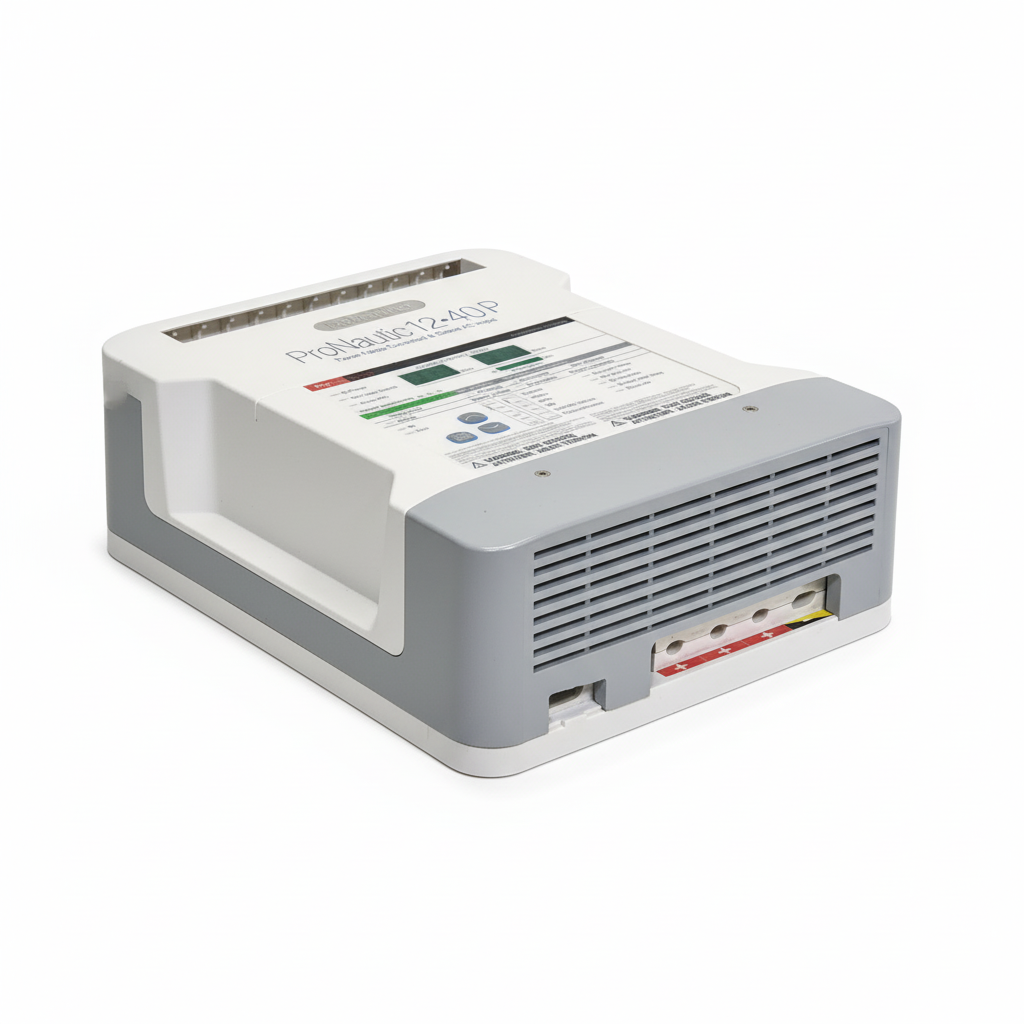
Most boats with a trolling motor are best served by a waterproof onboard charger with one output per battery: plug in one cord at the dock or in the garage and every battery charges at once. We stock onboard chargers from ProMariner (ProSport, ProTournament and ProNautic), Battery Tender (WaveCharge and PowerPlus) and Pro Charging Systems, high-output units from Mastervolt, Newmar and Samlex, lithium chargers from Norsk and Optimate, DC-to-DC chargers from Renogy, Redarc and Balmar, and the cables and connectors to install them.
How many banks do you need?
A bank is one isolated charger output, and on most bass and fishing boats you want one bank per 12 volt battery. Trolling motors that run on 24 or 36 volts use two or three 12 volt batteries wired in series. A multi-bank onboard charger charges each of those batteries individually, which keeps them balanced, and it can be connected without undoing the series wiring.
| Battery setup | Batteries | Banks needed |
|---|---|---|
| Outboard cranking battery only | 1 | 1 |
| Cranking + 12 V trolling motor | 2 | 2 |
| Cranking + 24 V trolling motor | 3 | 3 |
| Cranking + 36 V trolling motor | 4 | 4 (or a 3-bank for the trolling batteries plus a separate cranking solution) |
| Cruiser with house bank + engine battery | Varies | 2 to 3, often a higher-output charger |
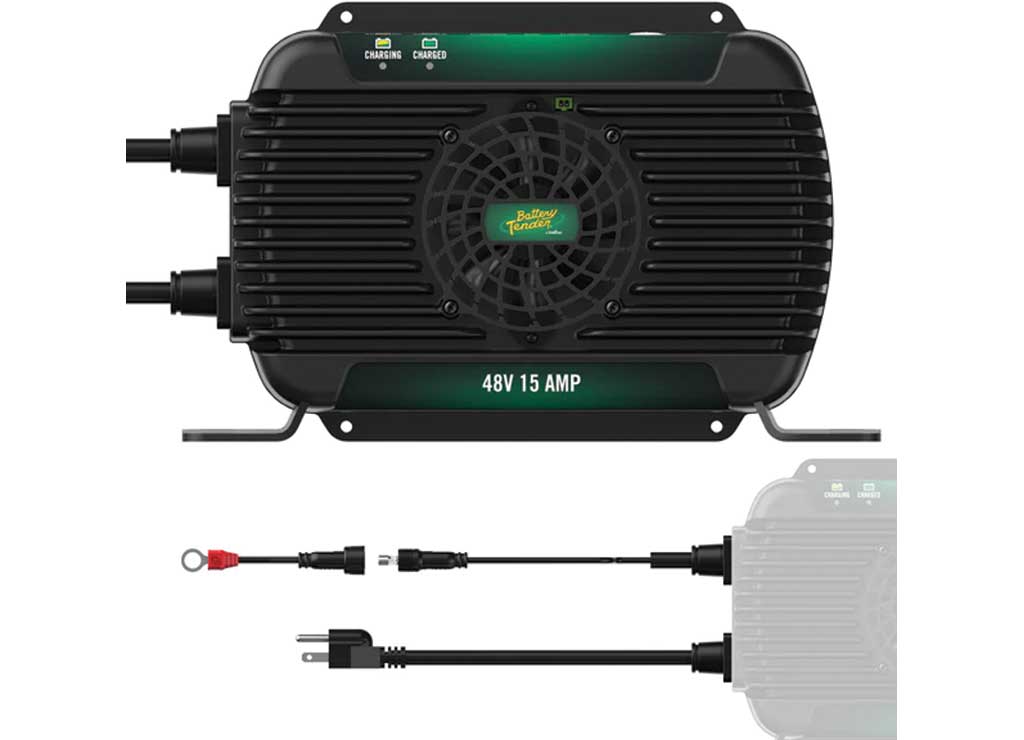
Battery Tender's WaveCharge line, for example, comes in 3 and 4 bank versions, and ProMariner's ProSport and ProTournament lines include single-bank and triple-bank models. Some chargers, like Battery Tender's 24, 36 and 48 volt onboard units, are single-output chargers meant for a whole series pack, such as a golf cart or an electric drive system. Make sure the output voltage and bank count match how your batteries are wired.
Amps, chemistry and charger types
Amps per bank. More amps means faster charging. A common rule of thumb for lead-acid batteries is a charger rated at roughly 10 to 20 percent of the battery's amp-hour capacity per bank, but always check the battery maker's recommended charge rate. Read the specs carefully: some chargers state total output that is split across banks, while others state amps per bank. A 6 amp single-bank charger suits a small boat that sits on shore power between trips; tournament anglers who need full batteries overnight usually step up to 10 amps per bank or more.
Battery chemistry. Flooded, AGM, gel and lithium (LiFePO4) batteries each want a specific charge profile. Most modern smart chargers have selectable profiles for lead-acid types. Lithium batteries need a charger with a lithium profile, or a dedicated lithium charger like Norsk's LiFePO4 units or the Optimate Lithium LFP, which can also wake a battery whose protection circuit has shut it off. Using a lead-acid charger with an equalize or desulfation mode on lithium can damage it, so check both makers' guidance.
| Charger type | Where it lives | Best for |
|---|---|---|
| Onboard multi-bank | Mounted on the boat, waterproof | Trolling motor and cranking batteries charged together |
| High-output onboard | Mounted on larger boats | House banks on cruisers, often 40 amps and up |
| Portable / maintainer | Garage or bench | Single batteries, winter storage, PWCs |
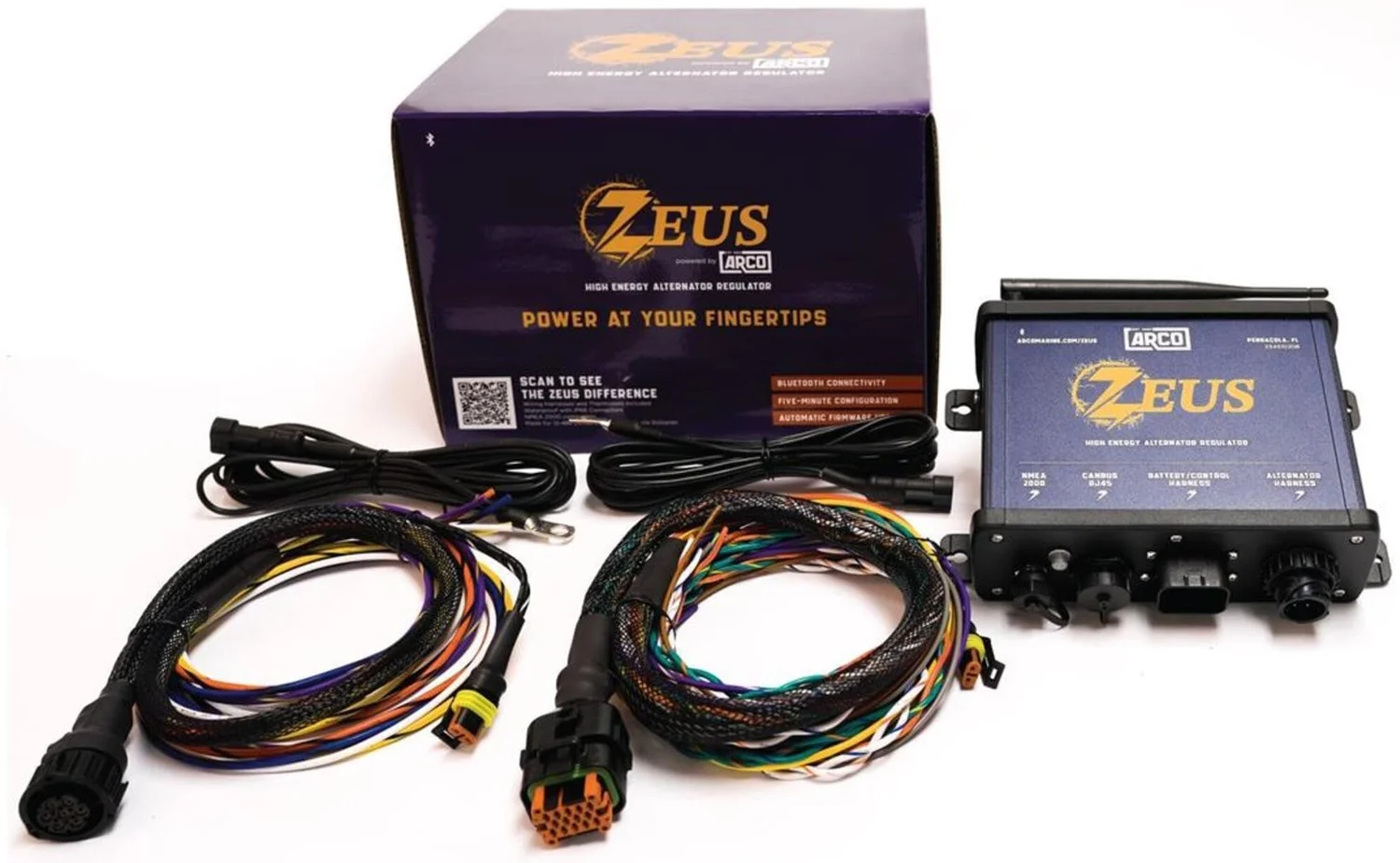
| DC-to-DC | Wired to the engine's charging system | Charging a house or trolling bank while underway |
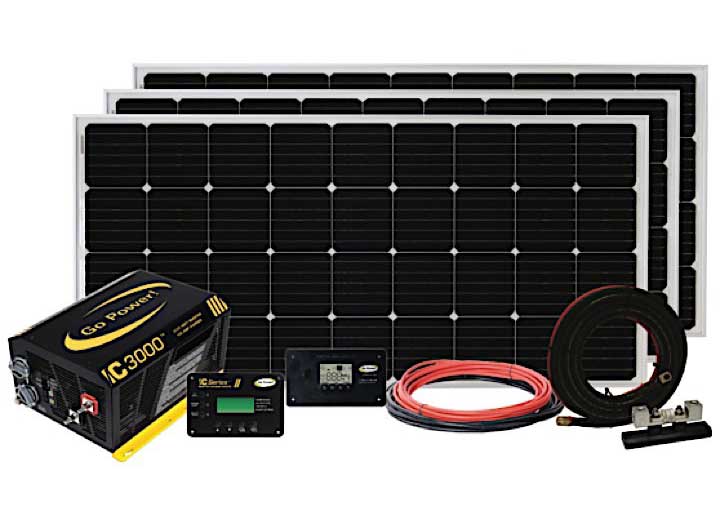
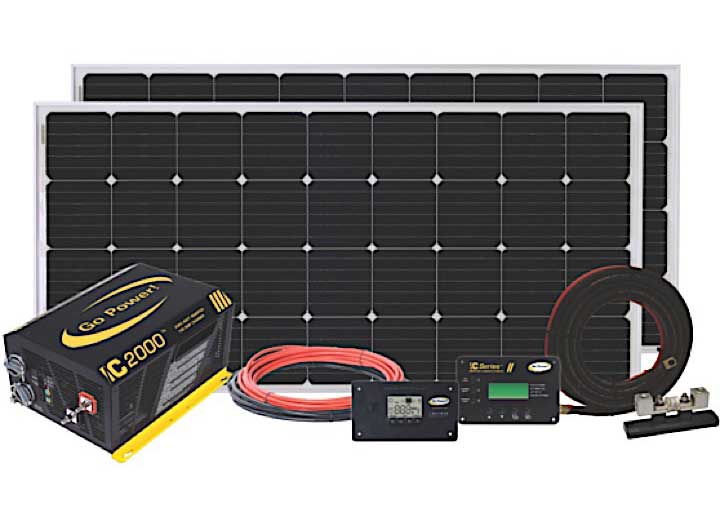
| Solar | On a cover or panel | Keeping batteries topped up away from shore power |
DC-to-DC chargers (Renogy, Redarc, Balmar Duo Charge) charge a second battery bank from the engine's alternator while you run, and are commonly recommended for lithium house banks because they control the charge rate. Maintainers and solar covers, like the Battery Tender boat engine and PWC covers with built-in solar chargers, keep a battery from slowly draining while the boat sits.
Installing an onboard charger
- Pick a spot that is dry, ventilated and secure, close enough to the batteries to keep the output leads short. Follow the charger maker's mounting instructions, and keep it out of standing water in the bilge.
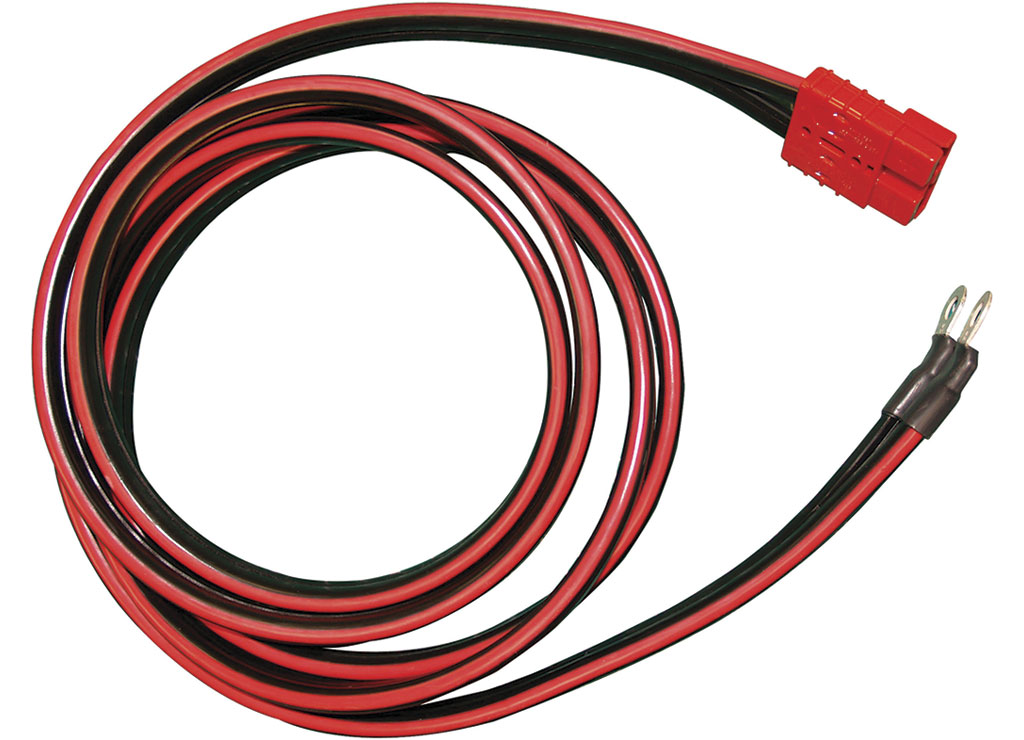
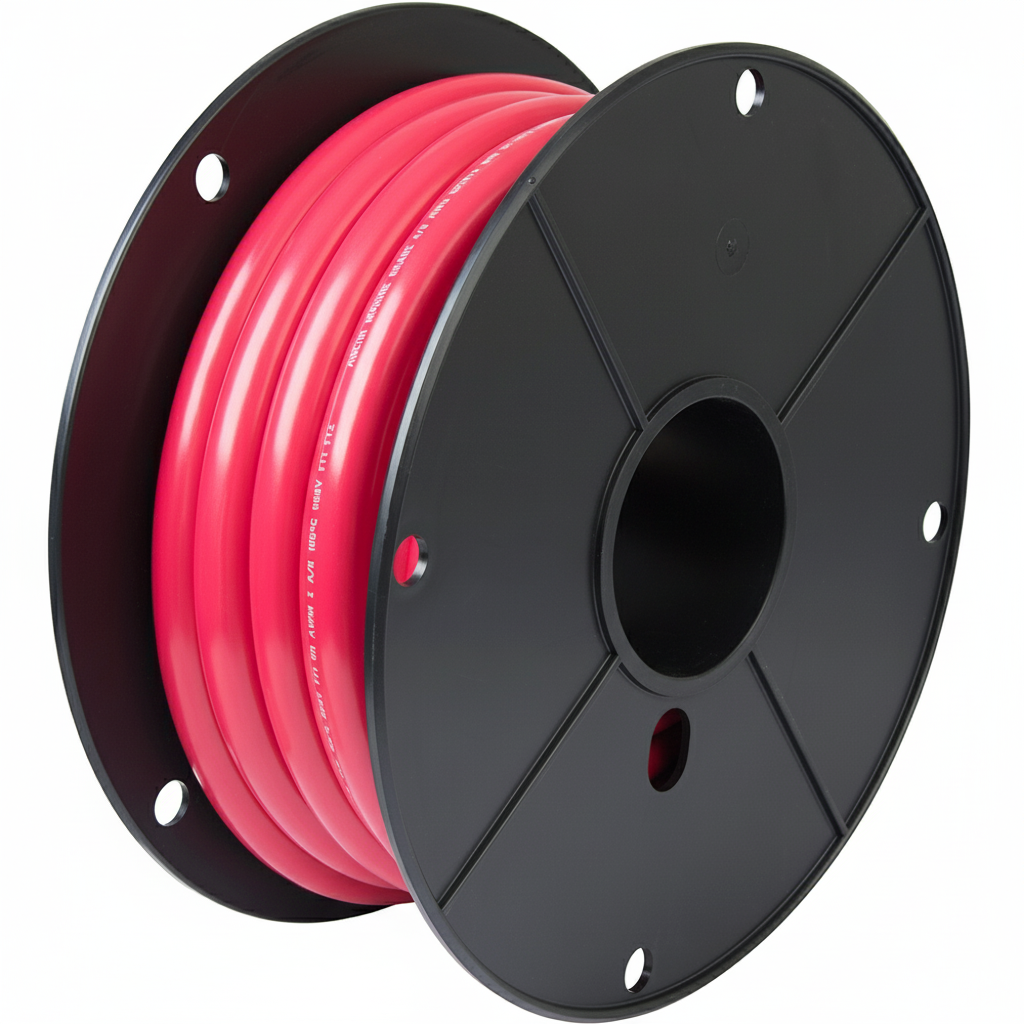
- Run each bank's leads to its own battery: positive to positive, negative to negative. Do not shorten or extend the output leads with undersized wire. If you need more length, use the manufacturer's extension cables, like ProMariner's 5 and 15 foot leads or Battery Tender's DC extension cables.
- Fuse the positive leads near the battery if the charger requires it. Many onboard chargers include inline fuses; leave them in place.
- Plan the AC side. Plug in only to a properly grounded, GFCI-protected outlet with a heavy enough extension cord. A dockside or hull-mounted AC receptacle saves fishing the cord out every time.
- Clean the terminals and use good battery cables and secure trays. Corroded or loose connections are a common reason a charger reports a fault or a battery never seems to fill.
If a battery keeps going flat even when charged, something may be draining it while the boat sits. Our article on finding a parasitic battery drain walks through the test, and how to test a battery at home applies to marine batteries too.
Cables, connectors and off-season care
- Quick connectors like Connect Ease and Battery Tender's quick-disconnect leads let you hook up a portable charger or maintainer without opening compartments.
- Series connection kits, such as Connect Ease's 36 volt trolling motor kit, simplify wiring a multi-battery trolling setup cleanly.
- Battery trays and straps sized to your battery group (for example Group 24 or Group 31) keep batteries from shifting, which boating safety standards call for.
- Batteries: AGM marine batteries like Odyssey's Extreme Series are popular for vibration resistance. Check that your charger has an AGM profile.
Off-season: charge fully before storage, then leave a smart charger connected in maintenance mode or disconnect the batteries and top them up periodically. Check electrolyte levels in flooded batteries. A fully charged battery is also far less likely to freeze than a discharged one. If you keep the boat on a lift, see our boat lift motors guide for lift battery and solar charging options.