A good truck box keeps tools dry, locked and in one place instead of sliding around the bed. The right one depends on three questions: where you want it to mount (across the bed rails, along the sides, on the bed floor or under a flatbed), what else needs the bed (a fifth wheel hitch, a tonneau cover, long material), and what it is made of. Get those right, then measure carefully.
We carry boxes from Dee Zee, RKI, Weather Guard, Camlocker, Better Built, Westin, Highway Products and Merritt, from budget poly chests to contractor topsiders and transfer tank combos.
Tool box styles compared
| Style | Where it mounts | Good for | Watch out for |
|---|---|---|---|
| Crossover (saddle) | Across the bed rails, behind the cab | Most pickups; keeps the bed floor open underneath | Can conflict with tonneau covers and some racks |
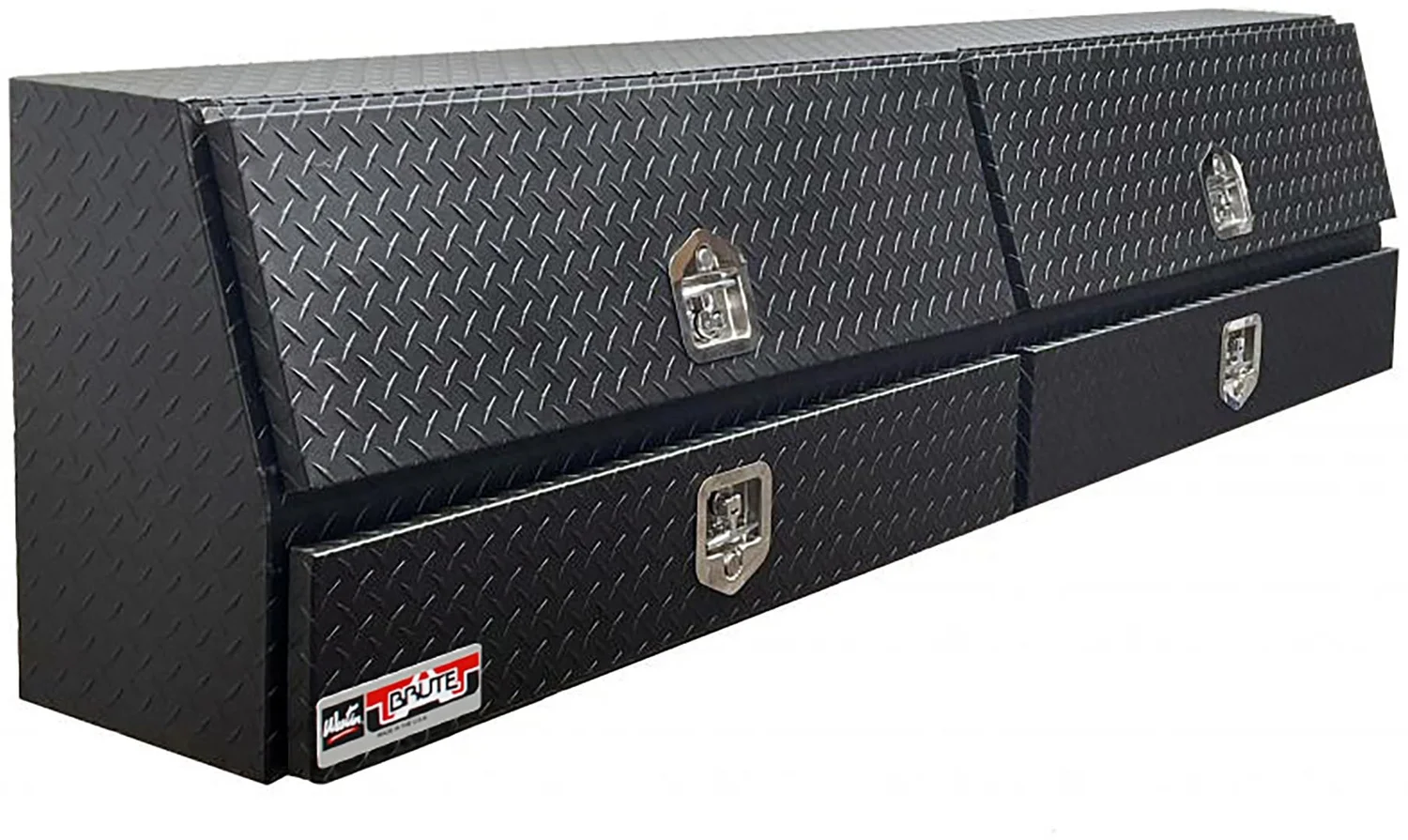
| Side-mount (lo-side, hi-side, topsider) | Along one or both bed rails | Contractors who want the center of the bed open; access from the side of the truck | Narrows usable bed width; hi-side boxes add height |
| Chest | On the bed floor, usually against the bulkhead | Trucks with a cover, or when rails need to stay clear | Uses floor space; you reach over the side or tailgate |
| Underbody | Under a flatbed or service body, between the frame and wheels | Flatbeds, dually and work trucks | Needs a flatbed or proper mounting brackets |
| Wheel well | In the bed, behind the wheel well | Small tools, straps and chains while keeping the bed open | Small capacity; driver and passenger sides are different parts |
| Fifth wheel | Low-profile box at the front of the bed | Fifth wheel and gooseneck owners | Check clearance to the hitch and trailer pin box |
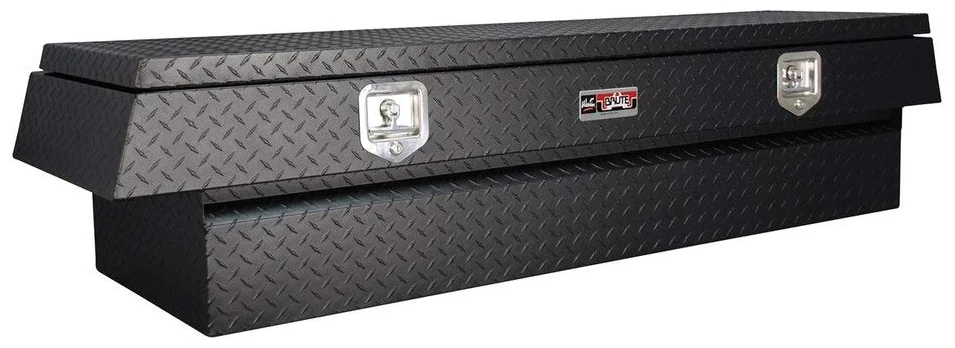
Crossover boxes come as single lid (one wide lid, often with a gas strut), double lid or gull wing (open either side independently), low profile (keeps rear visibility) and deep (more storage, sits lower into the bed). Pull-handle and push-button latch styles mostly come down to preference and how often you open it.
How to measure your truck
- Rail-to-rail width: measure across the bed between the outside edges of the bed rails. Full-size crossover boxes are commonly around 70 to 72 inches wide, midsize around 60 to 63, but trucks vary, so measure and compare to the box's listed dimensions.
- Inside bed width: the bottom of a crossover box drops between the rails, so the box's bottom width has to clear the inside of the bed.
- Depth front to back: make sure the lid can open fully without hitting the cab, and check clearance to a rear window or sliding glass.
- Height: a low-profile box keeps rear visibility; a deep box holds more. For chest and fifth wheel boxes, measure from the bed floor to the rail.
- Bed caps and rails: factory bed rail caps, stake pocket covers and bed rail systems can change how a box sits.
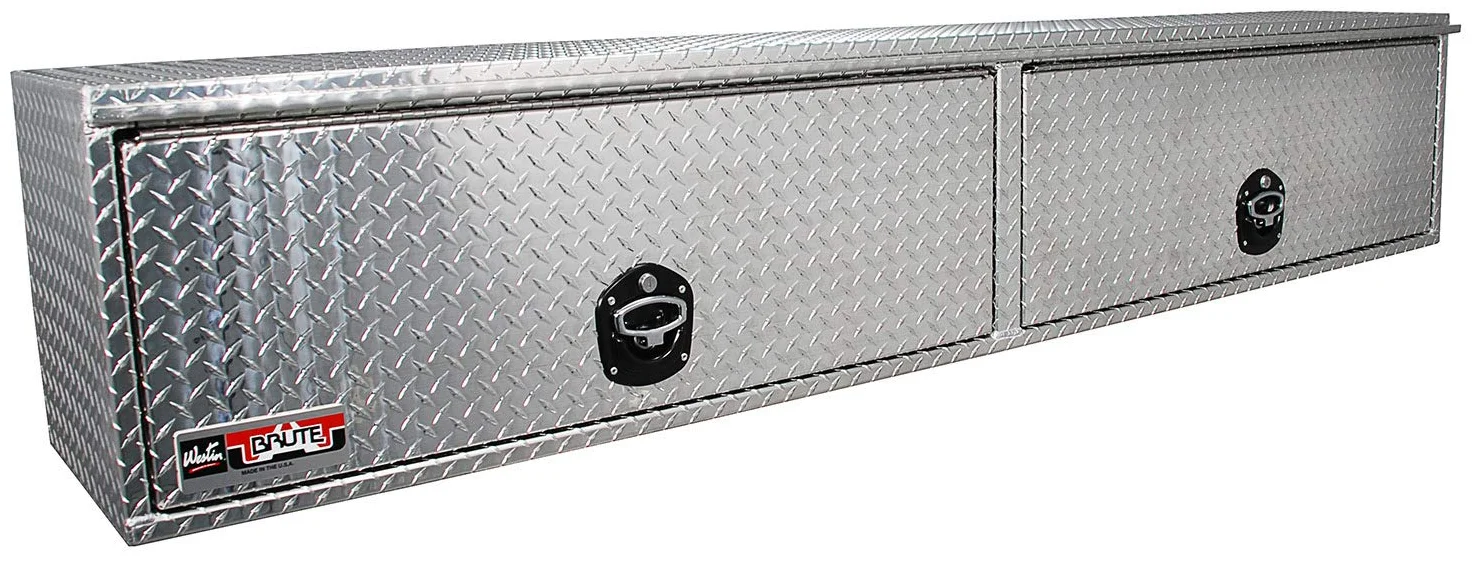
Midsize and sport-side trucks often need boxes labeled for them, like RKI's chest boxes for sportside midsize trucks and Dee Zee's midsize crossovers. Westin's Brute contractor topsiders come in lengths like 72, 88 and 96 inches to match bed length on full-size and stake bed trucks.
Aluminum vs steel vs poly
- Aluminum: light and naturally corrosion resistant, available in bright diamond plate or black powder coat. Most Dee Zee, Weather Guard aluminum, RKI aluminum and Merritt boxes fall here. Light weight helps payload and makes the box easier to install or move.
- Steel: heavier and very rigid, with strong lids and hinges. Common on RKI and Weather Guard steel boxes and many underbody units. Keep the coating intact, because chips can rust over time.
- Poly (plastic): the lightest and least expensive, and it will not dent or rust. Good for lighter tools and occasional use; examples include the Dee Zee plastic crossover and poly utility chest.
For security, look at the lock and latch design, lid seal, and whether the lock has a cover to keep out dirt and ice. Weather seals and drain points help keep water out. Replacement locking latches for many Dee Zee boxes are inexpensive if yours wear out.
Capacity is often listed in cubic feet, which makes comparing boxes of different shapes easier. Weather Guard, for example, lists 4.0 cubic feet for its 56 inch steel LoSide box and 16 cubic feet for its 48 inch jumbo under-bed box. Think about what you actually carry: long levels and pry bars need length, while power tools and cases need depth. Trays, dividers and drawers keep small parts from ending up in a pile at the bottom.
Mounting, tonneau covers and transfer tanks
Most crossover boxes bolt down with J-bolts that hook under the bed rail, or with bed clamps like the Titelok TL-1, which avoid drilling. Others bolt through the rail or floor; follow the maker's instructions and check for wiring or fuel lines below before drilling anything. A box must be secured, since a loose one can become a hazard in a crash or hard stop.
Tonneau covers: a standard crossover box and a standard tonneau cover usually cannot share the bed rails. Some covers are built to work behind a crossover box, and chest boxes sit under most covers. See our tonneau cover guide before you buy both.
Fifth wheel and gooseneck: make sure the box clears the hitch, the trailer and the turning radius. See our fifth wheel and gooseneck hitch guide.
Transfer tank combos: Dee Zee makes combination liquid transfer tank and tool box units in sizes from roughly 47 to 75 gallons, some with a pump. Check what liquid each tank is rated for (many are intended for diesel, not gasoline), factor the full tank's weight into your payload, and check federal and state rules if you haul fuel for work. Use only approved nozzles, pumps and caps.
Planning the rest of the bed? See our truck bed rack guide and bed mat and liner guide.