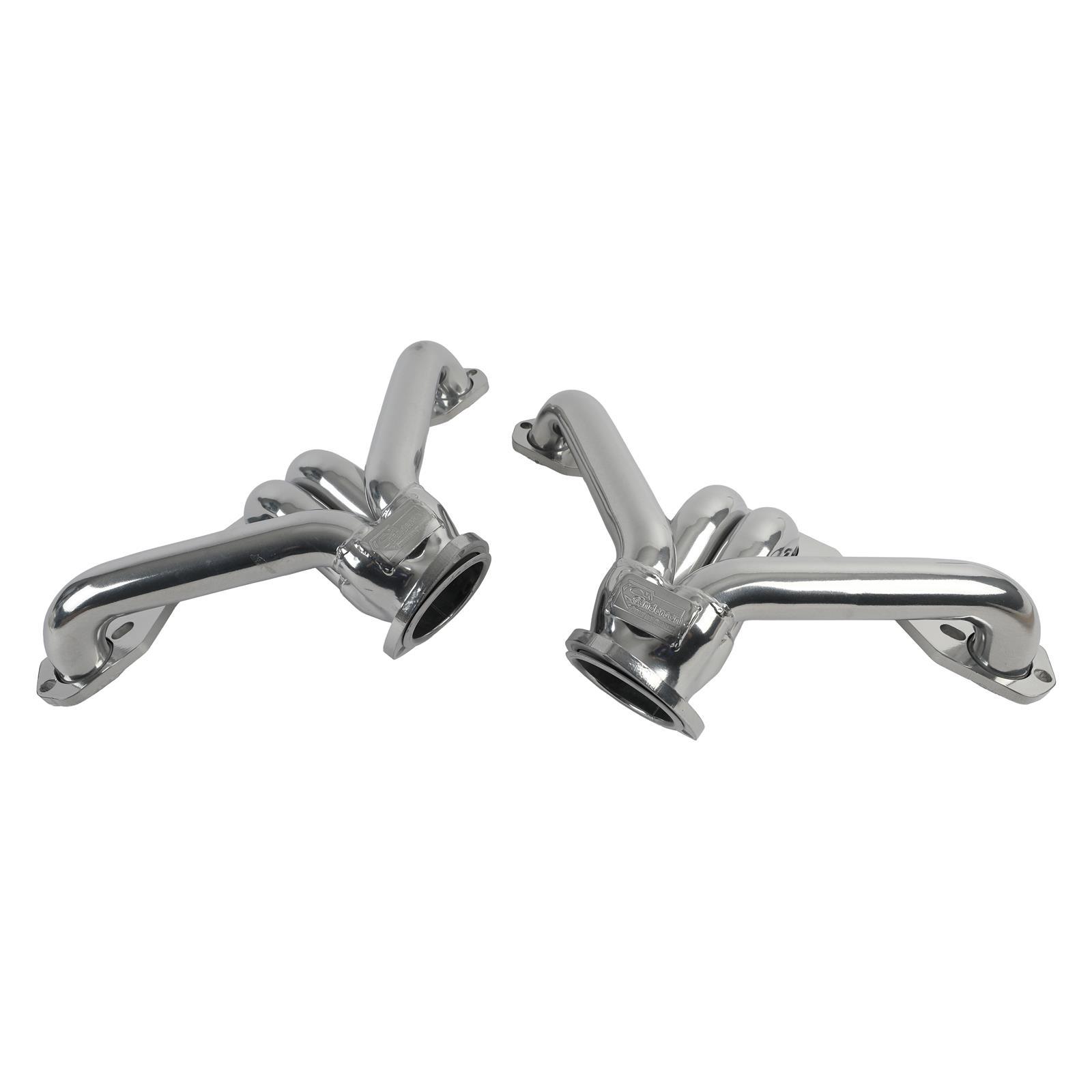
Most people upgrade an exhaust for sound first, then looks, then a modest bump in performance. The right parts depend on how far you want to go: a muffler or tip swap changes the sound for little money, a bolt-on axle-back or cat-back system changes sound and flow without touching emissions parts, and headers replace the exhaust manifold for the biggest gains and the most legal homework.
We stock systems and mufflers from Flowmaster, Magnaflow, aFe, X-Force and Walker, headers from Hedman and Schoenfeld, budget mufflers from Dynomax, AP Exhaust and Different Trends, and the clamps, tips, gaskets and bolts that finish the job.
Axle-back vs cat-back vs header-back
| Type | What it replaces | Sound and performance | Emissions parts touched |
|---|---|---|---|
| Axle-back | Muffler(s) and tailpipe behind the rear axle | Noticeable sound change, little performance change | No |
| Cat-back | Everything from the catalytic converter back: pipes, resonator, muffler, tips | Bigger sound change, modest gains on many engines | No |
| Header-back / headers | Exhaust manifold, and often pipes to the converter | Largest potential gains, needs tuning on many modern engines | Often, depending on design |
A direct-fit cat-back is the most popular bolt-on upgrade. Examples we stock include the Flowmaster FlowFX and Outlaw systems for Silverado, Ram, F-150 and Tacoma, Magnaflow cat-backs for Ram 1500 and FJ Cruiser, aFe Vulcan and Mach Force XP systems, and the X-Force cat-back with Varex muffler for the JK Wrangler. For the 2021-2022 Bronco, Flowmaster's FlowFX axle-back is a simple sound upgrade. Always match year, engine, cab and bed length, since pipe routing changes with all of them.
Installing: direct-fit systems are designed to bolt or clamp to the factory hangers and connection points, so many owners install them at home with basic tools, penetrating oil and a way to safely lift the vehicle. Old clamps and bolts on the stock system are often rusted solid; plan to cut them if needed. Universal mufflers usually need to be clamped or welded in and sometimes need pipe adapters, which is why a muffler shop install is common. A universal installation kit like Walker's covers the clamps and hangers for a typical muffler swap. After any install, check for leaks, rattles and clearance to the fuel tank, brake lines and driveshaft.
For a deeper look at the trade-offs, read cat-back vs axle-back vs header-back and does a new exhaust add horsepower.
Choosing a muffler: sound, size and layout
- Chambered mufflers use internal chambers and baffles to shape the sound. Flowmaster's Super 10, Super 40, Super 44 and Delta Flow series are classic examples, known for a deep, aggressive tone; the higher-numbered Super series are generally milder.
- Straight-through (perforated core) mufflers send exhaust through a perforated tube wrapped in packing. Magnaflow's round and oval stainless mufflers are well-known examples, with a smoother tone.
- Glasspacks and bullets like the Magnaflow glasspack and Dynomax Race Mini Bullet are compact and loud. Race mufflers are exactly that: check noise rules before using one on the street.
- OE-style replacement mufflers like Walker's SoundFX and Tru-Fit keep the car quiet and are the easy fix for a rusted-out stock muffler.
To pick the right size, match inlet and outlet diameter to your pipe, choose the layout (center or offset inlet, single or dual outlet) that fits your routing, and check body length and shape against the space under the car. A larger pipe is not always better: oversizing on a small engine can hurt low-end response and add drone.
Material: aluminized steel costs less but rusts sooner in salt country; 409 stainless lasts much longer; 304 stainless resists corrosion best and holds its finish. See stainless vs aluminized exhaust.
Headers, gaskets and hardware
Headers replace the cast exhaust manifold with tuned tubes that help the engine breathe. Shorty headers are closest to stock fitment; long-tube or full-length headers make more power but often need new pipes to connect. Hedman's Black Elite full headers and Hedders shorty headers and Schoenfeld's fender well exit headers serve classic small block Chevy builds. Ceramic coatings and header wrap or coatings like Thermo-Tec help control heat.
Plan the small parts too: header gaskets (Remflex makes header gaskets for many V8s), header bolts or stud kits (ARP, Proform locking bolts), and reducers to step down to your pipe size. Header bolts loosen over time on many engines, so recheck them after the first heat cycles. On modern fuel-injected engines, headers may also need oxygen sensor extensions and an engine tune, and the wrong setup can set a check engine light. Read headers vs exhaust manifolds for more.
Tips, clamps and hangers finish the install. Exhaust tips come clamp-on or weld-on, in rolled, angle-cut and double-wall styles; match the tip inlet to your pipe outside diameter. Use the right clamp size, and replace worn rubber hangers so the system does not rattle or crack. See exhaust tip sizes and styles and how to find and seal an exhaust leak.
Emissions and noise: check before you buy
Exhaust rules vary by state and sometimes by city, so check them for your area before buying. A few general points:
- Emissions equipment: removing or disabling a catalytic converter or other emissions equipment on a road vehicle is illegal under federal law. Cat-back and axle-back systems leave the converter in place.
- California and CARB states: in California, parts that affect emissions, including many headers, need a CARB Executive Order (EO) number to be legal on the street. Several other states follow California's rules. Many headers are sold for off-road or racing use only, so check the product's legal status.
- Noise limits: many states set decibel limits or ban modified or straight-through exhausts that are louder than stock. A race muffler or muffler delete can earn a ticket or fail an inspection. See muffler delete vs resonator delete.
- Inspection: states with emissions or safety inspections may check for leaks, missing parts and warning lights.
If a product listing does not make its legal status clear, check with the manufacturer before installing it on a street-driven vehicle.