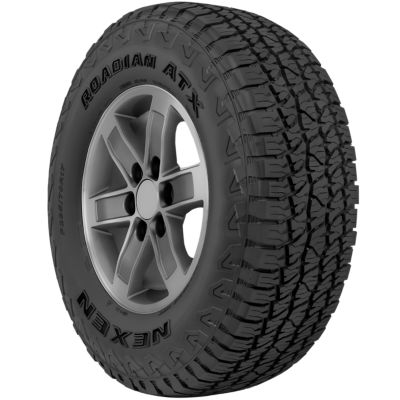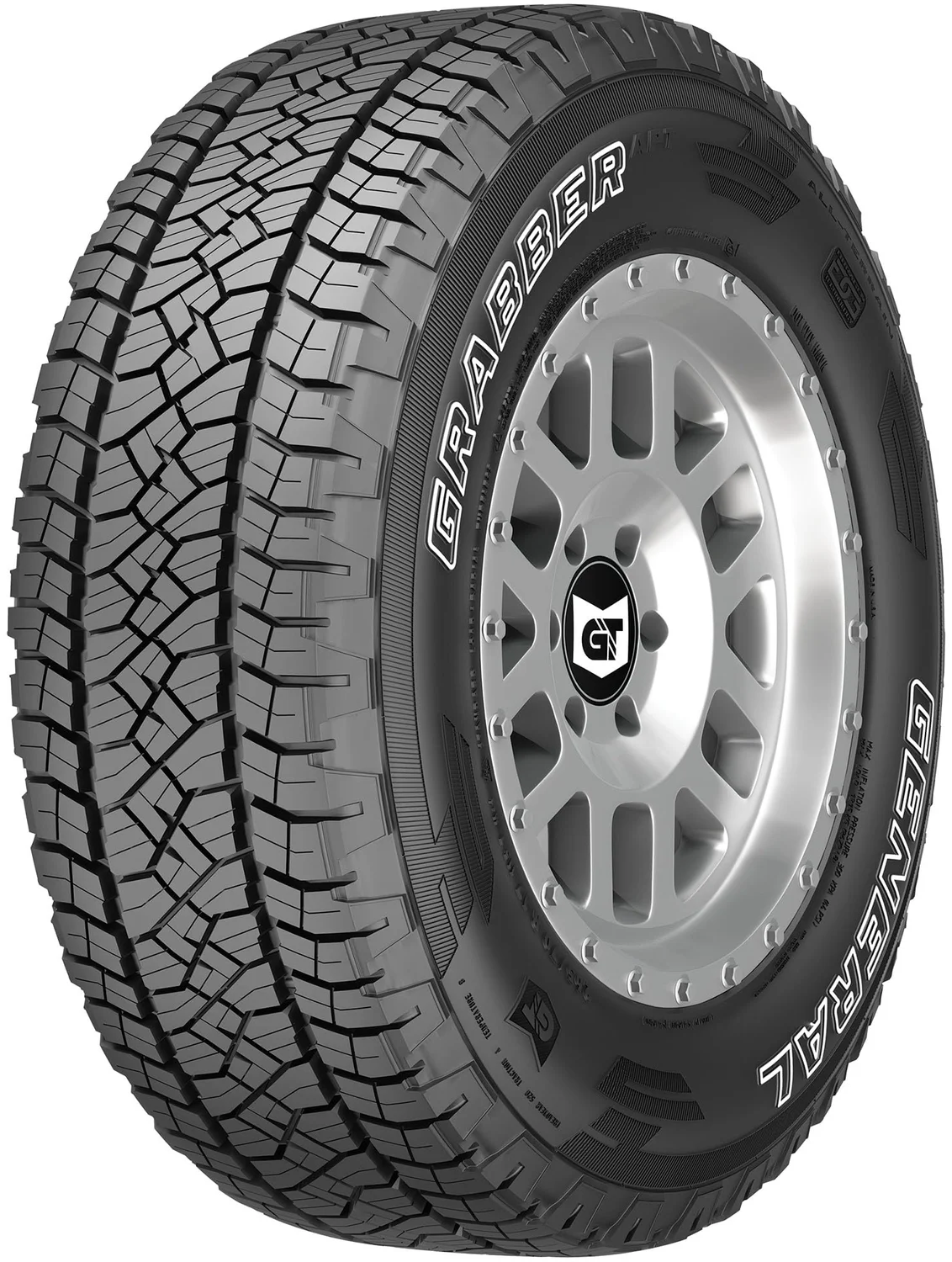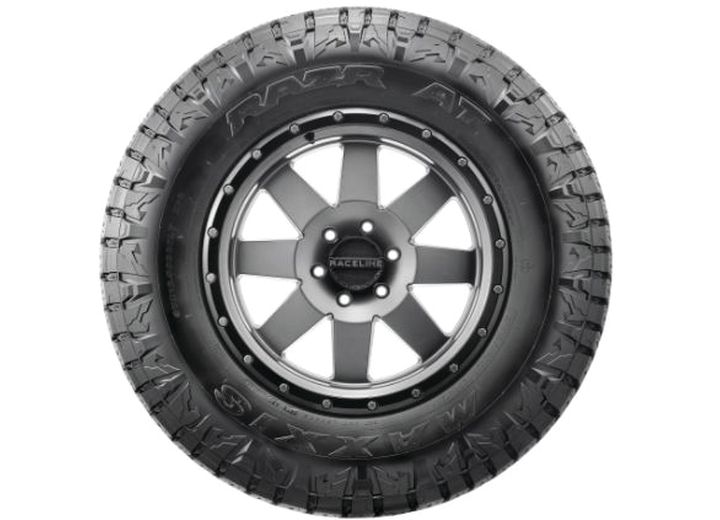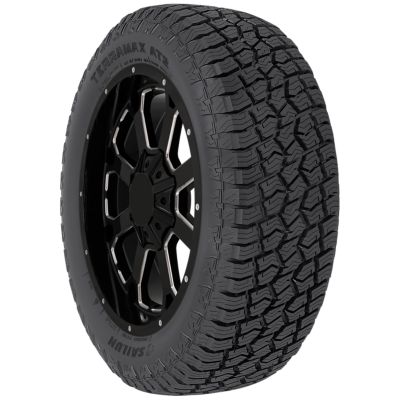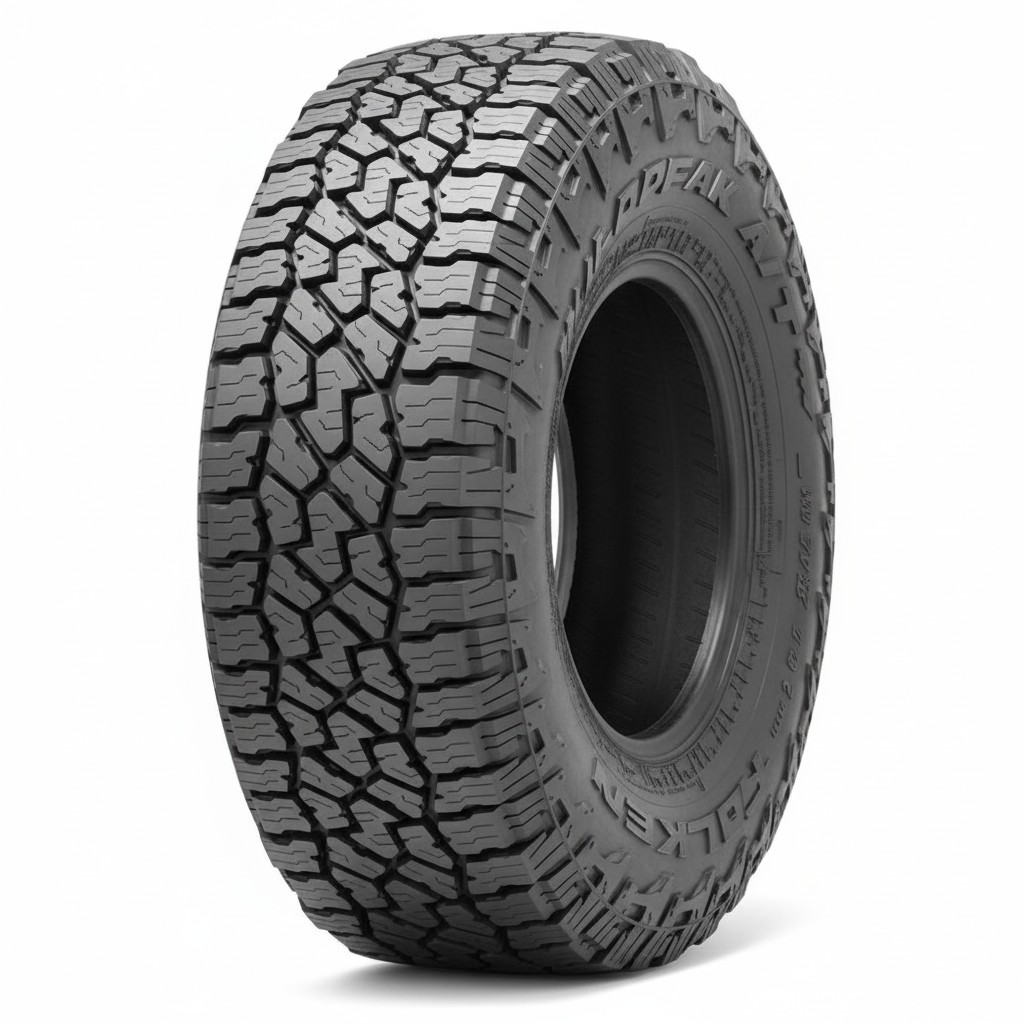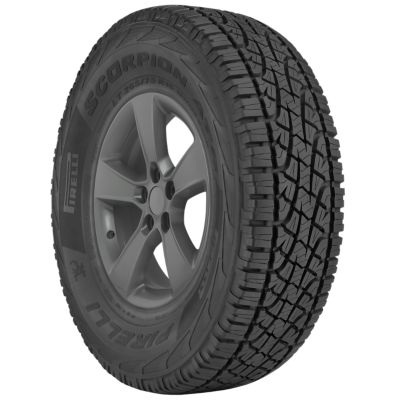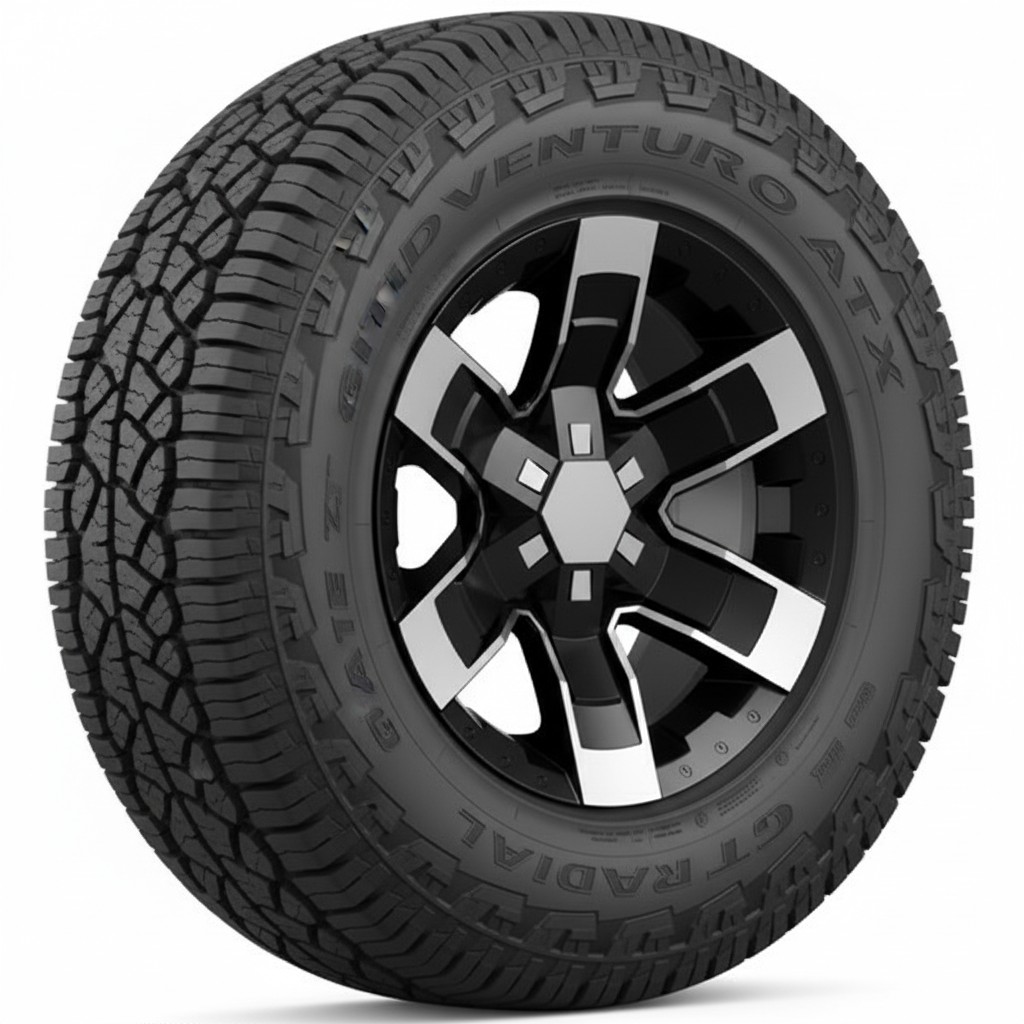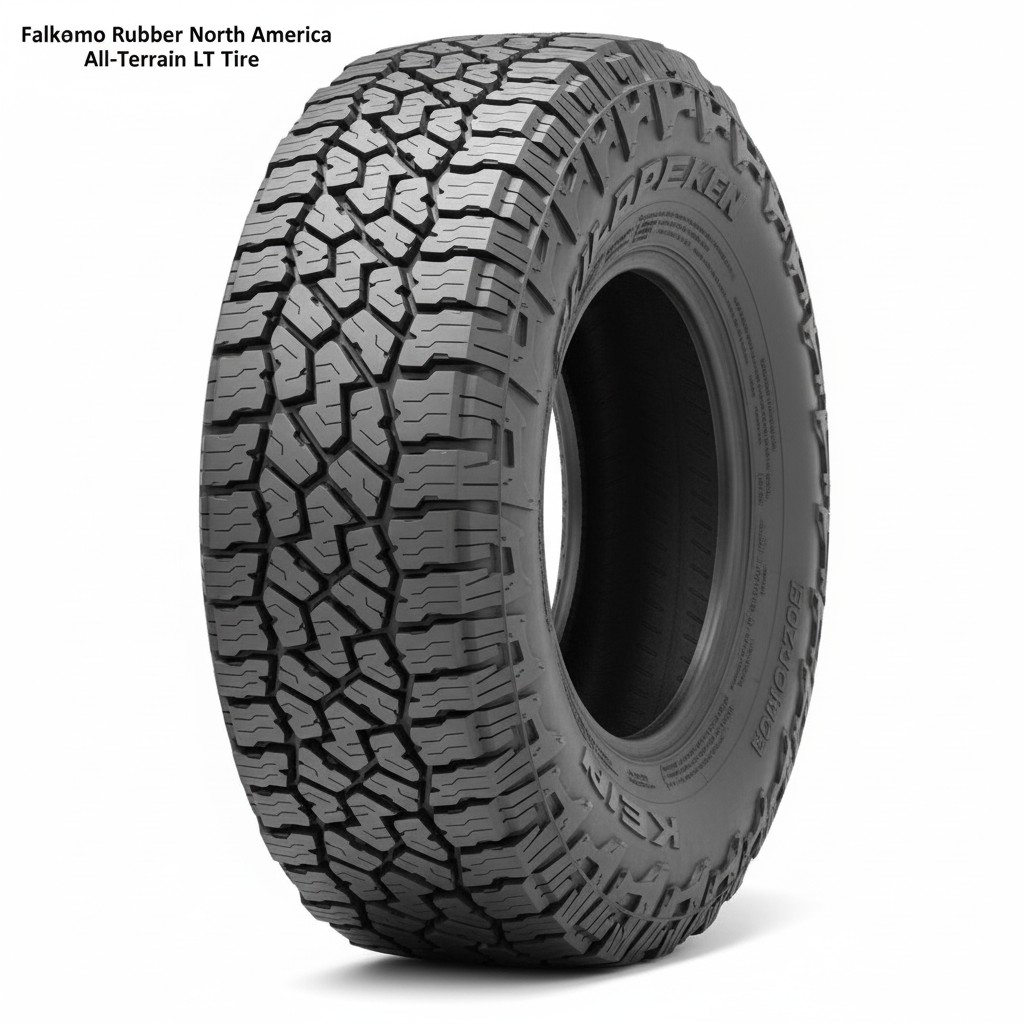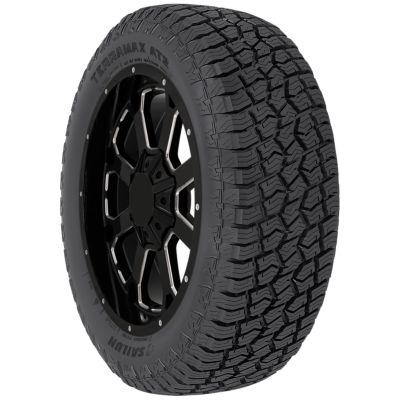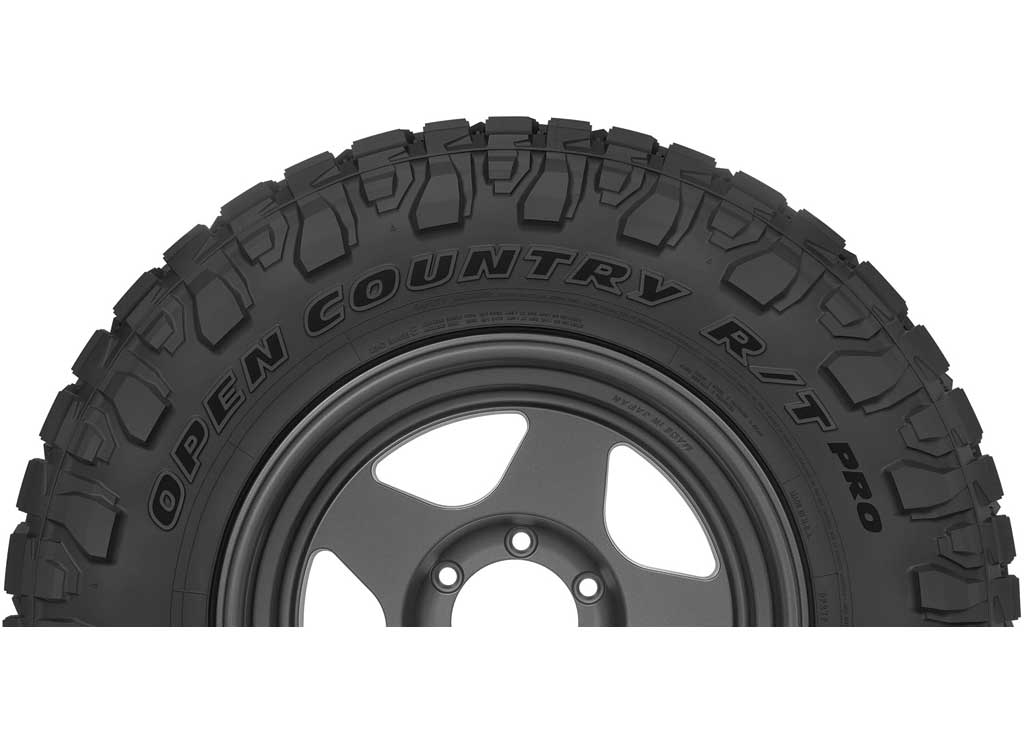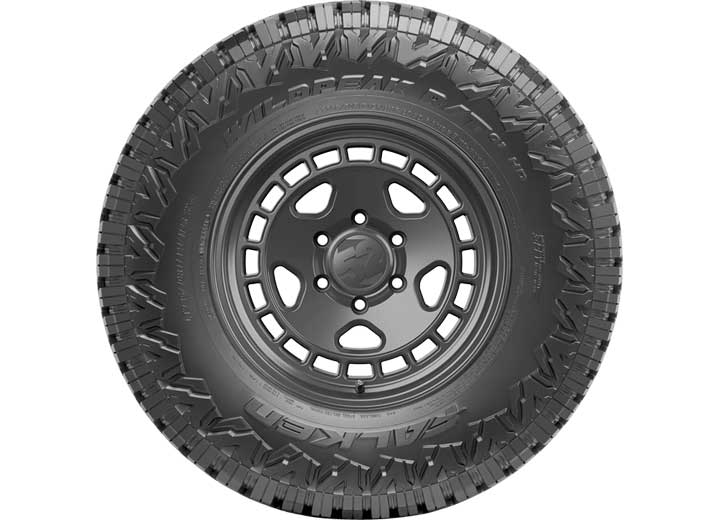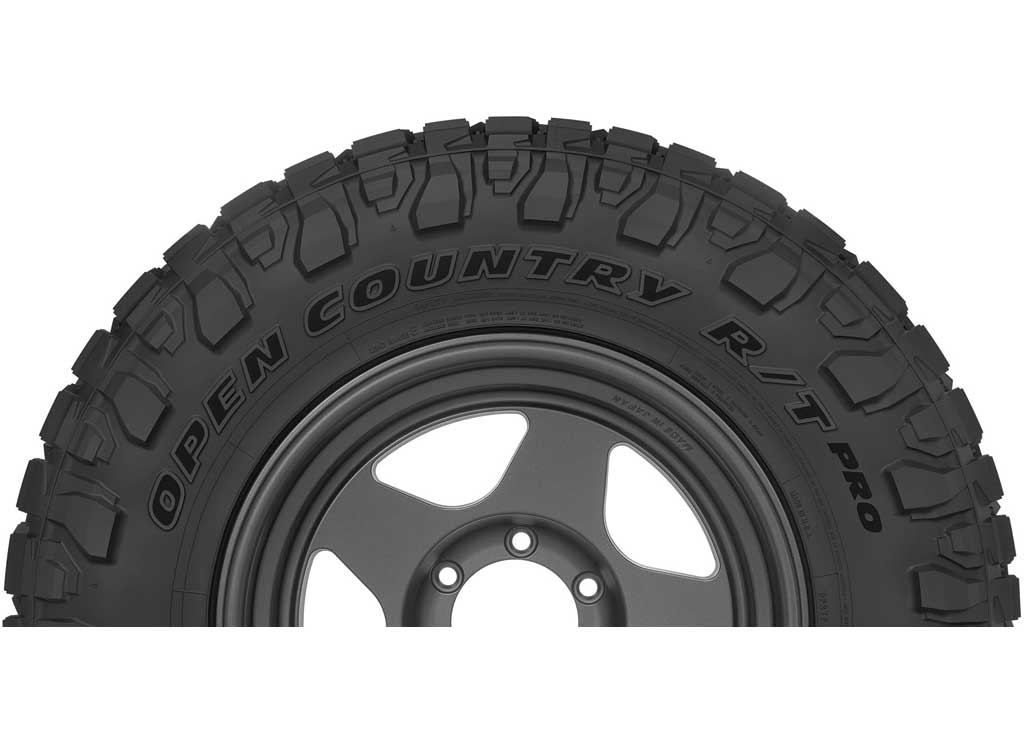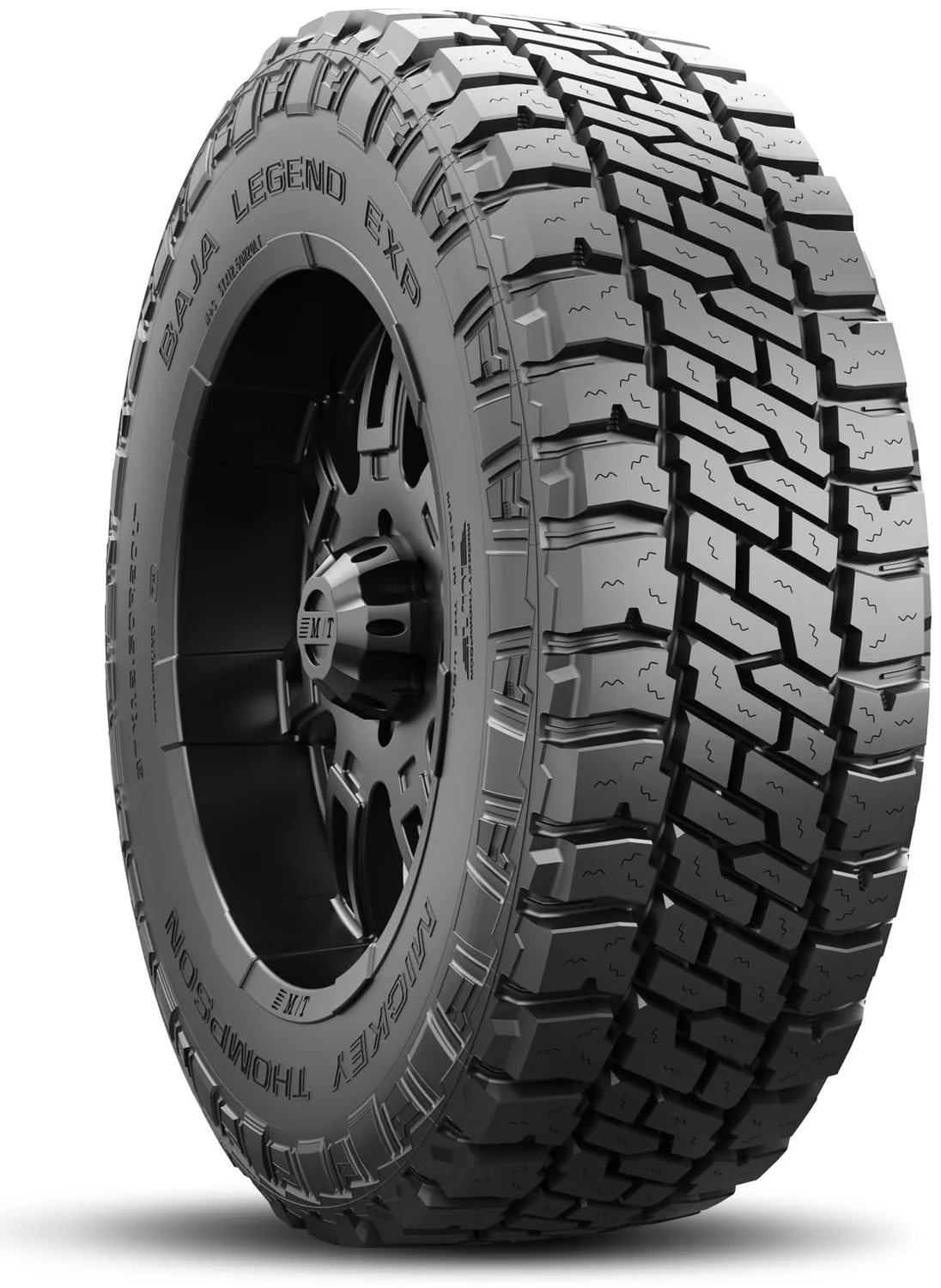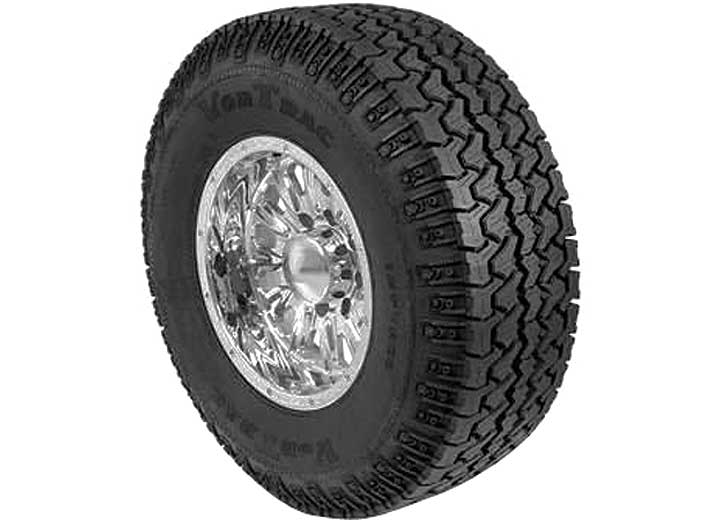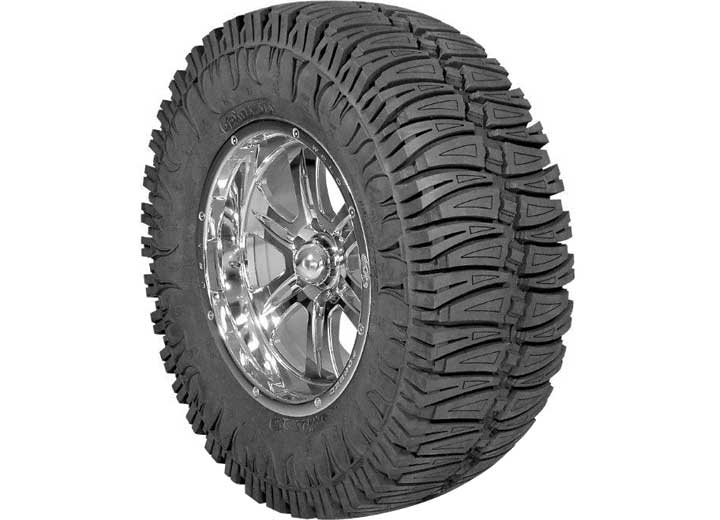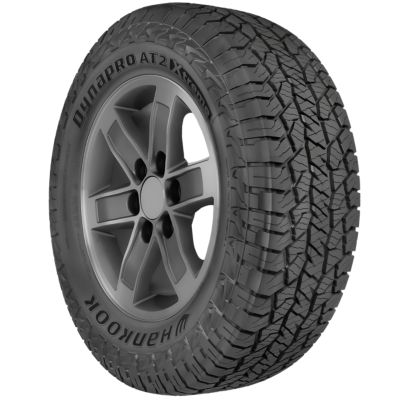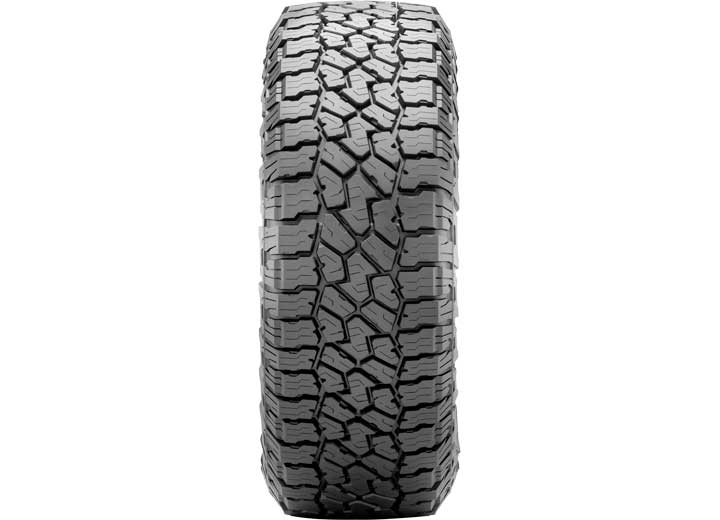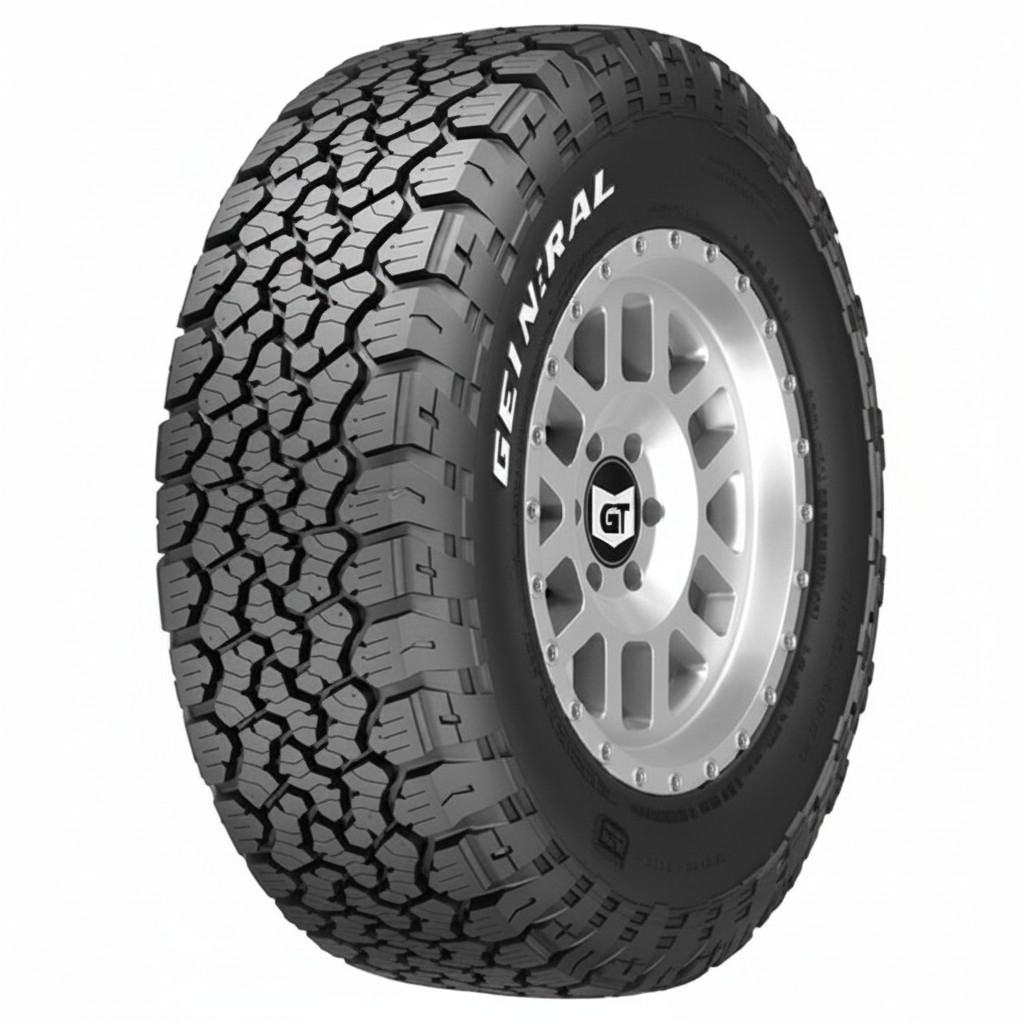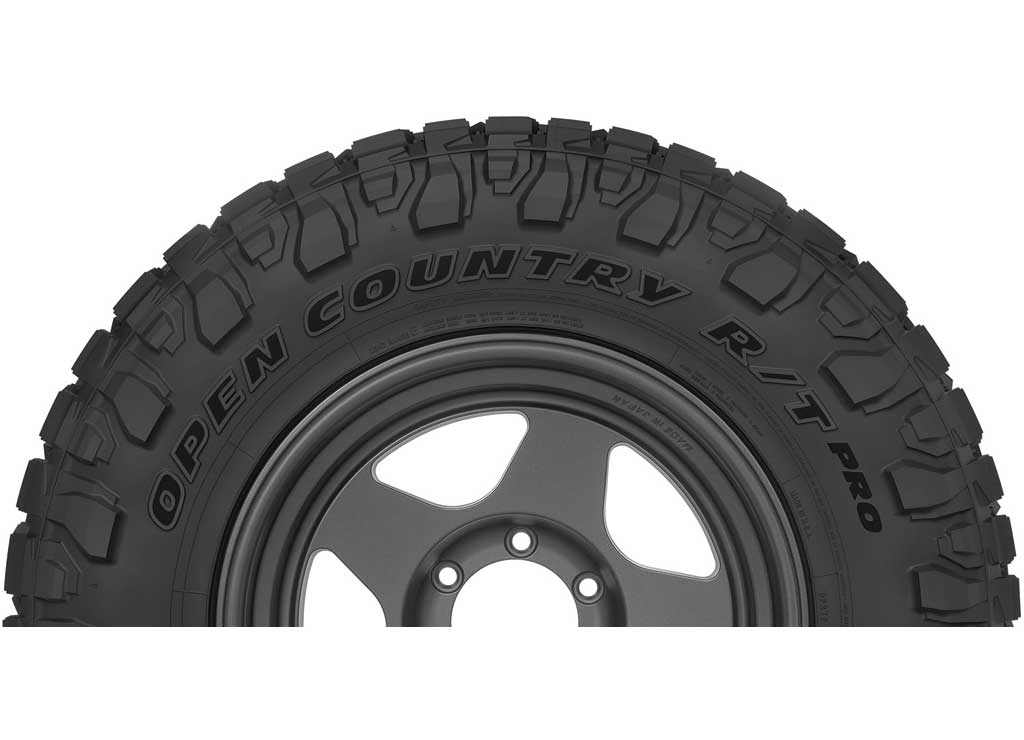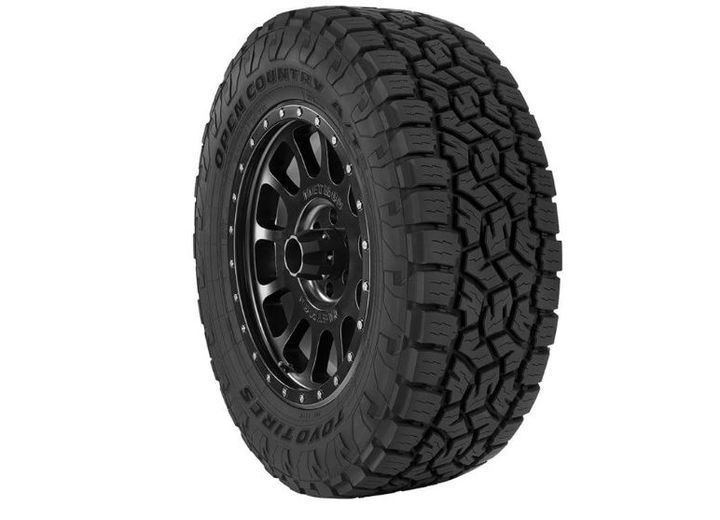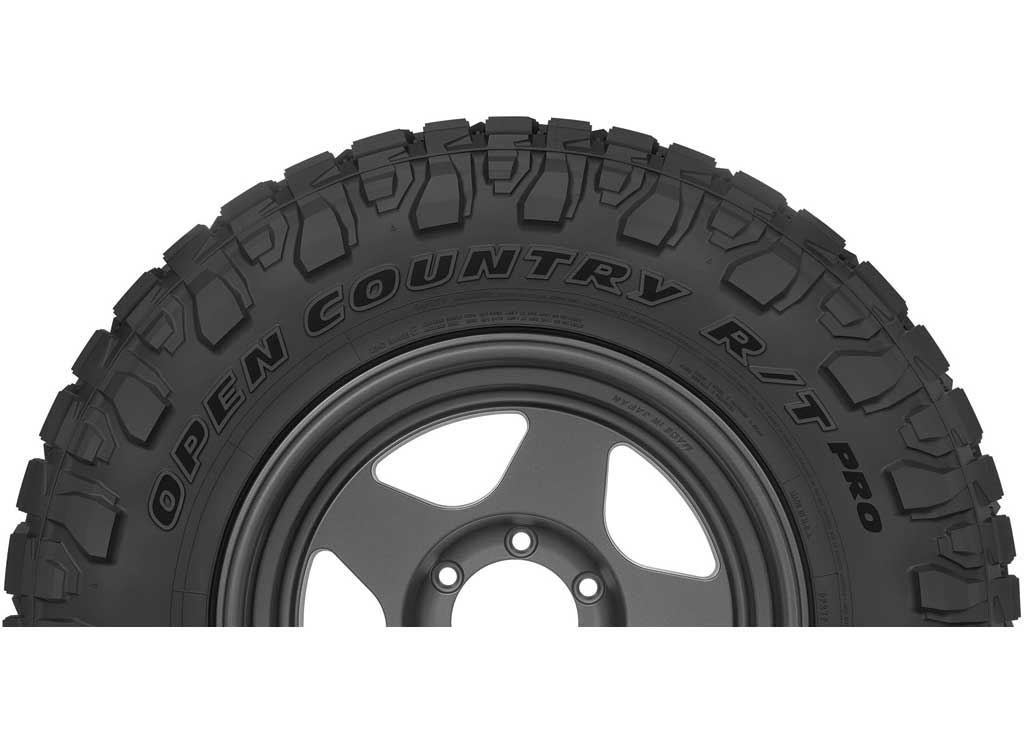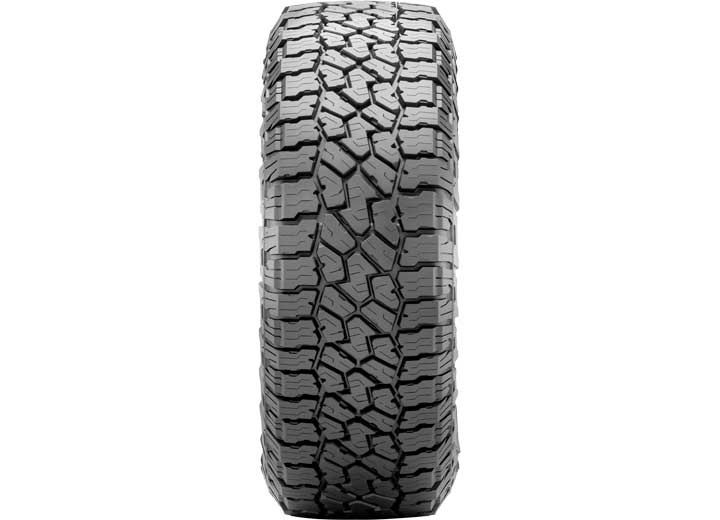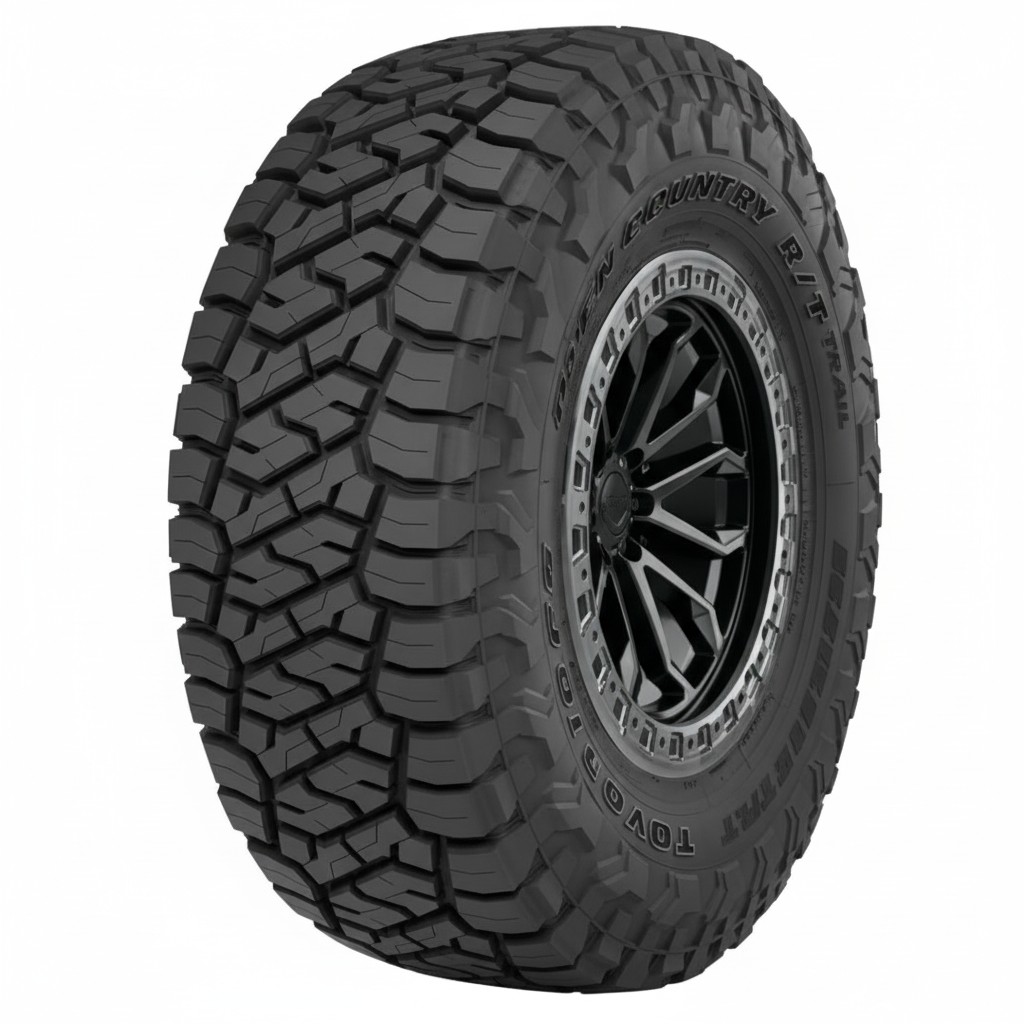
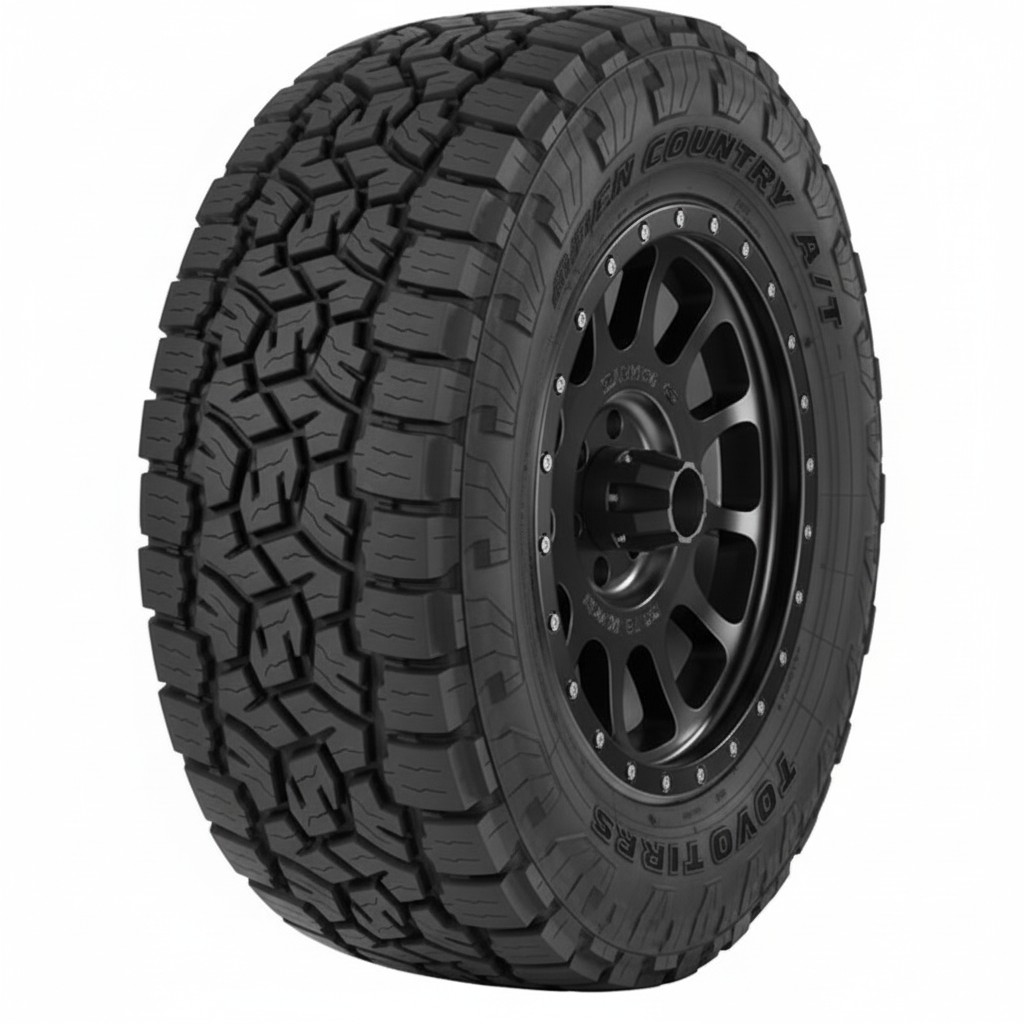
An all terrain tire (usually written A/T) is the middle ground for trucks, SUVs and Jeeps. It has a more open, blocky tread than a highway tire, so it grips on gravel, dirt roads, wet grass and light mud, but it is still quiet and stable enough to drive every day. For a lot of owners it is the only tire they will ever need: commute all week, tow on Saturday, take the two-track to the hunting spot on Sunday.
The catch is that "all terrain" covers a wide range. Some A/T tires are basically highway tires with a tougher look. Others, often sold as rugged terrain or hybrid tires, lean hard toward mud-terrain territory. This page walks through how to tell them apart, how to read the size and load range on the sidewall, and which details matter for towing, snow and off-road use.
What an all terrain tire is (and who it is not for)
A/T tires share a few traits: interlocking tread blocks with wider voids than a highway tire, siping (small slits) in the blocks for wet and snow grip, a tougher casing, and shoulder lugs that wrap partway onto the sidewall to help in ruts and soft ground. Many are built on a light truck (LT) casing with extra ply strength for towing and hauling.
An A/T is a good fit if you:
- Drive mostly pavement but regularly hit gravel, dirt, farm roads or job sites.
- Tow or haul and want a stronger sidewall than a typical highway tire.
- Want better snow traction than a basic all-season without running a dedicated winter tire.
- Like the look of an aggressive tread but do not want mud-terrain noise.
It is probably not the right pick if you: never leave pavement and care most about quiet ride and fuel economy (look at highway and touring tires), or you regularly crawl deep mud and rocks (look at mud terrain tires). A/T tires usually weigh a bit more and roll with more resistance than highway tires, so expect a small hit in fuel economy, especially in larger LT sizes.
Rugged terrain (R/T) tires sit between A/T and M/T. They typically have bigger voids and heavier sidewall lugs than an A/T but less noise and longer life than a full mud tire. If you split time between pavement and real off-road trails, an R/T is worth a look.
All terrain vs mud terrain vs highway tires
This is the decision most shoppers are really making. The table below is a general comparison; individual tires vary, so read the manufacturer's specs for the exact model.
| Trait | Highway (H/T) | All terrain (A/T) | Rugged terrain (R/T) | Mud terrain (M/T) |
|---|---|---|---|---|
| Road noise | Quietest | Low to moderate | Moderate | Loudest |
| Tread life | Longest | Long | Medium | Shortest |
| Wet pavement | Very good | Good | Fair to good | Fair |
| Snow | Fair | Good (best with 3PMSF) | Fair to good | Fair (packs up) |
| Mud and rocks | Poor | Light to moderate | Moderate to heavy | Best |
| Fuel economy | Best | Slightly lower | Lower | Lowest |
| Typical price | $ | $$ | $$ to $$$ | $$$ |
A simple way to decide: estimate what percentage of your miles are off pavement. Under 5 percent, a highway tire is usually the better daily driver. Roughly 5 to 30 percent, an A/T is the sweet spot. If you are airing down for trails most weekends, step up to R/T or M/T.
Reading A/T sizes: LT vs P-metric, flotation and load range
All terrain tires come in three common size formats:
- P-metric, like P265/70R17. Built for passenger and light SUV loads. Fine for half-ton trucks and SUVs that do not tow heavy.
- LT-metric, like LT265/70R17. Built for heavier loads, towing and three-quarter and one-ton trucks. Stiffer sidewalls and higher inflation pressures.
- Flotation, like 33x12.50R17. Overall diameter (33 inches), section width (12.50 inches), rim diameter (17 inches). Common on lifted trucks and Jeeps.
In 265/70R17, 265 is the width in millimeters, 70 means the sidewall height is 70 percent of the width, R means radial, and 17 is the wheel diameter. The numbers after the size, such as 121/118S, are the load index (single/dual) and speed rating. Search exact sizes like 265/70R17 or 275/65R18 to see what fits.
| LT load range | Ply rating | Typical max pressure | Common use |
|---|---|---|---|
| C | 6-ply | 50 psi | Light trucks, mild towing |
| D | 8-ply | 65 psi | Half-ton towing, moderate loads |
| E | 10-ply | 80 psi | 3/4 and 1-ton trucks, heavy towing |
| F | 12-ply | 95 psi | Heavy-duty and commercial use |
Ply rating is a strength equivalent, not a literal layer count. Do not drop below the load range your truck's door placard calls for. Going up a load range (say from C to E on a half-ton) gives more sidewall toughness but a firmer ride, and you must inflate correctly for your actual load rather than just running the max on the sidewall. If you put a P-metric tire on a light truck, the industry practice is to reduce its rated capacity by about 10 percent, which is one reason many truck owners prefer LT sizes.
Snow ratings, noise and what to look for on the sidewall
M+S vs 3PMSF. Almost every A/T carries an M+S (mud and snow) marking, but that only describes tread geometry. The three-peak mountain snowflake (3PMSF) symbol means the tire passed a standardized traction test on medium-packed snow against a reference tire. Many modern A/T tires carry it, which makes them a real option for snowy states. They still will not match a dedicated winter tire on ice, because winter compounds stay softer in deep cold.
Noise. Tread pattern design matters more than how aggressive a tire looks. Variable-pitch tread blocks (blocks of slightly different sizes) break up the hum. Larger sizes and higher load ranges tend to be a bit louder simply because they are stiffer and heavier.
Sidewall protection. If you drive on rocky or shale roads, look for thicker sidewalls or three-ply sidewall construction on the spec sheet. Sidewall cuts are the most common way A/T tires die early.
UTQG. Treadwear grades are required on P-metric tires but not on LT tires, so many LT all-terrains do not have one. Compare the manufacturer's tread depth and any mileage warranty the maker offers instead.
Popular A/T brands include BFGoodrich, Falken, Toyo, General, Cooper, Nitto and Goodyear, along with value lines from many other makers.
Rotation, pressure and common mistakes
- Rotate often. Blocky treads wear unevenly if left in one position. Every 5,000 to 7,500 miles is a common interval for A/T tires (check the tire maker's guidance). A five-tire rotation that includes a matching full-size spare spreads wear even further.
- Inflate for the load, not the sidewall. The max pressure on the sidewall is a limit, not a target. Start with your door placard. If you changed from P-metric to LT, use a load and inflation table to find the right pressure for your weight.
- Balance and align. Bigger, heavier tires are more sensitive to balance. Get an alignment when you change size, after lifts or leveling kits, or if you notice pulling.
- Air down off-road, air up on-road. Lower pressure helps on sand and rocks, but driving at highway speed on aired-down tires overheats them.
Common mistakes: going up several sizes without checking clearance (see our lift and leveling kits guide), mixing different tread types front to rear on a 4x4, forgetting to recalibrate the speedometer after a big diameter change, and buying wheels that do not have the load rating or offset for the new tire. Our off-road wheels guide covers wheel fitment.