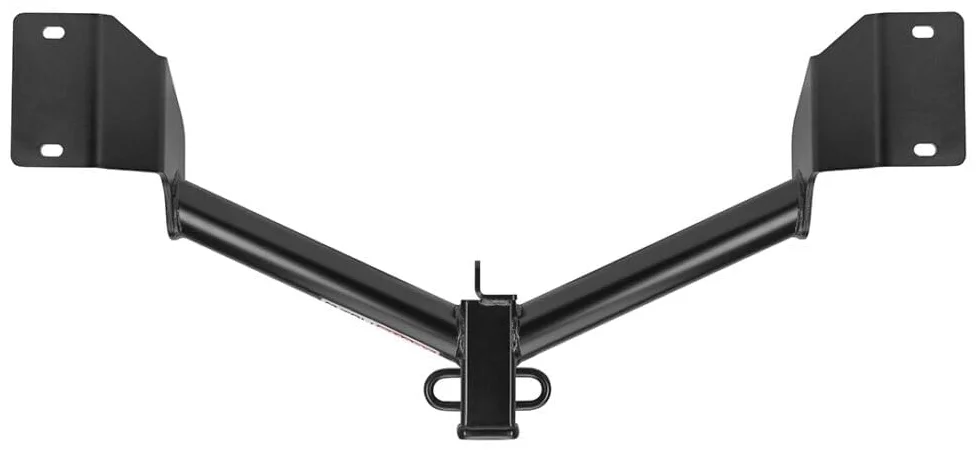
The difference is capacity. A Class 3 hitch is typically rated up to about 8,000 lb gross trailer weight (GTW) and 800 lb tongue weight (TW). A Class 4 is typically rated up to about 10,000 lb GTW and 1,000 lb TW. Both usually have a 2 inch receiver, so the same ball mounts and bike racks fit either one.
A Class 4 hitch does not let your vehicle tow more than its own rating. The lowest rated component sets the limit: vehicle, hitch, ball mount, ball and coupler. Check the owner's manual and the label on the hitch itself.
Side by side
| Class 3 | Class 4 | |
|---|---|---|
| Typical max GTW (weight-carrying) | up to about 8,000 lb | up to about 10,000 lb |
| Typical max TW (weight-carrying) | up to about 800 lb | up to about 1,000 lb |
| Receiver | 2 inch | 2 inch (some heavy-duty versions use 2-1/2 inch) |
| Typical vehicles | SUVs, minivans, half-ton pickups | Full-size SUVs and pickups |
| Weight distribution rating | Often listed higher than weight-carrying | Often listed higher than weight-carrying |
These are typical SAE J684 style class ranges. Real hitches are often rated below the class ceiling for a given vehicle, and many list separate weight-carrying and weight-distributing numbers. Full class ranges are in trailer hitch classes.
Worked example: which one for a 6,500 lb trailer
- Tongue weight: 6,500 x 0.10 = 650 lb. 6,500 x 0.15 = 975 lb.
- Class 3 check: 6,500 lb is under about 8,000 lb, but TW can exceed 800 lb once tongue weight passes about 12.3% (800 / 6,500). It works only if your measured TW stays under the label rating, or the hitch's weight-distributing rating covers it.
- Class 4 check: 6,500 lb and up to 975 lb TW both fit under about 10,000 / 1,000.
- Vehicle check: tow rating at least 6,500 lb and payload enough for up to 975 lb on the ball plus people and cargo.
Result: if your vehicle is rated for it and a Class 4 hitch is made for it, Class 4 gives more margin. If only a Class 3 is offered for your vehicle, its rating is usually tied to what the vehicle can handle anyway. Learn to measure TW in how to calculate tongue weight.
How to choose
- Start with the vehicle. Many crossovers and midsize SUVs only have Class 3 options because the frame and rating do not support more.
- Look at the heaviest trailer you will tow. Under about 5,000 lb with modest tongue weight, Class 3 is typically plenty. In the 7,000 to 10,000 lb range, Class 4 or a Class 3 with a higher WD rating is the usual answer.
- Think about weight distribution. Many hitches list a higher rating with WD. See do I need a weight distribution hitch.
- Accessories fit both. Bike racks and cargo carriers built for a 2 inch receiver work on either class, as long as the rack's tongue weight fits the hitch.
How they differ in construction
From the outside, Class 3 and Class 4 hitches can look nearly identical, since both usually have a 2 inch receiver opening and a cross tube that bolts to the frame. The differences are in the parts you cannot easily see:
- Tube and receiver wall thickness: Class 4 hitches typically use heavier steel, so the receiver and cross tube resist bending under higher loads.
- Mounting brackets and hardware: heavier hitches often use larger bolts, more attachment points or longer side plates to spread load across the frame.
- Vehicle fit: Class 4 hitches are mostly made for full-size trucks and SUVs whose frames can carry the load. A smaller vehicle may only have a Class 3 option because that is what its frame supports.
- Weight: a heavier hitch weighs more, which adds a little to rear axle load and payload use.
Installation is similar for both on most vehicles: the hitch bolts into existing frame holes or uses supplied fish-wire hardware, then each bolt is torqued to spec. Some installs need a fascia trim or an exhaust hanger adjustment, which the instructions will show. After the hitch is on, you still need a ball mount, ball, pin and clip, and wiring, all rated for your trailer. If you plan to use a weight distribution system, confirm the hitch lists a weight distributing rating and that the shank you choose matches its receiver size.
Common mistakes
- Assuming Class 4 raises tow capacity. It does not. The vehicle rating still applies.
- Pairing a Class 4 hitch with a light ball mount or ball. A 5,000 lb ball mount makes it a 5,000 lb setup. See hitch balls and ball mounts.
- Reading the class, not the label. The rating stamped on the hitch is the number that counts.