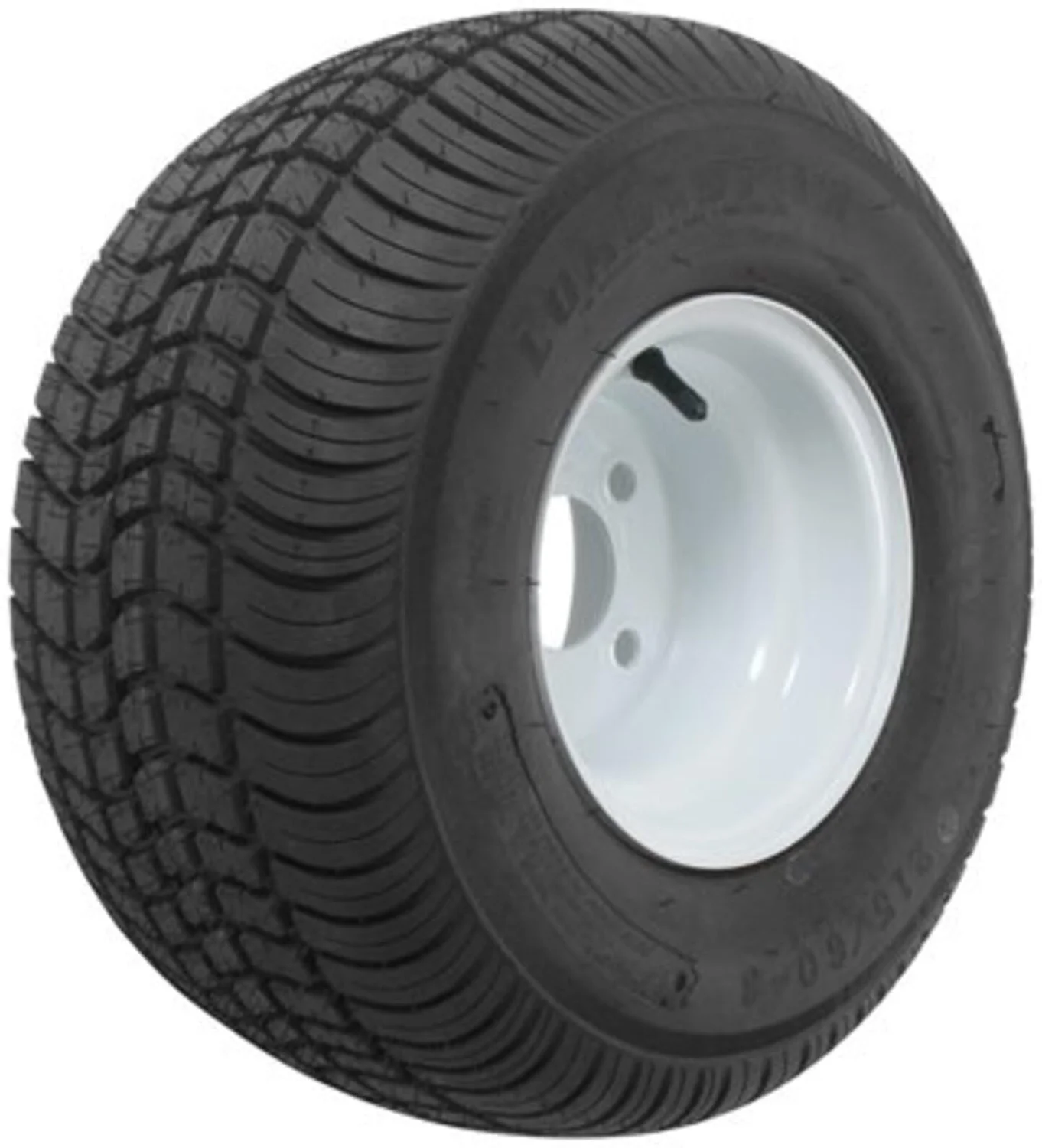
The safe answer is the speed rating on your tire's sidewall, and 65 mph if there is none. For decades, ST tires were designed around a 65 mph maximum. Many current ST radials now have a speed symbol after the load index, for example 117/112M, which raises that limit.
Speed is only half of it. Heat is what kills trailer tires, and heat comes from speed, load and low pressure together. A tire run fast, near its max load and a few psi low can fail well within its rating.
So the practical answer has three parts: stay at or under the speed symbol on the sidewall, keep the tires inflated to the pressure the load requires, and leave real load margin. The table and example below show how those fit together.
Speed symbols on trailer tires
| Speed symbol | Max speed | Where you see it |
|---|---|---|
| None | 65 mph (traditional ST guidance) | Older and many bias ST tires |
| J | 62 mph | Some small and bias trailer tires |
| L | 75 mph | Many ST radials |
| M | 81 mph | Many ST radials |
| N | 87 mph | Some premium ST radials |
The symbol sits right after the load index, as in ST225/75R15 117/112L. Read the actual tire; two tires of the same size can carry different speed ratings.
Speed, load and pressure work together
A tire's speed rating assumes it is properly inflated and within its load rating. Some manufacturers and industry guidance call for more pressure or less load when tires without a higher speed rating are run above 65 mph, and some ask for load reduction at higher speeds even on rated tires. The exact rules differ by manufacturer, so check the tire maker's published data for your tire.
Worked example, for illustration only: you run four ST225/75R15 load range D tires rated at about 2,540 lb each, and the tire maker's guidance calls for a 10 percent load reduction at your cruising speed.
- Derated capacity: 2,540 x 0.90 = about 2,286 lb per tire
- Four tires: 2,286 x 4 = about 9,144 lb
- Against a 7,000 lb GVWR: still about 30 percent margin
Now try the same speed with load range C tires at about 2,150 lb: 2,150 x 0.90 x 4 = about 7,740 lb, only about 11 percent over GVWR. Speed eats margin, which is one more reason to buy capacity beyond the minimum.
Keeping trailer tires cool at highway speed
Most trailer tire failures at speed are heat failures. A few habits keep temperatures down:
- Check cold pressure before every trip. Set it to the pressure the load requires, often the sidewall max on ST tires, with the tires cold. A tire 10 psi low flexes more and runs hotter.
- Weigh the trailer. A public scale shows axle weights. Campers often weigh more loaded than owners expect, which leaves less margin at speed.
- Use a tire pressure monitor. A TPMS on the trailer can warn of a slow leak or rising temperature before it becomes a blowout.
- Feel the hubs and tires at stops. One tire noticeably hotter than its partner can point to low pressure, a dragging brake or a bearing problem.
- Watch the date code. Many tire makers suggest inspecting or replacing trailer tires after a set number of years regardless of tread; follow your tire maker's guidance.
Slowing down a few mph is one of the simplest ways to cut heat, especially on hot days with a full load.
Speed limits for towing
Tire rating is not the only limit. Some states set lower speed limits for vehicles towing a trailer; California, for example, sets 55 mph for vehicles towing. Your tow vehicle's owner's manual and the trailer manufacturer may also recommend a maximum towing speed. Use the lowest of the tire rating, the posted towing limit and the manufacturer's guidance.
Some states also limit towing vehicles to certain lanes on multi-lane highways, and many trailer manufacturers print a recommended maximum speed in the owner's manual. If the trailer has older tires without a speed symbol, plan the trip around 65 mph or the posted towing limit, whichever is lower, or replace them with speed-rated ST radials before a long highway run.
Common mistakes
- Assuming any ST tire is good for highway speed. Check the speed symbol.
- Setting pressure warm. Check cold pressure before driving; it rises as tires heat.
- Running close to max load. Little margin plus high speed means more heat.
- Old tires. Aged rubber is more prone to failure at speed even with good tread. Check the DOT date code.
- Mixing speed ratings. The lowest-rated tire sets the limit for the whole trailer.