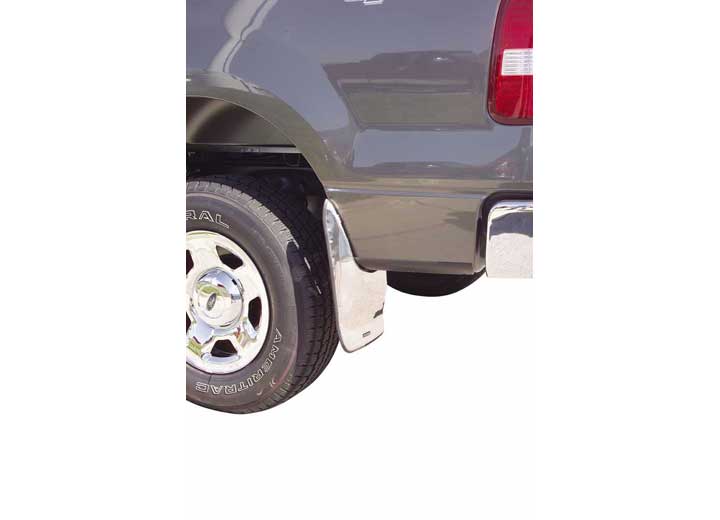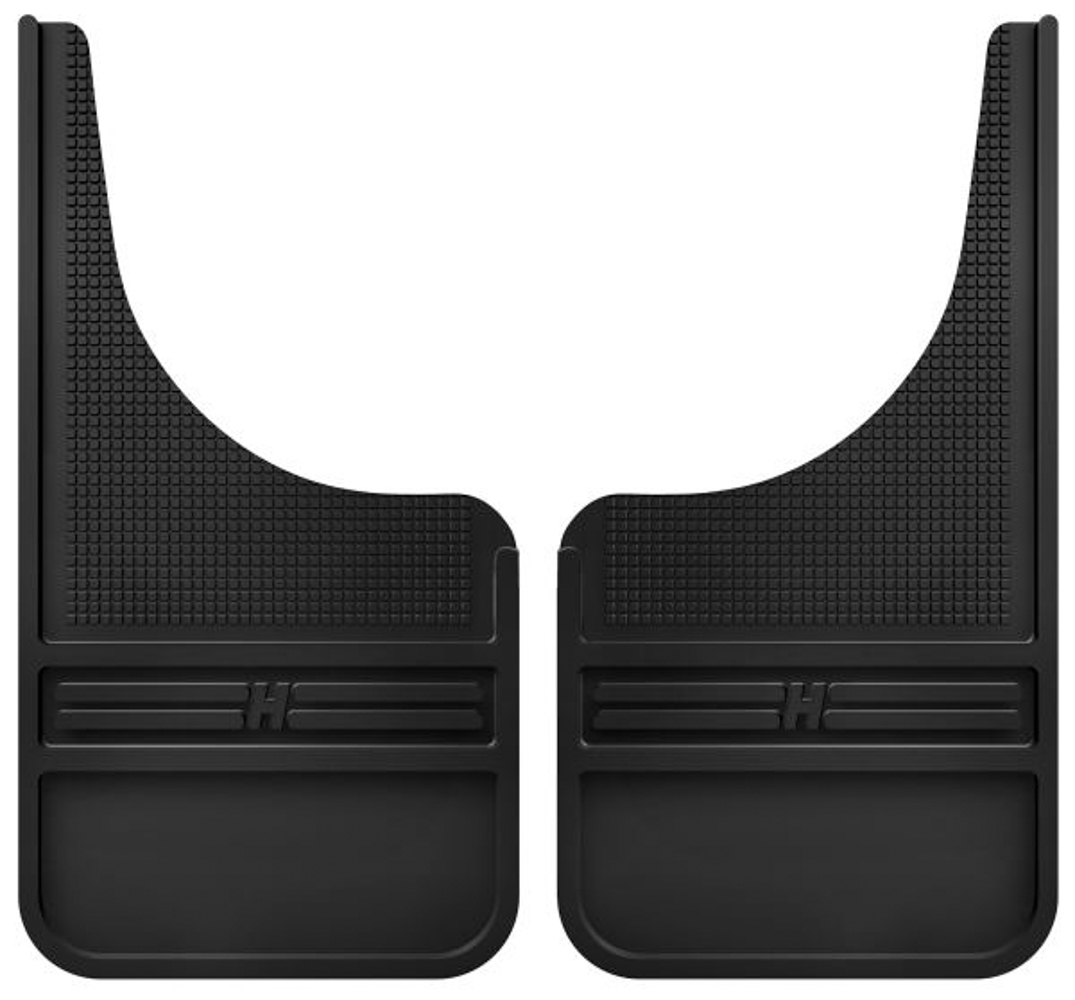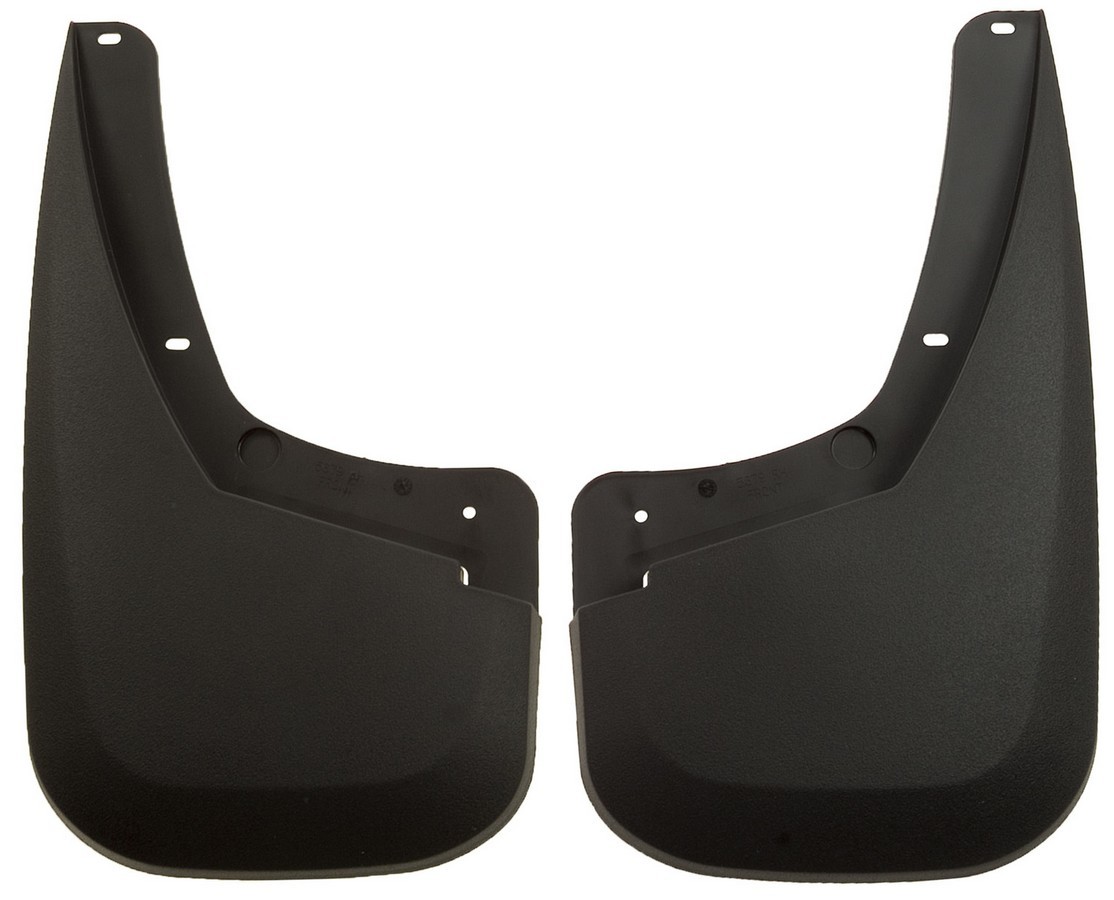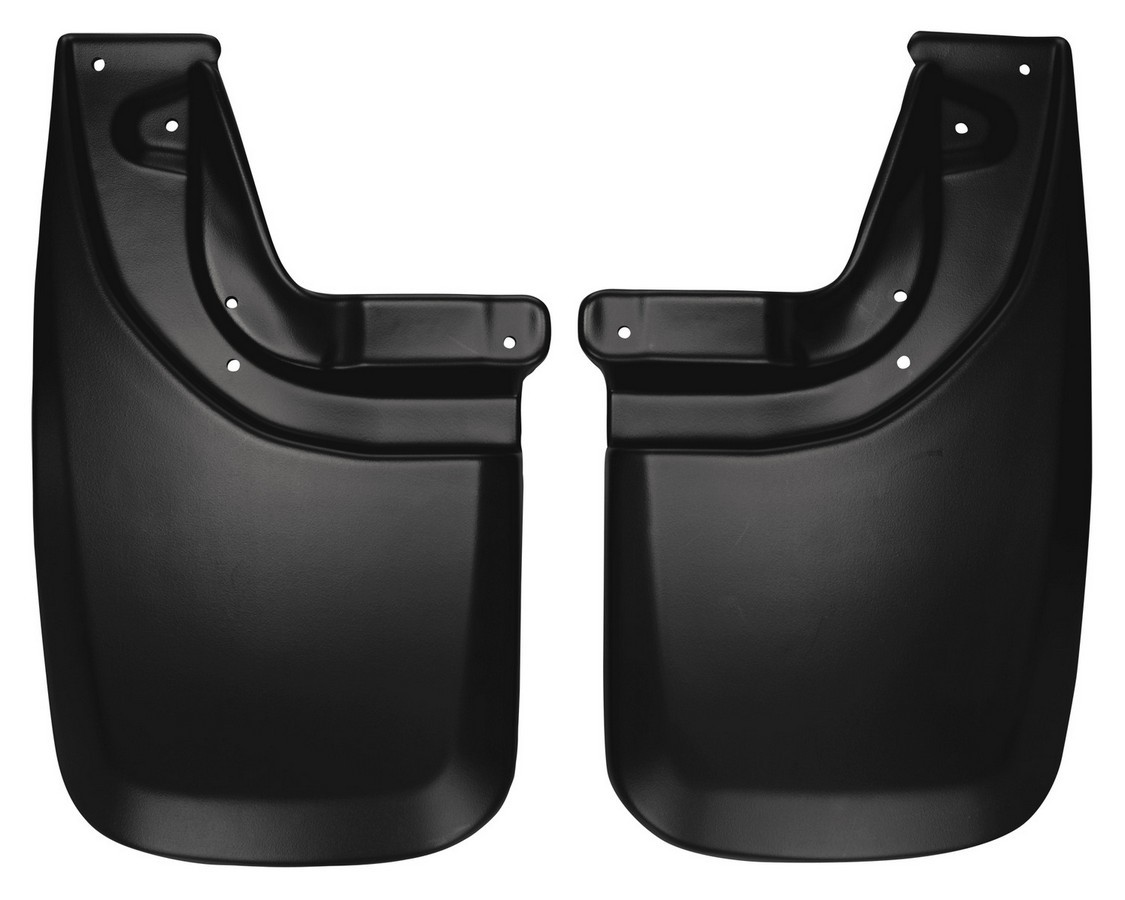
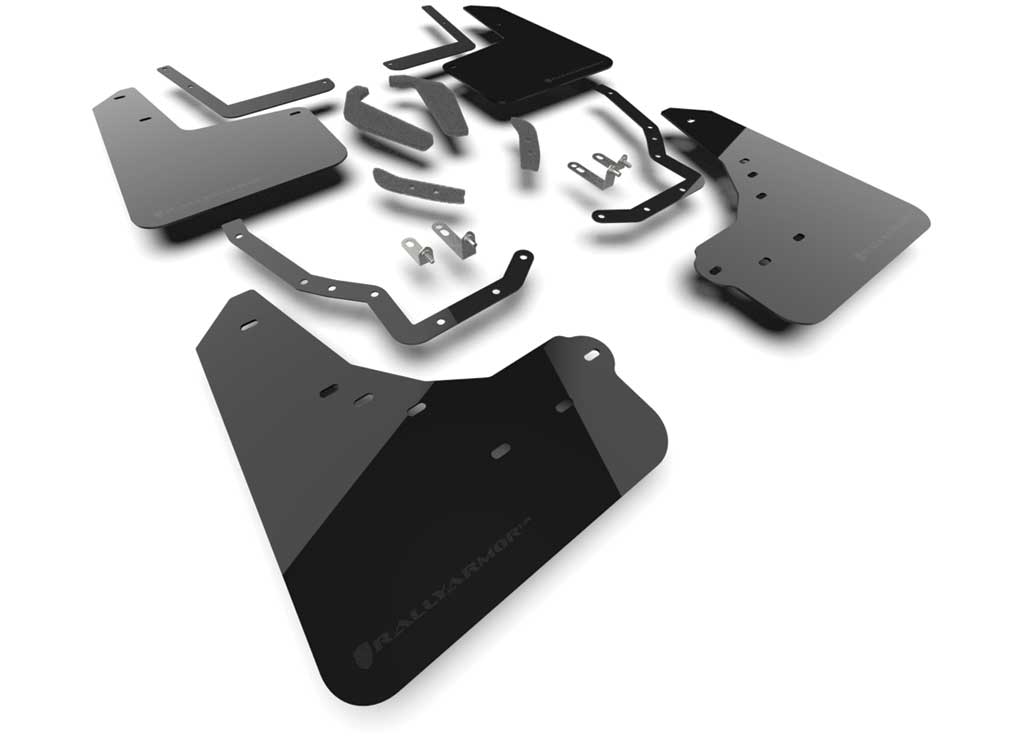
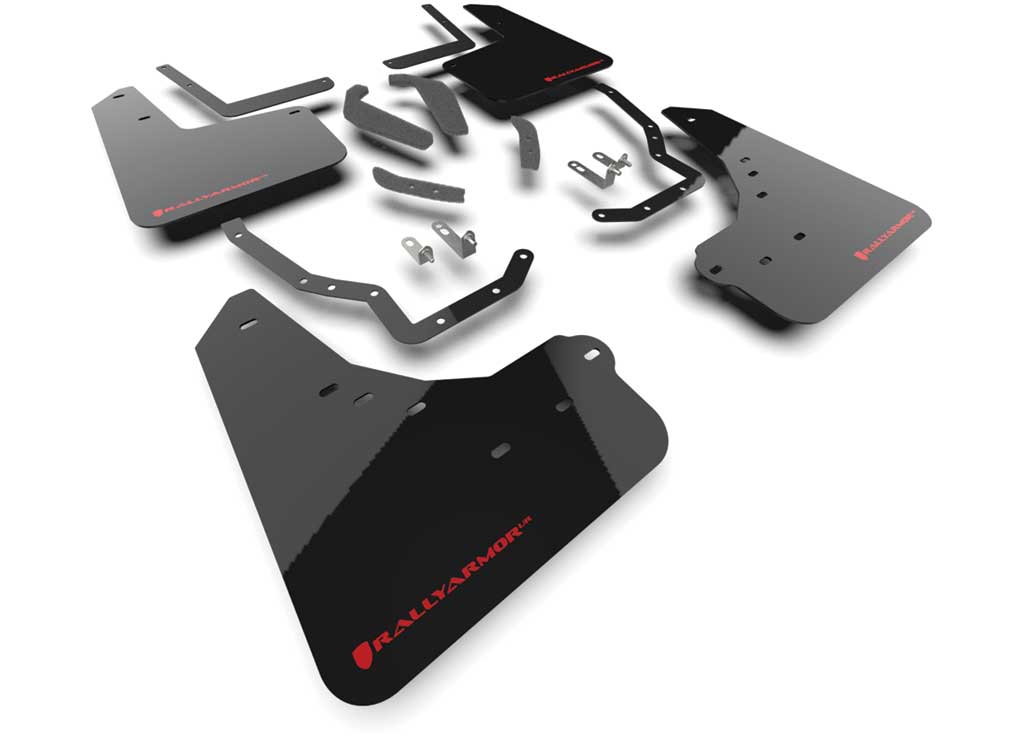
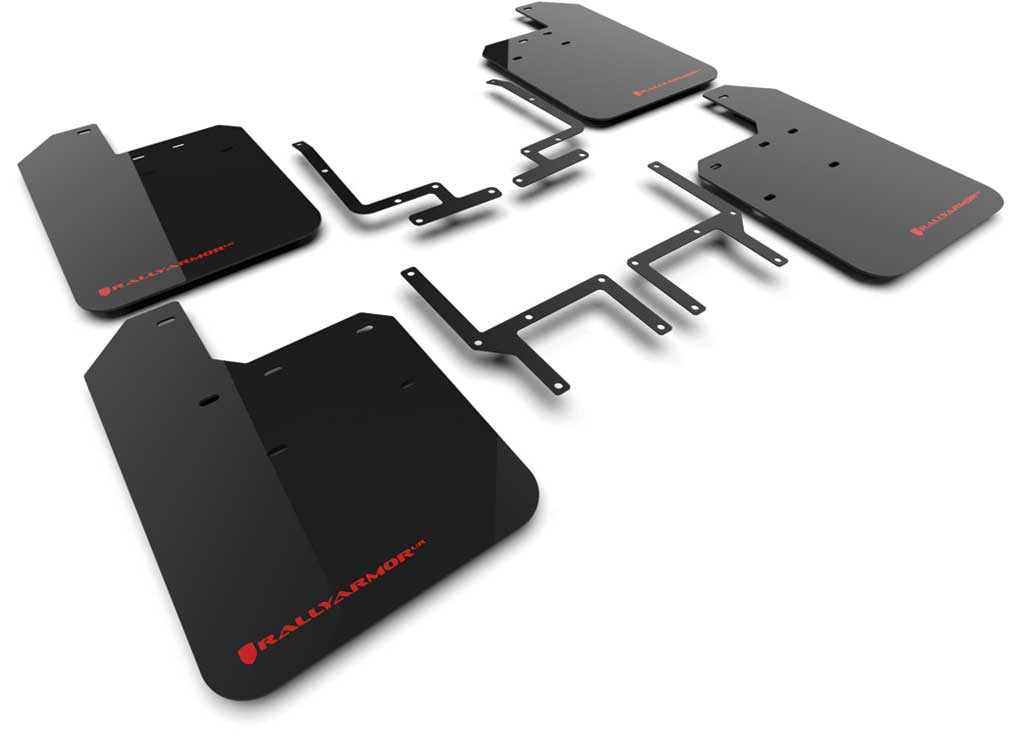
Mud flaps (also called mud guards or splash guards) hang behind the wheels and catch the water, mud, gravel and road salt your tires throw. They protect your own rocker panels, doors and bumpers from chips and corrosion, and they protect whoever is behind you, including your own trailer or the car you tow behind a motorhome. On lifted trucks with wider tires, they also cut down the spray that the stock fenders no longer cover.
We stock vehicle-specific flaps from Rally Armor, Husky Liners and Putco; heavy-duty truck and dually sets from GO Industries; universal and logo guards from Plasticolor, Dee Zee and Owens Products; hitch-mounted flaps from Access; and motorhome flaps from Ultraguard / Rock Solid. Here is how to choose between them.
Mud flap types compared
| Type | How it mounts | Best for | Trade-offs |
|---|---|---|---|
| Molded / custom fit | Shaped to the wheel well, often using factory holes | Cars, crossovers, SUVs and light trucks | Fits one vehicle; less coverage than big flat flaps |
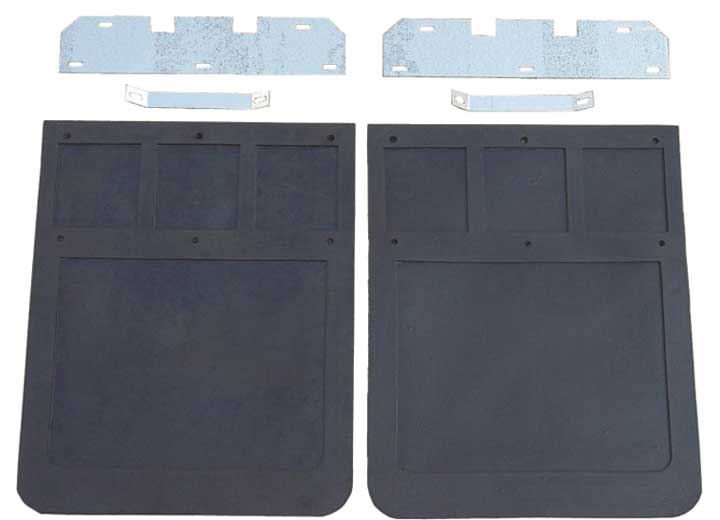
| Flat rubber, universal | Screws or brackets behind the wheel | Pickups and older vehicles, custom setups | May need drilling or brackets; trim to fit |
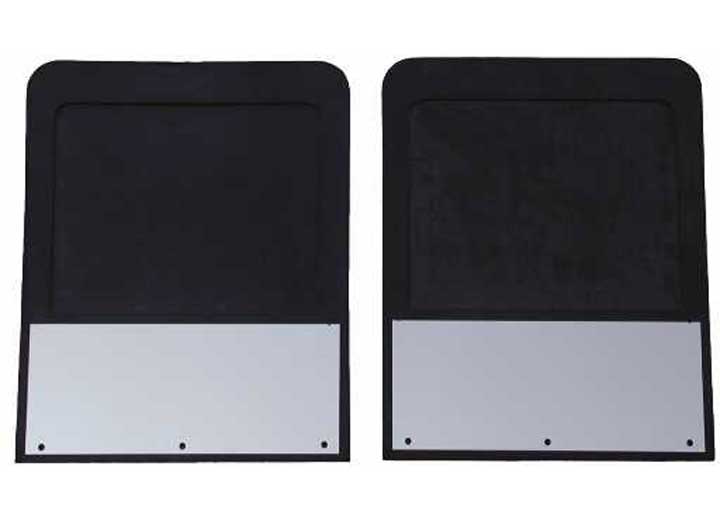
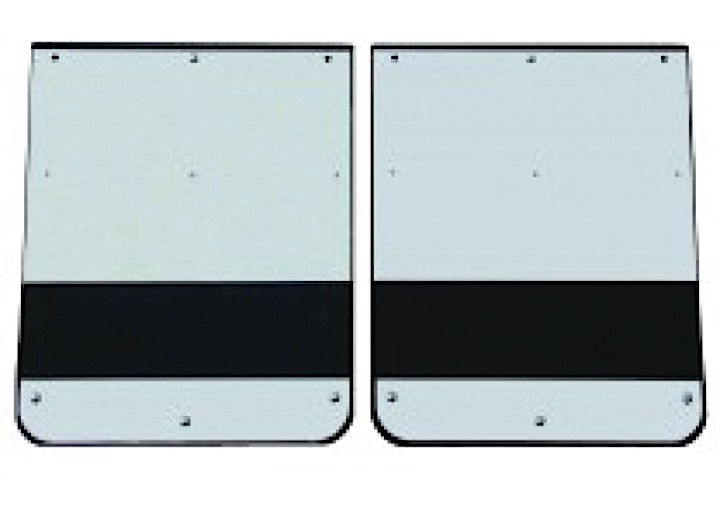
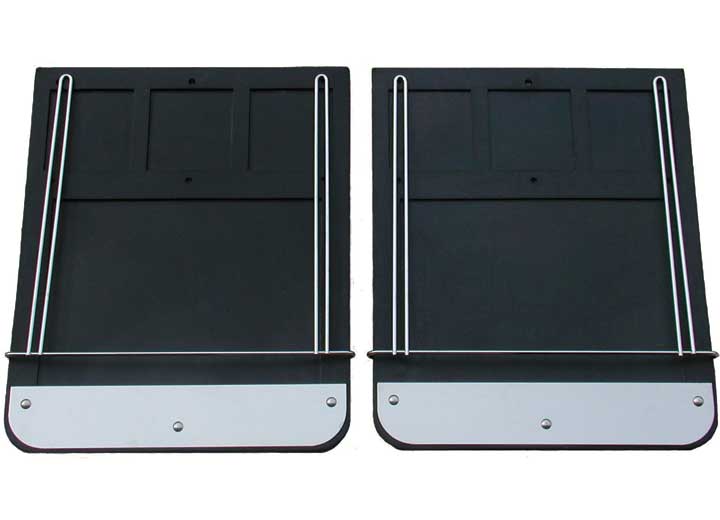
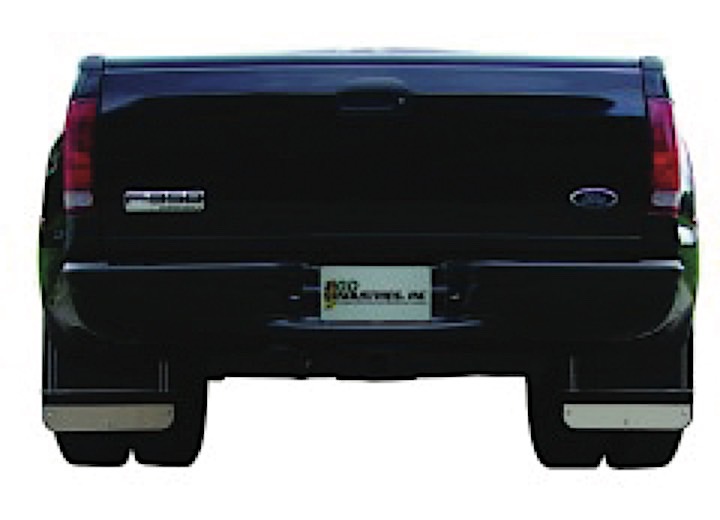
| Heavy-duty / dually sets | Steel or stainless brackets, often with weights and anti-sail | 3/4-ton, 1-ton and dually trucks, towing rigs | Heavier, more expensive |
| Hitch-mounted | Bar that slides into the receiver | Protecting a trailer or towed vehicle | Occupies the receiver unless it has a pass-through |
| Motorhome | Wide flap behind the rear axle | Class A motorhomes and buses pulling a toad | Large; mounting varies by chassis |
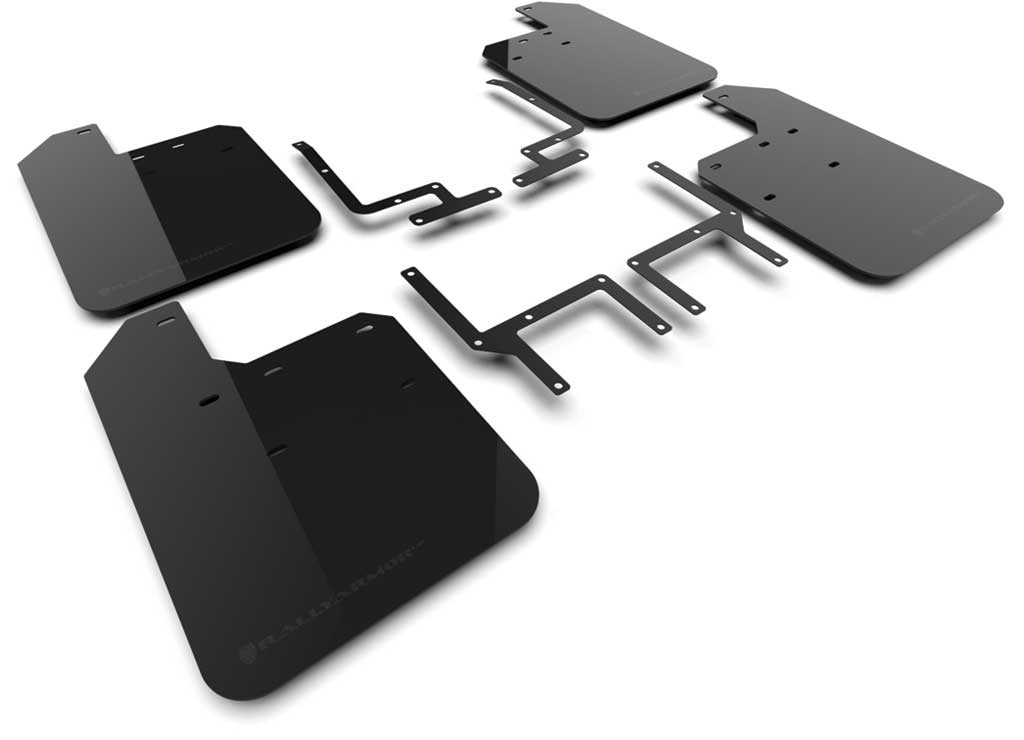
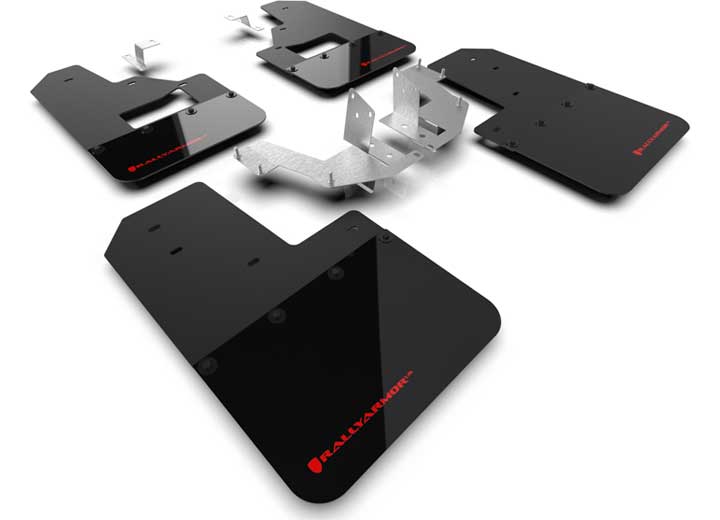
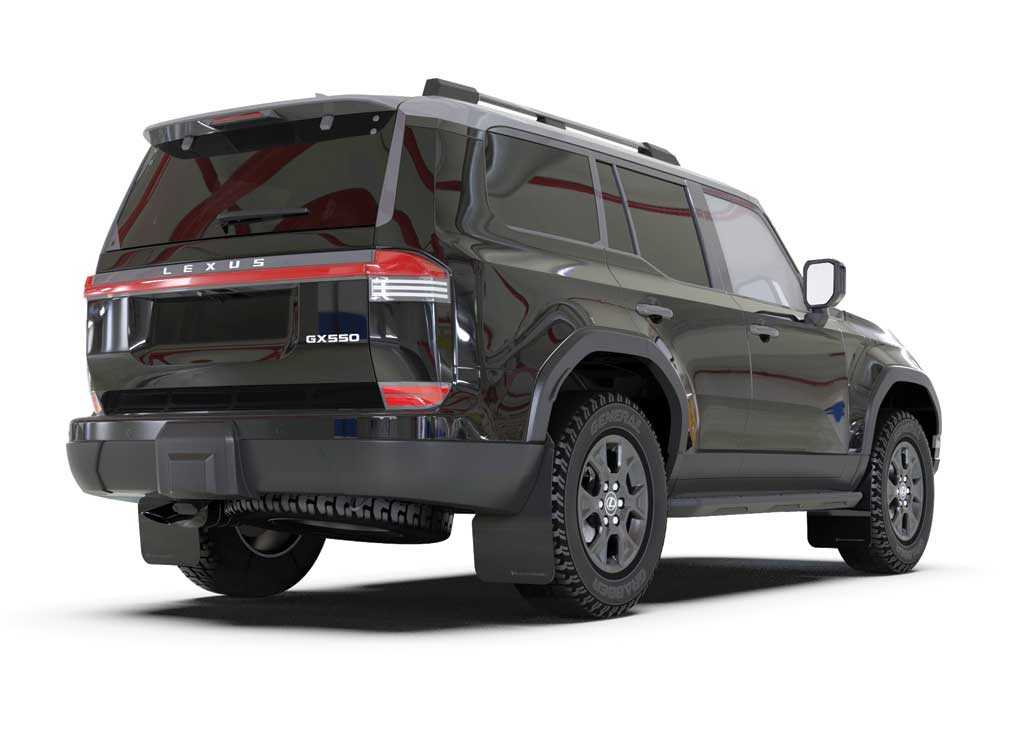
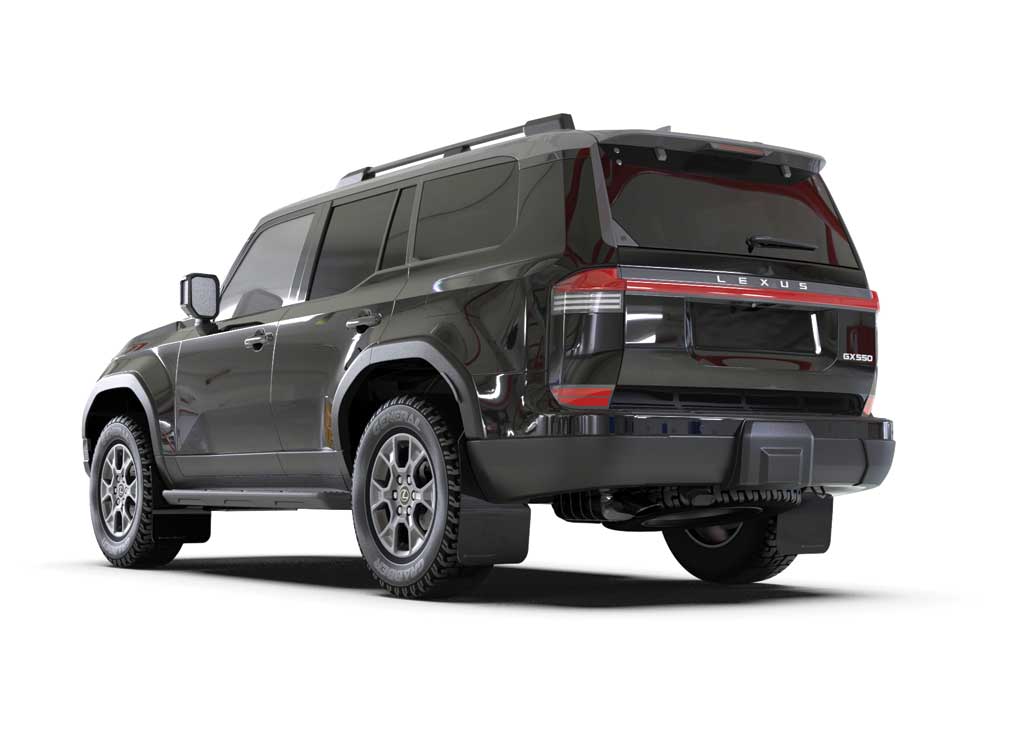
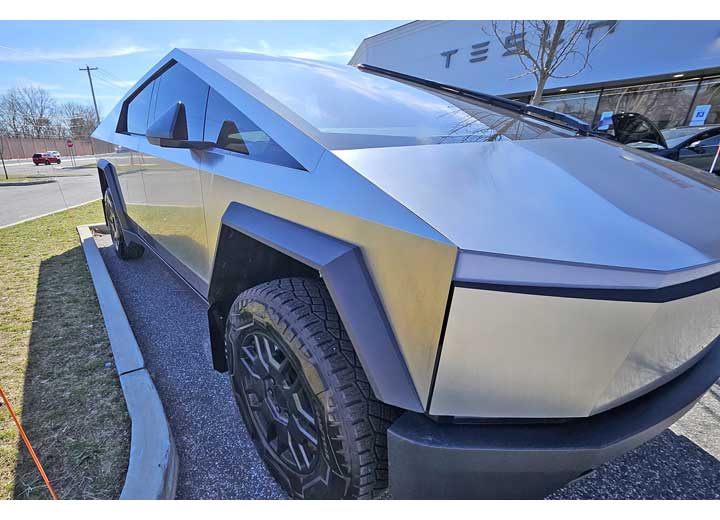
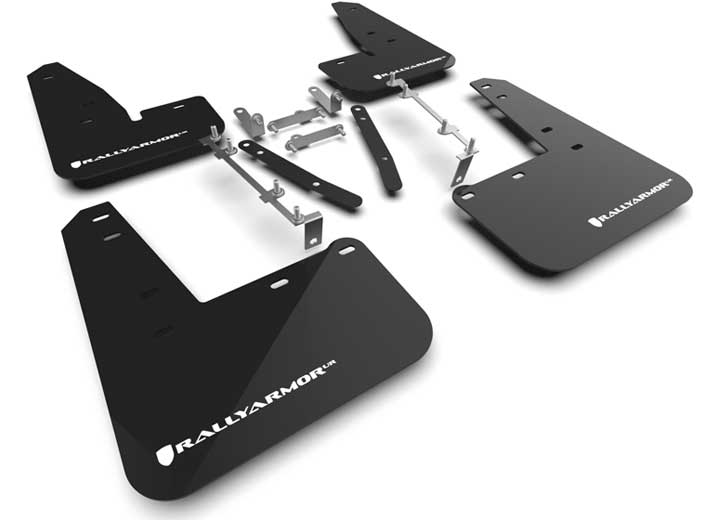
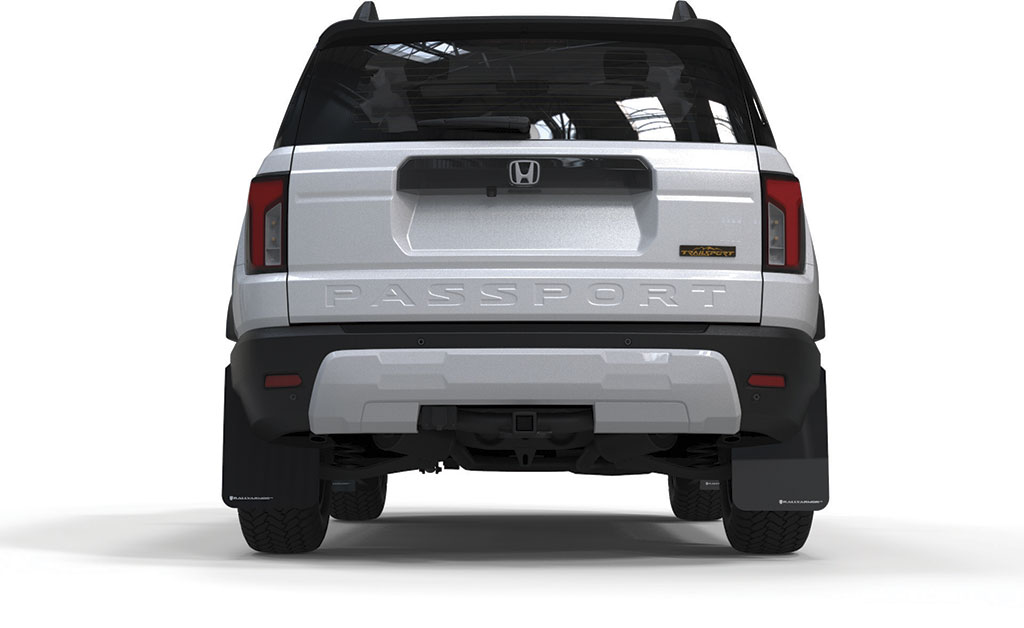
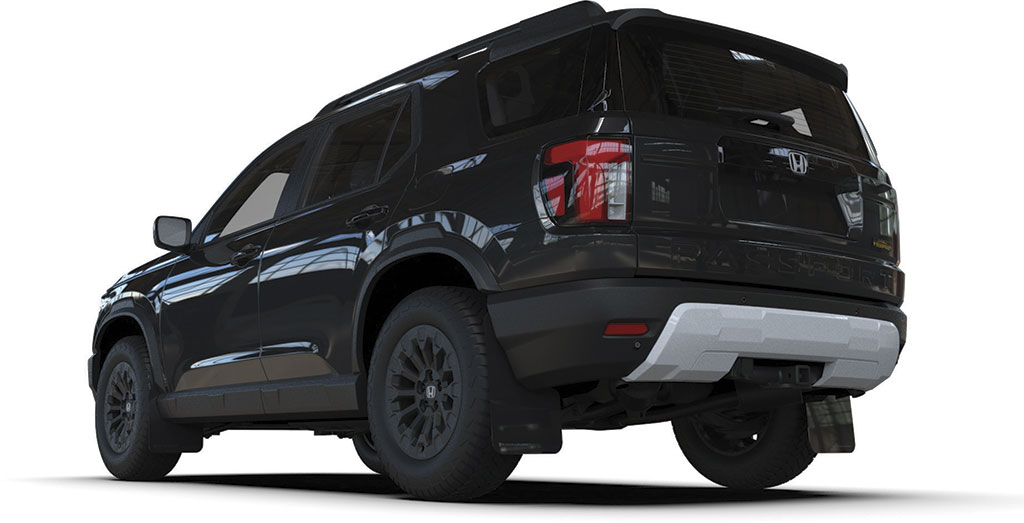
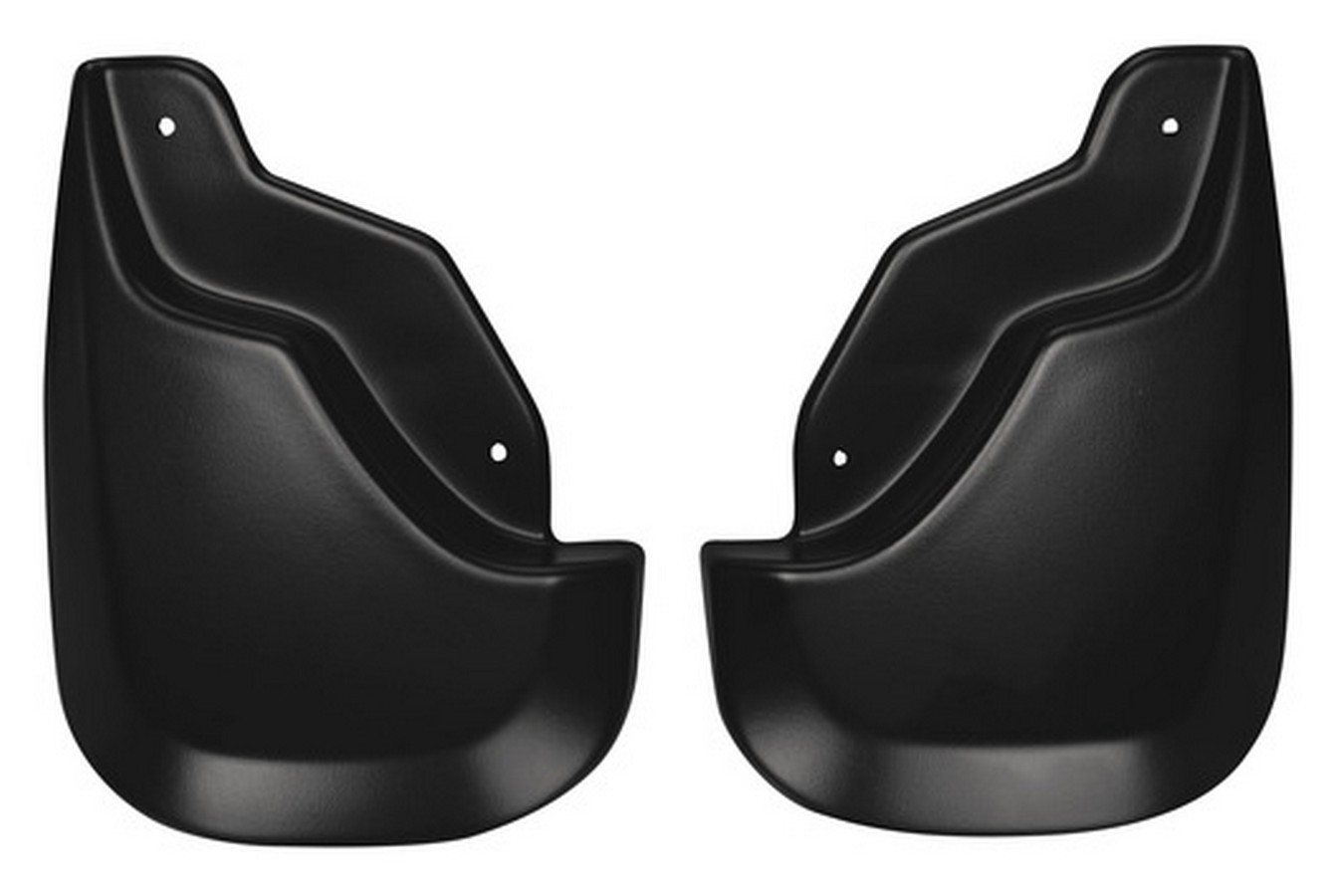
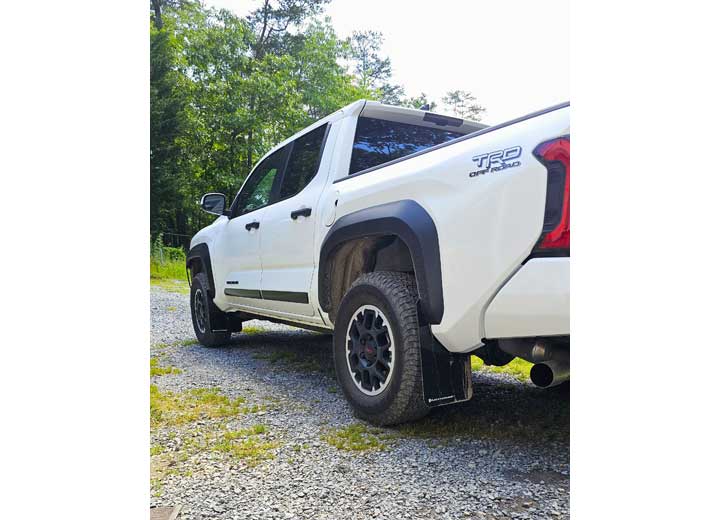
Molded flaps are the cleanest-looking choice on cars and SUVs. Rally Armor makes vehicle-specific sets for everything from the Subaru Crosstrek and Honda CR-V to the Toyota Tacoma, 4Runner, Wrangler Rubicon, Lexus GX 550 and Tesla Cybertruck, in a range of logo colors. Several are listed as no-drill installs. Husky Liners offers molded front and rear flaps for trucks like the Tacoma and GM full-size.
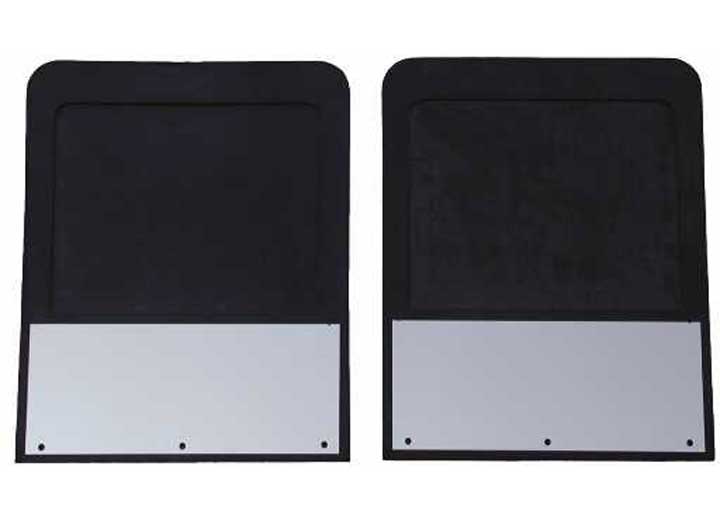
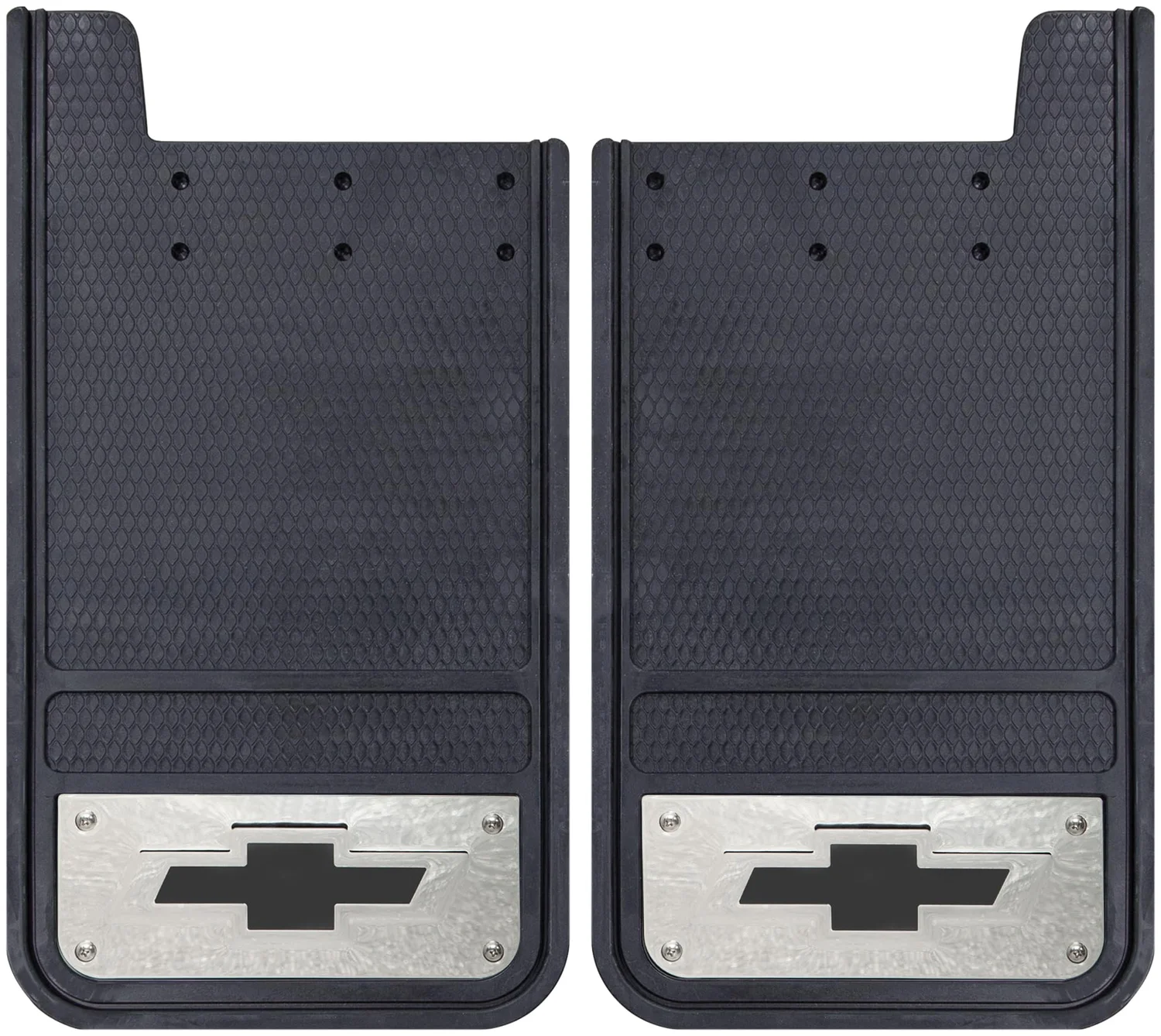
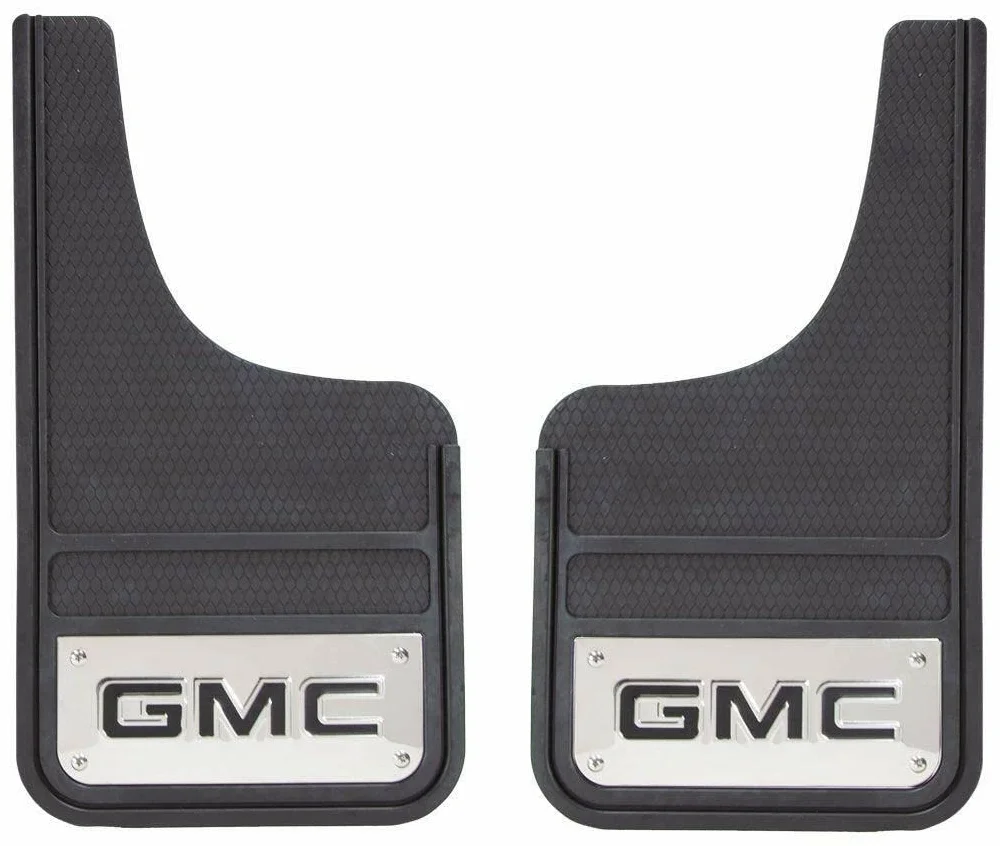
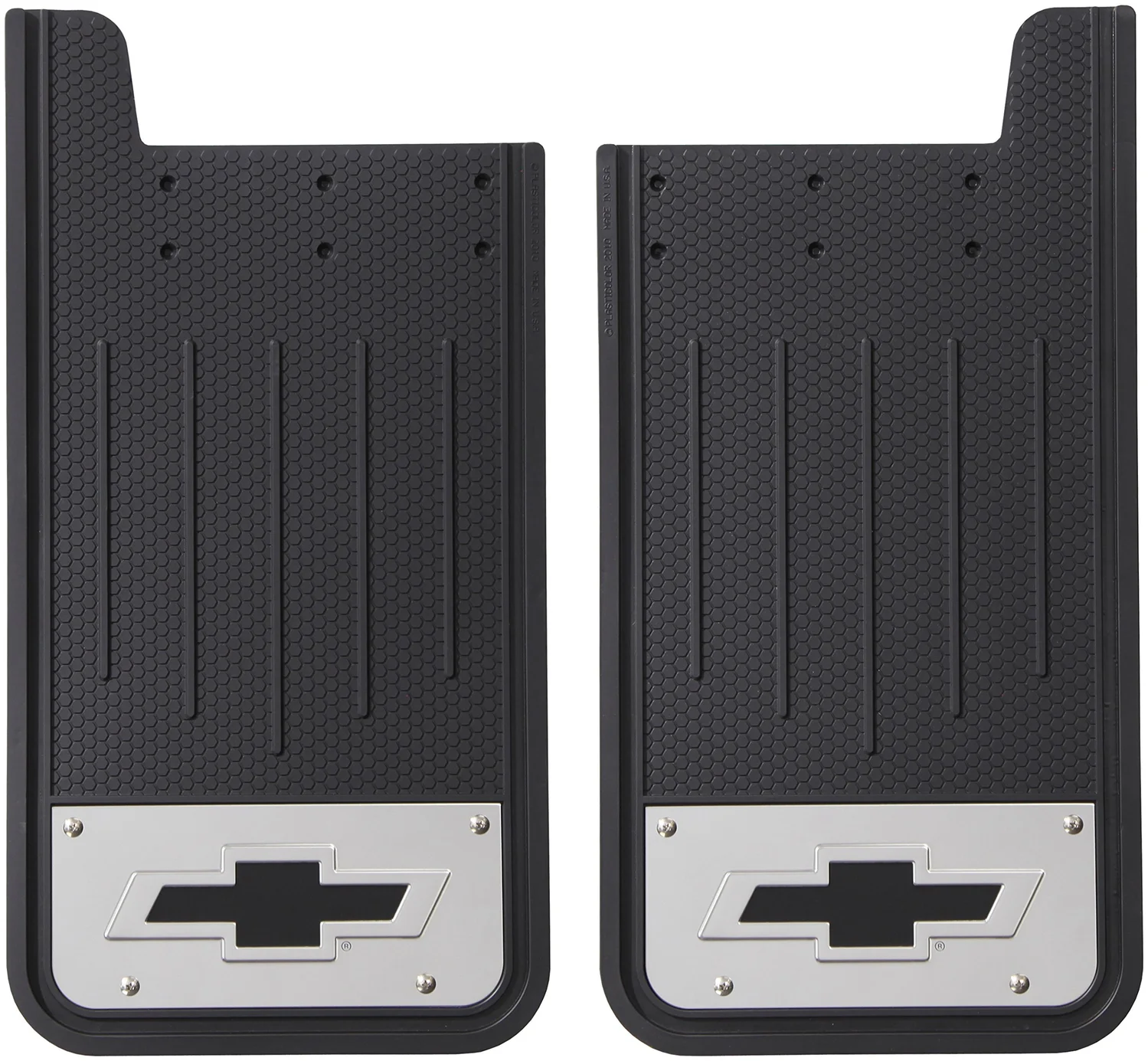
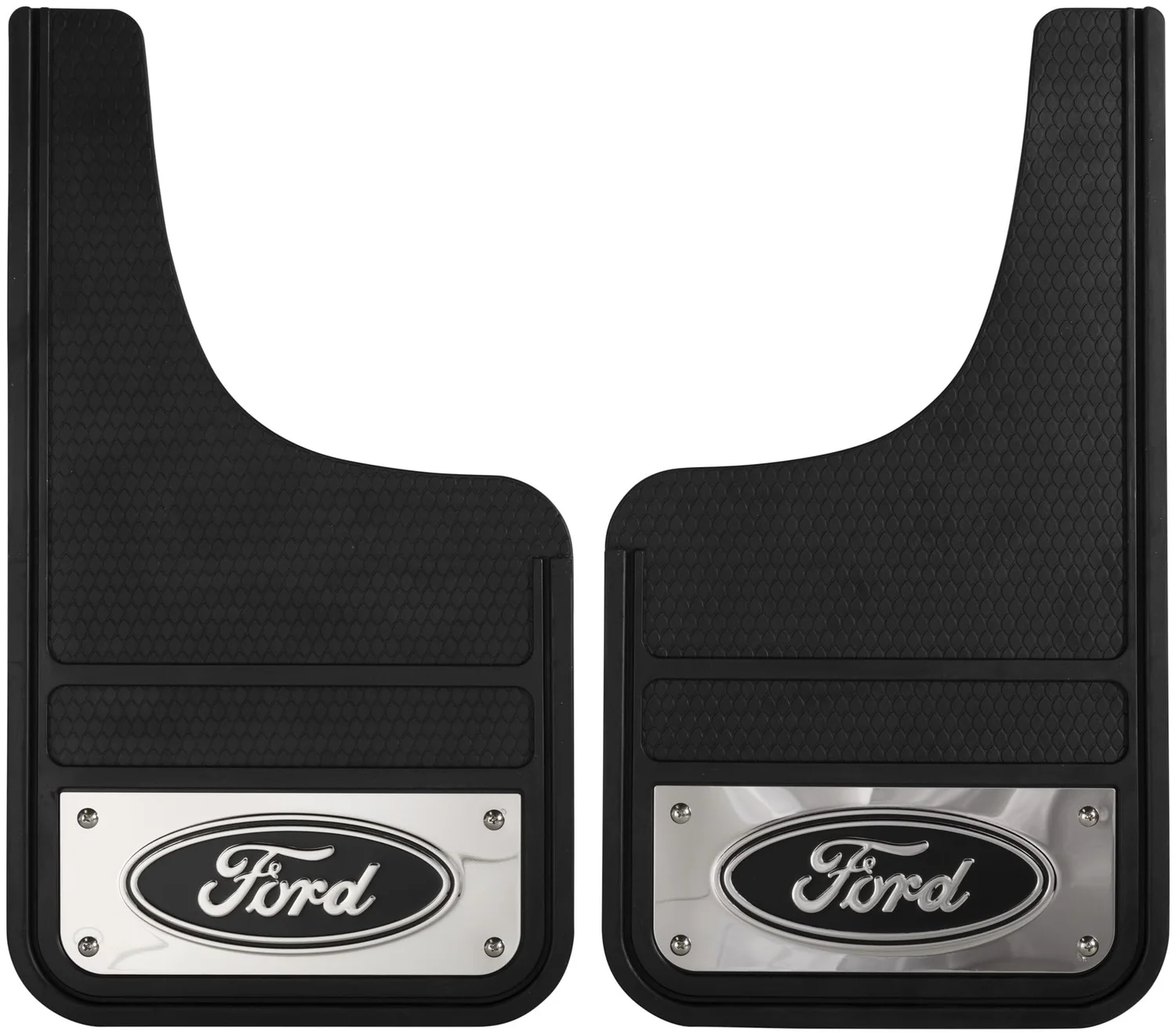
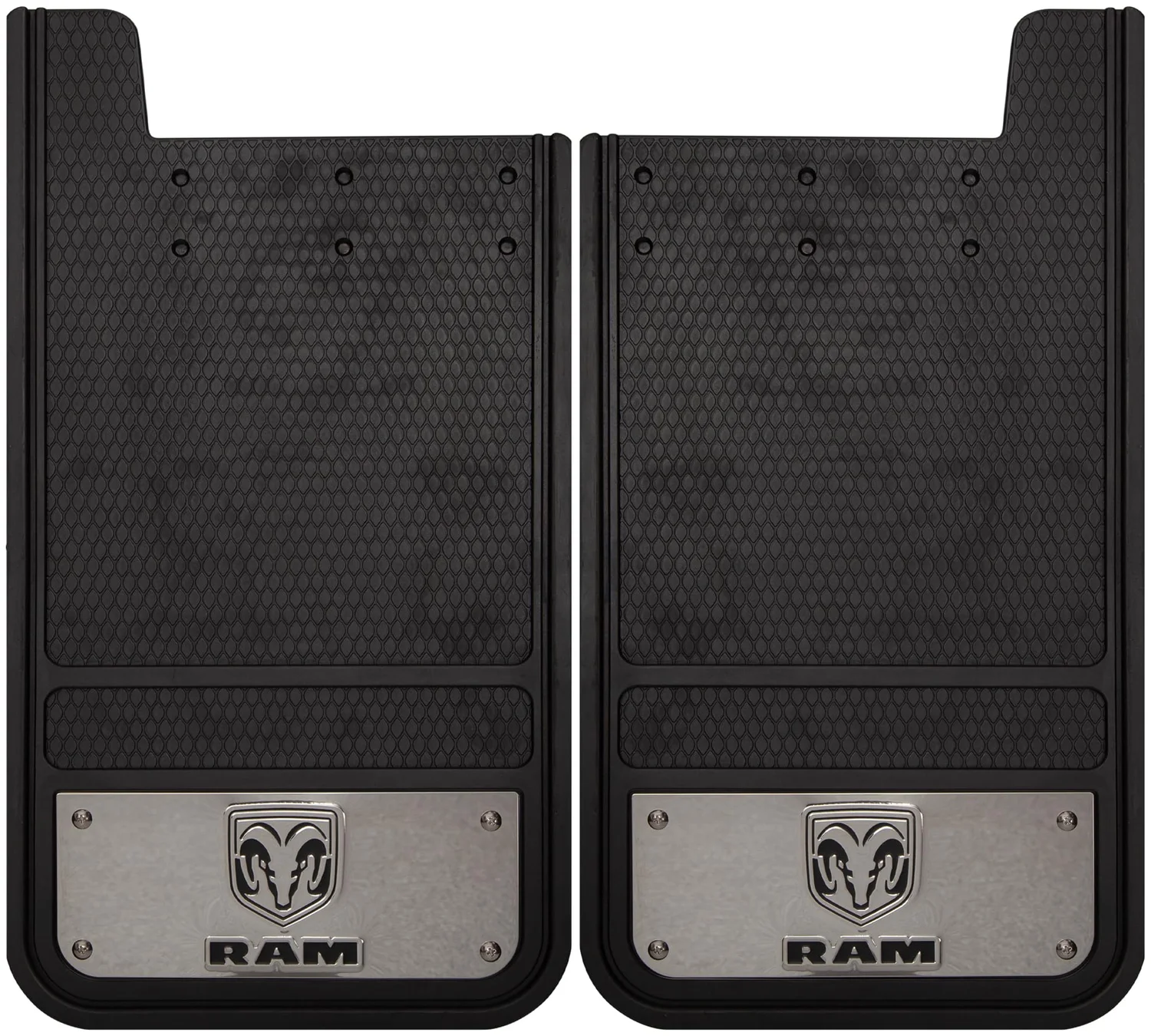
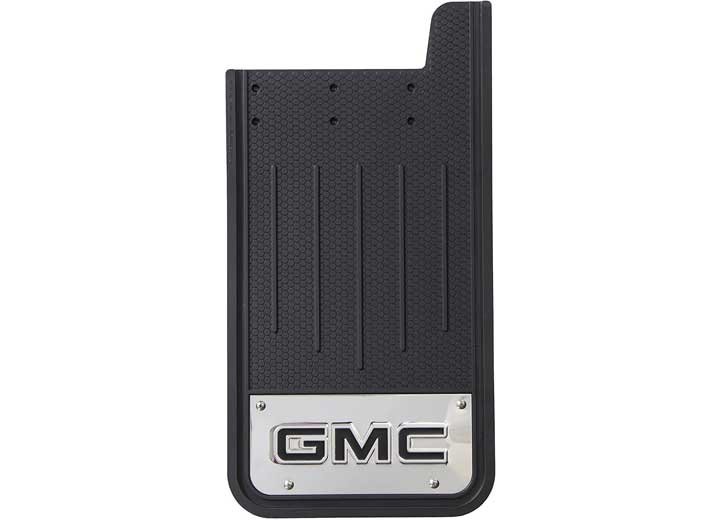
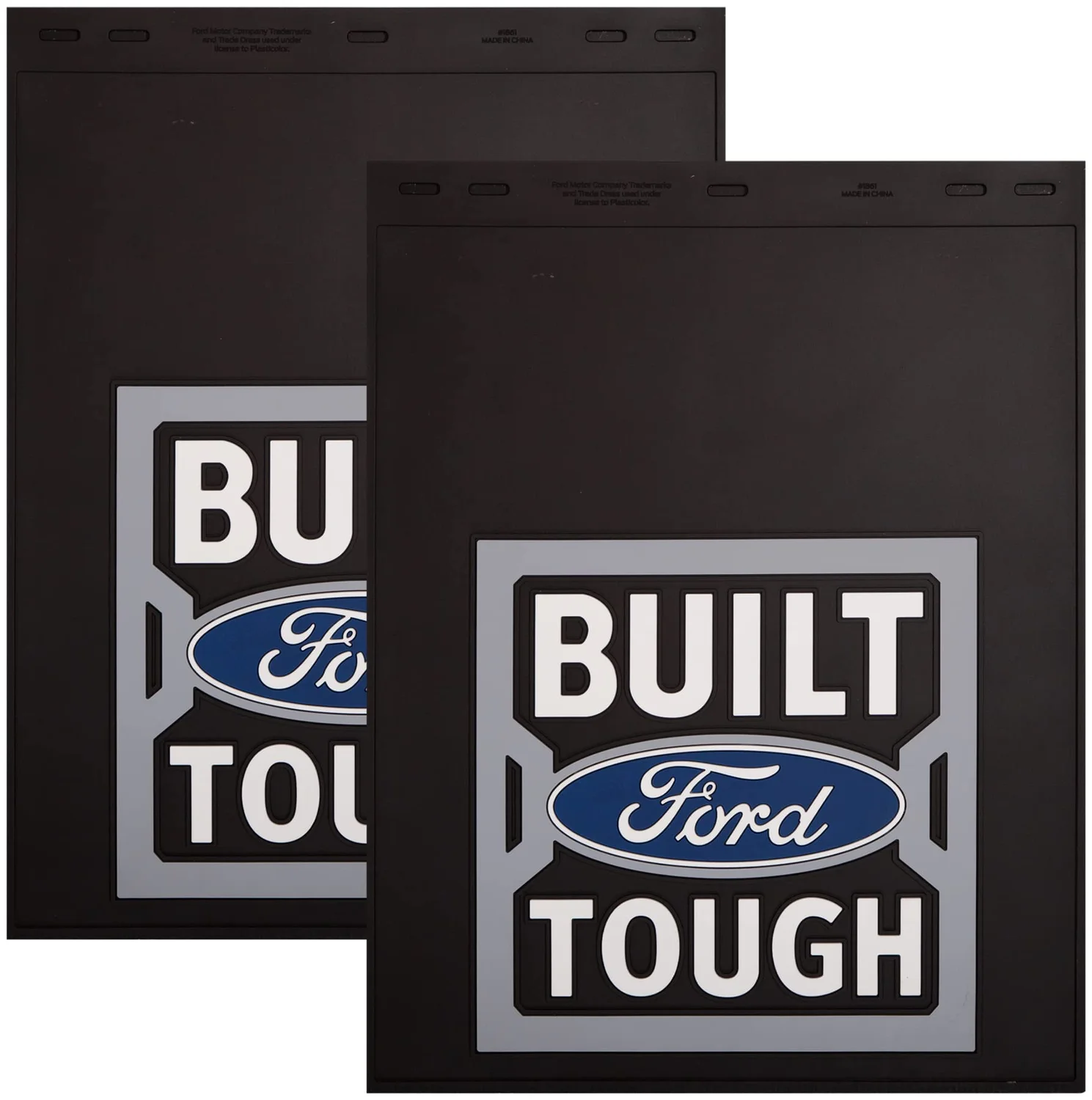
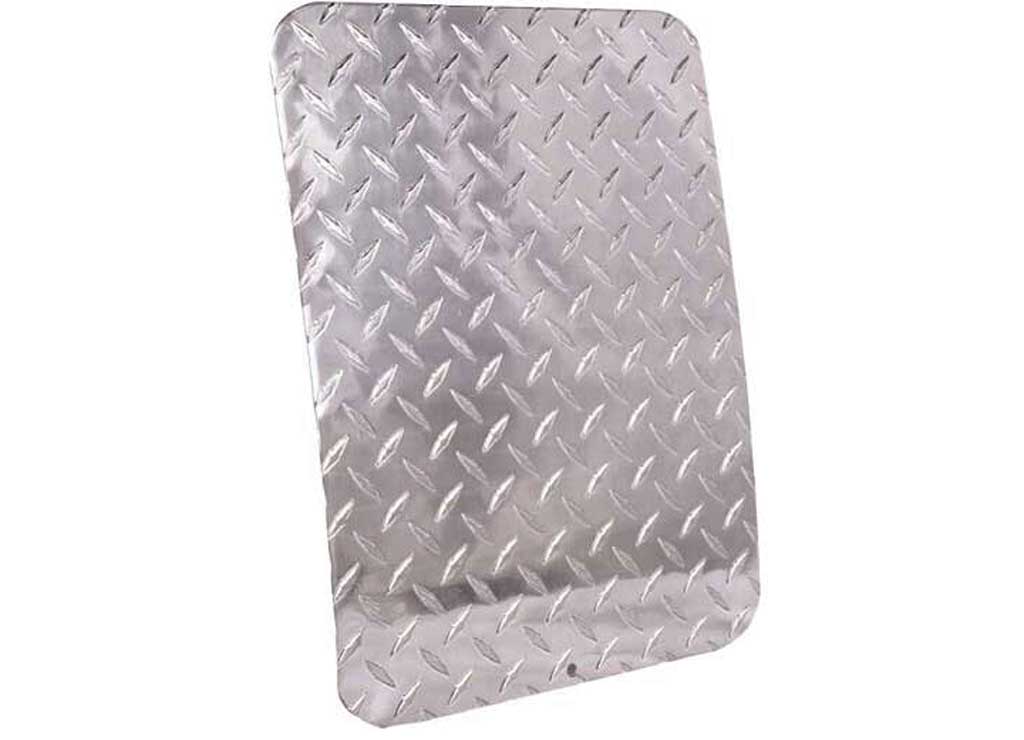
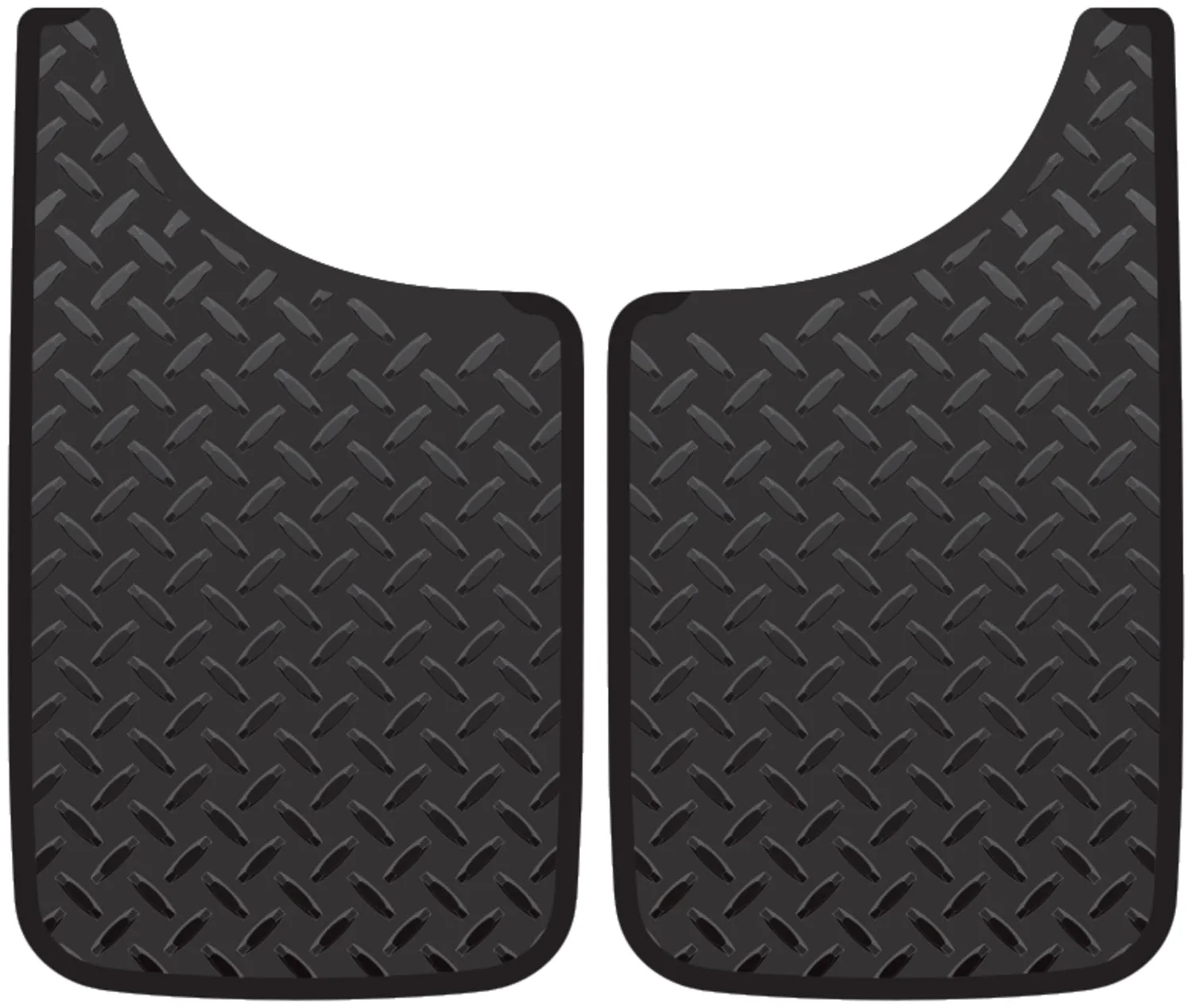
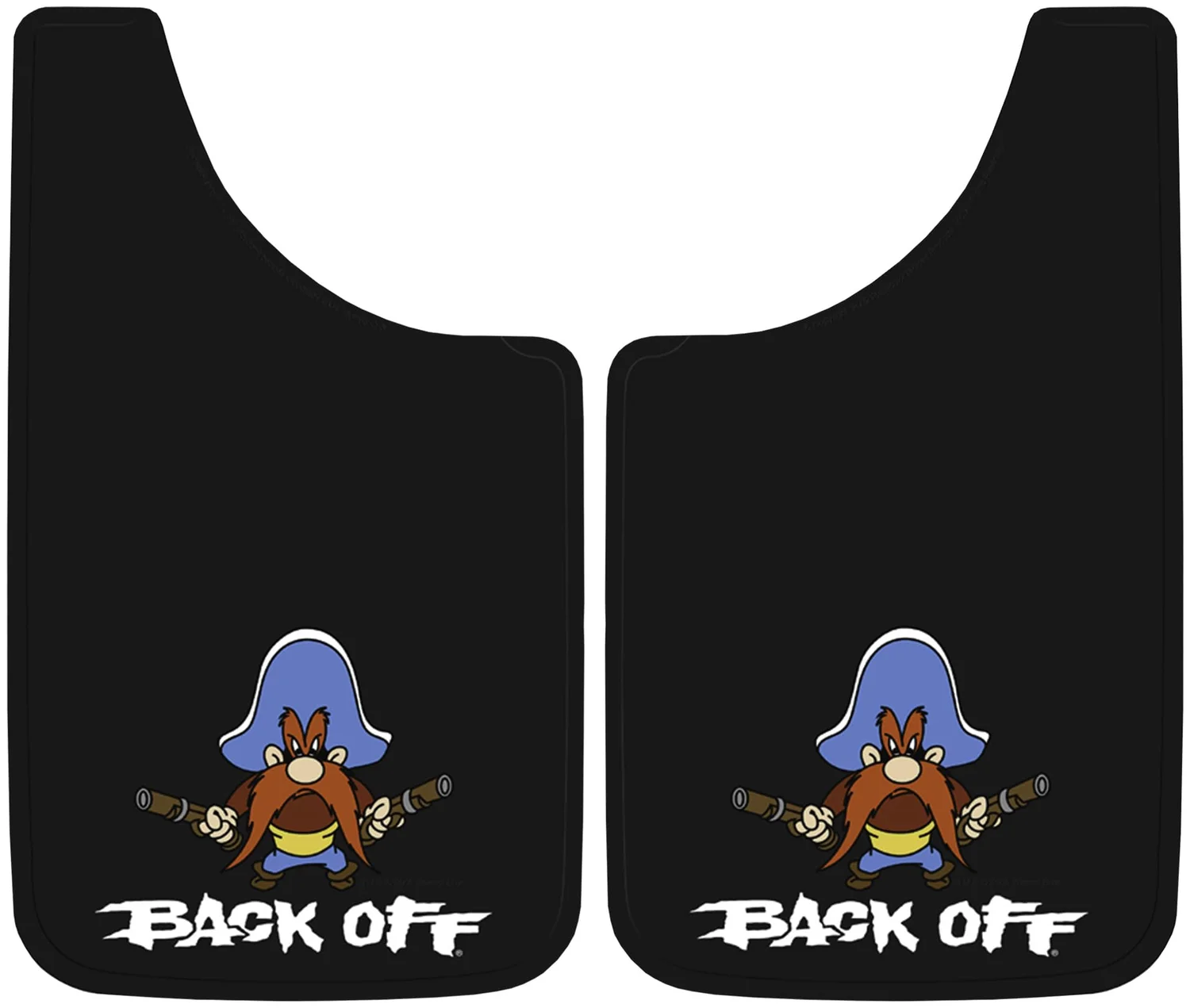
Flat rubber flaps come in common sizes such as 11 x 19, 12 x 16 and 12 x 23 inches. Plasticolor offers plain, diamond plate and logo designs for Ford, GMC, Chevrolet, Ram and Jeep, and Dee Zee sells plain black universal flaps, some notched to clear the tire radius.
Heavy-duty, dually and towing setups
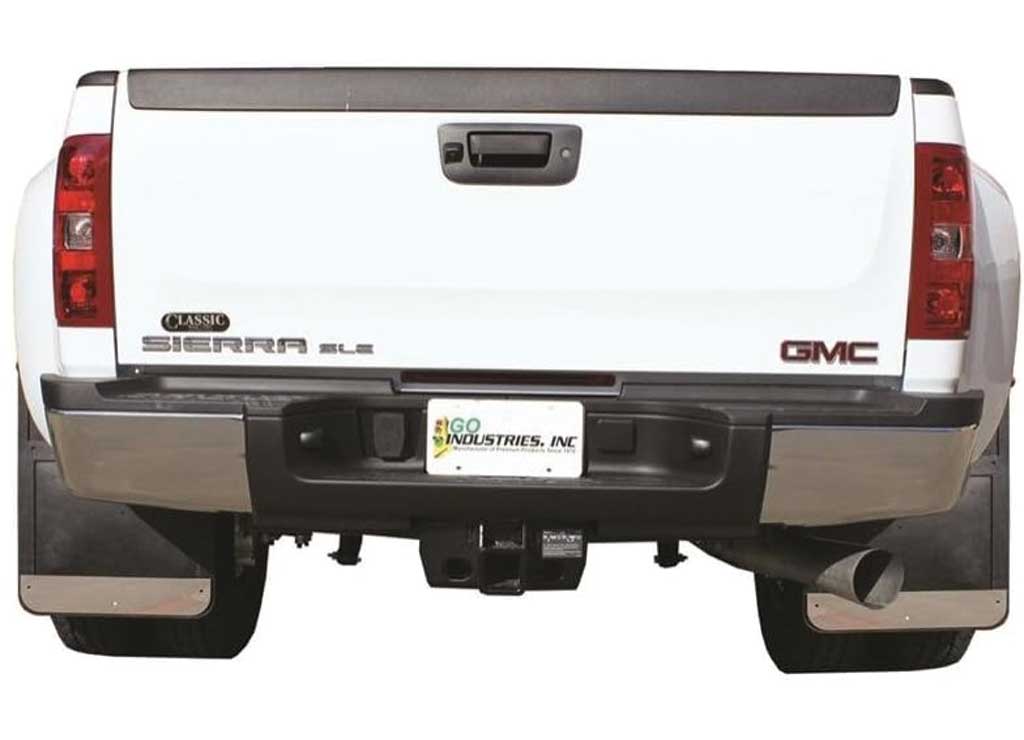
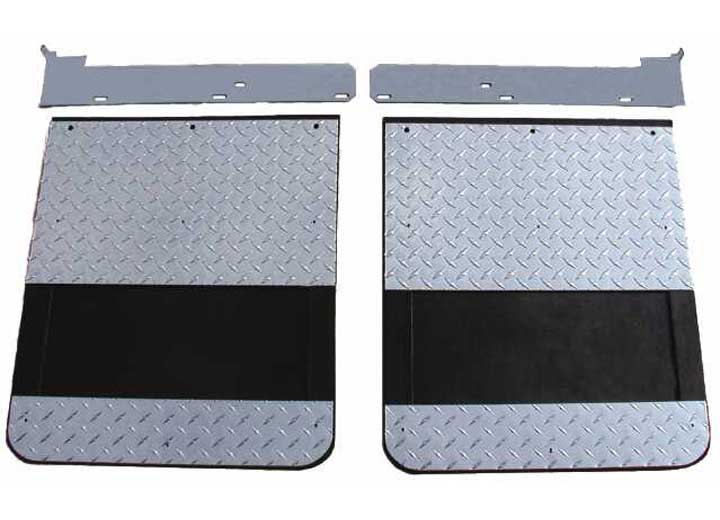
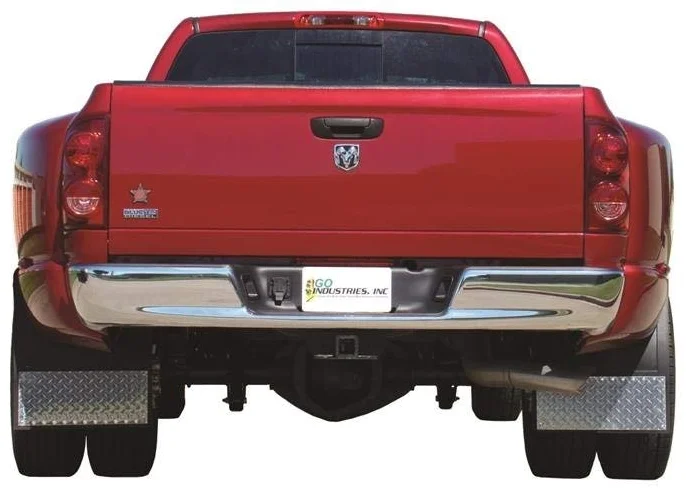
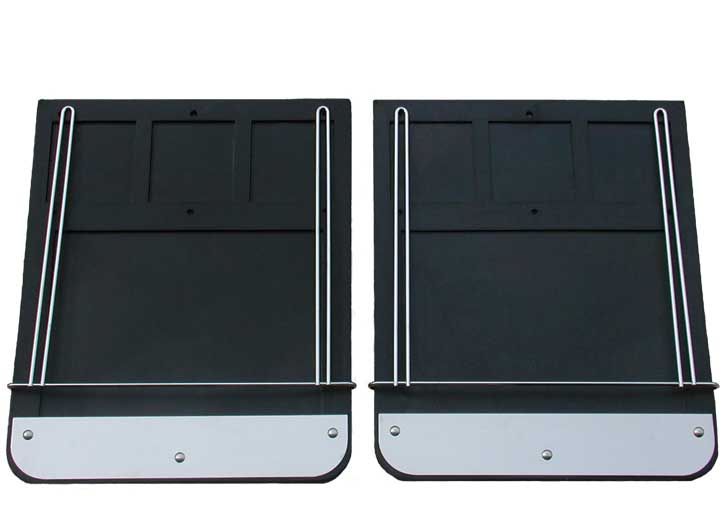
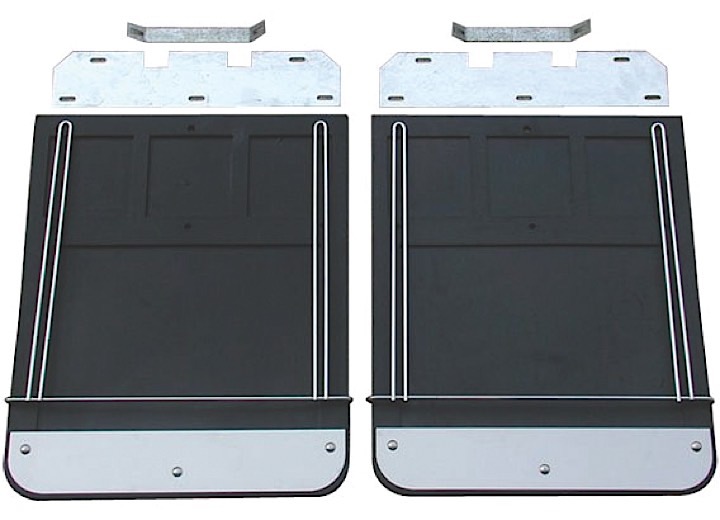
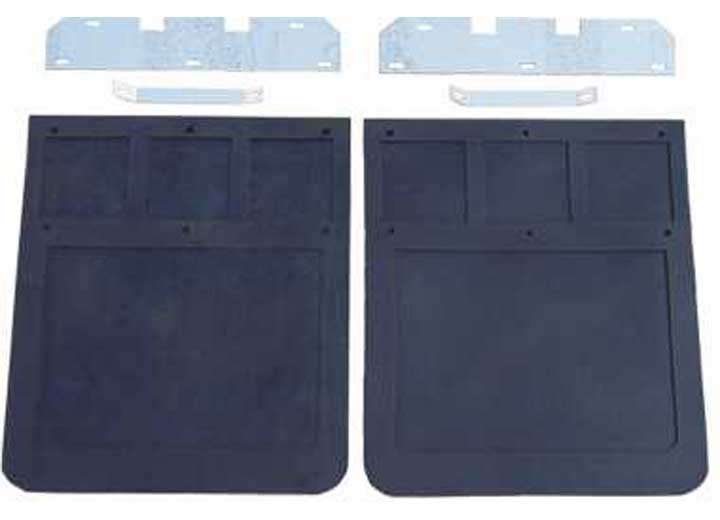
Big trucks throw a lot of water and rock, especially dual rear wheel pickups. GO Industries sets for Ford Super Duty, Ram 2500 and 3500, and GM HD trucks come as complete kits: flaps, brackets, weights and anti-sail hardware. Here is what those parts do:
- Brackets hold the flap behind the wheel without relying on the plastic fender liner. Stainless and black finishes are common.
- Weights sit along the bottom edge and keep the flap hanging straight.
- Anti-sail hardware stops the flap from blowing backward at highway speed, which would defeat the purpose. GO Industries sells weights separately if you want to add them to existing flaps.
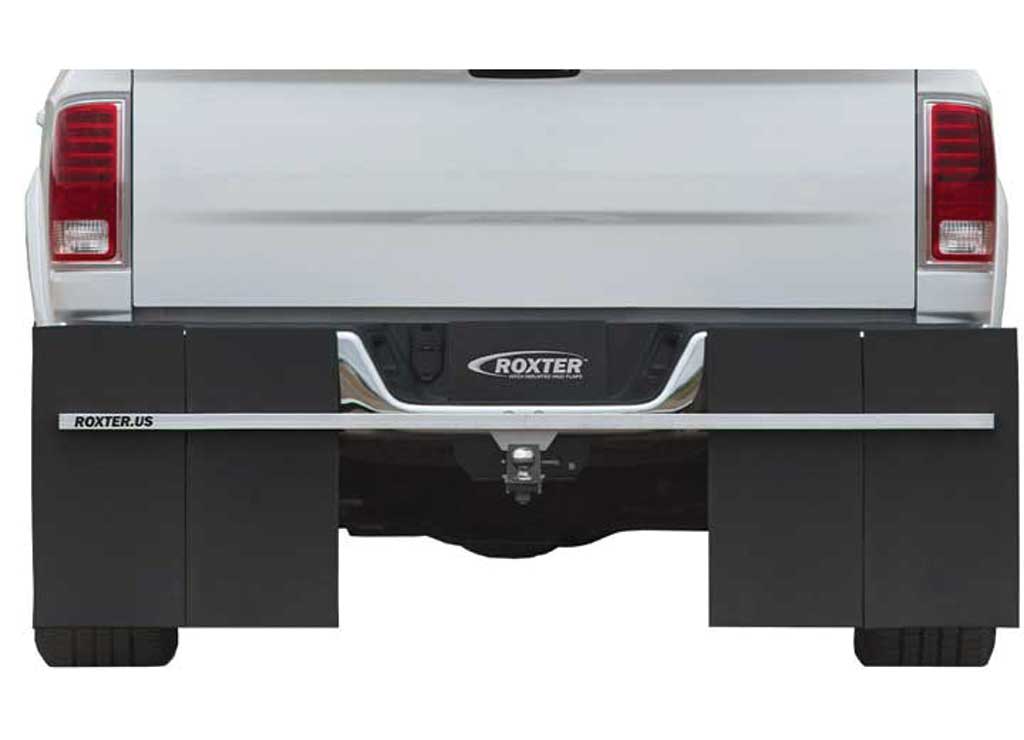
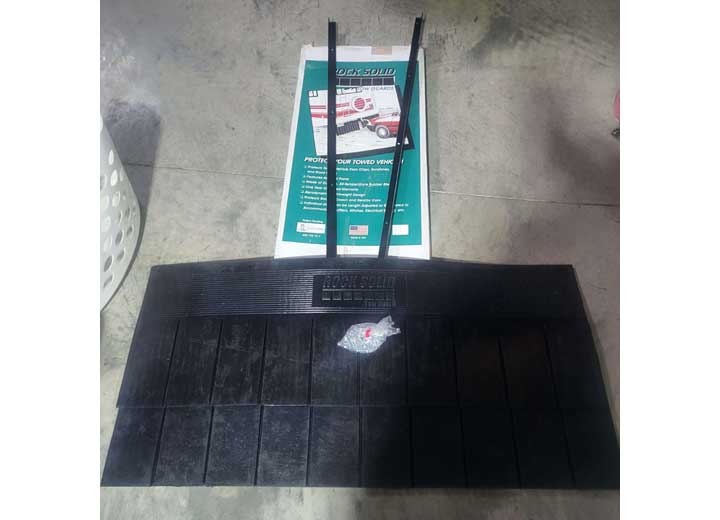
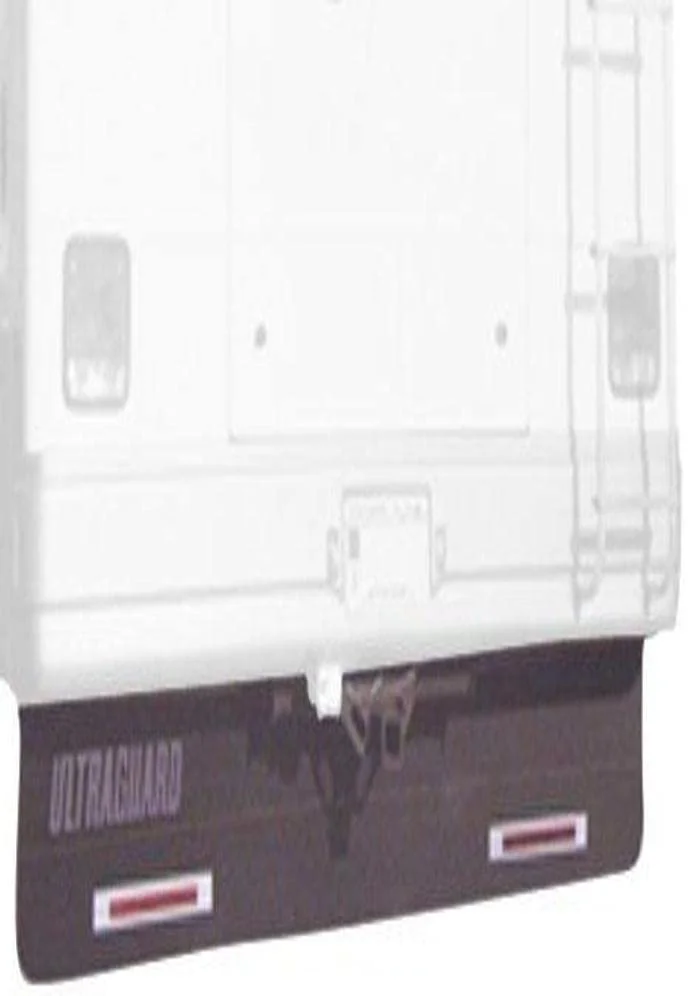
If you tow, consider what is behind you. A hitch-mounted flap, such as the Access Roxter 80 inch wide set, hangs across the back of the truck and protects the front of a trailer or camper. Motorhome owners pulling a car typically run a full-width flap behind the rear axle, like the Ultraguard Rock Solid molded rubber flaps, because rocks thrown by the coach tires can chip the windshield and paint of the towed vehicle.
Hitch-mounted flaps require a receiver that can carry the weight, and they must not block lights or the license plate. Learn more about receivers in our trailer hitch classes guide, and see hitch balls and ball mounts for what else goes in the receiver. Dually owners can read dually wheels explained.
Sizing mud flaps and checking the rules
A flap only works if it covers the tire. Size it in two directions:
- Width. The flap should be at least as wide as the tire tread, and many owners go a little wider. If you have upgraded to wider tires or run fender flares, size to the new tread width, not the old one.
- Length (drop). Measure from the mounting point down toward the ground. The flap should hang low enough to catch spray but stay clear of the ground over driveway aprons, curbs and when the suspension compresses. Check it with the vehicle loaded the way you use it, especially if you tow.
| Vehicle | Common choice |
|---|---|
| Car, crossover, mid-size SUV | Vehicle-specific molded flaps, front and rear |
| Half-ton pickup | Molded flaps or 11 x 19 / 12 x 16 inch flat flaps |
| 3/4- and 1-ton, single rear wheel | 12 x 23 inch heavy-duty rear guards or a bracketed set |
| Dually | Wide dually flaps with brackets, weights and anti-sail |
| Towing a trailer or toad | Hitch-mounted or motorhome full-width flap |
Rules vary by state. Some states require mud flaps or splash guards on certain vehicles, such as trucks over a weight rating, lifted vehicles or vehicles whose tires extend past the body, and some specify a maximum height above the ground. Commercial vehicles often have their own requirements. Check your state and local rules if you are unsure. Big off-road tires are also covered in all-season vs all-terrain vs mud-terrain tires.
Installing mud flaps and long-term care
Installation ranges from ten minutes to an afternoon:
- No-drill molded flaps usually use existing fender liner screws or factory holes. Remove the wheel or turn the steering to get better access.
- Drill-in flaps need a few holes in the fender lip or liner. Use the flap as a template, deburr the holes and touch up bare metal with paint so it does not rust.
- Bracket kits bolt to the frame or bumper area. Follow the kit instructions for bracket position so the flap sits straight and clear of the tire.
- Hitch-mount flaps slide into the receiver and pin in place like any hitch accessory.
After install, turn the wheels lock to lock and check that front flaps do not touch the tires. If you add a lift, bigger tires or a leveling kit later, re-check flap position and length.
For upkeep, rinse flaps when you wash the truck, especially after winter salt. Check the hardware a couple of times a year; vibration loosens screws and brackets on rough roads. Replace flaps that have cracked, curled or worn short, since they stop doing their job long before they fall off. Pair flaps with good floor liners to keep the mud outside the cab too.