Your truck can safely tow the lowest of three numbers: the published tow rating, the GCWR minus what your loaded truck weighs, and the trailer weight your leftover payload can carry at 10 to 15% tongue weight. Payload is usually the one that runs out first.
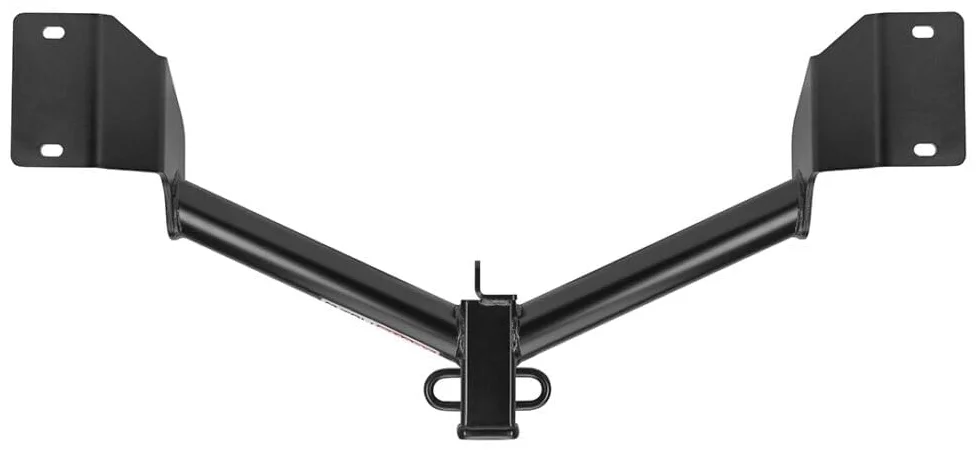
After that, the lowest rated component sets the limit: the hitch, ball mount, ball and coupler all have ratings. Check the owner's manual, the door-jamb labels and every hitch part.
The numbers and where to find them
| Term | What it means | Where to find it |
|---|---|---|
| GVWR | Max weight of the loaded truck, including tongue weight | Driver door-jamb certification label |
| Payload | Max weight of people, cargo and tongue weight | Tire and loading sticker on the door jamb ("combined weight of occupants and cargo should never exceed...") |
| GAWR | Max weight on each axle | Door-jamb certification label |
| GCWR | Max weight of truck plus trailer, all loaded | Owner's manual or manufacturer towing guide |
| Tow rating | Max trailer weight for your configuration | Owner's manual or towing guide (depends on engine, axle ratio, cab, bed, drive) |
The payload on the door sticker is specific to your truck as built, so it is more accurate than a brochure figure. Aftermarket parts and accessories you add later come out of it.
Worked example
A half-ton truck with these numbers: tow rating 9,500 lb, GCWR 15,000 lb, door-sticker payload 1,600 lb, curb weight 5,200 lb. The family puts in 500 lb of people and 200 lb of gear. The hitch is a Class IV labeled 10,000 lb / 1,000 lb TW.
- Tow rating limit: 9,500 lb.
- GCWR limit: loaded truck = 5,200 + 500 + 200 = 5,900 lb. 15,000 - 5,900 = 9,100 lb of trailer.
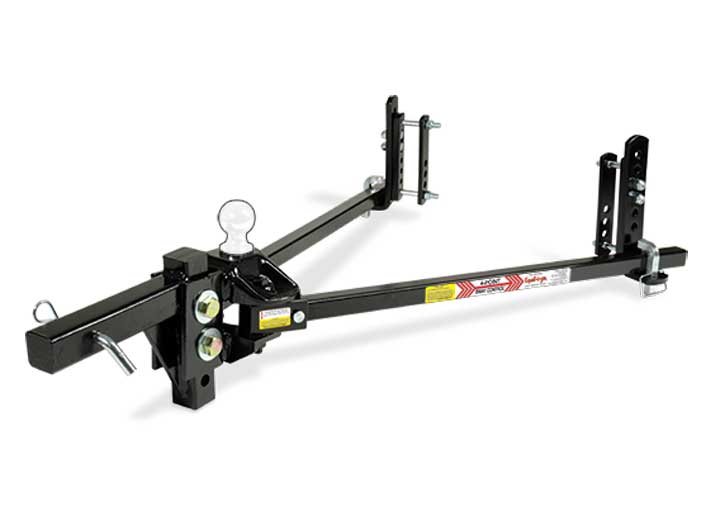
- Payload limit: 1,600 - 700 = 900 lb left for tongue weight. Subtract about 100 lb for a WD hitch head and bars, leaving 800 lb. At 12% tongue weight: 800 / 0.12 = about 6,650 lb.
- Hitch limit: 10,000 lb GTW and 1,000 lb TW. Not the bottleneck here.
Answer: about 6,650 lb, set by payload, not the 9,500 lb on the brochure. Many towers also leave extra margin below the calculated figure. Learn to measure the tongue load in how to calculate tongue weight.
Common mistakes
- Quoting the max tow rating for a different configuration. The headline number usually applies to one specific engine, axle ratio and cab. Look up yours.
- Forgetting tongue weight is payload. It counts against GVWR and the rear axle rating.
- Using dry trailer weight. Use loaded weight, ideally from a scale.
- Ignoring the hitch chain. A truck rated 12,000 lb with a ball rated 5,000 lb is a 5,000 lb setup. See what size hitch ball.
- Skipping WD or brakes. Heavy trailers often need weight distribution and a brake controller. See trailer wiring and brake controllers.
Why two trucks of the same model tow different amounts
Two trucks with the same badge can have tow ratings thousands of pounds apart. The published figure depends on how each one was built:
- Engine: bigger or turbocharged engines typically carry higher ratings.
- Axle ratio: a numerically higher ratio, such as 3.73 versus 3.21, usually raises the tow rating.
- Cab and bed: heavier cabs and longer beds add curb weight, which cuts payload and can reduce the GCWR margin.
- Drivetrain: 4x4 adds weight, which typically reduces payload slightly compared with 2WD.
- Tow package: factory packages may add a receiver, cooling upgrades, wiring and a brake controller, and some ratings require it.
- Trim and options: sunroofs, larger wheels and luxury features add weight, which is why the door sticker payload can vary between trucks on the same lot.
This is why the door-jamb labels and your configuration in the owner's manual matter more than any headline number. Look up your exact engine and axle combination, not the maximum for the model line.
Also remember anything added after the truck left the factory, such as a tonneau cover, toolbox, bed liner, larger tires or a bumper, comes straight out of payload. Weigh the truck as you actually use it to get an accurate starting point.
Verify with a scale
The most reliable check is a certified truck scale. Weigh the truck loaded for a trip, then with the trailer attached. Compare the steer axle, drive axle and total against the GAWR, GVWR and GCWR on your labels and in the manual. Then pick the right hitch class from trailer hitch classes.