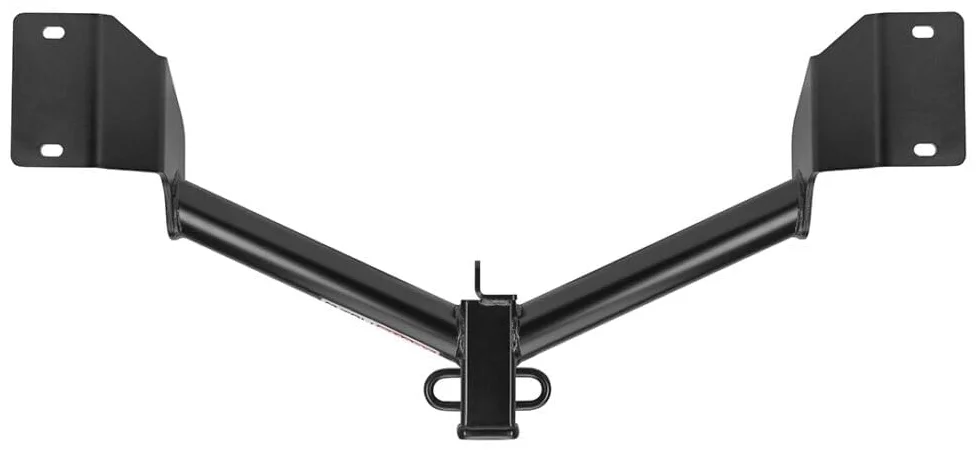
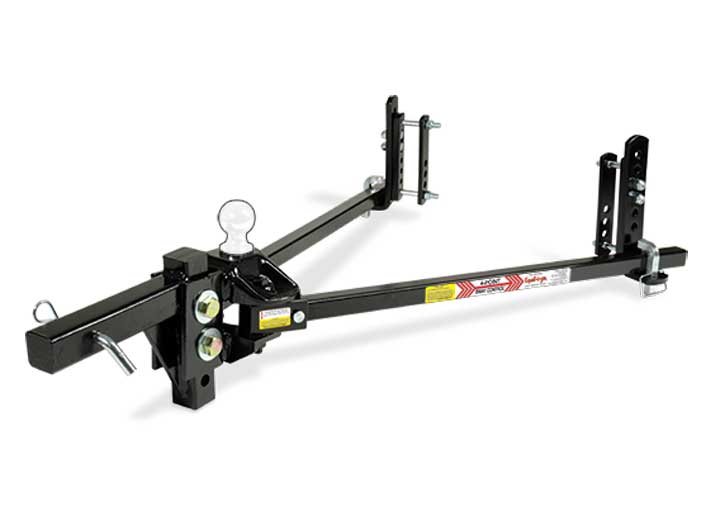
For a 7,000 lb trailer you typically need a Class IV hitch, or a Class III whose rating label covers both 7,000 lb and the tongue weight. Class III is commonly rated up to about 8,000 lb GTW but only about 800 lb TW, and a 7,000 lb trailer can put up to 1,050 lb on the ball, so tongue weight is usually what pushes you to Class IV.
As always, the lowest rated component sets the limit: vehicle, hitch, ball mount, hitch ball and coupler. Confirm the vehicle's tow rating, payload and any weight distribution requirement in the owner's manual first.
The math: worked example for 7,000 lb
Tongue weight for a conventional trailer is typically 10 to 15% of the loaded trailer weight.
- Loaded trailer weight: 7,000 lb (weigh it loaded at a truck scale if you can).
- Tongue weight range: 7,000 x 0.10 = 700 lb. 7,000 x 0.12 = 840 lb. 7,000 x 0.15 = 1,050 lb.
- Compare to Class III: about 800 lb TW. Anything above roughly 11.4% tongue weight (800 / 7,000) is over a typical Class III weight-carrying rating.
- Compare to Class IV: about 1,000 lb TW. That covers up to roughly 14% tongue weight in weight-carrying mode. Many hitches list a higher weight distributing rating, which is one reason WD is so common at 7,000 lb.
- Vehicle payload: 1,050 lb of tongue weight plus a 150 lb WD head, two adults (350 lb) and 200 lb of gear = 1,750 lb. Many half-tons cannot carry that, even if their tow rating says 7,000 lb or more.
Class III vs Class IV at 7,000 lb
| Tongue weight % | TW at 7,000 lb | Typical Class III (800 lb TW) | Typical Class IV (1,000 lb TW) |
|---|---|---|---|
| 10% | 700 lb | OK | OK |
| 12% | 840 lb | Over, unless WD rating covers it | OK |
| 13% | 910 lb | Over, unless WD rating covers it | OK |
| 15% | 1,050 lb | Over | Over in weight-carrying; check WD rating |
The class ceilings above are typical SAE J684 style figures. The label on your hitch, and the vehicle's own limits, are what count. See Class 3 vs Class 4 for more on the differences.
Common mistakes at 7,000 lb
- Trusting the brochure tow rating alone. Payload and rear axle ratings often run out before the tow rating does.
- Using a 2 inch ball rated 6,000 lb. Ball ratings vary a lot within the same size. The ball needs to be rated for at least 7,000 lb, and some couplers at this weight are 2-5/16 inch.
- Towing without weight distribution. At 700 to 1,050 lb of tongue weight, many trucks sag at the rear and go light on the front axle. A weight distribution hitch spreads that load and many manufacturers require one in this range.
- Skipping trailer brakes. Brake laws vary by state, but a 7,000 lb trailer is above the brake threshold in most of them. Use a brake controller set up for your trailer.
- Mixing receiver sizes. Class IV is usually a 2 inch receiver; a heavy-duty truck may have 2-1/2 inch. Match the ball mount or WD shank to the opening.
What kind of vehicle tows 7,000 lb
At 7,000 lb you are typically looking at a half-ton pickup with a tow package, a full-size body-on-frame SUV, or a heavy-duty truck. Many midsize trucks and SUVs are rated somewhere between 3,500 and about 7,700 lb depending on engine and equipment, so some can reach 7,000 lb on paper while others cannot. Look up the exact rating for your engine, axle ratio, cab and drive in the owner's manual or the manufacturer's towing guide.
Even when the tow rating clears 7,000 lb, three other numbers tend to run out first:
- Payload: found on the tire and loading sticker on the driver door jamb. Tongue weight, WD hardware, passengers and cargo all come out of it.
- Rear axle rating (GAWR): on the door-jamb certification label. Heavy tongue weight loads the rear axle hardest, which is part of why weight distribution helps.
- GCWR: the combined limit for truck and trailer, in the owner's manual.
A quick check: if the truck already carries 700 lb of people and gear and the door sticker shows 1,500 lb of payload, there is only 800 lb left, which is less than the 840 lb a 7,000 lb trailer puts on the ball at 12%. That truck is over payload before the trailer reaches its tow rating. The full method is in how much can my truck tow.
Quick checklist
Vehicle tow rating 7,000 lb or more. Payload covers tongue weight plus people and cargo. Hitch rated 7,000 lb GTW and your measured TW (Class IV, or a Class III with a covering WD rating). Ball mount or WD shank rated 7,000 lb or more. Ball rated 7,000 lb or more and matching the coupler size. Working trailer brakes and a 7-pin connection. See trailer wiring and brake controllers.