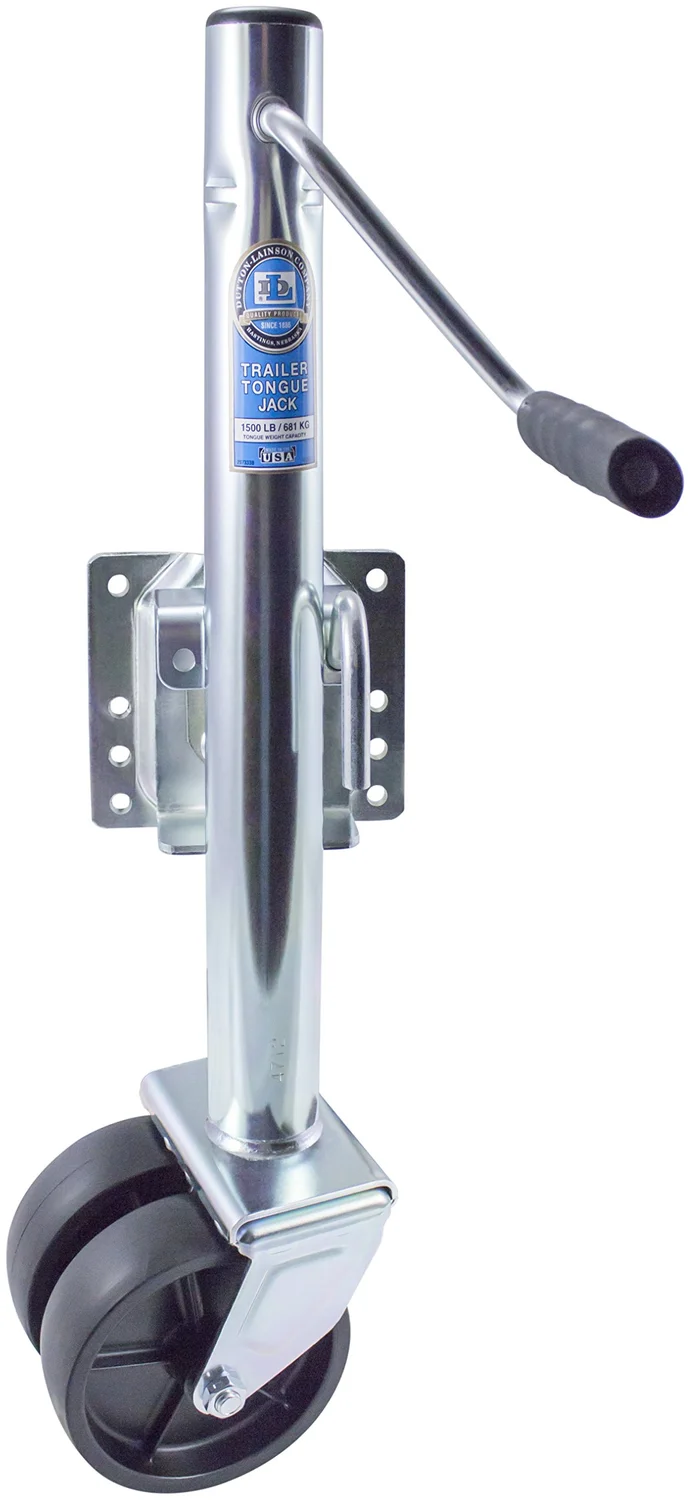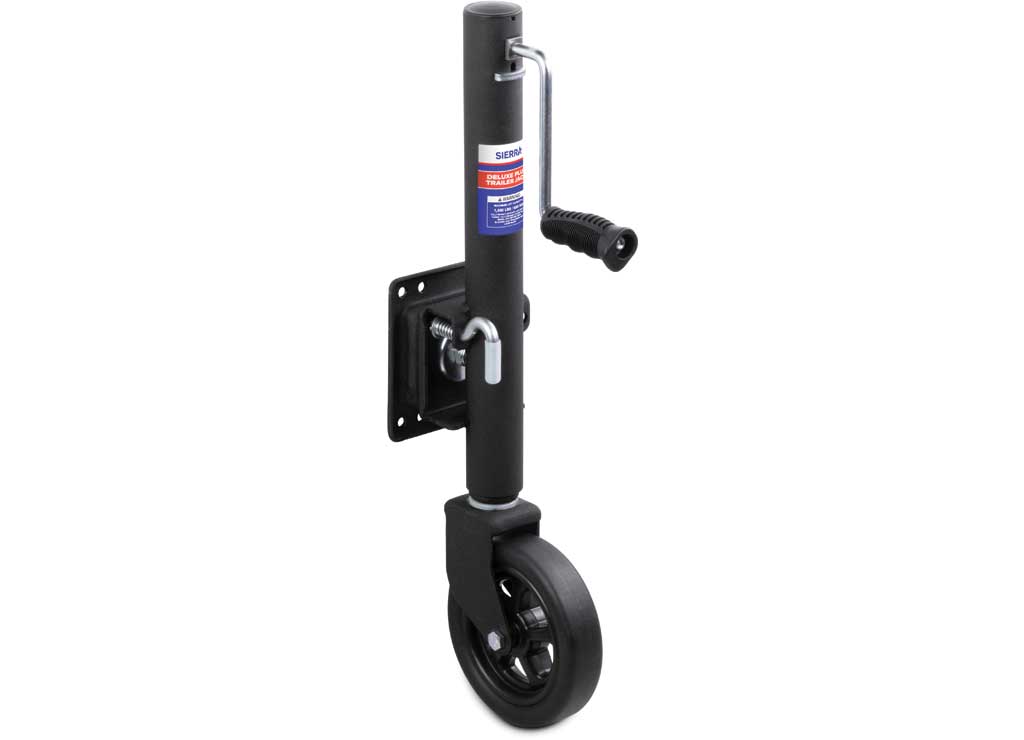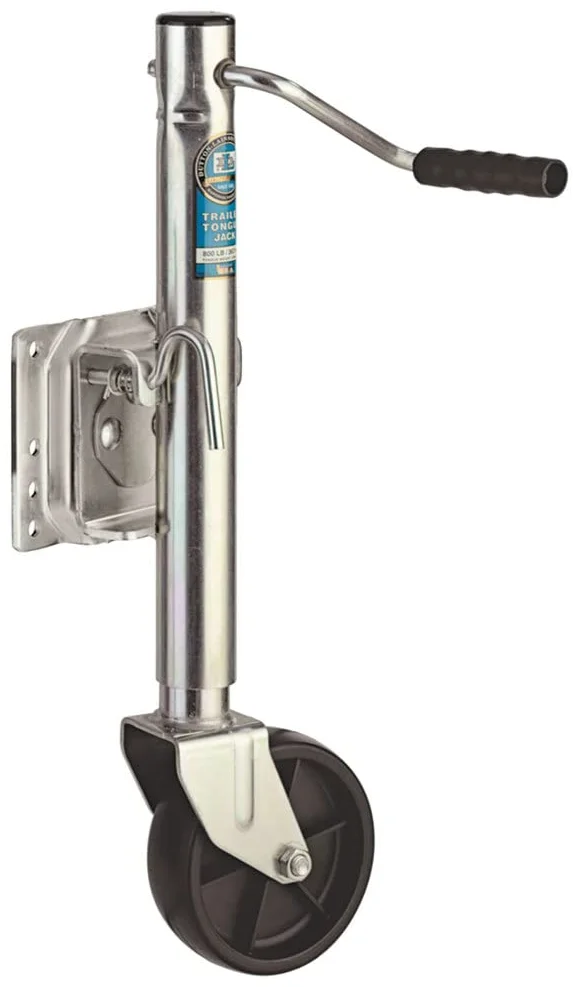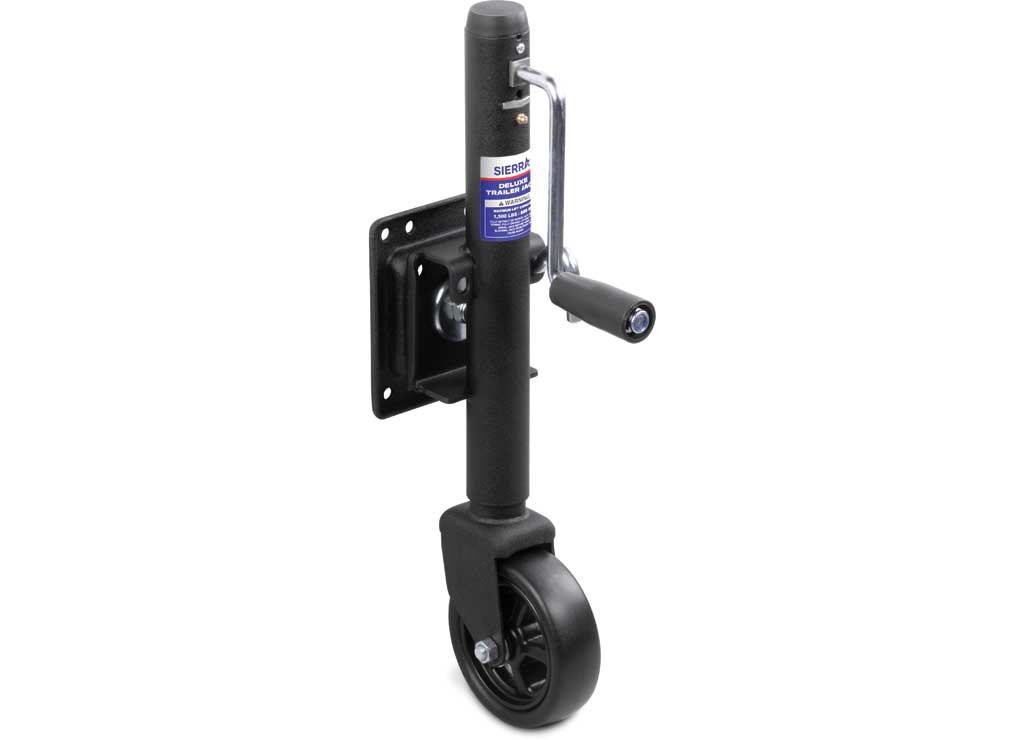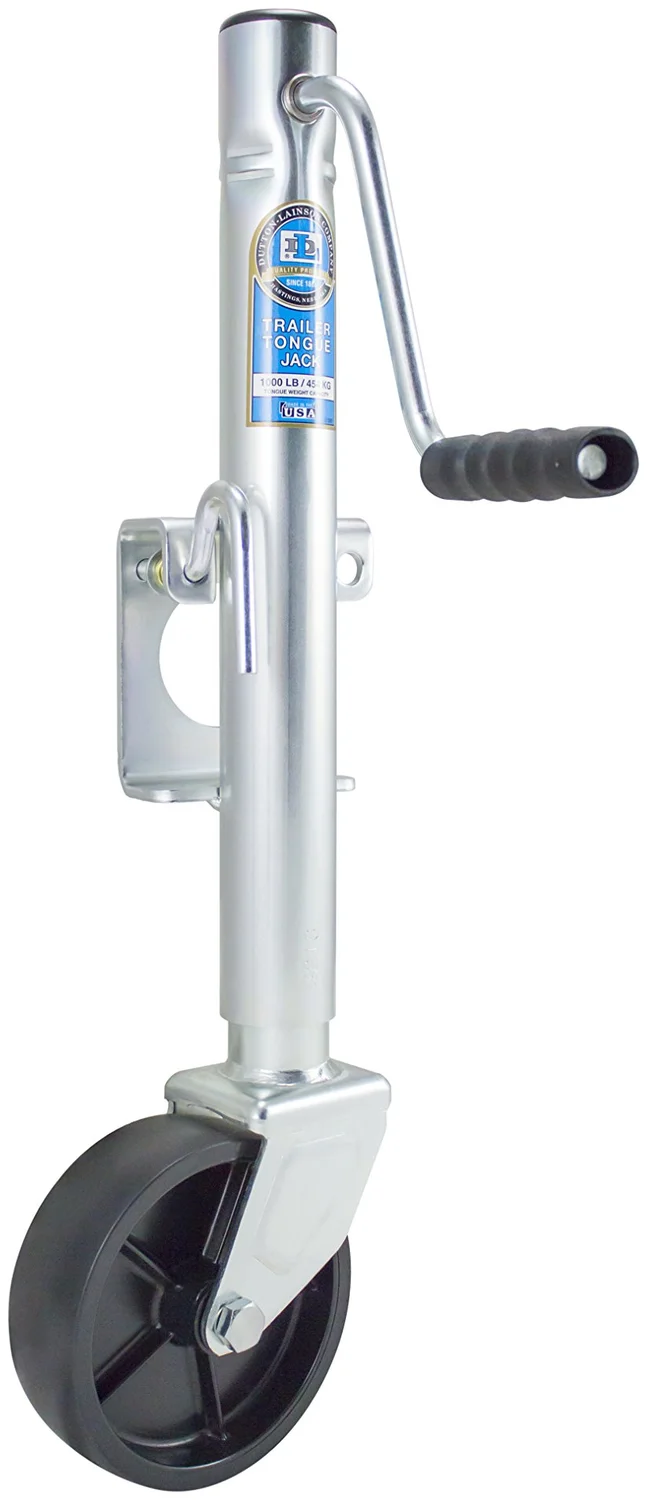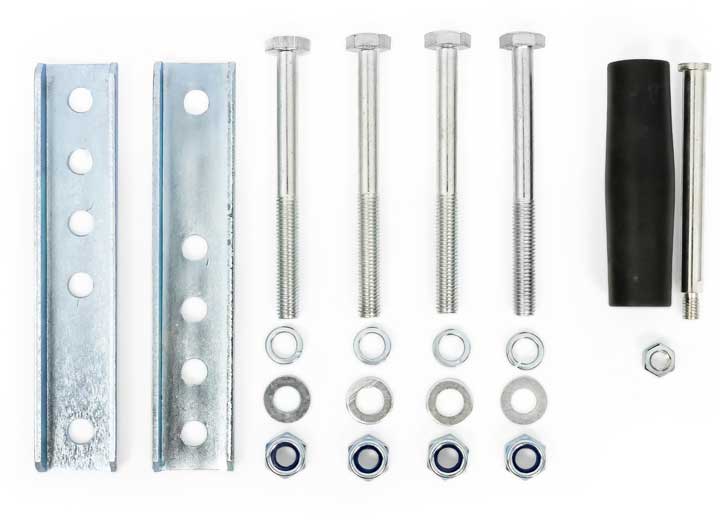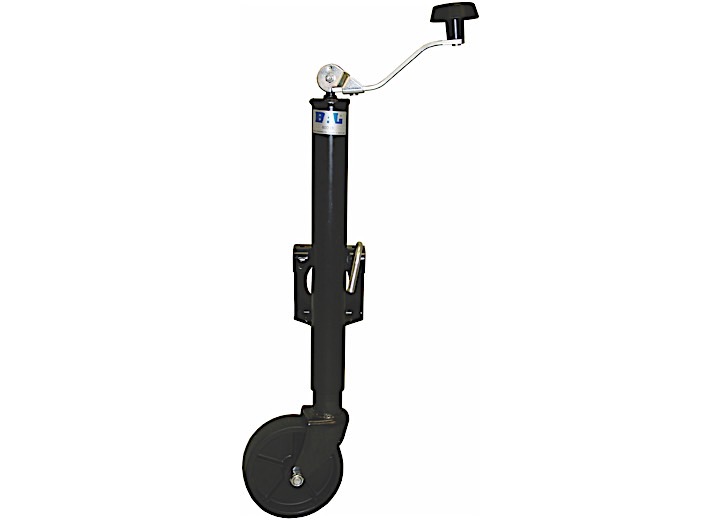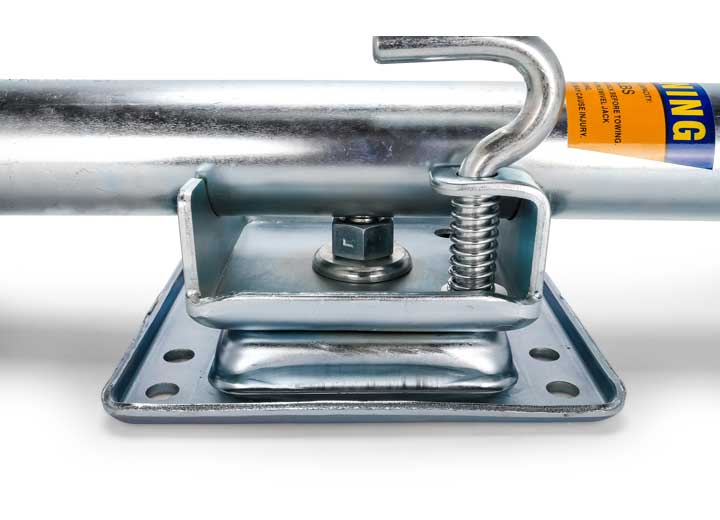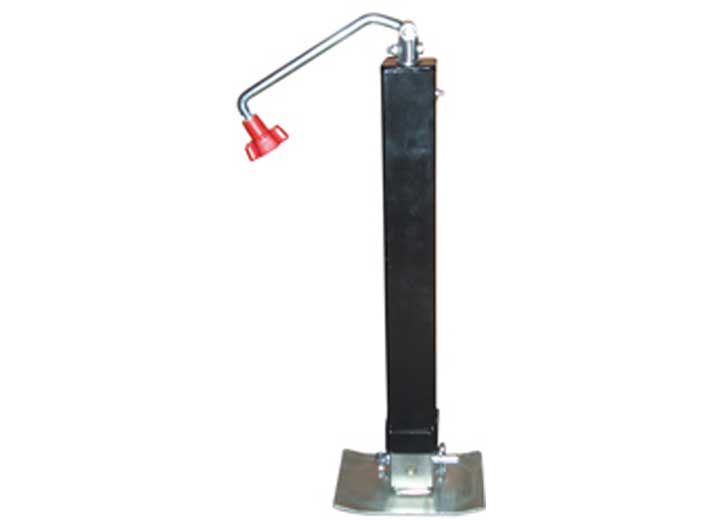
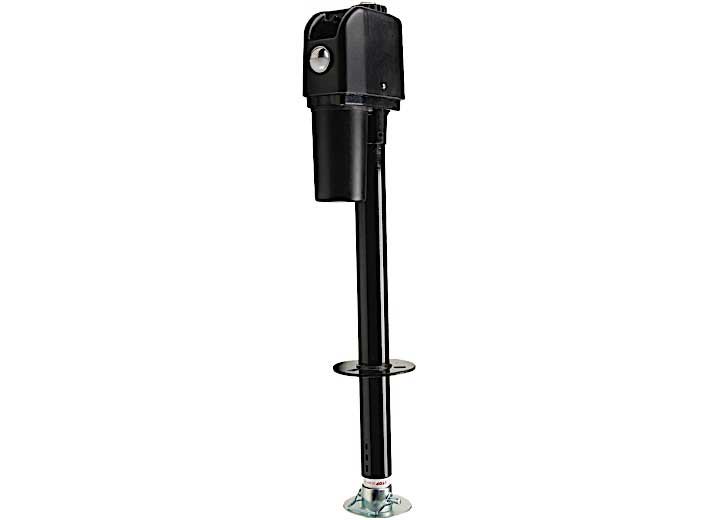
A trailer jack (or tongue jack) holds the front of a trailer up when it is unhitched and raises or lowers the coupler onto the hitch ball. It is one of the hardest-working parts on any trailer, and when one strips a gear or bends, hooking up turns into a struggle. Replacing or upgrading it is one of the easiest improvements you can make.
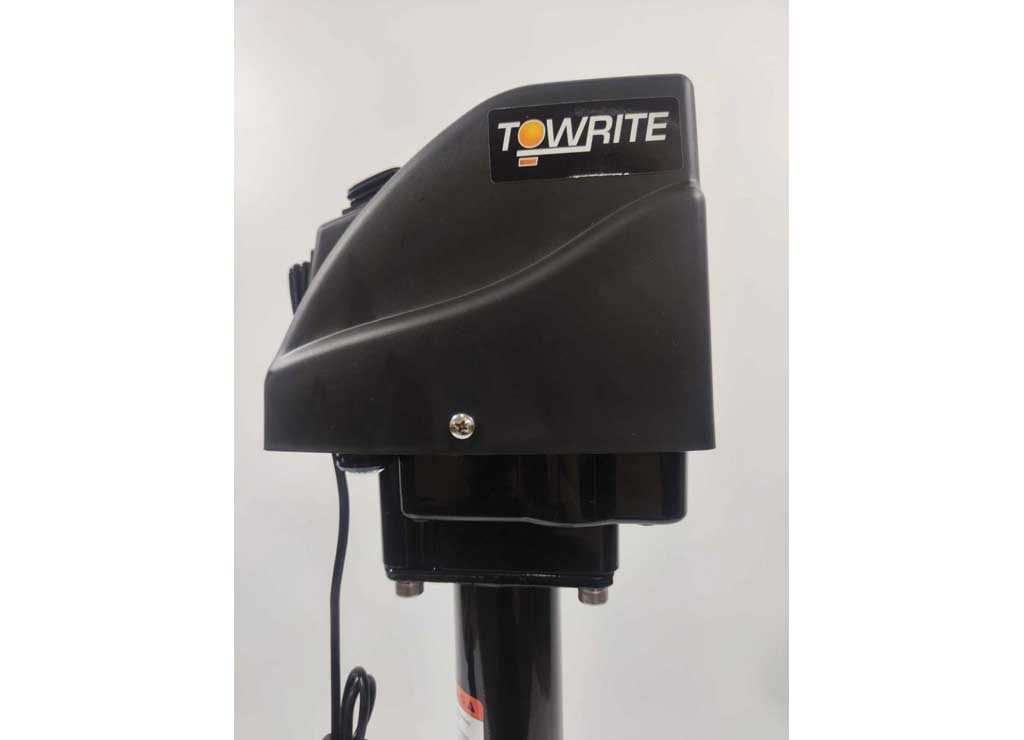
We stock manual tongue jacks from Bal, Draw-Tite, Pacific Rim International, Dutton-Lainson, Camco, Sierra Marine and Blaylock; electric jacks from Stromberg Carlson, Tow-Rite, Extreme Max, Pacific Rim and Draw-Tite; and the feet, pads, blocks, caster wheels, handles, covers and gear kits that go with them. This guide covers the decisions that matter: jack style, mounting, capacity, lift and footing.
Trailer jack types compared
| Jack type | How it mounts | Common on | Notes |
|---|---|---|---|
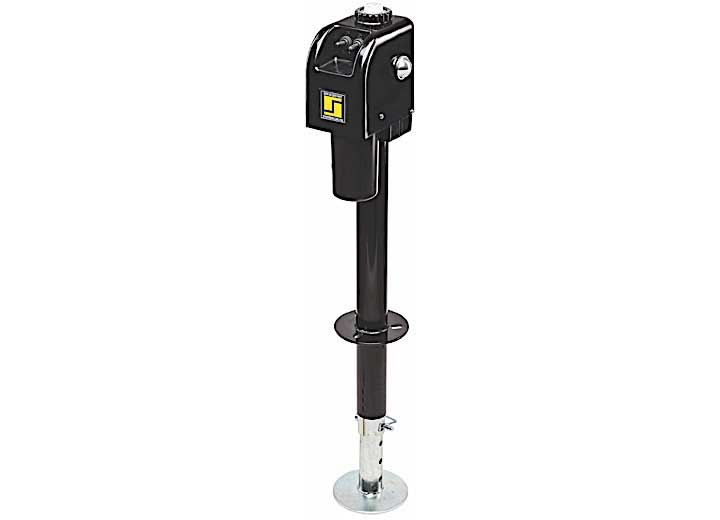
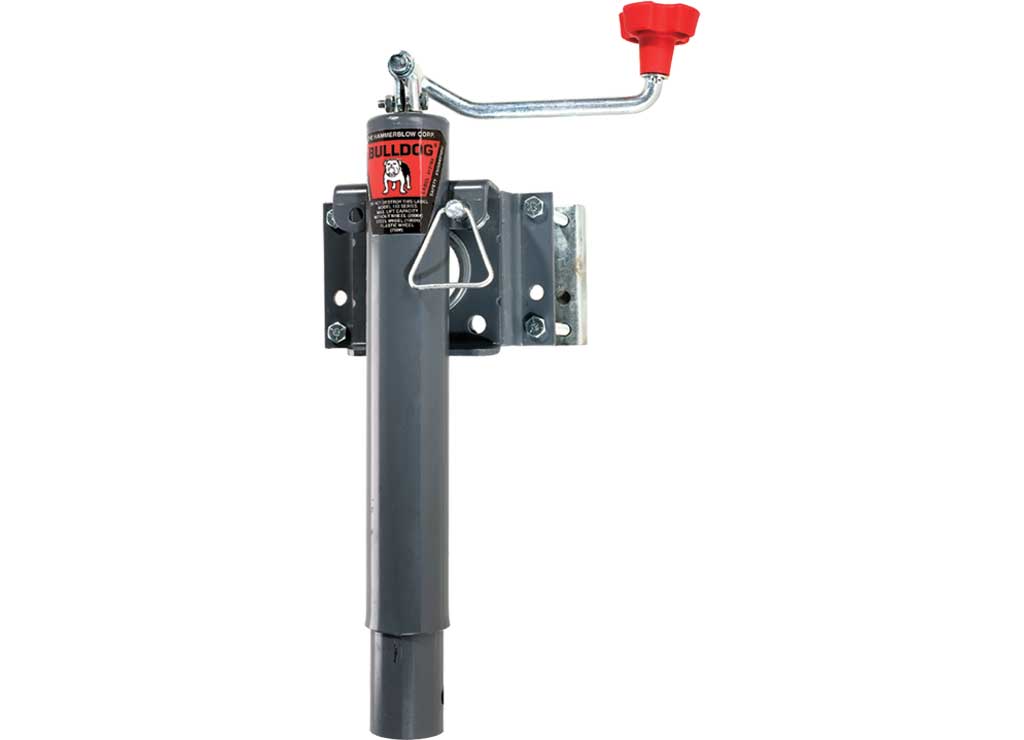
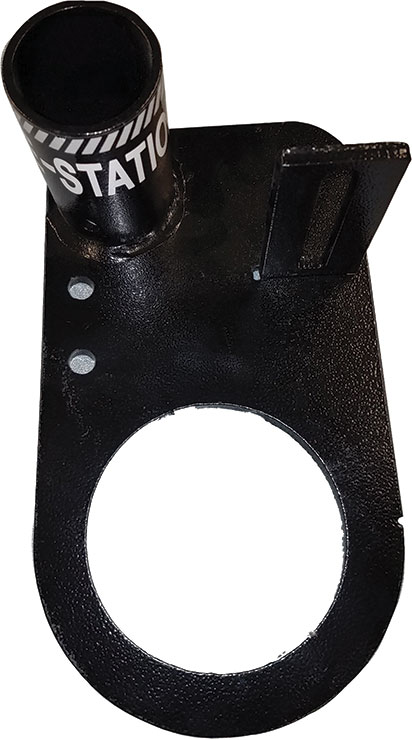
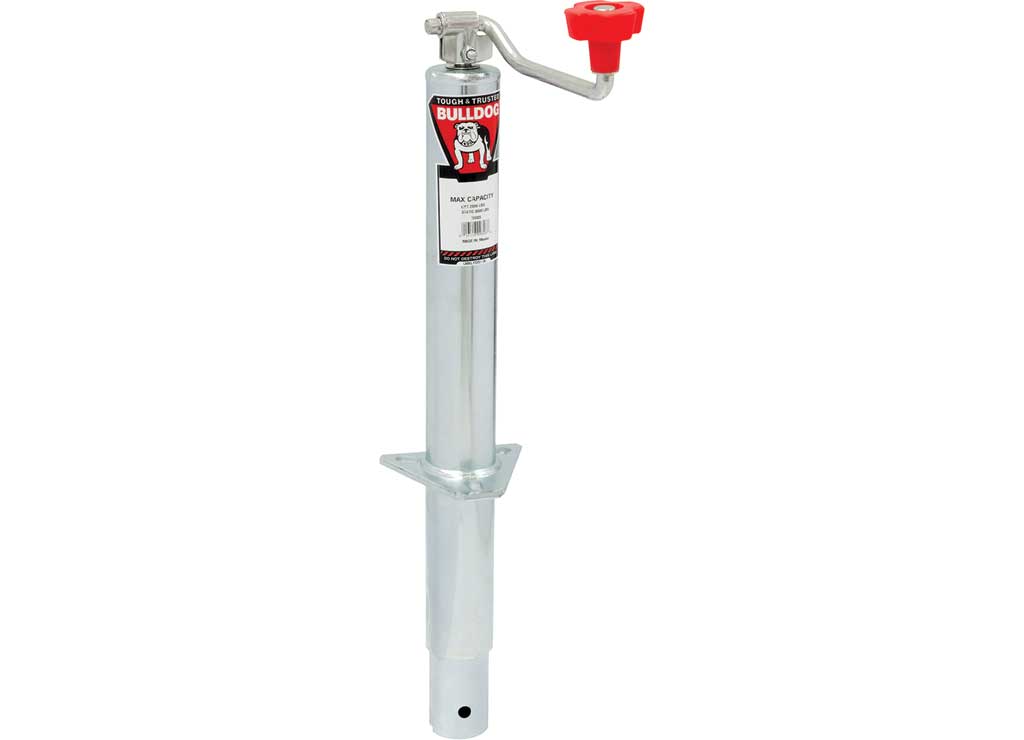
| A-frame | Bolts through a hole in the top plate of an A-frame coupler | Travel trailers, pop-ups, enclosed and cargo trailers | Most electric jacks are A-frame style |
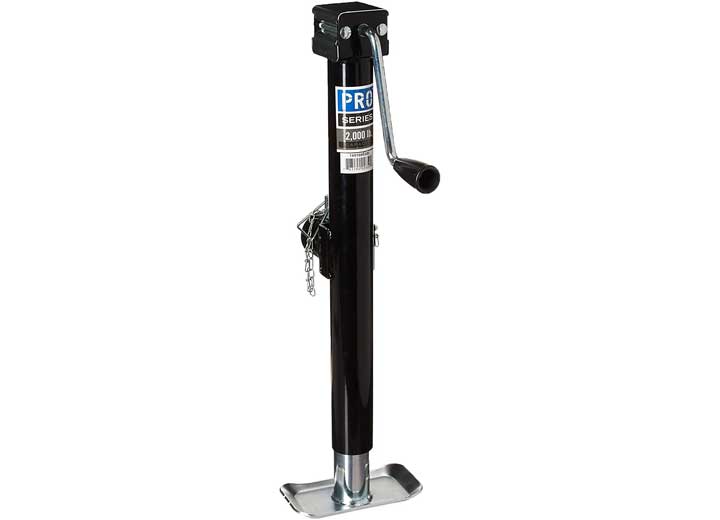
| Swivel (side mount) | Clamps or bolts to the side of a straight tongue; pivots up for travel | Boat trailers, utility and small trailers | Often with a wheel for moving the trailer by hand |
| Weld-on / bolt-on round | Welded or bolted to the tongue, fixed vertical | Utility and equipment trailers | Simple and strong; welding should be done by a qualified welder |
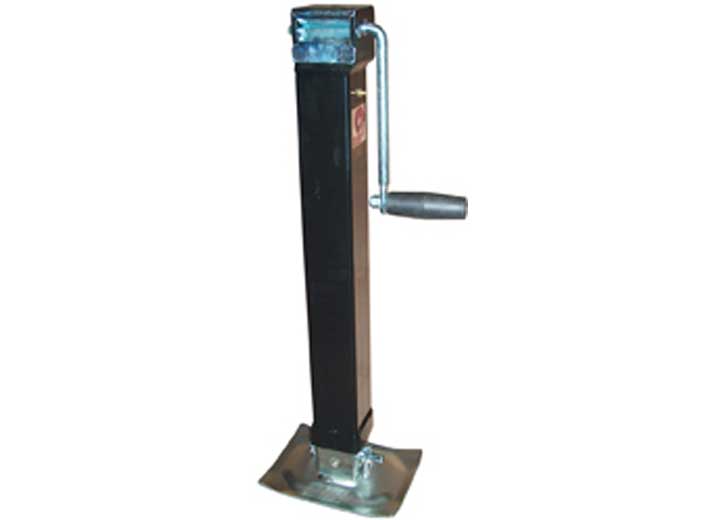
| Drop-leg | Side mount with a leg that drops down and pins, so you crank less | Heavy equipment and car haulers | Higher capacity; quick to set |
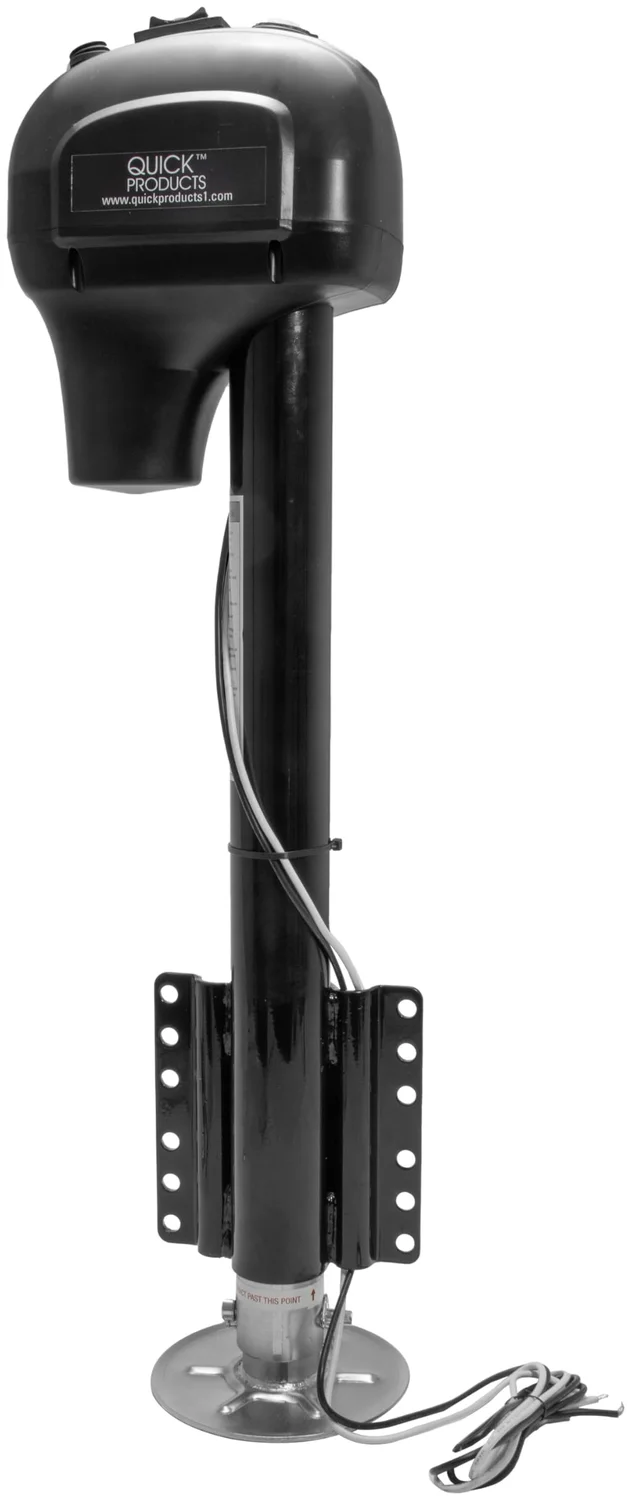
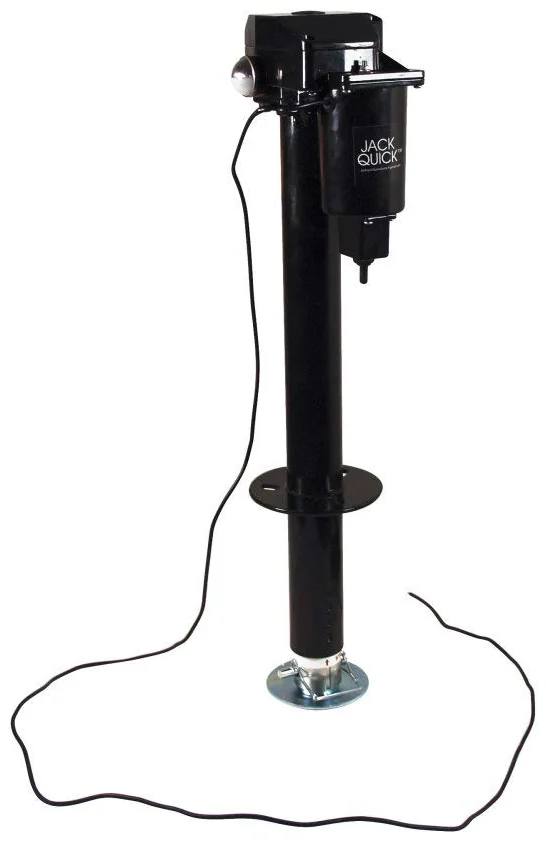
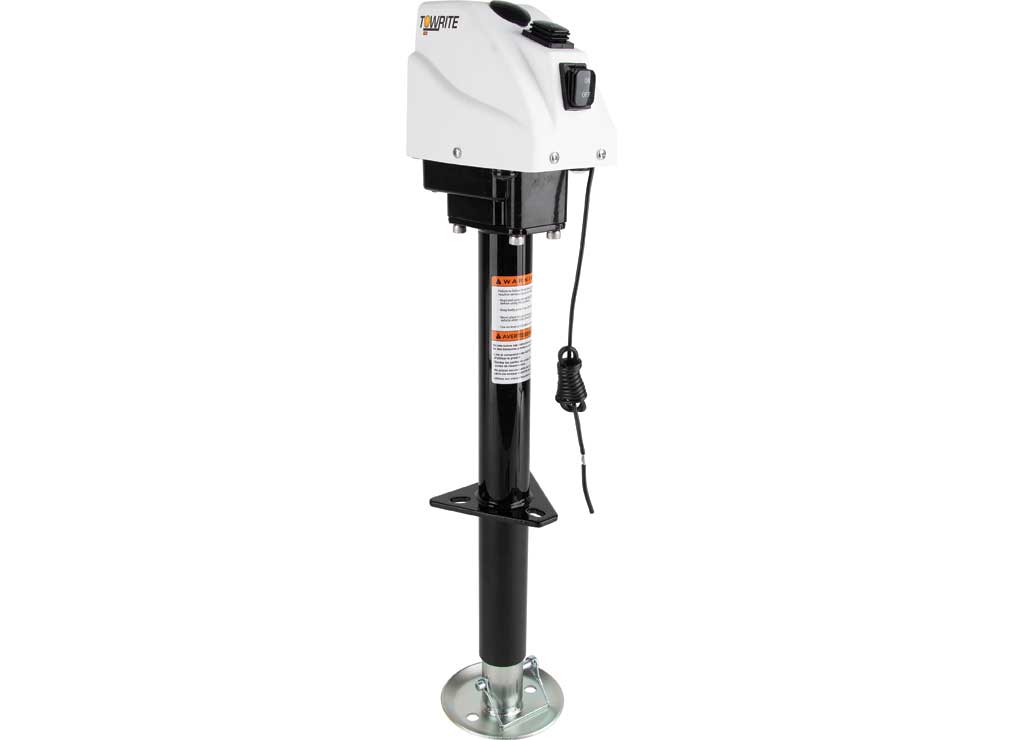
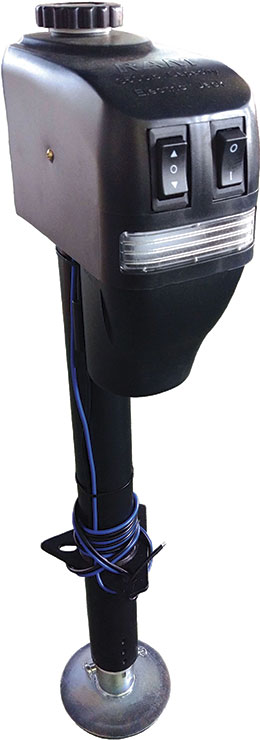
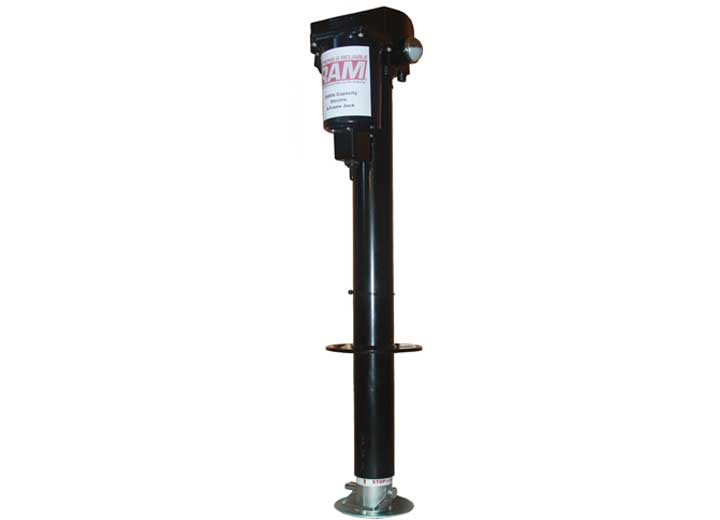
| Electric | Usually A-frame, powered by the trailer battery | Heavier campers and anyone tired of cranking | Needs 12V power; most include a manual override |
Side-wind vs top-wind describes where the handle is. Top-wind jacks crank from a handle on top; side-wind jacks use a gearbox and a handle on the side, which is easier to turn under load and keeps your hands clear of the coupler. Pacific Rim, Bal and Draw-Tite offer both.
For boat trailers, a swivel jack with a wheel is the usual choice: it swings up out of the way when towing and lets you roll the trailer around a driveway or garage. Dutton, Sierra Marine, Camco and Dutton-Lainson Shorelander jacks in the 1,000 to 1,500 lb range cover most small and mid-size boats. Learn more about boat trailer upkeep in our boat trailer parts guide.
Sizing capacity, lift and travel
Jack capacity has to exceed the trailer's tongue weight, not its total weight. For most travel and utility trailers, tongue weight is typically around 10 to 15% of loaded trailer weight; boat trailers are often lighter on the tongue. Weigh your tongue with a tongue scale or a bathroom scale method if you are close to a limit.
| Loaded trailer weight | Approx. tongue weight (10-15%) | Jack capacity to look for |
|---|---|---|
| Up to 3,000 lb | 300 to 450 lb | 800 to 1,500 lb |
| 3,000 to 7,000 lb | 300 to 1,050 lb | 2,000 to 3,500 lb |
| 7,000 to 10,000 lb | 700 to 1,500 lb | 3,500 to 5,000 lb |
| Heavy equipment trailers | Varies | 5,000 lb and up, often drop-leg |
Treat the table as a starting point and leave margin; a jack that works near its limit wears faster. Note that some jacks list two ratings: lift capacity (what it can raise) and support capacity (what it can hold still). The Pacific Rim heavy-duty drop-leg jack, for example, is rated 7K lift and 8K support. Size to the lift number.
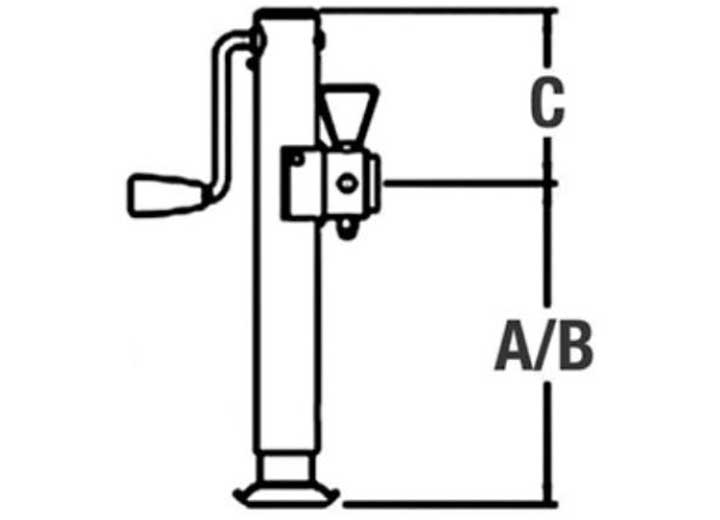
Travel (lift range) is how far the jack extends. Common figures are around 10, 14 and 18 inches. You need enough travel to lift the coupler clear of the ball on your tow vehicle, plus extra if you park on uneven ground or level the trailer front to back. A weight distribution hitch setup often needs more lift because the spring bars are tensioned with the jack.
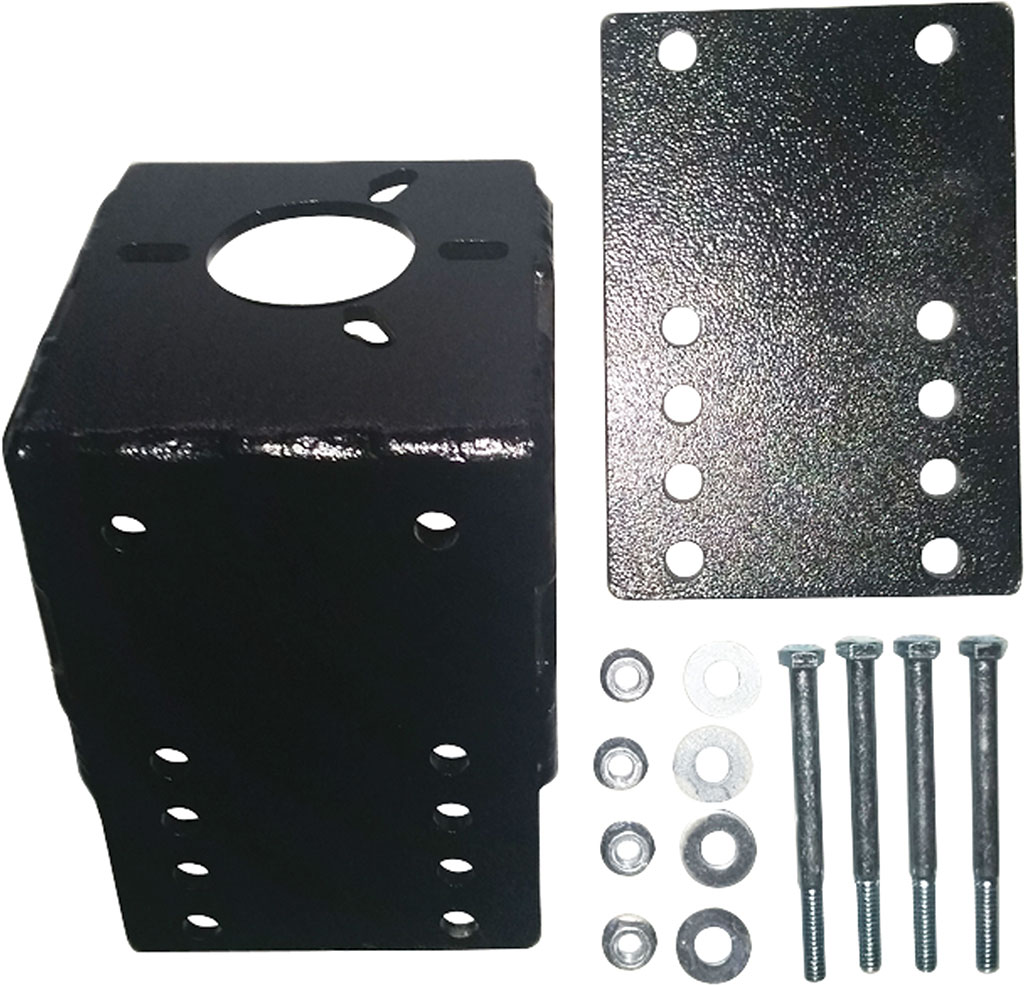
Finally, match the jack to the tongue: tube diameter for swivel brackets, bolt pattern for A-frame jacks and tongue width for clamp-on mounts. Pacific Rim sells single and dual wheel swivel mount brackets for marine jacks.
Electric tongue jacks: what to check
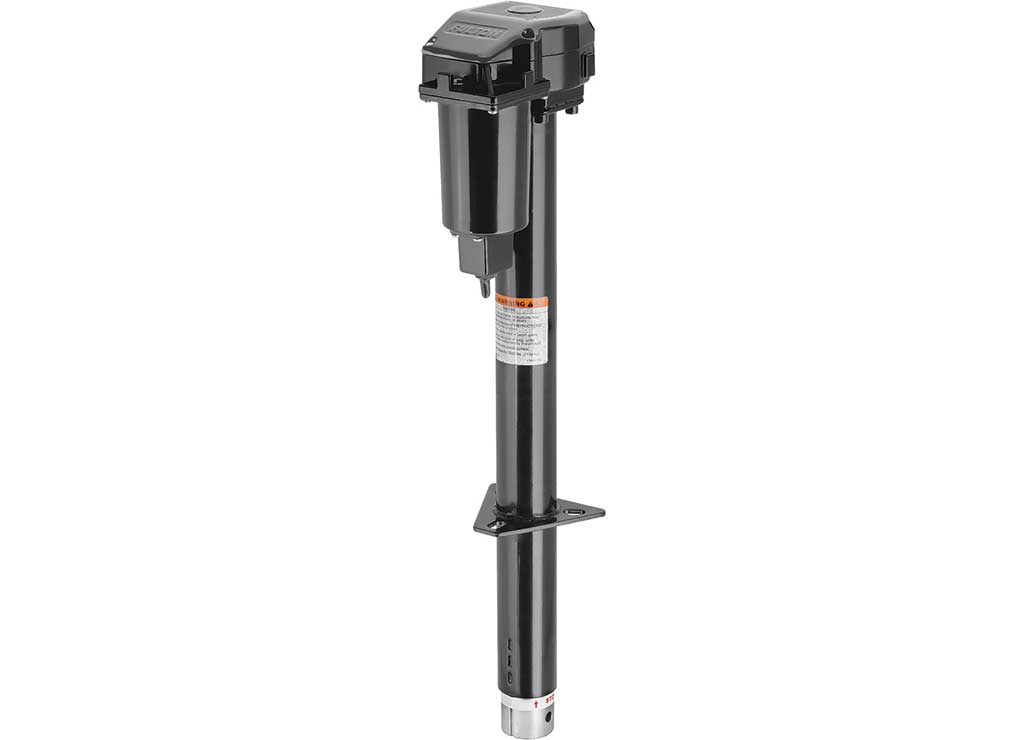
An electric jack turns hitching into pushing a button, and on campers with heavy tongues it saves a lot of effort. Points to compare:
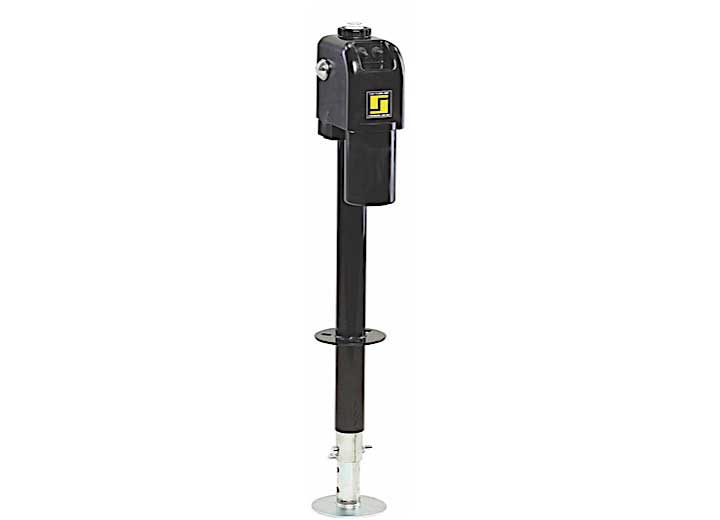
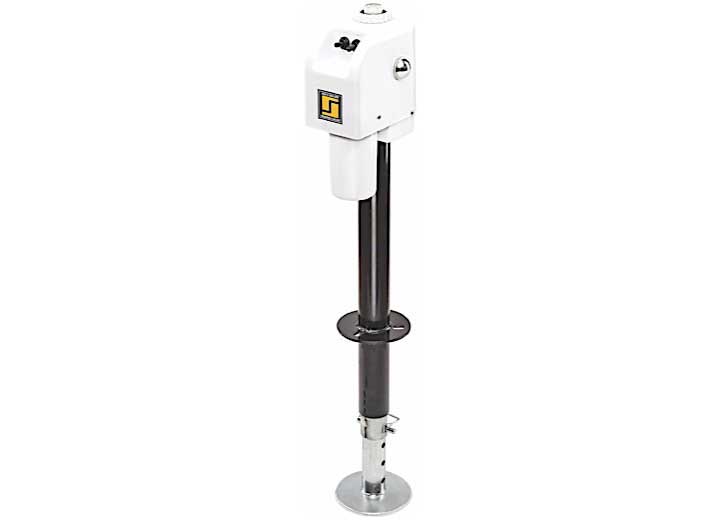
- Capacity: common ratings are 2,500, 3,500 and 5,000 lb. Stromberg Carlson, Tow-Rite and Pacific Rim offer 3,500 lb models; Stromberg Carlson also makes a 5,000 lb jack.
- Power: electric jacks run on 12V, usually from the trailer battery. Wire them with the gauge and circuit protection the manufacturer specifies; some, like the Pacific Rim single wire hookup model, simplify wiring.
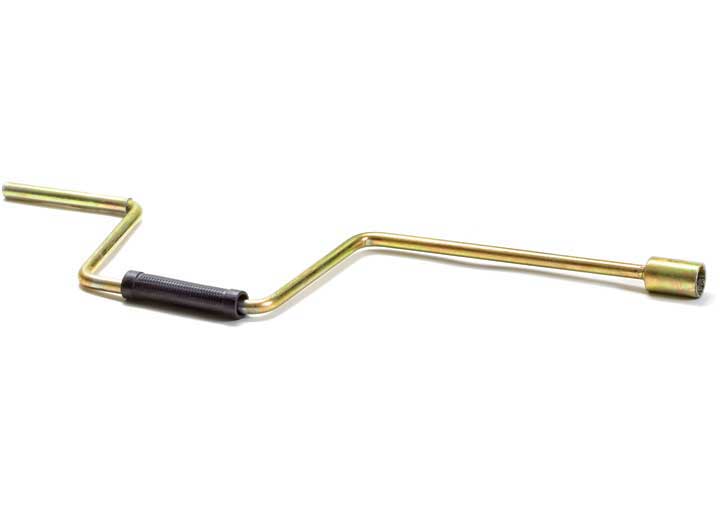
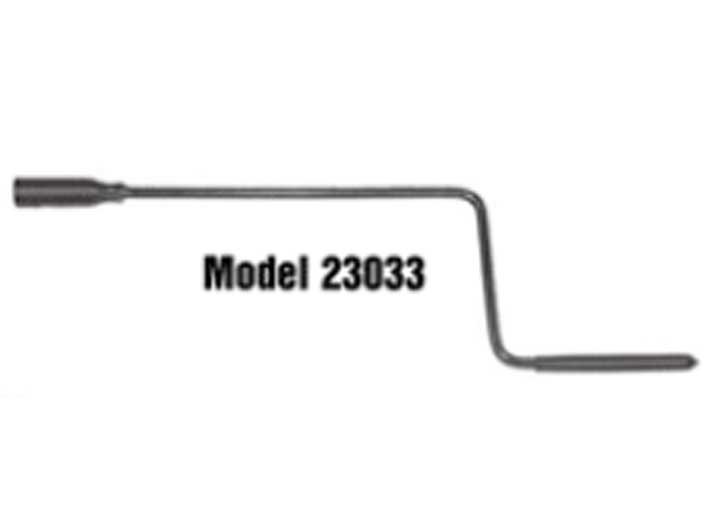
- Manual override: keep the crank handle in the trailer. If the battery dies, you will need it. Stromberg Carlson sells replacement crank handles.
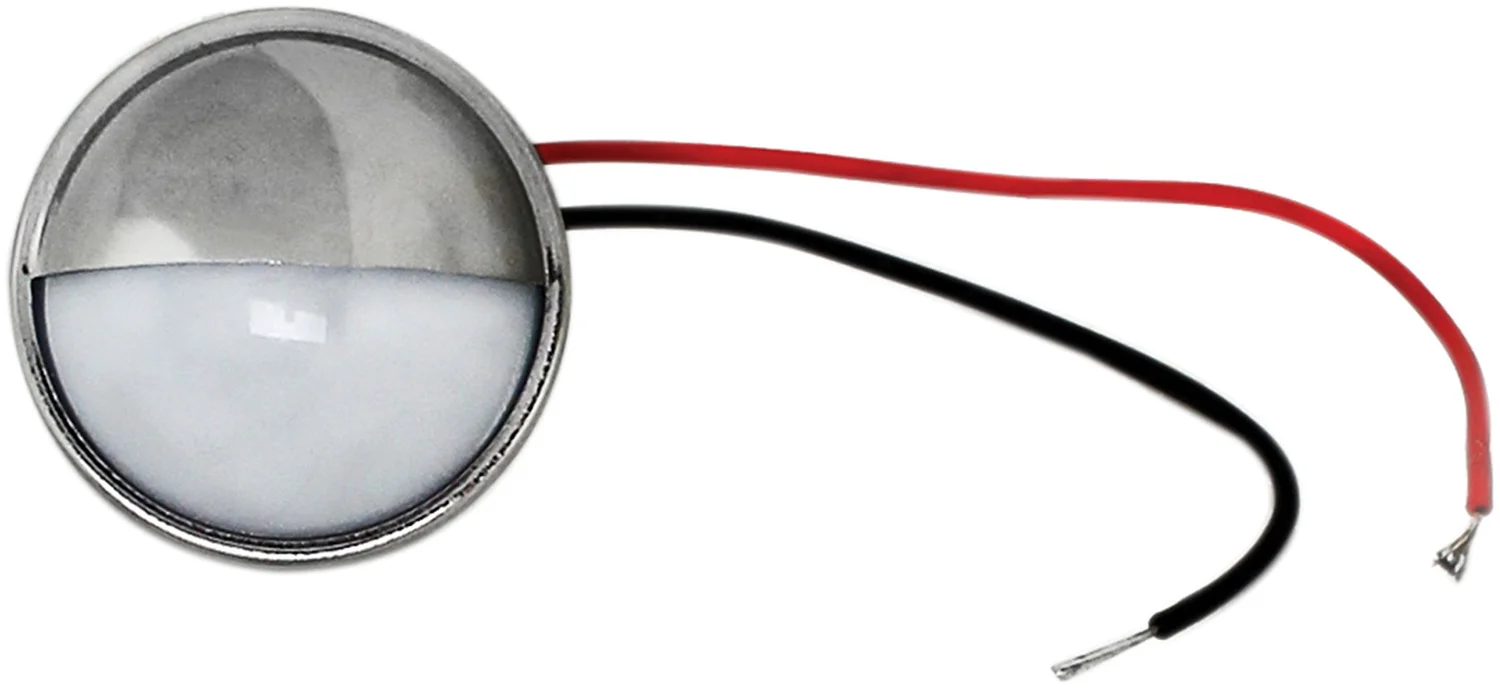
- Work light: Extreme Max jacks include an LED work light for hitching in the dark; replacement lights are available.
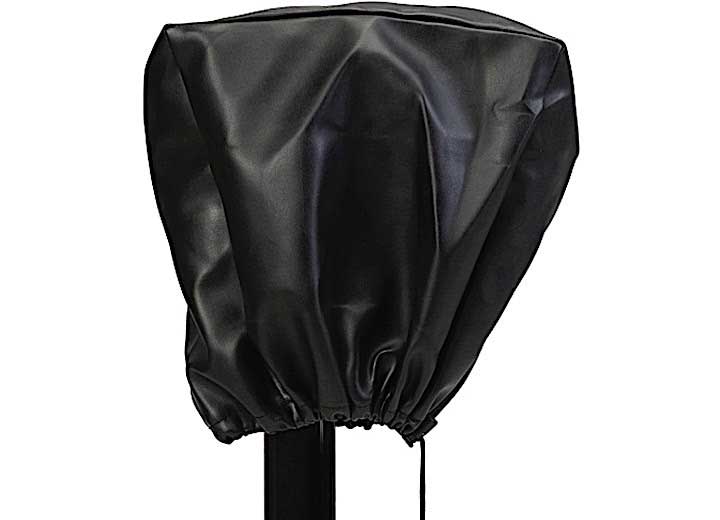
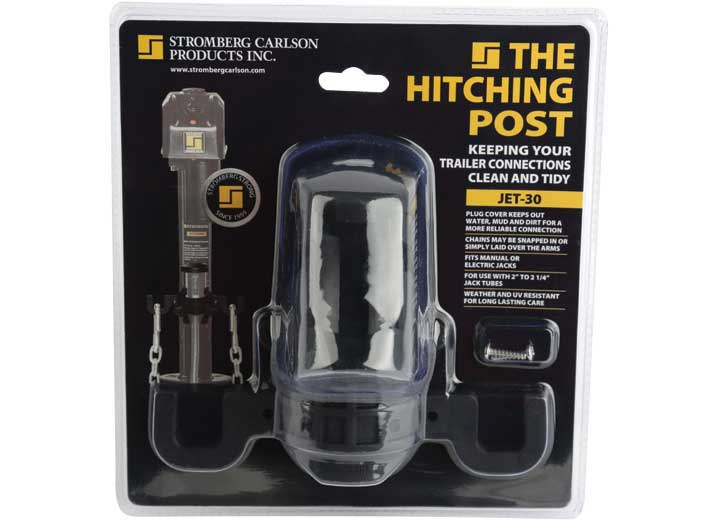
- Weather protection: a vinyl cover protects the motor and switch. Stromberg Carlson also offers a cord and chain saddle to keep safety chains and the 7-way cord tidy on the jack.
Since the jack draws from the same battery that runs your breakaway system and interior lights, keep the battery charged. Our trailer wiring and brake controllers guide covers the 7-way connection that charges it while towing, and 4-pin vs 7-pin connectors explains which carries charge power.
Feet, wheels, pads and safe hitching
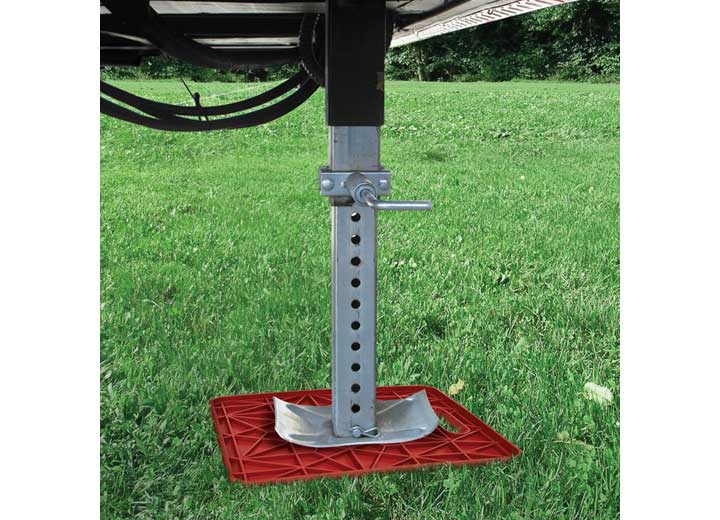
A jack is only as stable as what it sits on. On asphalt in summer, gravel or grass, a narrow jack foot can sink or tip. Options we stock:
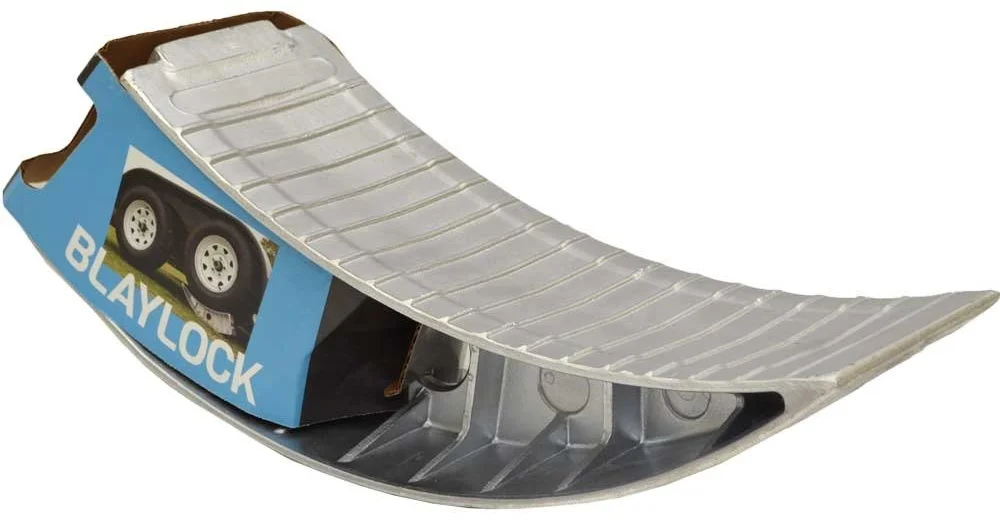
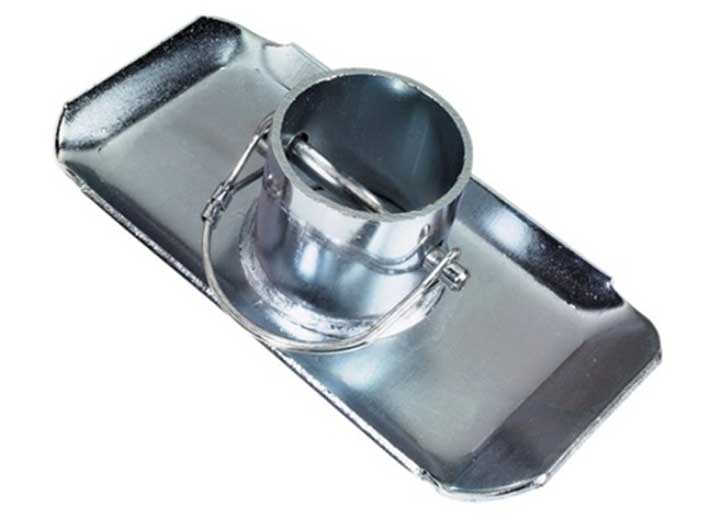
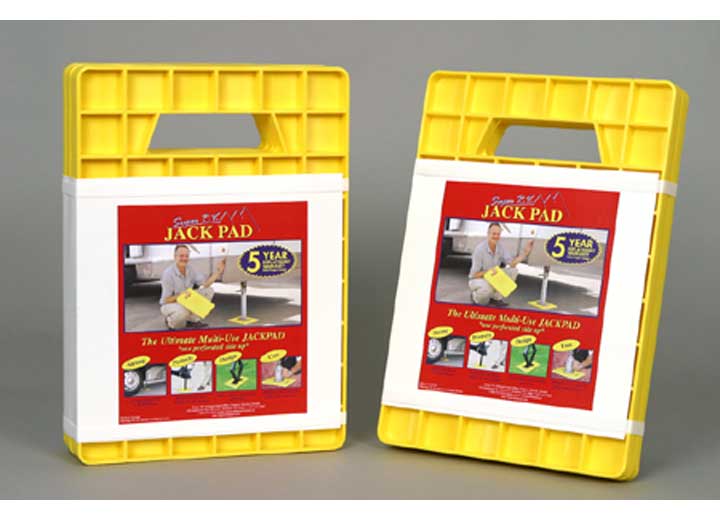
- Jack pads and blocks: Ox Blox trailer jack blocks, the Valterra Stayput pad and Snappad permanent pads spread the load and give you extra height.
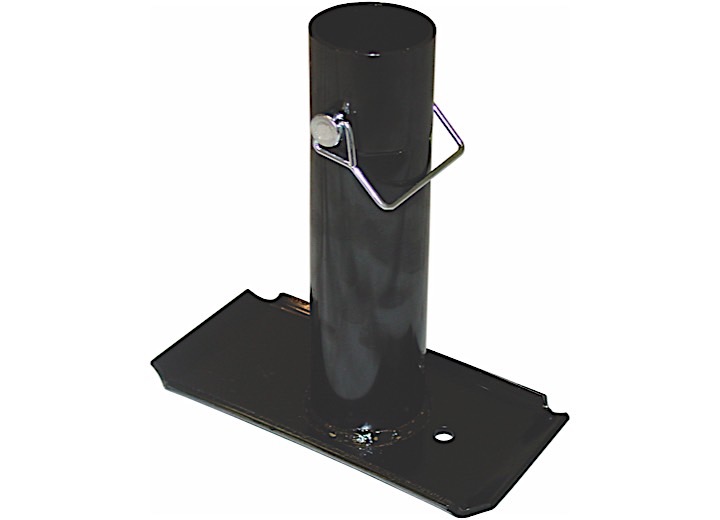
- Jack feet: Pacific Rim sells replacement feet for jacks with 2 inch outer tubes.
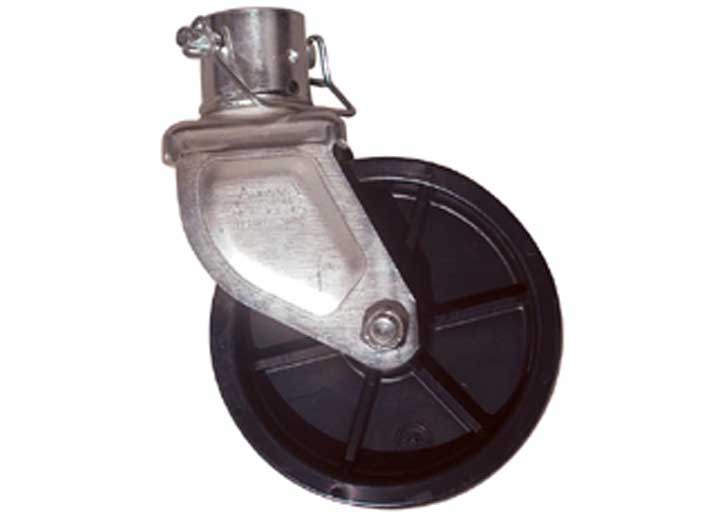
- Caster wheels: a Bal Norco caster wheel or a jack with a built-in wheel lets you roll a light trailer by hand on a hard, flat surface. Wheels are not meant for soft ground or heavy tongues.
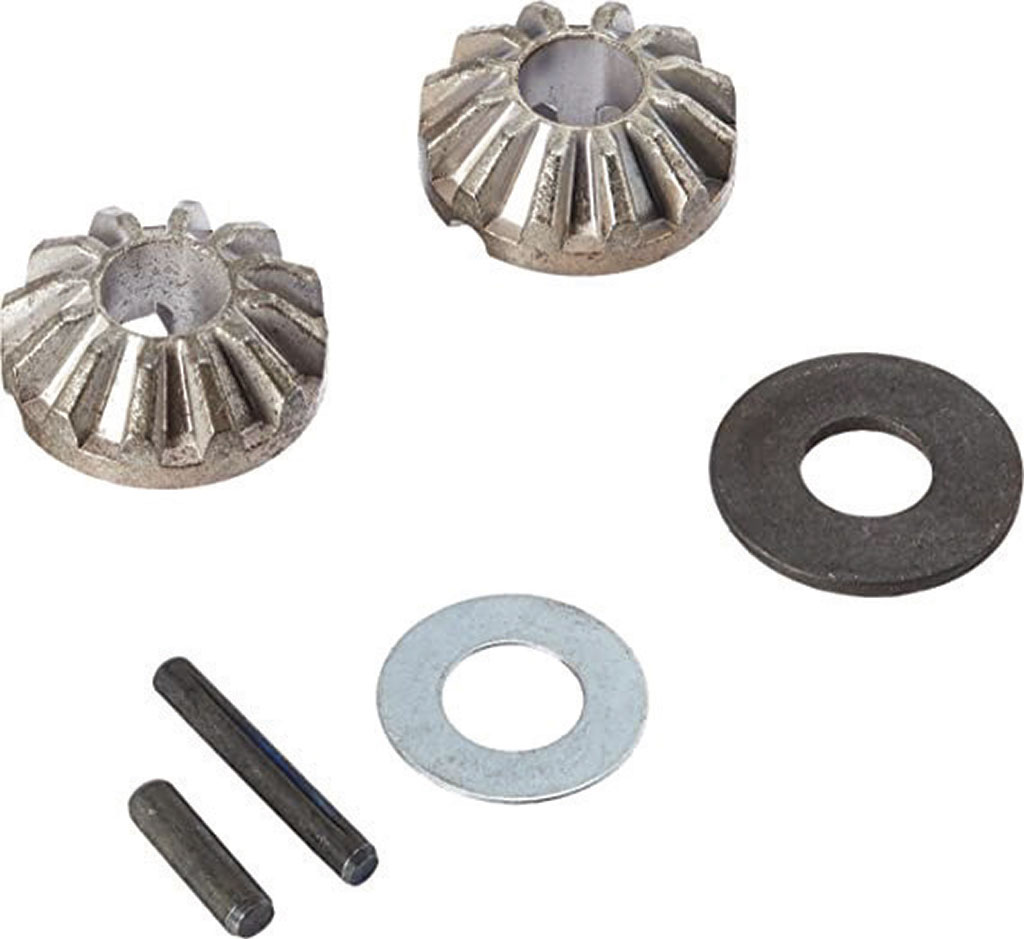
- Repair parts: Draw-Tite gear kits and side-wind handles bring a worn jack back without replacing it.
Hitching and unhitching safely:
- Chock the trailer wheels before you lower or raise the tongue, every time.
- Lower the coupler fully onto the ball, latch it and pin it, then raise the jack enough to see the trailer lift the tow vehicle slightly. That confirms the coupler is engaged.
- Retract the jack fully and swivel it up before driving. A swivel jack left down can catch on the road.
- Never work under a trailer supported only by its tongue jack. Use stands rated for the load.
Note that automotive jack stands, such as the Performance Tool pairs we carry, are designed for supporting vehicles, not as trailer stabilizers. For leveling and stabilizing a parked camper, see our RV stabilizer and leveling jacks guide. And make sure the ball matches your coupler; see choosing the right tow ball size.